China vs India for Precision Manufacturing
Short answer: For tight-tolerance precision work, China still leads on ecosystem depth, while India wins on landed cost for simpler, higher-volume parts. If your drawing calls for ±0.005 mm CNC machining, multi-stage progressive stamping dies, or custom springs with controlled load tolerances, Dongguan suppliers typically quote in 12 working hours and hold tolerances that Indian job shops often subcontract. If your part is a straightforward bracket or turned fitting with ±0.05 mm tolerance and you want to avoid China tariffs, India is competitive. Most serious buyers run both: China for the hard geometries and tooling, India for volume parts where the tolerance band is wide enough to absorb process variation.
The China vs India decision is not a nationality question. It is a capability-matching question. Buyers who treat it as a binary "which country is cheaper" debate usually end up with a supplier that cannot hold the drawing, or a price that looked good in the RFQ and ballooned after the first inspection report.
This article breaks the comparison down the way an engineer should: tolerances, tooling, materials, lead time, quality systems, MOQ, and total landed cost. It is written from the perspective of a Dongguan factory that runs four production lines under one ISO9001 roof — CNC machining, metal stamping, custom springs, and heat sinks — so we will be honest about where China's advantage is real and where it is overstated.
What actually differs between China and India for precision parts?
The headline difference is not labor rate. It is the density of the supply chain around the factory.
In Dongguan, a precision machine shop sits within a 30 km radius of heat treaters, anodizers, electroplaters, tool steel distributors, custom spring winders, and stamping die makers. When a job needs a secondary process, it moves down the road and comes back in days. In most Indian precision clusters — Pune, Bengaluru, Chennai, Coimbatore — that density exists but is thinner, and secondary processes are more often batched, queued, or shipped between cities.
That density shows up as:
- Faster iteration on first articles. A tolerance problem can be solved with a local die correction or a re-ground tool instead of a two-week logistics loop.
- Wider material availability. 7075 aluminum, 17-7 PH stainless, beryllium copper, silicon steel laminations, and music wire gauges are stocked locally in Guangdong. Indian suppliers frequently import the same stock, adding lead time and cost.
- More mature tooling shops. Progressive die and fine-blanking capability is deeper in China, which matters for stamped parts with tight burr and flatness requirements.
India's advantages are equally real:
- Lower labor cost for manual and semi-automatic operations, which matters on high-volume, low-complexity parts.
- English-language engineering communication is generally strong, and documentation practices are often closer to Western norms.
- Tariff and trade posture. For US buyers, Indian-origin goods often avoid the Section 301 tariffs that apply to Chinese-origin goods, which can be a 7.5–25% swing on landed cost depending on HTS classification.
- Growing domestic demand has pushed Indian suppliers up the learning curve in automotive and pharmaceutical equipment.
How do tolerances and process capability compare?
This is where the comparison gets concrete. Capability is not a country attribute — it is a machine, tool, and inspection attribute. But the distribution of capability differs.
| Capability | Typical China (Dongguan cluster) | Typical India (mature clusters) | Notes |
|---|---|---|---|
| CNC machining tolerance | ±0.005 mm achievable on critical features | ±0.01–0.02 mm common; ±0.005 mm available at premium shops | Depends on machine class and thermal control |
| Surface finish (CNC) | Ra 0.4 µm routine, Ra 0.2 µm with polishing | Ra 0.8 µm routine | Both need secondary ops for mirror finish |
| Stamping die life | 1–5 million strokes typical for progressive dies | 0.5–2 million strokes typical | Tool steel grade and heat treat drive this |
| Spring load tolerance | ±5% typical, ±3% on precision wound springs | ±8–10% typical | Wire diameter control and coiling setup |
| Flatness on stamped parts | 0.05 mm/100 mm typical | 0.1 mm/100 mm typical | Fine blanking closes the gap |
| CMM / optical inspection | Standard at mid-size shops | Available but less universal | Ask for the report format upfront |
The practical takeaway: if your tightest callout is ±0.05 mm and your volumes are high, India can deliver. If your callout is ±0.005 mm on a bearing bore, or you need a 12-station progressive die with in-die tapping, the Chinese cluster is the lower-risk path.
Read our supplier vetting checklist for the specific evidence to request — capability studies, CMM reports, and machine lists — before you accept either country's quote.
What does tooling cost and ownership look like?
Tooling is often the deciding factor, and it is where buyers get burned in both countries.
| Tooling item | Typical China cost | Typical India cost | Lead time China | Lead time India |
|---|---|---|---|---|
| Simple blanking die | $800–2,500 | $600–2,000 | 2–4 weeks | 3–6 weeks |
| Progressive die (5–10 station) | $4,000–15,000 | $3,500–12,000 | 4–8 weeks | 6–10 weeks |
| Fine blanking die | $12,000–40,000 | $10,000–35,000 | 8–12 weeks | 10–16 weeks |
| CNC soft jaws / fixtures | $150–600 | $120–500 | 3–7 days | 5–10 days |
| Spring coiling setup | $100–400 | $80–350 | 2–5 days | 3–7 days |
The numbers overlap more than most buyers expect. The real difference is how fast a die can be corrected when the first article is out of tolerance. In Dongguan, a die correction is usually a same-week event because the die shop and the press are in the same building or the same industrial park. In a distributed Indian supply chain, the same correction can consume two weeks.
Tooling ownership is a separate negotiation. Insist on a written clause that the die is your property, amortized or paid in full, and transferable. Our guide to quote comparison walks through how to structure that so you are comparing like for like rather than a low tooling price hiding a captive die.
How do lead times and MOQ compare?
Lead time is where China's cluster advantage is most visible, and where India's smaller shops can actually be more flexible on tiny orders.
| Order profile | China (Dongguan) | India (mature cluster) |
|---|---|---|
| Prototype, 1–50 pcs CNC | 5–10 working days | 7–14 working days |
| Production CNC, 500–5,000 pcs | 10–18 working days | 15–30 working days |
| Stamped part, new die | 4–8 weeks total | 6–10 weeks total |
| Stamped part, existing die | 2–4 weeks | 3–6 weeks |
| Custom spring, new setup | 7–12 working days | 10–18 working days |
| Quotation turnaround | Often 12 working hours | 2–5 working days typical |
MOQ is more nuanced. Chinese factories are increasingly flexible on MOQ because they compete on responsiveness as much as price — BQUQ, for example, runs flexible MOQ across all four lines rather than forcing a container-load minimum. Indian suppliers range from very small job shops with no MOQ to large Tier-1s with strict annual volume commitments.
If your program needs both a fast prototype loop and a volume ramp, the dual-source strategy is usually the right structure: one supplier for speed and tooling, one for volume cost.
What about quality systems and inspection?
Both countries have ISO9001 factories. Both also have factories that print the certificate and do not live it. The differentiator is inspection infrastructure and documentation discipline.
Ask for:
1. Calibration records for every gauge used on your part, with traceability to a national standard.
2. First article inspection (FAI) to AS9102 or PPAP Level 3 format, even if your industry does not require it — the format forces discipline.
3. CMM or optical comparator reports with actual measured values, not pass/fail stamps.
4. Material certificates from the mill, matched to heat numbers.
5. A control plan showing which features are checked, at what frequency, with what gauge.
In China's mature clusters, this documentation is routine and often automated. In India, it is available but more variable — some suppliers are excellent, others treat inspection as a final gate rather than an in-process control. Our third-party inspection guide covers how to verify either country's claims without flying in.
How should you calculate total landed cost?
Unit price is the least useful number in the comparison. Build the landed cost model:
Landed cost = unit price + tooling amortization + freight + duty + tariff + inspection + inventory carrying cost + cost of quality escapes
Two worked examples:
- Precision CNC housing, ±0.01 mm, 2,000 pcs/year. China unit price $18, India $17. Tooling: China $3,000, India $2,800. Freight: China $1,200, India $1,400. Tariff: China 25%, India 0%. Duty difference alone is roughly $9,000/year, which flips the decision toward India — if the Indian supplier holds tolerance. If they do not, the cost of one rejected lot plus a rework cycle erases the saving.
- Progressive-stamped contact, ±0.03 mm, 500,000 pcs/year. China unit price $0.042, India $0.048. Tooling: China $9,000, India $8,500. At this volume, the 6-mil unit difference is $3,000/year, and the Chinese die's longer life and faster correction cycle usually wins on total cost.
The pattern: India wins when tolerance is loose and volume is high; China wins when tolerance is tight, tooling is complex, or the schedule is short.
Where does BQUQ fit?
BQUQ is a Dongguan source factory running CNC machining, metal stamping, custom springs, and heat sink production across four lines in one ISO9001 facility. That means:
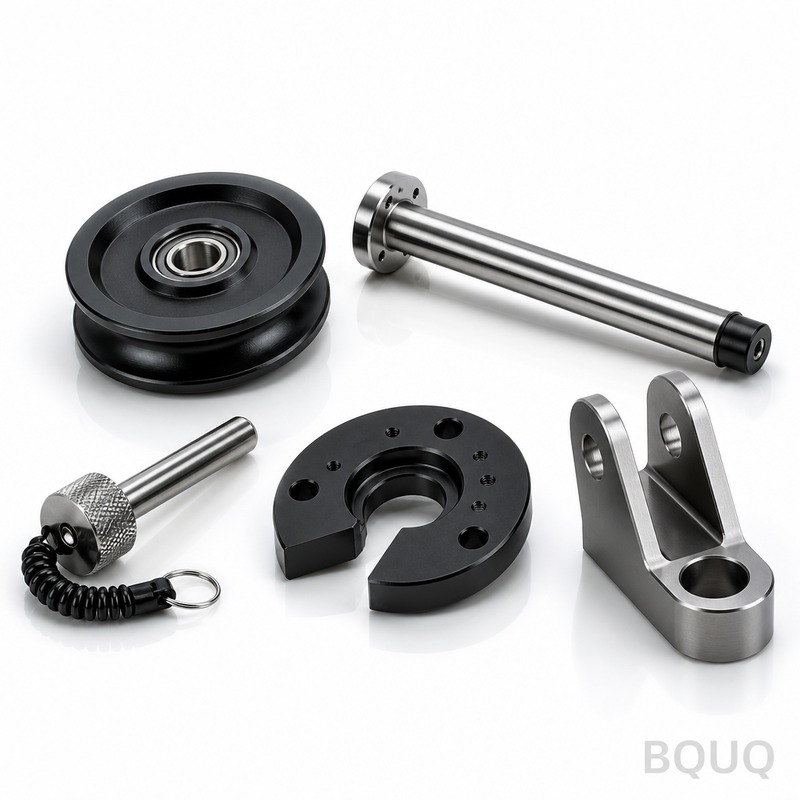
- CNC machining to ±0.005 mm on critical features, with in-house inspection.
- Progressive and fine-blanking stamping with die design, build, and correction under one roof.
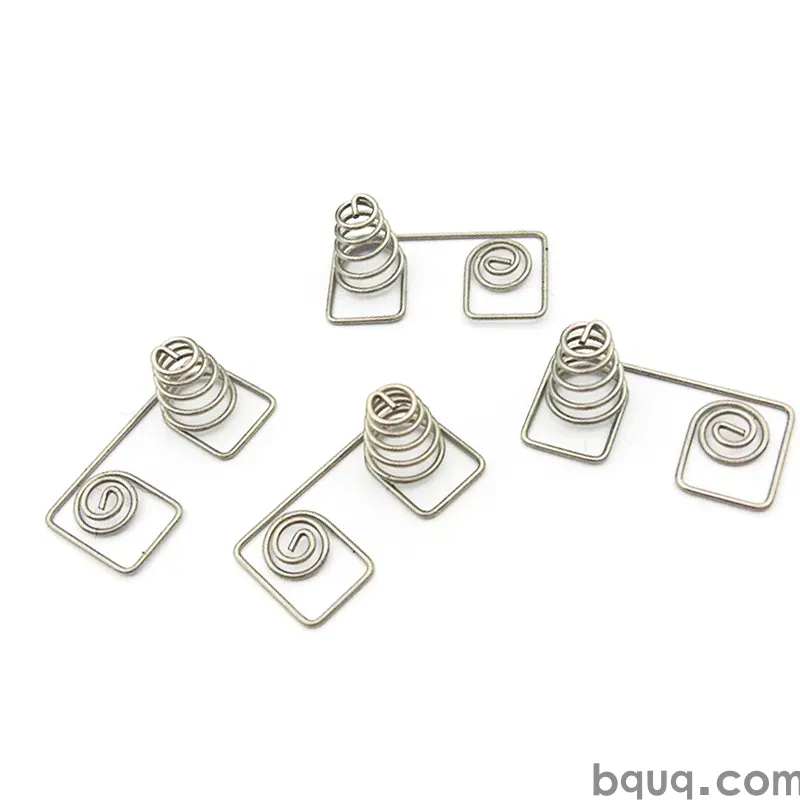
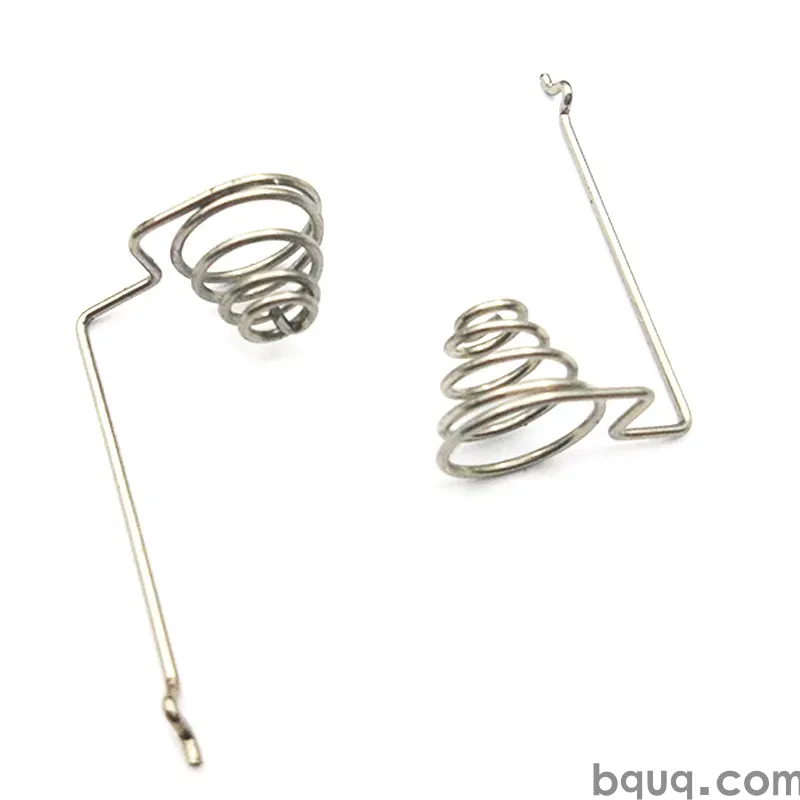
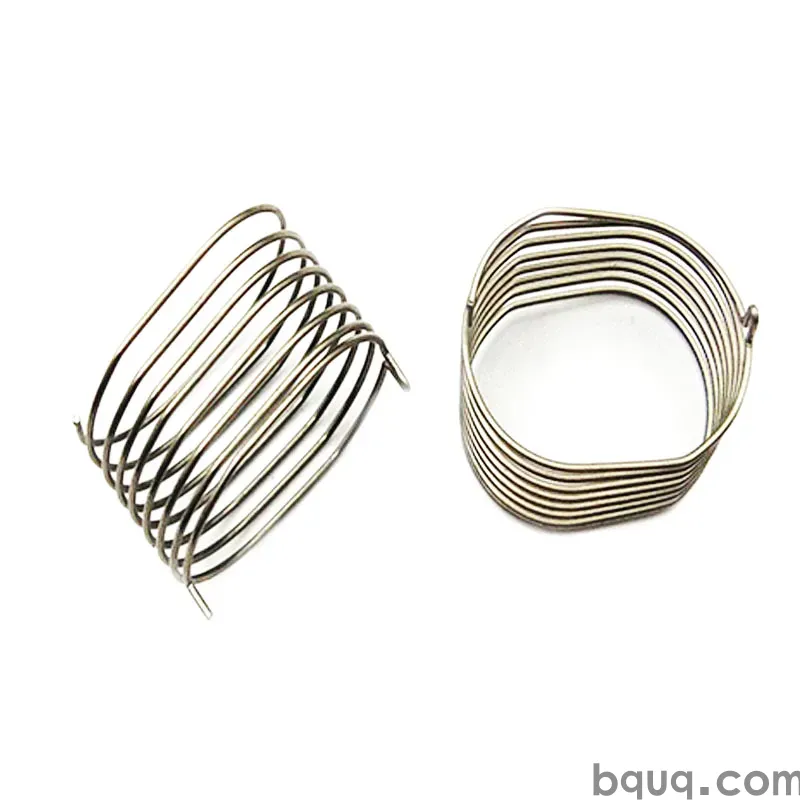
- Custom springs — compression, extension, torsion — with controlled load tolerances.
- Heat sinks and thermal parts, including stamped and bonded assemblies.
- Quotes in 12 working hours, flexible MOQ, and DFM feedback before you commit to tooling.
If you are evaluating China vs India, the fastest way to decide is to send the same drawing to both and compare the DFM response, not just the price. The supplier that flags a tolerance problem before quoting is the one that will not surprise you at FAI.
Frequently Asked Questions
Q: Is China or India cheaper for precision CNC machining?
A: India typically quotes 5–15% lower on simple turned or milled parts at high volume, mainly from lower labor cost. China is usually cheaper once you factor in tooling correction speed, material availability, and scrap rates on tight-tolerance work. For parts at ±0.005 mm, Chinese quotes are often lower in total cost despite a higher hourly rate, because fewer parts are lost to rework.
Q: Can Indian suppliers hold ±0.005 mm tolerances?
A: A small number can, usually in Pune and Bengaluru, using imported CNC machines and temperature-controlled rooms. It is not the norm. Most Indian precision shops hold ±0.01–0.02 mm comfortably and will subcontract or decline work tighter than that. Always request a capability study (Cpk) on the specific feature before awarding a tight-tolerance job, in either country.
Q: Does India avoid the China tariffs for US buyers?
A: Often yes. Indian-origin goods generally avoid Section 301 tariffs that apply to many Chinese-origin products, which can be a 7.5–25% landed cost difference depending on HTS classification. That advantage is real but not automatic — verify the correct HTS code and country-of-origin rules, and remember that a tariff saving can be erased by a single quality escape or a two-week schedule slip.
Q: How long does tooling take in China versus India?
A: For a simple blanking die, China typically delivers in 2–4 weeks and India in 3–6 weeks. A 5–10 station progressive die runs 4–8 weeks in China and 6–10 weeks in India. The bigger difference is correction speed after first article: in Dongguan the die shop and press are usually minutes apart, so a correction is a same-week event rather than a cross-city logistics loop.
Q: Should I dual-source between China and India?
A: For most programs above $200k annual spend, yes. Run the tight-tolerance and complex-tooling parts in China, and qualify an Indian supplier for looser-tolerance volume parts to reduce tariff exposure and single-country risk. Keep the drawings, inspection standards, and control plans identical so you can shift volume between them without re-qualifying from scratch.
Related Resources
- About BQUQ and our four Dongguan production lines: /about/
- CNC machining services to ±0.005 mm: /cnc-machining/
- Custom metal stamping and progressive dies: /custom-metal-stamping/
- Industry trends and sourcing analysis: /industry-dynamics/
- Technical articles and engineering guides: /bquq-blog/
- Frequently asked questions: /faq/
- Case studies from precision manufacturing programs: /case/
- Contact the engineering team: /contact/
Authored by the BQUQ Engineering Team. BQUQ (Dongguan) runs CNC machining (±0.005 mm), metal stamping, custom springs, and heat sink production in one ISO9001 factory. Source-direct from Dongguan, China — quote in 12 hours: sc@bquq.com | WhatsApp +86 13713157787 | www.bquq.com