China vs Mexico for Precision Parts: A Buyer's Comparison
Short answer: For precision parts, China usually wins on unit cost, process breadth, and tolerance capability, while Mexico wins on truck-route speed to US plants and tariff treatment under USMCA. A typical 10,000-piece machined bracket might land at USD 2.10–3.40 each from a Dongguan ISO9001 factory versus USD 3.60–5.80 from a Mexican shop, but Mexico can cut transit from 25–35 days to 3–7 days. The right answer is rarely "one country" — it is matching each part number to the route that protects your margin, your launch date, and your tooling.
The nearshoring conversation has been running for years, and it usually gets framed as a binary: stay in Asia or move to Mexico. That framing loses money. Precision parts sourcing is a portfolio decision. Some parts benefit enormously from a 4-day truck lane into Texas; others benefit enormously from a supplier who can hold ±0.005 mm on a hardened stainless shaft and run four processes under one roof.
This comparison is written for engineers and sourcing managers who have to defend a decision with numbers, not slogans. We will cover landed cost, tolerance and process capability, tooling ownership, lead time, quality systems, and the hybrid model that most mature buyers actually run.
What does the cost comparison actually look like?
Published wage data is a poor proxy for part cost. A precision machined part is mostly machine time, tooling amortization, material, yield, and overhead — not direct labor. Mexico's labor advantage has narrowed, and its energy and logistics costs have risen. China's advantage is not cheap hands; it is density of supply chain, mature tooling shops, and high machine utilization.
The table below is indicative pricing for a mid-complexity 6061-T6 aluminum bracket, anodized, with three tight bores, quoted at three volumes. Treat these as planning ranges, not quotes.
| Cost element | China (Dongguan, ISO9001) | Mexico (Baja / Monterrey) |
|---|---|---|
| Unit price @ 1,000 pcs | USD 4.20–6.10 | USD 6.80–9.50 |
| Unit price @ 10,000 pcs | USD 2.10–3.40 | USD 3.60–5.80 |
| Unit price @ 50,000 pcs | USD 1.35–2.20 | USD 2.60–4.10 |
| Tooling / fixture (one-time) | USD 900–2,400 | USD 1,800–4,500 |
| First-article + PPAP-style report | Often included | Often billed separately |
| Inbound freight to US Midwest | USD 0.35–0.90 / unit (air/sea mix) | USD 0.20–0.55 / unit (truck) |
| Duty exposure | Section 301 lists apply to some HS codes | USMCA-qualifying goods may enter duty-free |
| Payment terms | 30% deposit / 70% before shipment | Often net 30–60 after setup |
Two things jump out. First, the gap is widest at low volume, because Mexican shops amortize setup over fewer parts and often carry higher overhead per machine hour. Second, at high volume the gap narrows but rarely closes — China's tooling ecosystem and material availability keep the floor lower.
Where Mexico genuinely wins on cost
Mexico wins when total landed cost, not unit price, is the metric. If your part is bulky, heavy, or low-value-per-kilo, ocean freight and 30-day transit can erase a 30% unit-price advantage. Stamped steel housings, welded frames, and large sheet-metal enclosures are classic candidates. Mexico also wins when the part is on a weekly replenishment cadence tied to a US assembly line, because inventory carrying cost and expedite risk dominate.
Where China genuinely wins on cost
China wins on anything with high process content: multi-axis CNC, tight-tolerance bores, progressive-die stamping, custom springs, heat sinks, and secondary finishing. When a part needs machining plus deburring plus passivation plus laser marking plus inspection, a single Dongguan factory with four production lines absorbs all of it without inter-factory freight or a second quality system. That consolidation is worth more than the wage delta.
If you want a structured way to compare quotes line by line, see our guide to comparing supplier quotes.
How do tolerance and process capability compare?
Capability varies far more between individual factories than between countries. A well-run Mexican shop with newer DMG Mori machines can hold tighter tolerances than a poorly run Chinese shop with tired equipment — and vice versa. What differs structurally is the depth of the supply base.
| Capability | Typical China (Dongguan) | Typical Mexico (nearshore hubs) |
|---|---|---|
| CNC machining tolerance | ±0.005 mm achievable on critical features | ±0.010–0.025 mm common; ±0.005 mm available at a premium |
| Stamping die precision | Fine blanking, progressive dies, in-house die shop | Progressive dies common; fine blanking less available |
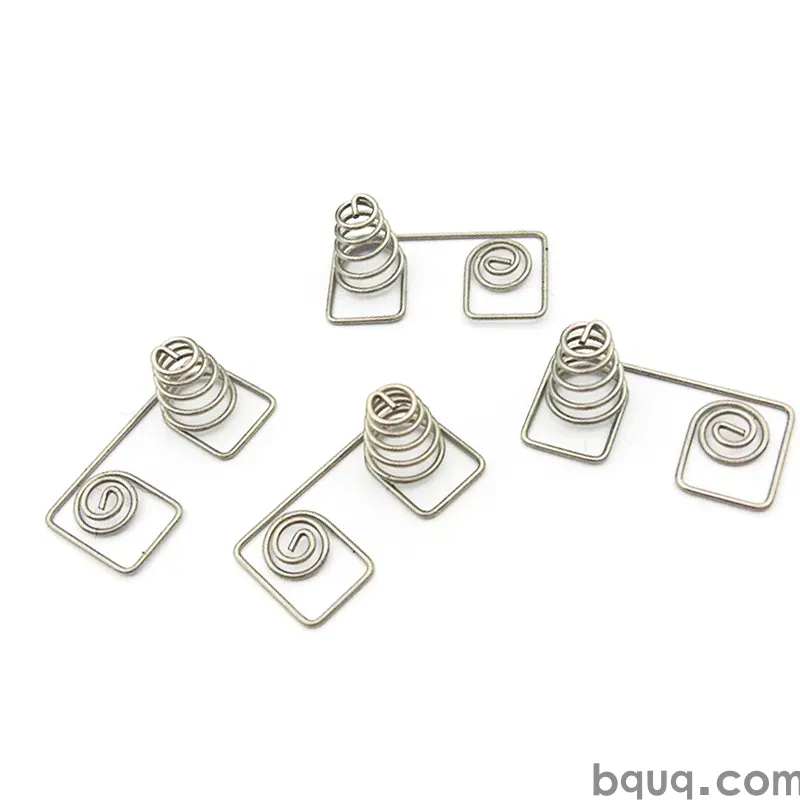
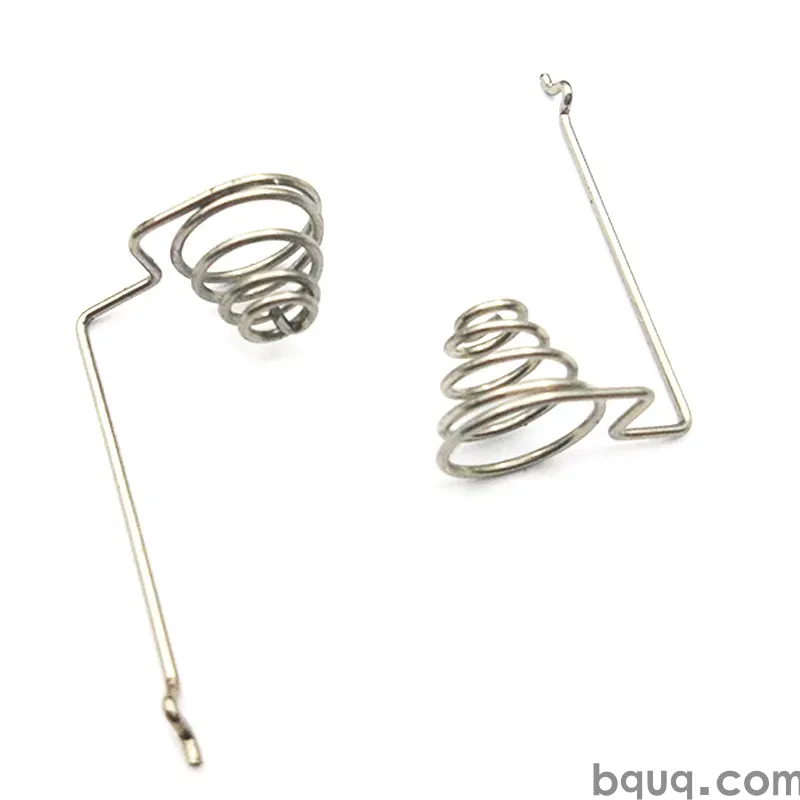
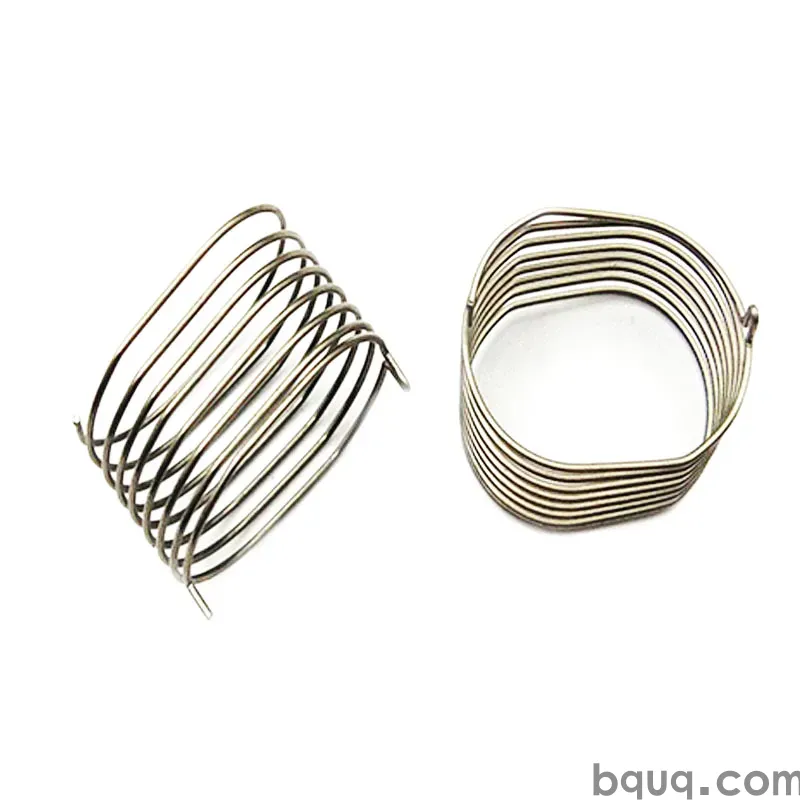
| Spring / wire forming | Deep bench of custom spring specialists | Limited; often imported |
| Heat sink extrusion + CNC | Fully integrated | Extrusion often imported from Asia |
| Surface finishing | Anodize, zinc, nickel, powder, passivation all local | Available but fewer options, longer queues |
| Material breadth | Broad, including specialty alloys | Good for common steels and aluminums |
The practical takeaway: if your drawing has a true position callout of 0.01 mm, a profile tolerance under 0.02 mm, or a spring rate window of ±5%, validate the specific factory's capability with a first article rather than assuming a country-level answer.
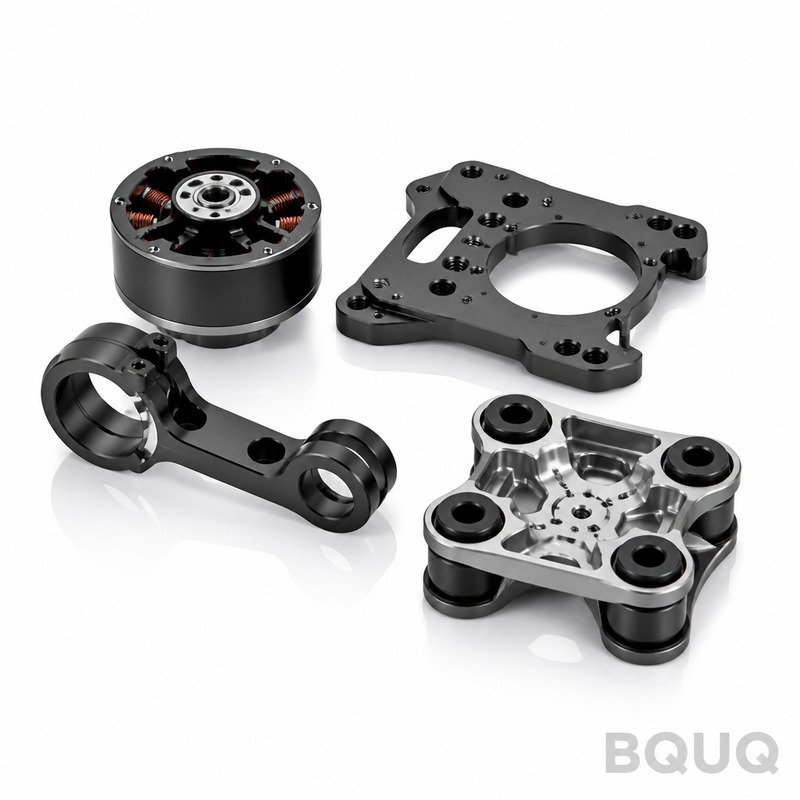
BQUQ, for example, machines to ±0.005 mm on critical features and runs CNC machining, metal stamping, custom springs, and heat sink production in one ISO9001 facility in Dongguan — which means a part that needs a stamped contact, a machined housing, and a compression spring can be produced and inspected under one quality system.
What about lead time and logistics?
This is where nearshoring earns its reputation. The table below compares door-to-door timelines for a production order, assuming material is on hand.
| Stage | China (Dongguan → US Midwest) | Mexico (Baja → US Midwest) |
|---|---|---|
| Quotation turnaround | 12 working hours (BQUQ standard) | 3–7 business days typical |
| Tooling / first article | 10–18 working days | 12–20 working days |
| Production run (10k pcs) | 12–20 working days | 10–18 working days |
| Transit | 3–7 days air / 25–35 days sea | 3–7 days truck |
| Customs clearance | 1–3 days | 0–1 day (USMCA) |
| Total, air + production | 25–40 days | 20–30 days |
| Total, sea + production | 45–60 days | 20–30 days |
The honest reading: production speed is comparable. The difference is transit mode. Air freight from China compresses the gap to roughly a week, at a cost that is often still cheaper than the Mexican unit-price premium on high-value parts. Sea freight is where China loses on time and wins on cost.
For a deeper look at mode selection and its cost curve, read shipping methods compared.
The hybrid model most buyers actually use
Mature sourcing teams rarely pick one country. A common split:
- High-volume, high-process-content parts → China, sea freight, 8–12 weeks of buffer inventory.
- Heavy or bulky low-value parts → Mexico, truck, weekly replenishment.
- Launch and bridge volumes → whichever factory can hit first article fastest, regardless of country.
- Service and spare parts → local or nearshore, because response time matters more than unit price.
This is a portfolio, and it should be reviewed quarterly against actual landed cost, not against the original business case.
How should you think about tooling ownership?
Tooling is the most under-negotiated item in a nearshoring decision. If you move a stamped part from China to Mexico, who owns the die? Can you physically retrieve it? Is it built to a standard that a different press can run?
Three rules protect you:
1. Pay for tooling separately and take ownership in writing. The purchase order should state that tooling is your property, list the die ID numbers, and specify that it is built to a generic press standard rather than a proprietary one.
2. Request die drawings and maintenance logs. A die that has run 400,000 strokes needs a refurbishment plan before it moves.
3. Budget for requalification. Moving a die between countries almost always requires a new first article, and often a new die shoe.
Our article on tooling ownership walks through the contractual language that prevents a hostage situation later.
What quality and compliance factors matter?
Both countries have competent suppliers and both have weak ones. What you can rely on is the system you specify.
- ISO9001 is the baseline and is widely held in both countries. Anything beyond that — IATF 16949, ISO 13485 — must be verified per factory, never assumed.
- Inspection documentation matters more than certificates. Ask for dimensional reports, CMM data, material certs, and plating thickness readings on every lot.
- Change control is where cross-border programs fail. A supplier that silently switches a material source or a plating line will cost you a containment event.
- Traceability should link lot number to material heat number to inspection record.
For a practical checklist you can attach to a PO, see our quality agreement guide.
Frequently Asked Questions
Q: Is Mexico cheaper than China for precision CNC parts?
A: No, not on unit price. For a typical machined aluminum bracket at 10,000 pieces, Mexican quotes run roughly 40–70% higher than comparable Chinese quotes, and the gap widens on parts with tight tolerances or multiple secondary operations. Mexico can still be cheaper on total landed cost for heavy, bulky, or low-value-per-kilo parts where truck freight and duty treatment outweigh the unit-price premium.
Q: How much does nearshoring to Mexico reduce lead time?
A: Typically 15–25 days on a sea-freight program, mostly from transit. Production time itself is similar — 10–20 working days in both countries. If you ship from China by air, the door-to-door difference shrinks to about 5–10 days, which is often not enough to justify a 40% unit-price premium on high-value precision parts.
Q: Can Chinese factories hold ±0.005 mm tolerances?
A: Yes, on critical features, at well-equipped factories. BQUQ machines to ±0.005 mm in Dongguan, and this capability is common among export-oriented precision shops. The caveat is that capability is per feature, per material, and per machine. Always validate with a first article report and CMM data rather than accepting a country-level claim.
Q: Does USMCA make Mexico automatically cheaper?
A: Only if the goods actually qualify. USMCA rules of origin require sufficient regional content, and a part machined in Mexico from Chinese billet may not qualify. Duty savings must be calculated per HS code and per bill of materials. Many buyers find the duty benefit real but smaller than the labor-cost assumption they started with.
Q: What is the best sourcing strategy for a mixed BOM?
A: Split by part characteristics, not by country preference. Route high-process-content, high-value parts to China; route heavy, bulky, or fast-replenishment parts to Mexico; keep a dual-qualified source for any part that would stop your line. Review the split quarterly against actual landed cost and lead-time performance. For planning support, see lead-time planning.
Related Resources
- About BQUQ and our Dongguan factory: /about/
- CNC machining services (±0.005 mm): /cnc-machining/
- Custom metal stamping and progressive dies: /custom-metal-stamping/
- Compression springs and custom spring design: /compression-springs/
- Industry trends and sourcing shifts: /industry-dynamics/
- Technical articles library: /bquq-blog/
- Request a quote in 12 working hours: /contact/
Authored by the BQUQ Engineering Team. BQUQ (Dongguan) runs CNC machining (±0.005 mm), metal stamping, custom springs, and heat sink production in one ISO9001 factory. Source-direct from Dongguan, China — quote in 12 hours: sc@bquq.com | WhatsApp +86 13713157787 | www.bquq.com