In-House vs Outsourced Machining: A Cost Model
Short answer: Outsourcing wins when annual volume is below roughly 5,000–15,000 units, when part geometry changes more than twice a year, or when the part needs tolerances tighter than ±0.01 mm without in-house metrology. In-house wins above roughly 20,000 stable units per year with a dedicated operator and spare spindle capacity. The break-even is not the hourly rate — it is loaded machine cost (typically 2.5–3.5× the labor rate), fixture amortization, scrap, and the working capital tied up in idle capacity. Most buyers underestimate overhead by 40–60%.
The make-or-buy decision for machined parts is usually framed as "our shop rate is $45/hr, theirs is $28/hr." That framing is almost always wrong. A machine that is not running still costs money — depreciation, floor space, maintenance, insurance, the operator you keep on payroll for the weeks it is running. The honest comparison is total cost of ownership per good part, delivered on time, at the required tolerance.
This article gives you a working cost model you can put into a spreadsheet today, plus the qualitative factors that decide the answer when the numbers land close.
Why the hourly-rate comparison fails
A vertical machining center purchased for $90,000, depreciated over 7 years, used 2,000 hours per year, carries about $6.40/hr in depreciation alone. Add:
- Floor space at $8–15 per square foot per month
- Power, compressed air, coolant, chip disposal
- Preventive maintenance and spares (typically 3–6% of machine value per year)
- Tooling consumption — carbide, inserts, drills, taps
- The operator's fully loaded cost (wage + benefits + supervision + training time)
- Programming, setup, and fixture design, amortized over the batch
- Quality inspection labor and equipment calibration
- Scrap and rework at your internal rate, not the supplier's
When you add all of that, a machine billed internally at a $45/hr labor rate frequently lands at $110–160/hr loaded. That is the number to compare against a supplier's quoted piece price — and suppliers spread those same fixed costs across many more parts and many more customers.
The utilization trap
The single biggest error in in-house cost models is assuming high utilization. If your shop runs the machine 35% of available hours, the fixed cost per part triples. Most captive machine shops run between 25% and 50% utilization because demand is lumpy and the machine was bought for peak load.
Outsourced suppliers run 60–80% utilization across a diversified order book. That structural difference alone often explains a 30–50% piece-price gap — before anyone talks about labor arbitrage.
Building the cost model: line by line
Here is the structure that survives contact with real accounting. Build it once, reuse it for every part family.
| Cost element | In-house treatment | Outsourced treatment |
|---|---|---|
| Machine depreciation | Annual depreciation ÷ actual good parts | Embedded in piece price |
| Floor space | Allocated per sq ft per month | Zero |
| Labor (direct) | Loaded hourly × run + setup hours | Embedded in piece price |
| Programming / CAM | Engineering hours ÷ batch size | Usually amortized or waived |
| Fixtures & tooling | Full cost ÷ annual volume | NRE, one-time, often negotiable |
| Consumable tooling | Per-part tool life cost | Embedded in piece price |
| Inspection | Labor + gauge amortization | Often included, ask for the report |
| Scrap & rework | Internal scrap rate × loaded cost | Supplier's risk, capped by contract |
| Freight & duty | Inbound material freight only | Inbound freight + duty + brokerage |
| Inventory carrying | Raw + WIP + finished at ~18%/yr | Finished goods only, or consignment |
| Management overhead | Purchasing, planning, QA oversight | Purchasing, planning, QA oversight |
Notice the last row: you still pay overhead when you outsource. Someone has to write the PO, chase the delivery, review the inspection report, and handle the nonconformance. Budget 3–8% of spend for supplier management. Buyers who ignore this line overstate the outsourcing saving.
Worked example: 8,000 brackets per year
Assume a 6061-T6 aluminum bracket, ±0.05 mm on two features, one setup, 4 minutes of cycle time, 30-minute setup, one simple fixture.
| Line item | In-house | Outsourced (Dongguan) |
|---|---|---|
| Loaded machine rate | $120/hr | — |
| Cycle time per part | 4.0 min | 4.0 min |
| Setup amortized (8,000 pcs) | $0.008 | $0.005 |
| Machining cost per part | $8.00 | $2.40 |
| Material (per part) | $1.10 | $0.95 |
| Fixture / NRE amortized | $0.40 | $0.15 |
| Inspection per part | $0.35 | $0.12 |
| Scrap allowance (3% vs 1.5%) | $0.29 | $0.05 |
| Freight + duty per part | $0.00 | $0.30 |
| Supplier management (5%) | $0.00 | $0.19 |
| Total per good part | $10.15 | $4.17 |
The gap is 59%, and it is driven by the loaded machine rate and utilization — not by the labor rate. Figures are indicative; run your own.
When in-house genuinely wins
Outsourcing is not automatically cheaper. In-house wins in specific, identifiable conditions:
- Volume above ~20,000 stable units/year. At that point the supplier's margin and freight exceed your fixed-cost penalty.
- Design secrecy that cannot be contracted away. This is rarer than people think — a well-drafted NDA plus tooling ownership handles most cases. See our notes on NDA enforceability in China.
- Same-day iteration. If your engineers change the geometry daily during prototype, a 3-day round trip kills velocity.
- Processes you already own and fill. If the machine is idle anyway, the marginal cost of one more job is genuinely low — but only the marginal cost, not the fully loaded rate.
- Extreme tolerance with in-house metrology. If you own a CMM and the supplier does not, the measurement risk may dominate.
The marginal-cost fallacy
"Machine's already paid for, so it's free" is the most expensive sentence in manufacturing. The machine has a replacement cost. Every hour you consume brings the replacement forward. Depreciation is a real economic cost whether or not your accountant books it this quarter.
The hidden costs of outsourcing
Outsourcing has its own failure modes, and a credible cost model must price them.
| Risk | Typical cost impact | Mitigation |
|---|---|---|
| Longer lead time | 1–3% of part value per week of extra WIP | Buffer stock, dual sourcing |
| Quality escape | 5–50× part cost per field failure | PPAP-style first article, in-house IQC |
| Communication lag | 2–10 engineering hours per change | Single point of contact, DFM loop |
| Freight variability | ±20% on landed cost | Lock Incoterms, consolidate |
| IP exposure | Hard to quantify | NDA, tooling ownership, split processes |
| Supplier concentration | Line-down risk | Qualify a second source early |
The mitigation column is where the real work lives. A supplier that returns DFM feedback within 24 hours and quotes in 12 working hours removes most of the communication lag — which is why we built our quoting process around that number.
What actually drives the decision
Strip away the spreadsheet and four variables decide it:
1. Annual volume stability. Predictable volume favors in-house; lumpy or declining volume favors outsourcing.
2. Tolerance and inspection burden. Tighter than ±0.01 mm with no in-house CMM favors outsourcing to a supplier who already owns the metrology.
3. Rate of engineering change. More than two ECOs per year on the same part favors outsourcing until the design freezes.
4. Capital availability and opportunity cost. Cash spent on a machine is cash not spent on product development. At a 15% hurdle rate, a $90,000 machine must return $13,500/year in avoided cost just to break even.
If you want a structured way to weigh these against quality outcomes, our article on balancing quality and cost in sourcing walks through the trade-off explicitly.
A hybrid model that usually wins
Most mature buyers land on a hybrid: keep one or two general-purpose machines in-house for prototypes, fixtures, and emergency repairs, and outsource all production volume. This preserves engineering velocity while capturing the supplier's utilization advantage on the parts that actually carry cost.
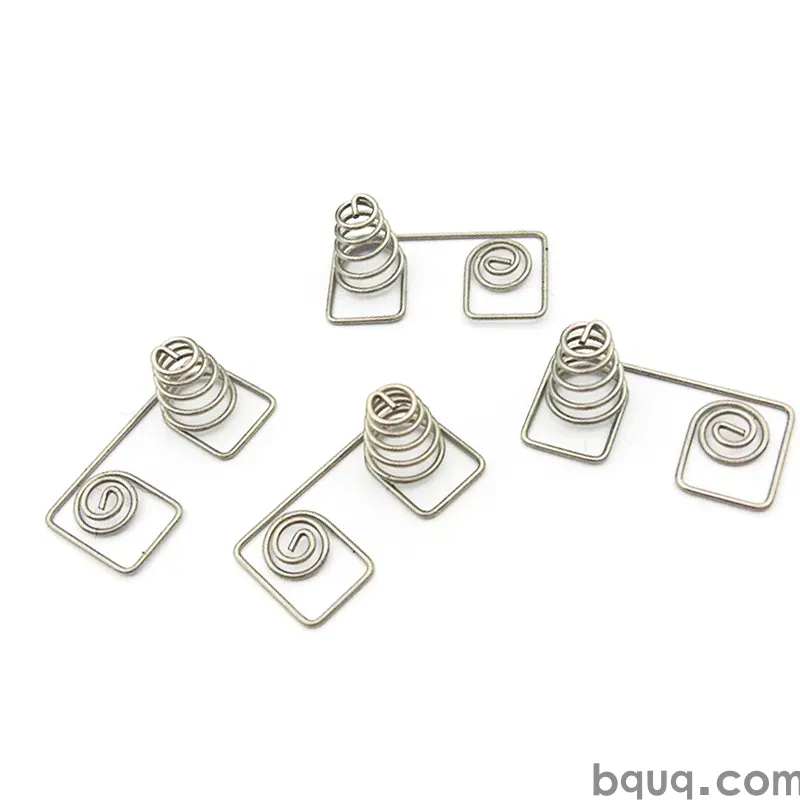
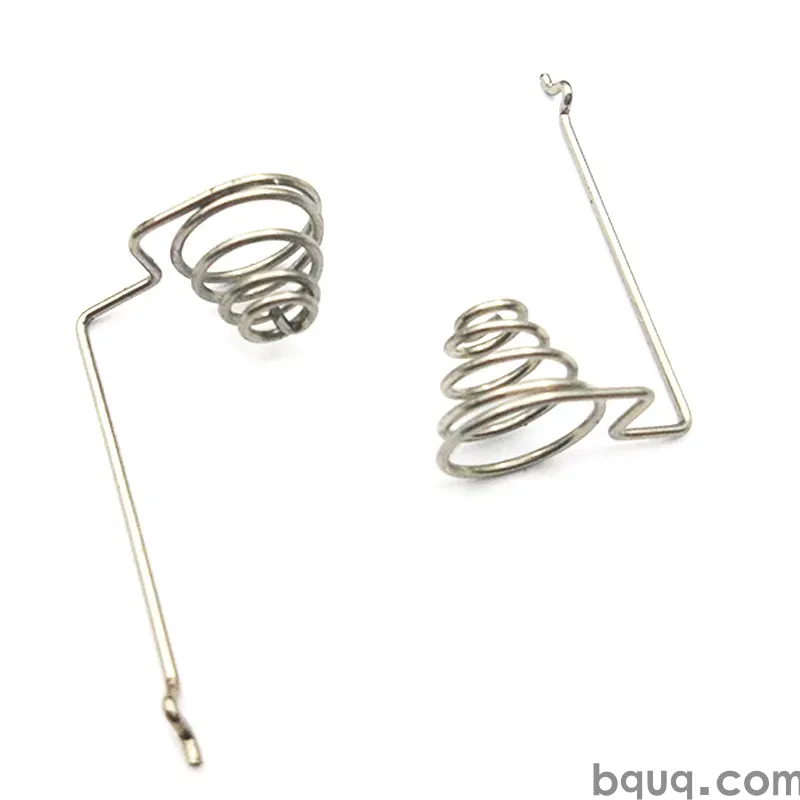
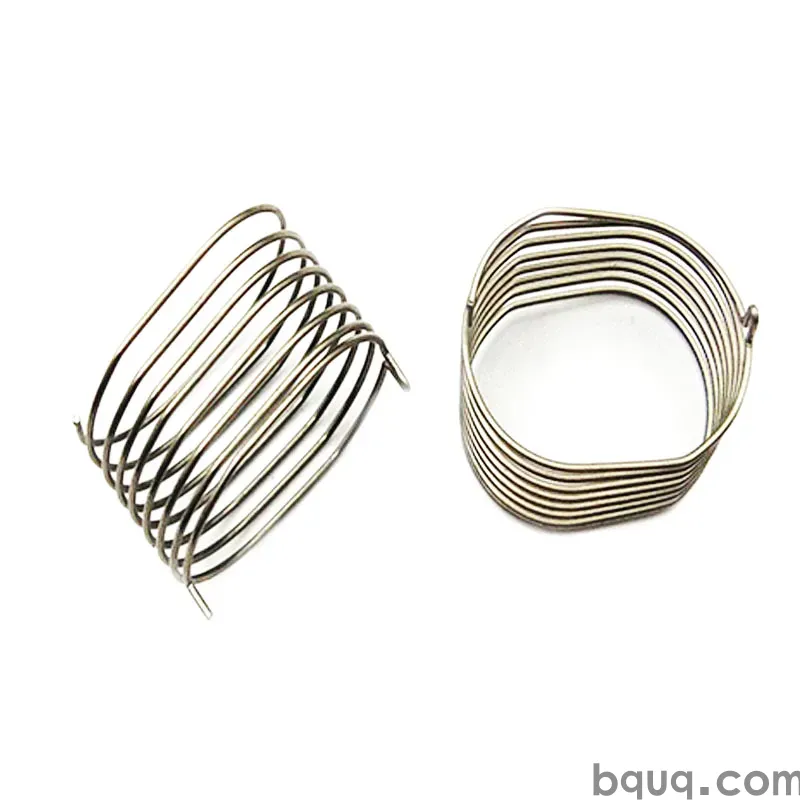
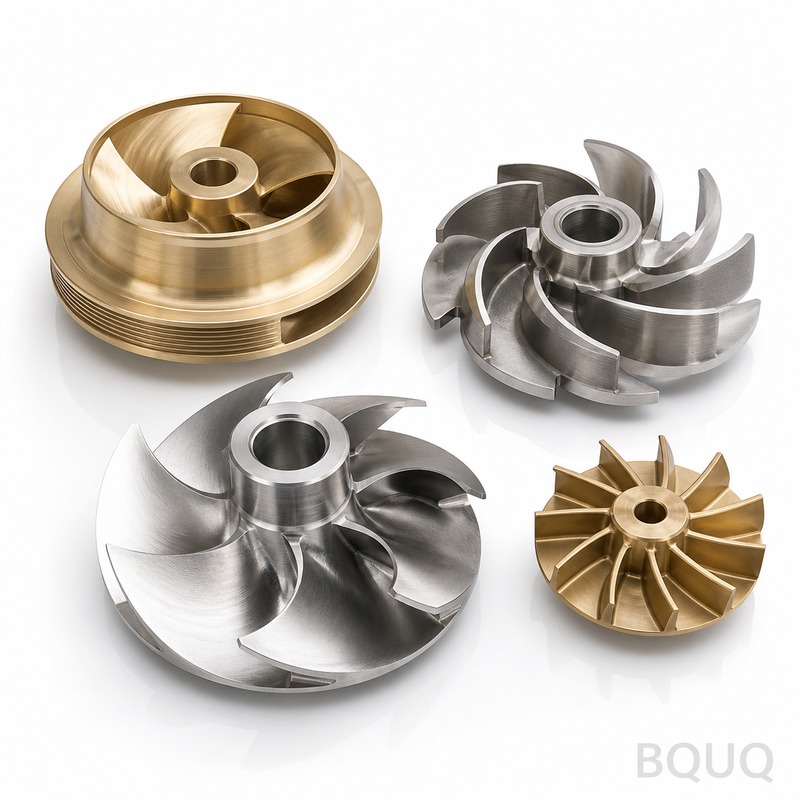
For parts that cross process boundaries — a machined housing that also needs a stamped bracket and a custom compression spring — consolidating with one source-direct factory removes an entire layer of coordination cost. BQUQ runs CNC machining, metal stamping, springs, and heat sinks under one ISO9001 roof in Dongguan, which means one PO, one inspection standard, and one freight consolidation.
How to run the comparison in practice
1. Define the part family, not the part. Group by material, tolerance band, and cycle time.
2. Get a real internal loaded rate. Ask finance for the machine-hour rate including depreciation, space, and maintenance. Do not accept the labor rate.
3. Get three external quotes with identical drawings, tolerances, finish, and inspection requirements. Mismatched RFQs produce meaningless comparisons.
4. Add landed cost. Freight, duty, brokerage, and supplier management. See our customs and duties guide for the line items buyers forget.
5. Price the risks. Assign a probability and cost to quality escape and late delivery for each option.
6. Re-run at 0.5×, 1×, and 2× your volume forecast. The decision is often volume-sensitive, and the crossover point tells you when to revisit.
7. Review annually. Supplier capability improves; your utilization changes. A decision made at 3,000 units/year is not valid at 30,000.
For a broader view of how to vet a partner before you commit volume, see our factory capability assessment framework.
Frequently Asked Questions
Q: At what annual volume does in-house machining become cheaper than outsourcing?
A: There is no universal number, but for a simple 3-axis part with a 4-minute cycle, the crossover typically sits between 15,000 and 25,000 stable units per year — assuming your machine runs above 50% utilization. Below that, the supplier's higher utilization and lower loaded rate dominate. Above it, your fixed costs spread thin enough to compete. Run the model with your own loaded rate before deciding.
Q: What is a realistic loaded machine-hour rate for in-house CNC?
A: For a mid-size vertical machining center in a high-cost country, a fully loaded rate of $90–160/hr is typical once you include depreciation, floor space, power, maintenance, consumable tooling, and the operator's fully loaded cost. That is usually 2.5–3.5× the bare labor rate. If your finance team quotes you the labor rate alone, the comparison will be wrong by a wide margin.
Q: How do I compare quotes when suppliers include different scope?
A: Normalize the RFQ first. Specify material grade, tolerance band, surface finish, inspection report level, packaging, Incoterm, and payment terms identically for every supplier. Then convert all quotes to a landed cost per good part, adding freight, duty, brokerage, and an allowance for supplier management. Quotes that differ in scope are not comparable, no matter how clean the spreadsheet looks.
Q: Does outsourcing machining always mean longer lead times?
A: Not necessarily. A domestic in-house queue can be slower than a supplier with dedicated capacity and a 12-hour quoting turnaround. The real variable is queue depth, not geography. Ask each supplier for their current queue time in working days, their on-time delivery rate for the last 12 months, and whether your order books dedicated machine time. Those three answers predict lead time better than distance does.
Q: What should I keep in-house even if I outsource production?
A: Keep prototyping, fixture making, and emergency repair capability. These are low-volume, high-iteration activities where a 3-day round trip destroys engineering velocity, and the marginal machine cost is genuinely small because the work is unpredictable. Outsource the stable, repeatable production volume where the supplier's utilization advantage is largest. Most mature buyers run exactly this hybrid split.
Related Resources
- About BQUQ and our four production lines in one Dongguan factory: /about/
- CNC machining services with ±0.005 mm capability: /cnc-machining/
- Metal stamping, springs, and heat sinks under one roof: /custom-metal-stamping/
- Industry trends affecting sourcing decisions: /industry-dynamics/
- Full technical article library: /bquq-blog/
- Common sourcing and engineering questions: /faq/
- Customer case studies: /case/
- Request a quote in 12 working hours: /contact/
Authored by the BQUQ Engineering Team. BQUQ (Dongguan) runs CNC machining (±0.005 mm), metal stamping, custom springs, and heat sink production in one ISO9001 factory. Source-direct from Dongguan, China — quote in 12 hours: sc@bquq.com | WhatsApp +86 13713157787 | www.bquq.com