Low-Volume Custom Parts From China: Is It Worth It
Short answer: Yes — for most engineered parts in the 50–5,000 piece range, low-volume sourcing from China is worth it, provided you pick a factory rather than a trading platform. A Dongguan source factory quoting in 12 working hours, holding ±0.005 mm on CNC work and running flexible MOQ, typically lands landed cost 25–45% below Western small-batch pricing even after freight, duty and inspection. The break-even is usually around 30–80 pieces for machined parts and 200–500 pieces for stamped or spring parts once tooling is amortized. Below those volumes, domestic job shops often win on speed; above them, China wins on unit price, repeatability and access to secondary processes in one building.
Why Low-Volume Sourcing From China Changed
Ten years ago, "China" meant a 10,000-piece minimum order, a 45-day tooling cycle and a trading company between you and the machine. That model still exists, but it is no longer the only one. Dongguan alone hosts thousands of small and mid-sized factories that run mixed-mode production: a 200-piece CNC batch in the morning, a 5,000-piece progressive-die stamping run in the afternoon, a spring coiling setup overnight.
Three structural changes made low volume viable:
- Machine flexibility. Modern 3-axis and 4-axis VMCs, Swiss-type lathes and CNC coilers change over in minutes. Setup cost per part falls fast once batch sizes reach a few dozen.
- Soft tooling and modular dies. Simple forming and blanking tools can be built in days rather than weeks, and inserts can be swapped for design revisions without scrapping the whole die.
- Direct factory access. Buyers now talk to engineers, not intermediaries. That removes a margin layer and, more importantly, removes the translation loss that ruins tight-tolerance work.
BQUQ is a good example of the pattern: four production lines — CNC machining, metal stamping, custom springs and heat sink production — under one ISO9001 roof in Dongguan, quoting in 12 working hours with flexible MOQ.
What Does Low Volume Actually Cost?
The honest answer is that unit price is the smallest part of the decision. What matters is landed cost per good part, which includes tooling amortization, freight, duty, inspection and the cost of a failed batch.
Landed Cost Comparison: 500 Precision Brackets
Figures below are typical/indicative for an aluminum 6061 bracket, 80 × 40 × 6 mm, ±0.05 mm on critical features, clear anodized.
| Cost element | Dongguan source factory | US/EU job shop | Notes |
|---|---|---|---|
| Unit price (500 pcs) | $4.20 | $11.80 | 3-axis CNC, batch of 500 |
| Tooling / fixturing | $180 | $450 | Soft jaws + simple fixture |
| Freight (air, 40 kg) | $310 | included | 5–7 days door-to-door |
| Duty + clearance | $95 | — | Depends on HS code |
| Third-party inspection | $220 | — | AQL sample, 1 lot |
| Total landed | $2,905 | $6,350 | |
| Per good part | $5.81 | $12.70 |
That is a 54% saving at 500 pieces. At 50 pieces the picture shifts, because tooling and freight do not scale down.
Where the Break-Even Sits
| Volume | Machined parts (CNC) | Stamped parts | Springs / wire forms |
|---|---|---|---|
| 1–20 pcs | Domestic usually wins | Domestic wins | Domestic wins |
| 20–80 pcs | Close call | Domestic usually wins | Domestic usually wins |
| 80–500 pcs | China typically wins | Close call | Close call |
| 500–5,000 pcs | China clearly wins | China typically wins | China typically wins |
| 5,000+ pcs | China wins on price and capacity | China wins decisively | China wins decisively |
The reason machined parts break even earlier is that CNC has almost no tooling. Stamping and spring coiling need a die or a set of coiling tools, so the amortization curve is steeper — but so is the long-run saving.
The Real Risks and How to Neutralize Them
Low-volume sourcing fails for predictable reasons. None of them are mysterious, and all of them are manageable.
Risk 1: The Factory Is Actually a Trader
A trader adds 8–15% and, worse, cannot answer a tolerance question. Fix it by asking for the machine list, the factory address, and a short video of your actual part being made. A real factory will send it. Read how to assess a China factory's capability before you send a PO.
Risk 2: Tolerance Drift Between Prototype and Batch
The first article measures perfectly; part 300 does not. This is a process-control problem, not a country problem. Fix it with a documented first-article inspection, in-process checks at defined intervals, and a control plan that names the critical dimensions.
Risk 3: Ambiguous Drawings
If your drawing says "±0.1 mm unless otherwise stated" but the mating feature needs ±0.02 mm, you will get parts that fit nothing. Mark critical-to-quality dimensions explicitly. BQUQ holds ±0.005 mm on CNC when the drawing calls for it — but only when the drawing calls for it.
Risk 4: No Quality Agreement
Verbal promises do not survive a batch rejection. Put AQL levels, measurement methods, sampling plans and rework responsibility in writing. A quality agreement costs an afternoon and prevents a month of argument.
Risk 5: Freight Economics
Air freight on a 3 kg box is fine. Air freight on a 300 kg pallet is not. For heavier low-volume orders, consolidate or accept sea freight and plan the lead time accordingly.
Which Processes Suit Low Volume Best?
Not every process tolerates small batches equally. Here is how the main four compare.
| Process | Practical low-volume floor | Tooling lead time | Typical tolerance | Best for |
|---|---|---|---|---|
| CNC machining | 1 pc | None | ±0.005 mm | Brackets, housings, shafts, prototypes |
| Metal stamping | 200–500 pcs | 5–15 days | ±0.02 mm | Contacts, terminals, clips, shields |
| Custom springs | 100–500 pcs | 3–10 days | ±0.05 mm on rate | Compression, extension, torsion springs |
| Heat sinks | 50–200 pcs | 3–10 days | ±0.1 mm | Extruded or bonded thermal parts |
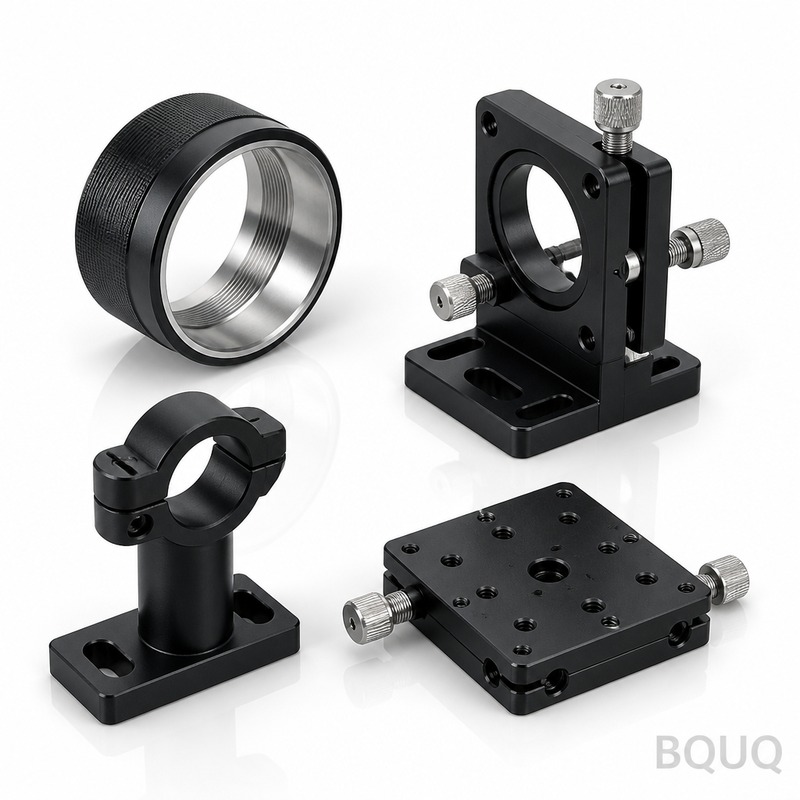
CNC machining is the natural entry point for low volume because there is no tooling to amortize — you can order one piece or one thousand from the same program. Explore CNC machining services if your part is a one-off or a bridge build.
Stamping becomes interesting once the design is stable. A custom metal stamping die is a fixed cost, so it rewards buyers who are confident the geometry will not change. If your design is still moving, machine it first.
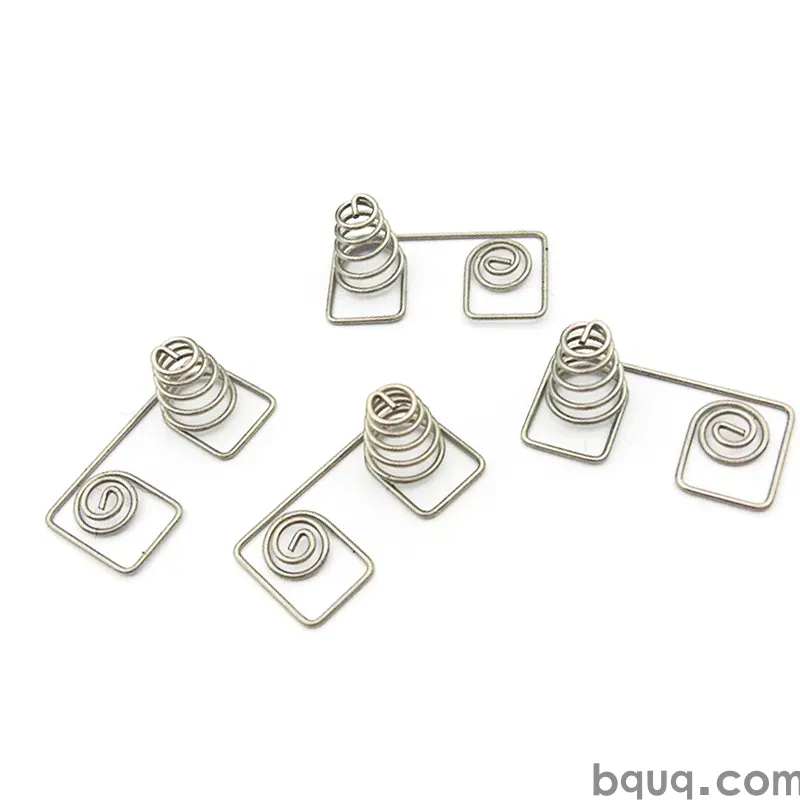
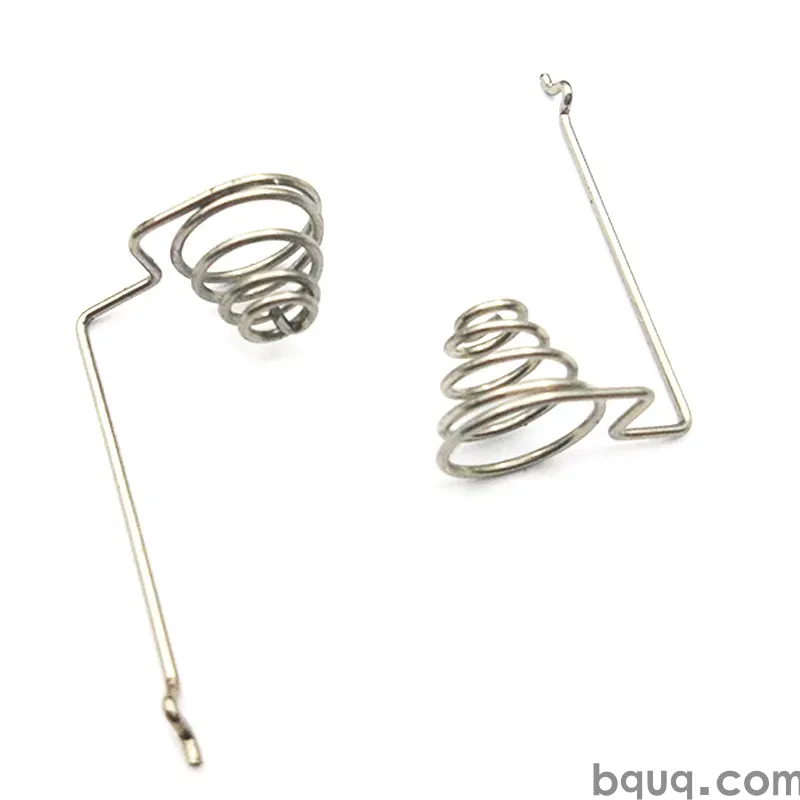
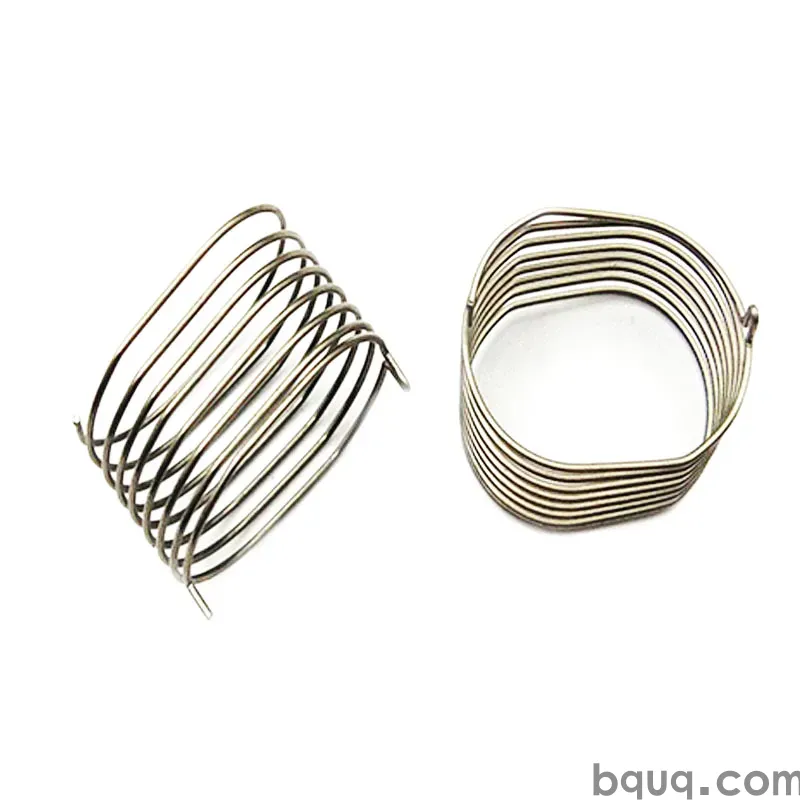
Springs sit in between. A compression spring with a defined wire diameter, free length and rate can be coiled in small batches economically, and design changes usually mean a new setup rather than a new tool.
How to Run a Low-Volume China Project Well
Step 1: Send a Complete RFQ Package
Include 2D drawings with tolerances and GD&T, a 3D STEP file, material specification, surface finish, annual and first-order quantities, and any inspection or documentation requirements. Incomplete packages are the number one cause of slow quotes.
Step 2: Ask for the Process Plan, Not Just a Price
A quote that says "$3.80 each" tells you nothing. A quote that says "3-axis VMC, two setups, soft jaws, clear anodize per MIL-A-8625 Type II, FAI report included" tells you the supplier understood the part.
Step 3: Approve a First Article Before the Batch
Never let a supplier run 500 pieces off an unapproved first article. Approve one, measure it, then release.
Step 4: Decide Your Inspection Strategy
For low volume, a full dimensional report on the first article plus AQL sampling on the batch is usually the right balance. For regulated or safety-critical parts, add third-party inspection — see third-party inspection in China for how to scope it.
Step 5: Plan the Bridge to Production
Low volume is rarely the destination. Design your part so the same geometry can move from CNC to stamping or from machining to die casting later, without a redesign. That single decision saves more money than any negotiation.
When Low-Volume China Is Not Worth It
Be honest about the exceptions:
- One or two pieces with a hard deadline. Domestic or in-house wins on turnaround.
- Parts over 50 kg. Freight destroys the saving.
- Materials with export controls or long lead times. Specialty alloys may need to be sourced by you and shipped in.
- Designs still in weekly flux. Every revision triggers a new setup or a die change. Stabilize first.
- Extremely tight tolerances below ±0.002 mm. Fewer suppliers, longer qualification, higher cost — evaluate case by case.
If your situation is one of these, in-house vs outsourcing is worth reading before you commit.
Frequently Asked Questions
Q: What is the minimum order quantity for custom parts from China?
A: It depends on the process. A source factory with flexible MOQ can machine a single piece, since CNC has no tooling to amortize. Stamping and spring coiling usually start around 200–500 pieces because a die or coiling setup must be paid for. Always ask for the MOQ at your specific process, material and tolerance — a generic website number is rarely the real one.
Q: How long does a low-volume order take from quote to delivery?
A: Typical/indicative timelines: quote in 12 working hours, first article in 5–10 days for CNC, 10–20 days for stamped or spring parts including tooling, then 5–7 days air freight. A realistic door-to-door window for a first low-volume order is three to five weeks. Repeat orders without tooling often ship in 7–12 days.
Q: Is low-volume sourcing from China cheaper than domestic suppliers?
A: Usually yes above roughly 80 pieces for machined parts and 500 pieces for stamped or spring parts, once tooling, freight, duty and inspection are included. Below those thresholds, domestic job shops often win because setup and shipping are absorbed differently. Run the landed-cost comparison on your own part rather than assuming.
Q: How do I protect quality on a small batch?
A: Approve a first article with a full dimensional report before the batch runs, define critical-to-quality dimensions on the drawing, agree an AQL sampling level in writing, and request material certificates. For safety-critical parts, add third-party inspection. Small batches are actually easier to control than large ones because every part can be traced.
Q: What should I put in the RFQ to get an accurate quote fast?
A: Send 2D drawings with tolerances and GD&T, a 3D STEP file, material grade, surface finish, quantities for first order and annual volume, and any documentation requirements such as FAI or material certs. A complete package is typically quoted within 12 working hours; an incomplete one can take days of back-and-forth.
Related Resources
- About BQUQ and our Dongguan factory: /about/
- CNC machining, metal stamping, springs and heat sinks: /cnc-machining/, /custom-metal-stamping/, /compression-springs/
- Industry trends shaping China sourcing: /industry-dynamics/
- Technical articles and engineering guides: /bquq-blog/
- Common sourcing questions: /faq/
- Project case studies: /case/
- Talk to an engineer: /contact/
Authored by the BQUQ Engineering Team. BQUQ (Dongguan) runs CNC machining (±0.005 mm), metal stamping, custom springs, and heat sink production in one ISO9001 factory. Source-direct from Dongguan, China — quote in 12 hours: sc@bquq.com | WhatsApp +86 13713157787 | www.bquq.com