Shipping From China: Express, Air, Sea and Rail Compared
Short answer: For most B2B orders, express couriers (DHL/FedEx/UPS) make sense below roughly 100 kg when you need parts in 3–7 days door to door. Air freight is the middle ground for 100 kg–1,000 kg at 5–12 days. Sea freight (FCL or LCL) is the cheapest per kilogram for anything above about 1–2 CBM, at 25–45 days port to port. China–Europe rail sits between air and sea at roughly 18–30 days with lower cost than air. Choose by total landed cost and deadline, not by freight rate alone — packing, duties and inland trucking often decide the winner.
Why the Shipping Decision Starts Before the Quote
Most buyers treat freight as an afterthought: finish the purchase order, then call a forwarder. That sequence costs money. Shipping mode determines carton dimensions, pallet configuration, whether parts travel in anti-static bags or on foam-lined trays, and whether you can consolidate several suppliers into one container. It also determines how much safety stock you must carry, which is a real inventory cost.
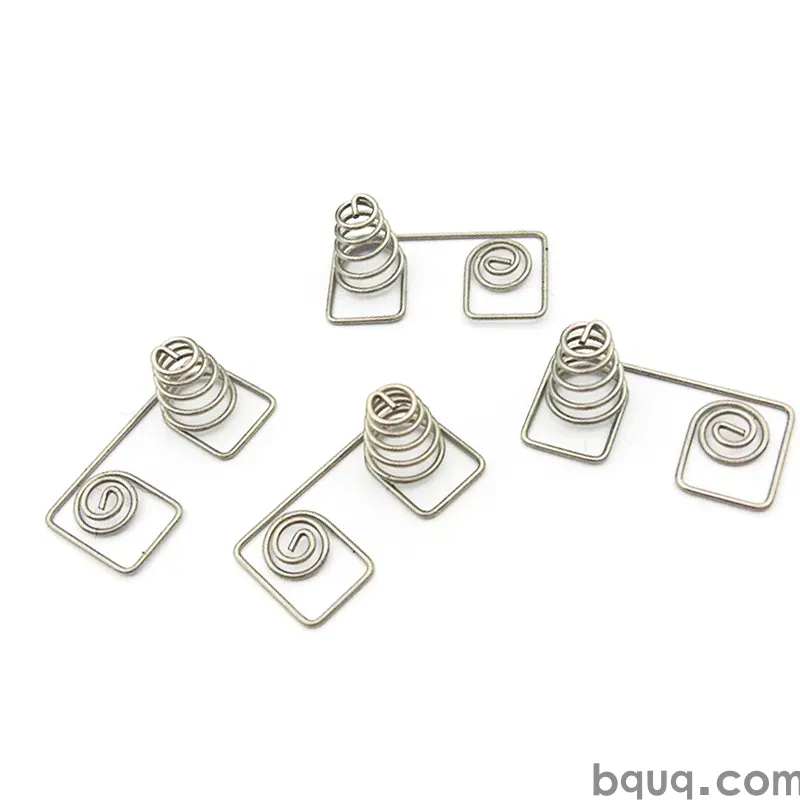
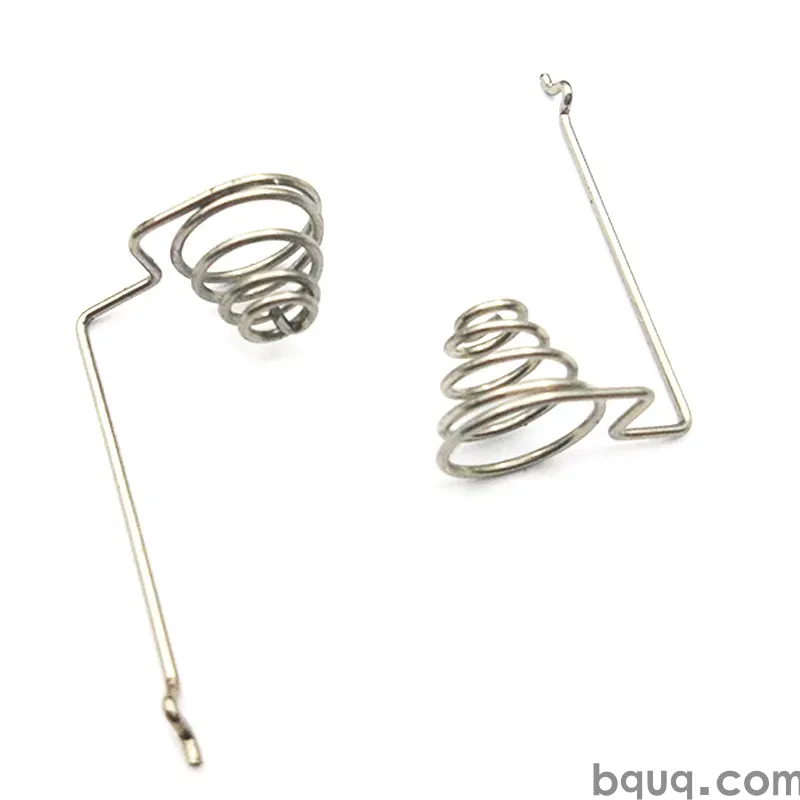
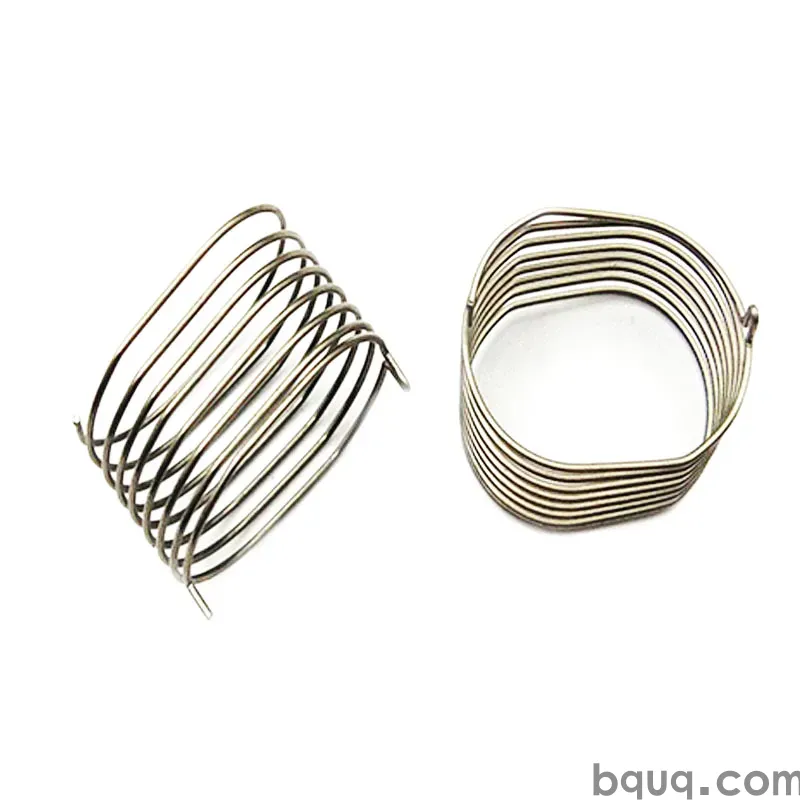
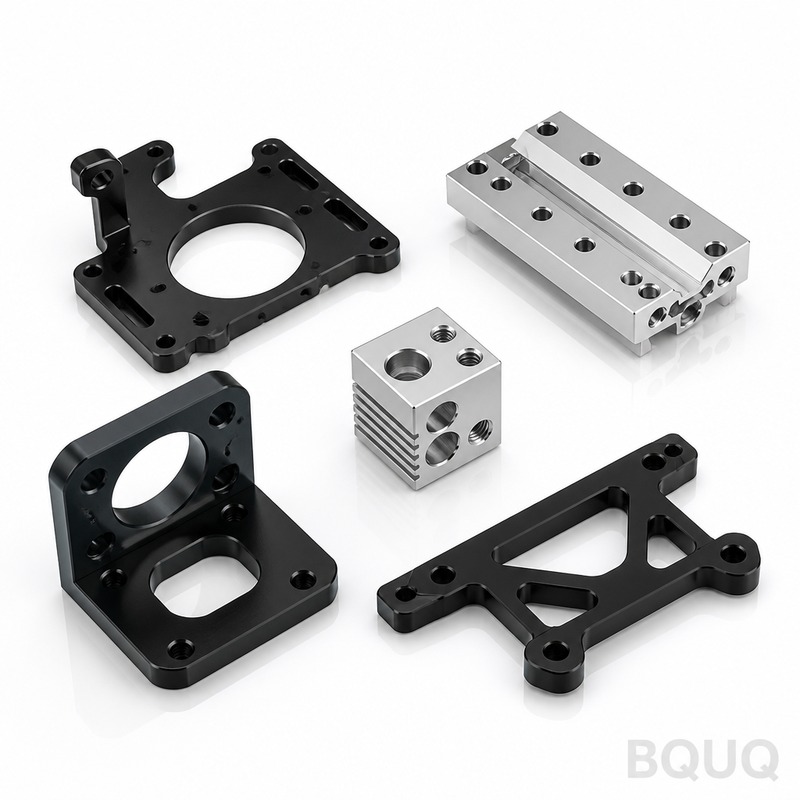
At BQUQ, a Dongguan factory running CNC machining, metal stamping, custom springs and heat sink production across four production lines, we see the same pattern repeatedly. Buyers who specify the shipping mode at the RFQ stage get better packaging, cleaner documentation and fewer surprises at destination. Buyers who decide late pay for expedited air on cargo that could have sailed two weeks earlier.
What Are the Four Main Shipping Modes From China?
Express courier (DHL, FedEx, UPS, SF)
Express is a door-to-door integrated service. The courier handles export clearance, linehaul, import clearance and final delivery under one tracking number. Typical transit is 3–7 working days to North America and Europe. Pricing is based on volumetric or actual weight, whichever is greater, and volumetric divisors (typically 5000 or 6000) punish light, bulky cartons.
Express suits: prototypes, first articles, samples, urgent replacement parts, small batches of high-value components such as precision springs or machined connectors.
Air freight
Air freight moves on commercial or freighter aircraft through a forwarder. You get airport-to-airport pricing plus separate pickup, export clearance, import clearance and delivery — or a door-to-door bundle. Typical transit is 5–12 days door to door depending on routing and customs.
Air freight suits: 100 kg to about 1,000 kg, or 0.5–3 CBM, when the deadline is tight but express rates are too high.
Sea freight (FCL and LCL)
Full container load (FCL) means you book the whole 20 ft or 40 ft container. Less than container load (LCL) means your cargo shares a container and is consolidated at origin and deconsolidated at destination. Typical transit is 25–45 days port to port, plus 3–10 days for inland moves and clearance.
Sea freight suits: heavy, dense or bulky cargo — stamped metal parts, heat sinks, brackets, wire forms — where per-kilogram cost dominates.
China–Europe rail
Rail runs via Kazakhstan, Russia or the Middle Corridor to Poland, Germany and other European hubs, then continues by truck. Typical transit is 18–30 days door to door. Rail is generally cheaper than air and faster than sea, but it is Europe-focused; it is not a practical option for North America.
How Do the Four Modes Compare Side by Side?
The table below gives indicative ranges. Actual rates swing with fuel, season, capacity and carrier surcharges, so treat every number as a planning figure, not a quote.
| Mode | Typical transit (door to door) | Best cargo size | Cost profile | Customs complexity |
|---|---|---|---|---|
| Express courier | 3–7 working days | Under ~100 kg | Highest per kg, simplest | Low — courier files |
| Air freight | 5–12 days | 100 kg–1,000 kg | High per kg, moderate minimums | Medium — forwarder files |
| Rail (China–Europe) | 18–30 days | 1–20 CBM | Mid — cheaper than air | Medium |
| Sea LCL | 30–45 days | 1–15 CBM | Low per CBM, high fees at low volume | Medium–high |
| Sea FCL | 25–40 days | 15+ CBM | Lowest per CBM | Medium–high |
The volumetric weight trap
Couriers and air freight bill on chargeable weight: the greater of actual weight and volumetric weight. A carton of custom springs is dense and bills on actual weight. A carton of stamped EMI shielding or heat sink fins is light and bulky and bills on volume. Always ask your supplier for carton dimensions before you compare quotes, or you will compare the wrong numbers.
| Cargo type | Example part | Billing basis | Practical implication |
|---|---|---|---|
| Dense, small | CNC shafts, collet chucks | Actual weight | Express and air are predictable |
| Light, bulky | Heat sinks, stamped brackets | Volumetric weight | Sea or rail usually wins |
| Mixed pallet | Springs plus housings | Greater of the two | Split shipments may be cheaper |
How Do You Calculate Total Landed Cost?
Freight rate is one line item. Total landed cost includes:
- Ex-works or FOB price of the goods
- Origin charges: pickup, export declaration, terminal handling
- Freight (the headline number everyone compares)
- Insurance, typically a small percentage of CIF value
- Import duties and taxes based on HS code and country of origin
- Destination charges: terminal handling, deconsolidation, customs brokerage
- Inland delivery to your warehouse
- Inventory carrying cost for the extra days the slower mode adds
That last item is the one buyers forget. If sea freight saves you a few hundred dollars but adds 25 days of pipeline inventory on a high-value part, the carrying cost and the risk of a stockout can erase the saving. For low-value, high-volume stamped parts, the opposite is true — sea freight wins decisively.
When Should You Choose Each Mode?
Choose express when
- The shipment is a prototype, first article or sample for approval
- You are validating a new supplier and want parts in hand this week
- The part is high value per kilogram, such as precision machined components
- A production line is down and you need a partial shipment immediately
Choose air freight when
- You have 100 kg to 1,000 kg and a hard deadline inside two weeks
- The cargo is dense enough that volumetric weight is not punitive
- You are bridging a gap before a larger sea shipment arrives
Choose sea freight when
- You are shipping full production quantities of stamped, drawn or machined parts
- Cargo exceeds roughly 2 CBM or 1,000 kg
- You can plan 6–8 weeks ahead and hold buffer stock
- You want the lowest carbon footprint per tonne-kilometre
Choose rail when
- Your destination is in Europe
- Air is too expensive and sea is too slow
- You have 1–20 CBM of cargo and a 3–4 week window
What Documents Do You Need for Each Mode?
Documentation is where first-time importers lose the most time. The core set is similar across modes, but the filing party differs.
- Commercial invoice — must match the purchase order and the packing list exactly
- Packing list — carton count, dimensions, weights, marks and numbers
- Bill of lading (sea) or air waybill (air/express) — the transport contract
- Certificate of origin — needed for preferential duty treatment under trade agreements
- HS code classification — determines duty rate; get this right before shipping
- Product-specific certificates — only if genuinely applicable to your part
For a deeper look at verifying what actually leaves the factory, see our guide to third-party inspection in China. Inspection before shipment is far cheaper than discovering a problem at destination, when return freight can exceed the value of the goods.
How Does Packaging Affect Freight Cost?
Packaging is a cost lever, not an administrative detail.
- Reduce void space. Oversized cartons bill on volume. Right-sized cartons cut chargeable weight immediately.
- Palletize consistently. Standard 1200 × 1000 mm or 1200 × 800 mm footprints load efficiently into containers and air pallets.
- Protect precision surfaces. Machined faces, spring ends and stamped contacts need separators, VCI paper or foam. Damage claims cost more than the packaging.
- Label every carton. Part number, quantity, PO number and carton N of M. This speeds receiving and reduces counting errors.
- Consider knock-down design. For bulky assemblies, shipping sub-components flat can cut volume dramatically.
If you are still negotiating commercial terms, our breakdown of supplier scorecard metrics covers how to weigh logistics capability alongside price and quality. And if your order volume is below the supplier's stated minimum, MOQ negotiation tactics explains how to structure a trial order that still ships economically.
Frequently Asked Questions
Q: Is express shipping from China always the most expensive option?
A: Per kilogram, yes — express is typically the highest-cost mode. But for shipments under about 100 kg, express often beats air freight on total landed cost because it bundles pickup, export clearance, import clearance and delivery into one rate with no minimum charges. Compare total door-to-door cost, not the headline per-kg rate.
Q: How long does sea freight from China to the US or Europe take?
A: Port-to-port transit is typically 25–45 days depending on the lane, with Asia–US West Coast generally faster than Asia–North Europe. Add 3–10 days for origin handling, customs clearance and inland delivery. Plan 6–8 weeks door to door for a realistic production and shipping cycle.
Q: Can I combine express and sea freight in one order?
A: Yes, and it is common practice. Ship a small express or air portion to start production or cover a gap, and send the balance by sea. Ask your supplier to split the packing list clearly and mark each carton with the shipment reference so receiving does not merge the two.
Q: What is the minimum cargo size for sea freight to make sense?
A: As a rule of thumb, LCL becomes competitive above roughly 1–2 CBM or 500 kg, once you account for destination deconsolidation fees. Below that, express or air usually wins on total landed cost. FCL typically beats LCL above about 15 CBM.
Q: Does rail freight from China work for North America?
A: No. China–Europe rail moves overland through Central Asia and Eastern Europe, so it serves European destinations. For North America, your realistic options are express, air freight or sea freight. Some buyers combine sea to a European hub with onward transatlantic service, but that rarely beats direct sea.
Practical Takeaways for Your Next Order
1. Decide the mode at RFQ stage, not after production. It shapes packaging, carton sizes and documentation.
2. Get carton dimensions and weights before comparing quotes. Volumetric weight changes everything for light, bulky parts.
3. Calculate total landed cost, including duties, destination charges, inland delivery and inventory carrying cost.
4. Match mode to part economics. Dense, high-value machined parts tolerate air; bulky, low-value stamped parts belong on the water.
5. Inspect before shipment. A pre-shipment inspection costs a fraction of return freight.
6. Keep a buffer. Even express lanes see customs delays; never plan to the last day.
BQUQ ships CNC machined parts, stamped components, custom springs and heat sinks from one ISO9001 factory in Dongguan, with ±0.005 mm machining tolerance and flexible MOQ. Tell us your destination and deadline at RFQ stage and we will quote in 12 working hours with packaging and shipping recommendations that fit your mode. Email sc@bquq.com or message WhatsApp +86 13713157787.
Related Resources
- About BQUQ and our four Dongguan production lines: /about/
- CNC machining services (±0.005 mm): /cnc-machining/
- Custom metal stamping services: /custom-metal-stamping/
- Compression spring manufacturing: /compression-springs/
- Industry trends and sourcing analysis: /industry-dynamics/
- Technical articles and engineering guides: /bquq-blog/
- Frequently asked questions: /faq/
- Case studies: /case/
- Contact the engineering team: /contact/
Authored by the BQUQ Engineering Team. BQUQ (Dongguan) runs CNC machining (±0.005 mm), metal stamping, custom springs, and heat sink production in one ISO9001 factory. Source-direct from Dongguan, China — quote in 12 hours: sc@bquq.com | WhatsApp +86 13713157787 | www.bquq.com