Negotiating MOQ With Chinese Factories
Short answer: MOQ is not a fixed number — it is a cost-recovery figure the factory calculated from setup time, tooling, material buy quantity, and scrap risk. You can usually move it 30–70% by attacking those four inputs instead of arguing about the number itself. On CNC work, setup is dominant, so a 50-piece MOQ often drops to 10–20 pieces for a modest unit-price premium. On stamping and springs, tooling dominates, so the MOQ is real — but you can split it across a first article plus a scheduled release. BQUQ quotes flexible MOQ from one Dongguan factory in 12 working hours.
Why do Chinese factories set MOQ at all?
Most buyers assume MOQ exists because factories want big orders. In practice, MOQ is a break-even calculation. A factory with four production lines and a fixed monthly overhead needs each machine-hour to cover its cost. When an order is too small, the setup time — programming, fixturing, first-article inspection, material handling — is spread across too few parts, and the job loses money even at a high unit price.
So when a supplier tells you "MOQ 5,000 pcs," they are really saying: "below 5,000 pieces, this job does not pay for the machine time it consumes." That distinction matters, because it tells you which levers to pull.
There are four cost inputs behind almost every MOQ:
1. Setup and programming time — dominant for CNC machining, wire forming, and any job with a custom fixture.
2. Tooling and die cost — dominant for metal stamping, deep drawing, and progressive-die work.
3. Material minimum buy — steel mills, coil suppliers, and extruders sell in standard increments, not in your part weight.
4. Scrap and yield risk — a new process on a new geometry has a learning curve; the factory prices that risk into the first run.
If you can reduce any of these four, the MOQ moves. If you only argue about the final number, it usually does not.
Which manufacturing process has the highest MOQ?
Not all processes behave the same way. The table below shows typical MOQ ranges and the dominant cost driver for each. Treat these as indicative, not absolute — they shift with material, tolerance, and geometry.
| Process | Typical MOQ range | Dominant MOQ driver | Negotiation headroom |
|---|---|---|---|
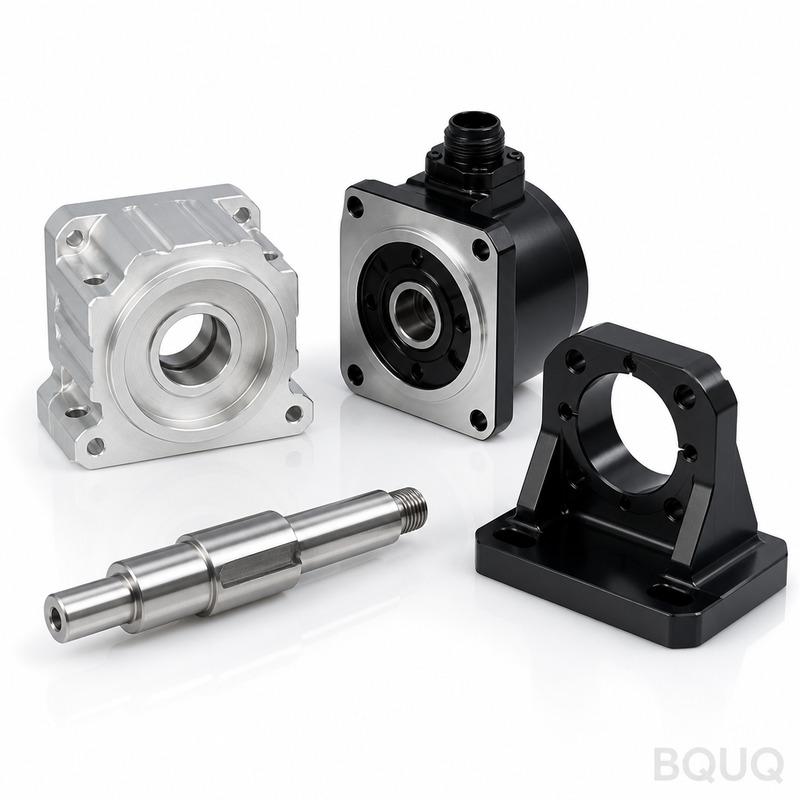
| CNC machining (turning/milling) | 1–100 pcs | Programming + fixturing | High — setup is time, not money |
| Metal stamping (new die) | 1,000–10,000 pcs | Die design, build, and tryout | Low on first run, high on release schedule |
| Metal stamping (existing die) | 100–1,000 pcs | Material buy increment + press setup | Moderate |
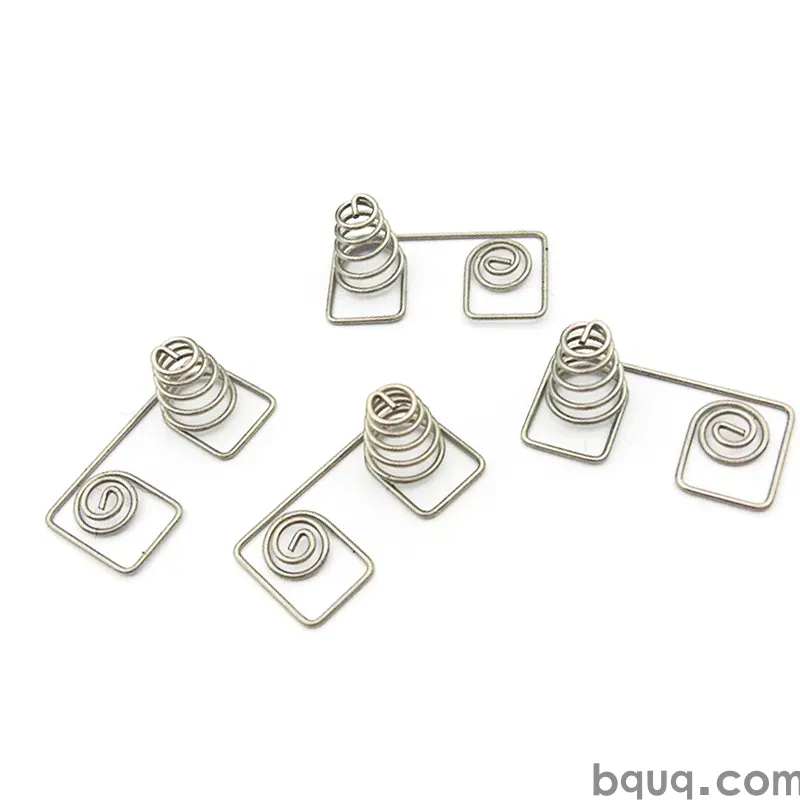
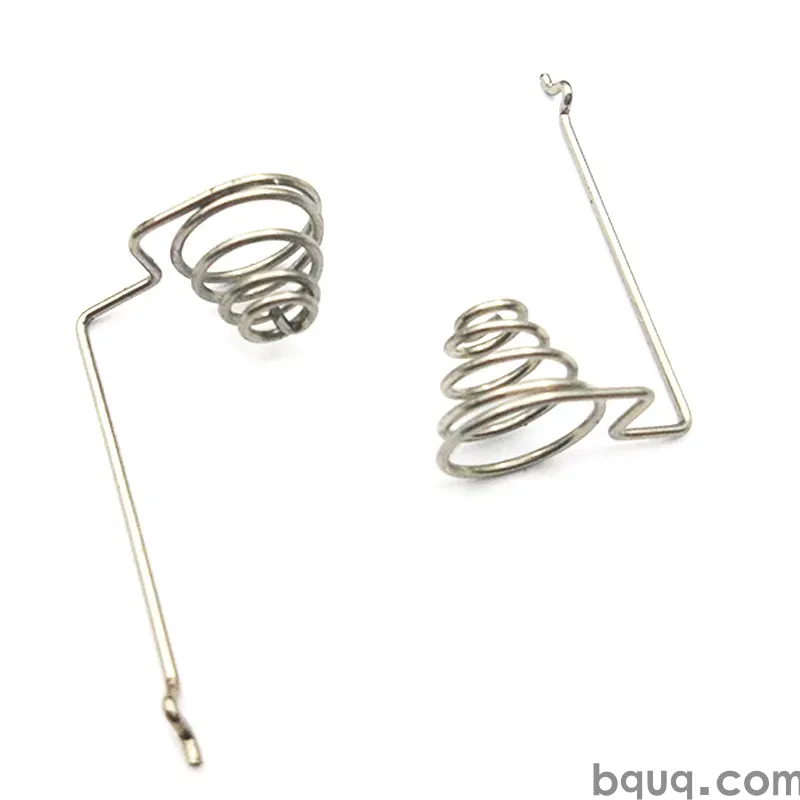
| Custom springs (compression/extension) | 500–5,000 pcs | Coiling setup + wire minimum buy | Moderate |
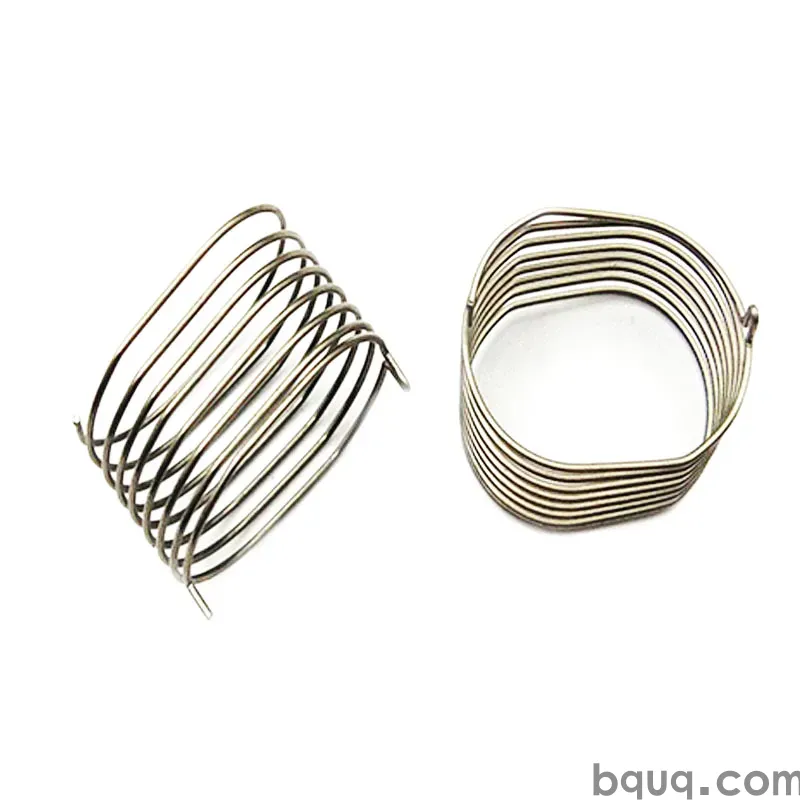
| Wire forms | 500–3,000 pcs | Fixture + bend programming | Moderate to high |
| Deep drawn parts | 2,000–20,000 pcs | Draw die stages + material | Low |
| Heat sinks (extruded) | 500–3,000 kg or pcs | Extrusion die + billet minimum | Low to moderate |
| Heat sinks (CNC/skived) | 10–500 pcs | Machine setup | High |
The pattern is clear: the more the MOQ is driven by time (setup), the more negotiable it is. The more it is driven by hard tooling and material minimums, the less negotiable it is — but the more creatively it can be structured.
This is the same trade-off that shows up when you compare CNC machining versus stamping supply chains. CNC wins on flexibility and low entry quantity; stamping wins on unit cost at volume. If your annual demand is genuinely small, forcing a stamping supplier to accept a 200-piece MOQ usually just means you are paying the die cost inside the unit price.
How do you actually lower a CNC machining MOQ?
CNC is where negotiation works best, because setup is a one-time labor cost rather than a permanent asset. Here is what moves the number.
Offer to pay the setup separately
Ask the supplier to quote setup as a separate line item. A factory that sees the NRE (non-recurring engineering) recovered up front will often accept a much smaller production quantity. You pay the same total, but you stop subsidizing setup through a bloated unit price on parts you do not need yet.
Simplify the geometry for the first run
Every extra setup — a second op, a custom soft jaw, a tight true-position callout — adds cost that gets amortized into MOQ. If you can design the first article as a single-op part and add features later, the MOQ drops. This is exactly the kind of feedback a DFM feedback loop should surface before you commit to a quantity.
Accept a standard material size
If your part fits a stock bar or plate size the factory already buys, you skip the material minimum-buy problem entirely. A 2 mm change in diameter can be the difference between "we buy this weekly" and "we special-order a mill run."
Combine families into one order
One purchase order covering three similar parts, machined from the same material on the same fixture, spreads setup across the whole batch. The MOQ applies to the order, not each line item.
Use a first-article plus release structure
Instead of demanding the full annual quantity up front, agree on a small first article for validation, then a scheduled release. The factory's real risk is idle capacity, not small batches — a committed release schedule removes that risk.
What about stamping, springs, and heat sinks?
For tooling-driven processes, the conversation changes. You are not negotiating setup labor; you are negotiating who owns and amortizes a physical asset.
| Negotiation lever | How it works | Best used when |
|---|---|---|
| Amortize tooling into unit price | Die cost spread across first N units | You are confident of volume |
| Pay tooling up front | You own the die; unit price drops | You may move suppliers later |
| Share a die with a similar part | Family tooling across two SKUs | Geometries are close |
| Use a soft die / laser first | Bridge production before hard tooling | Design still changing |
| Split the MOQ across releases | 3 shipments against one PO | Cash flow is the constraint |
| Accept a wider tolerance | Fewer die stages, cheaper tool | Function allows it |
Two of these deserve emphasis. First, tooling ownership is a separate negotiation from MOQ, and it determines your leverage for years. If you pay for the die, you own it, and the MOQ conversation resets every time you reorder. Second, a soft die or laser-cut bridge lets you validate the market before committing to a progressive die — you pay a higher unit price on 200 pieces instead of a five-figure tooling bill on a design that may change.
For springs specifically, the MOQ is usually driven by wire minimum buy plus coiling setup. If your spring uses a standard wire diameter the factory stocks, MOQ can drop sharply. Custom wire diameters and exotic alloys push it back up.
How should you structure the negotiation itself?
MOQ negotiation fails most often because buyers treat it as a price argument. It is a risk argument. The supplier is not refusing your order — they are refusing an unhedged risk.
A workable structure:
1. Ask what the MOQ is made of. Request a breakdown: setup, tooling, material, scrap allowance. A supplier who cannot break it down is guessing.
2. Offer to remove one risk. Prepay tooling, accept a longer lead time, commit to a release schedule, or accept a wider tolerance.
3. Propose a pilot quantity with a defined next step. "200 pieces now, 2,000 within 90 days if first article passes."
4. Get the reorder MOQ in writing. The first-order MOQ and the reorder MOQ are different numbers. Confirm both.
5. Confirm what happens if you under-forecast. Is there a penalty? A price step? A tooling balance due?
A supplier who will not discuss any of these is telling you something about how they handle change orders generally — which is worth knowing before you commit. The same signals show up in a supplier vetting checklist, and they are usually more predictive than the quoted price.
Where does MOQ flexibility actually come from?
Flexibility is a function of factory structure, not goodwill. A trading company can accept any MOQ because it consolidates your order into someone else's production run — but you lose visibility and control. A large factory with dedicated high-volume lines cannot easily break into a 50-piece run without disrupting a scheduled customer.
The sweet spot for low-MOQ sourcing is a source factory with multiple production lines and mixed order sizes. When CNC machining, metal stamping, spring coiling, and heat sink production sit in one facility, small orders can be slotted into natural gaps in the schedule rather than forced into a dedicated line. That is a structural advantage, not a discount.
It also changes the economics of the first order. A factory running four lines has more ways to absorb a small job without losing money on it — and more reason to keep a buyer who will scale. That is why supplier capacity structure matters more than the headline MOQ number when you are choosing a partner for a program that will grow.
What should you never do when negotiating MOQ?
A few common mistakes cost buyers far more than the MOQ itself.
- Never inflate your forecast to unlock a lower MOQ. Factories price against forecasts. If you promise 50,000 and buy 500, you will pay for it on the next quote — or lose the supplier.
- Never accept a unit price that hides setup without asking what it is. You cannot negotiate what you cannot see.
- Never let tooling ownership stay ambiguous. "The die stays with us" is a sentence that has ended many supplier relationships badly.
- Never trade tolerance for MOQ without checking function. A wider tolerance that passes your test bench is free money; one that fails field returns is not.
- Never assume the first MOQ is the reorder MOQ. Ask explicitly.
Frequently Asked Questions
Q: What is a realistic MOQ for custom CNC parts from a Chinese factory?
A: For simple turned or milled parts in standard material, 10–50 pieces is realistic, and single prototypes are common. For parts with multiple setups, tight tolerances, or custom fixtures, expect 50–200 pieces. The number tracks setup complexity far more than part size. BQUQ quotes flexible MOQ from one Dongguan factory, so a first article plus small production run is a normal request rather than an exception.
Q: Can I negotiate MOQ down after the first order?
A: Yes, and you should plan for it. The first-order MOQ covers setup and validation risk; the reorder MOQ should be lower because the fixture, program, and inspection plan already exist. Confirm both numbers in writing before you place the first PO. Suppliers who quote a single MOQ for all orders are usually padding the first run.
Q: Is a low MOQ always more expensive per unit?
A: Almost always, yes — but not by as much as buyers fear. On CNC work, a 20-piece run might carry a 20–40% unit premium over a 500-piece run, because setup is amortized across fewer parts. On stamping, the gap is much larger because tooling dominates. The right question is whether the premium is cheaper than carrying inventory you cannot sell.
Q: How does tooling ownership affect MOQ negotiation?
A: It changes who carries risk. If you pay for the die up front, you own it, and the supplier's MOQ concern shrinks to press time and material buy — often a 5–10x reduction. If the supplier amortizes tooling into unit price, they need volume to recover it, so the MOQ stays high. Paying for tooling is usually the stronger long-term position.
Q: What information should I send to get an accurate MOQ quote?
A: Send 2D drawings with tolerances, 3D models, material and finish specification, annual and first-order quantities, and any inspection or documentation requirements. Quantities matter most — a supplier quoting without them is guessing. BQUQ returns a quote with MOQ, unit price breaks, and lead time within 12 working hours.
Related Resources
- About BQUQ and our four production lines in Dongguan: /about/
- CNC machining services with ±0.005 mm capability: /cnc-machining/
- Custom metal stamping and progressive die work: /custom-metal-stamping/
- Compression spring manufacturing and wire minimums: /compression-springs/
- Industry trends affecting sourcing and lead times: /industry-dynamics/
- Technical articles and engineering guides: /bquq-blog/
- Frequently asked sourcing questions: /faq/
- Contact our engineering team: /contact/
Authored by the BQUQ Engineering Team. BQUQ (Dongguan) runs CNC machining (±0.005 mm), metal stamping, custom springs, and heat sink production in one ISO9001 factory. Source-direct from Dongguan, China — quote in 12 hours: sc@bquq.com | WhatsApp +86 13713157787 | www.bquq.com