Prototype to Production: Managing the Transition
Short answer: Plan the transition as a process change, not a purchase order. Prototypes are usually made by CNC machining because no tooling exists; production parts are often stamped, molded, or wound on dedicated equipment. The gap between those two worlds is where cost, tolerance, and lead-time surprises live. Before you commit, freeze the drawing, run a DFM review, confirm which dimensions are functional versus cosmetic, and order a pilot lot that uses the real production process. At BQUQ in Dongguan, quotes come back within 12 working hours, CNC holds ±0.005 mm, and MOQ stays flexible — so you can validate a pilot batch before tooling spend.
Why does the prototype-to-production transition go wrong?
Most transitions fail for reasons that have nothing to do with machining skill. They fail because the prototype was never a manufacturing document.
A prototype is a learning tool. It answers questions like "does this fit?", "does the thermal path work?", "will the customer accept this form factor?" It is usually produced by CNC machining from billet, with generous tolerances, hand deburring, and a finish chosen for appearance rather than durability. It may be a 3D-printed shell with machined inserts. It may be assembled by an engineer with a torque driver and good intentions.
Production is a different discipline. It assumes a fixed process, a fixed fixture, a fixed inspection plan, and a fixed cost per unit. When you hand a prototype drawing to a production supplier, three things typically break:
1. Tolerance stack-up. The prototype had ±0.1 mm on everything because it was CNC-machined in one setup. The production process — say progressive die stamping — distributes tolerance differently across bends, pilots, and trim stations.
2. Feature geometry. A 0.5 mm internal radius that a 3 mm end mill produced easily may be impossible in a stamping die without a secondary operation.
3. Volume economics. The prototype cost per piece is irrelevant at 500 units. At 50,000 units, tooling amortization, material yield, and cycle time dominate.
The fix is not to demand tighter prototype tolerances. It is to define the production process early and design backwards from it.
What should be frozen before you scale?
Freeze four things before you release a production PO: the drawing, the material, the finish, and the inspection method.
| Item | Prototype stage | Production stage | Risk if not frozen |
|---|---|---|---|
| Drawing revision | Often "Rev A, working" | Locked, ECO-controlled | Silent dimensional drift |
| Material spec | "6061 or similar" | Alloy, temper, mill cert | Strength or corrosion failure |
| Surface finish | Cosmetically acceptable | Ra value or coating spec | Rework, adhesion failure |
| Inspection | Visual + calipers | CMM / gauge plan with AQL | Escapes at volume |
A drawing that says "aluminum" is not a specification. A drawing that says "6061-T6 per ASTM B209, mill certificate required" is. The difference shows up the first time you have two suppliers quoting the same part at 30% apart — one of them is quoting a different material.
Freezing does not mean the drawing can never change. It means changes go through a documented path with a revision number, a date, and a note on which parts are affected. Suppliers who receive "the latest drawing" by email with no revision control will eventually build the wrong version. This is one of the most common causes of a failed first production run, and it is entirely preventable.
How do you choose the production process?
Choose the process that matches your annual volume and tolerance requirement — not the process your prototype supplier happens to own.
| Process | Typical economic volume | Typical tolerance | Tooling lead time |
|---|---|---|---|
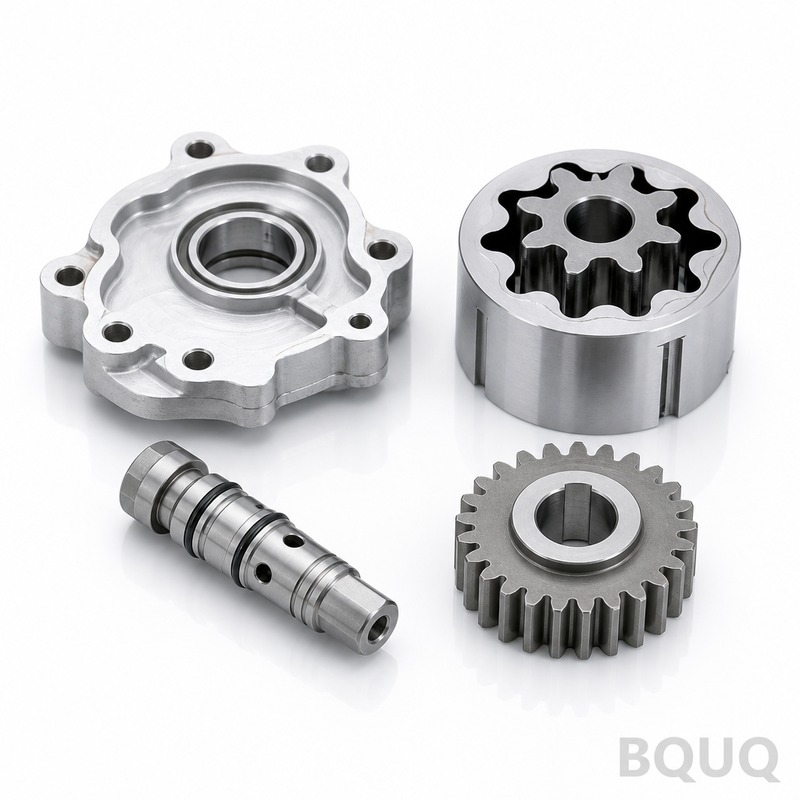
| CNC machining | 1 – 5,000 pcs | ±0.005 mm achievable | None to days |
| Metal stamping | 5,000 – 1,000,000+ pcs | ±0.05 mm typical | 2 – 5 weeks |
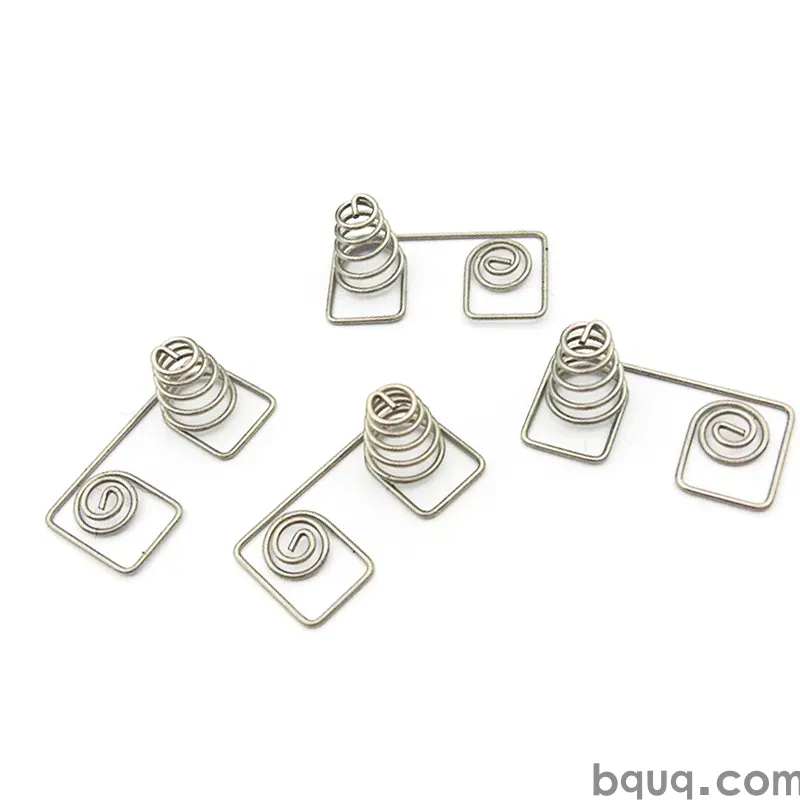
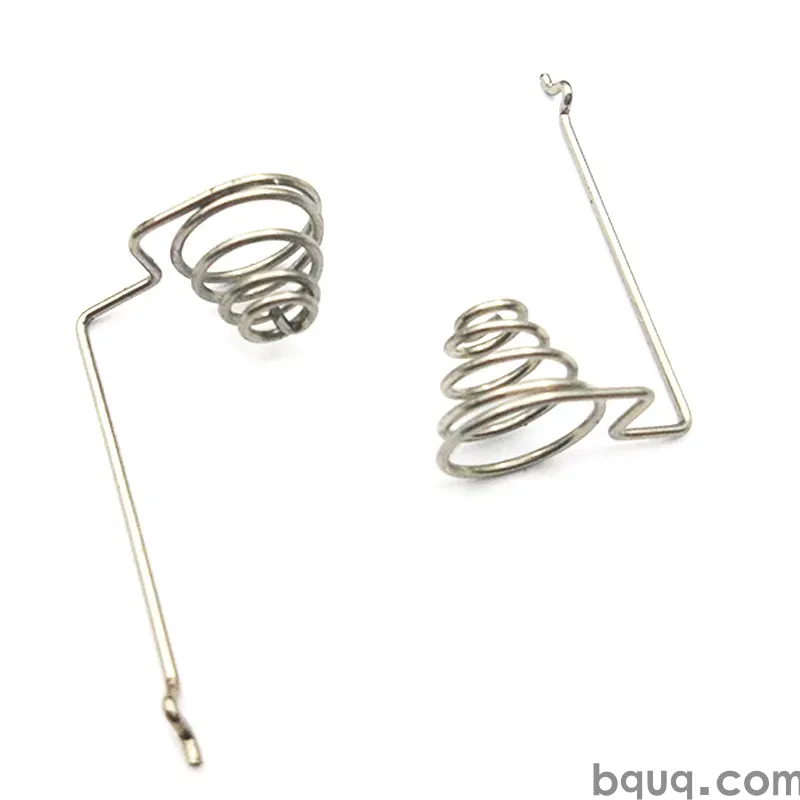
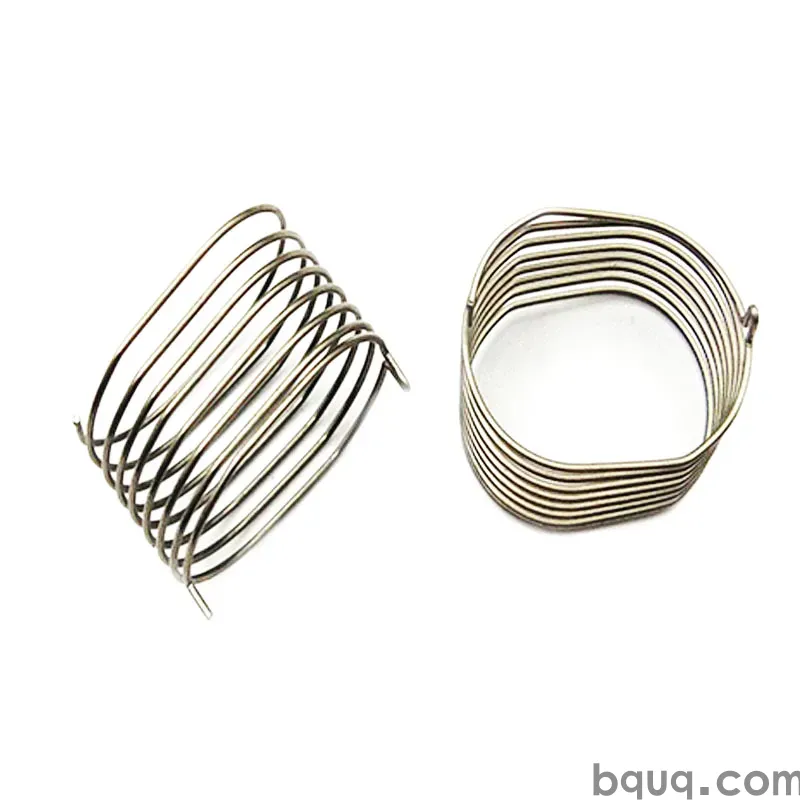
| Spring coiling / wire forming | 1,000 – millions | ±0.1 mm typical | Days to weeks |
| Deep drawn / fine blanked | 10,000+ pcs | Process dependent | Weeks |
These ranges are indicative, not rules. A complex bracket with 14 bends may never be economical to stamp at 3,000 pieces. A simple flat washer may be worth stamping at 2,000 pieces if the die is simple. The crossover point depends on part complexity, material cost, and how much secondary machining the stamped part would still need.
The practical approach is to ask your supplier for two quotes at the same time: one for the CNC route and one for the tooled route, both at your target annual volume. The comparison usually makes the decision obvious.
If you are still deciding whether to run a pilot batch before committing, the reasoning in China pilot production: why a small batch beats a big bet is worth reading before you sign a tooling PO.
Where does DFM feedback actually save money?
DFM feedback saves money when it arrives before tooling is cut — not after the first samples fail.
A useful DFM review answers specific questions:
- Can this bend radius be formed without cracking in this material and temper?
- Is this hole diameter compatible with a standard punch, or does it need a custom tool?
- Does this tolerance require a secondary operation, and can it be relaxed without affecting function?
- Will this feature be measurable in production, or only on a CMM in a lab?
- Does the part nest efficiently on the strip, or is material yield poor?
At BQUQ, DFM notes come back with the quote, which is issued within 12 working hours. That timing matters because DFM value decays fast. A note that arrives after the die is designed is a change order. A note that arrives before the die is designed is free.
The deeper version of this loop — how feedback should flow between your engineering team and the factory across multiple revisions — is covered in Building a DFM feedback loop that actually shortens schedules.
A worked example
A customer needed a stamped EMI shield. The prototype was CNC-machined from 0.5 mm brass with a 0.3 mm internal corner radius. The production drawing carried the same radius.
Two problems surfaced in DFM review. First, a 0.3 mm internal radius in a stamping die requires either a very small punch corner that wears quickly, or an EDM-cut insert that adds cost. Second, the radius was not functional — it existed only because the prototype's end mill left it there.
Relaxing the internal radius to 0.5 mm removed the need for a custom insert, improved die life, and reduced the piece price. Nothing about the part's function changed. That is what a good DFM review looks like: it removes cost that was never adding value.
How do you run a pilot lot that actually de-risks production?
Run the pilot on the production process, with production tooling or production-equivalent tooling, and inspect it against the production inspection plan.
A pilot lot that is CNC-machined "to check the design" does not validate a stamping process. It validates the design, which you already did. The pilot exists to validate the process: the die, the fixture, the cycle time, the operator instructions, the gauge, and the packaging.
A pilot lot should produce:
- First article inspection reports on the actual production tooling
- Capability data (Cpk) on the functional dimensions, not just pass/fail
- Confirmed cycle time and piece cost at rate
- Confirmed scrap rate and material yield
- Packing that survives your inbound logistics
Typical pilot sizes run from a few hundred to a few thousand pieces, depending on part value and how much capability data you need. High-value assemblies justify larger pilots. Simple stamped contacts may only need a few hundred pieces plus a thorough first article.
The pilot is also where you find out whether your supplier's quality system is real. Ask to see the inspection records, not just the parts. A supplier who cannot produce a first article report on demand will not produce one when a customer complaint arrives.
What does the cost curve look like across the transition?
Unit cost does not fall in a straight line. It falls in steps, and each step has a trigger.
| Stage | Cost driver | What changes it |
|---|---|---|
| Prototype (1–50 pcs) | Machine time, setup, programming | Design freeze |
| Bridge (50–2,000 pcs) | Setup amortization, material | Volume commitment |
| Tooled production (5,000+) | Tooling amortization, cycle time | Die design, material yield |
| Mature production | Yield, scrap, logistics | Process improvement, volume |
Two mistakes are common here. The first is comparing a prototype unit price to a production unit price and concluding the supplier is overcharging — they are quoting different processes. The second is committing to tooling before the design is stable, then paying for die modifications on every revision.
If your volumes sit between the prototype and tooled stages and neither quote looks attractive, the trade-off between unit price and quality risk is worth working through explicitly — see Balancing quality and cost in supplier selection.
How do you keep quality stable once volume ramps?
Control the process, not the parts. Inspection catches defects; process control prevents them.
At volume, you need three things in place:
1. A control plan. Which dimensions are checked, how often, with what gauge, and what happens when a reading drifts.
2. Gauge R&R. If two operators measure the same part and get different numbers, your inspection data is noise.
3. A change notification agreement. Any change to material, tooling, sub-supplier, or process requires your written approval before parts ship.
That third item is the one buyers most often forget. A supplier who switches to a cheaper material source without telling you has changed your product. A supplier who re-cuts a die without telling you has changed your product. A one-page change notification clause in the PO prevents most of this.
Frequently Asked Questions
Q: How long does the prototype-to-production transition usually take?
A: It depends almost entirely on tooling. A CNC-only transition can move from prototype to production in days, since no tooling is required. A stamped part typically needs two to five weeks for die design and build, plus pilot validation. Spring and wire-form tooling usually sits in between. Add time for first article approval and any design revisions. The single biggest schedule saver is freezing the drawing before tooling starts.
Q: Can I skip the pilot lot and go straight to mass production?
A: You can, but you absorb the risk. A pilot lot on production tooling is the cheapest way to discover that a bend cracks, a gauge is unreadable, or a cycle time is 40% above quote. Skipping it means those discoveries happen at full volume, when the cost of stopping the line is far higher than the cost of a few hundred validation parts.
Q: What tolerance should I put on a production drawing?
A: Put the tolerance the function requires, not the tightest tolerance the process can theoretically hold. Over-tight tolerances force secondary operations and inflate cost without improving performance. Where a dimension is cosmetic, say so. Where it is functional, specify it precisely and mark it as a key characteristic so it gets inspected at the right frequency.
Q: Does BQUQ handle both prototype and production volumes?
A: Yes. BQUQ runs CNC machining to ±0.005 mm, metal stamping, custom spring winding, and heat sink production across four production lines in one Dongguan factory. That means a part can be prototyped by CNC and then moved to stamping or coiling without changing suppliers. MOQ is flexible, and quotes are issued within 12 working hours.
Q: How do I compare quotes from a prototype shop and a production factory?
A: Compare them at the same volume and the same process. A prototype shop quoting 100 pieces and a factory quoting 100,000 pieces are answering different questions. Ask both for a quote at your target annual volume, plus tooling cost broken out separately. Then compare total landed cost over 12 months, including tooling, unit price, freight, and expected scrap.
Related Resources
- About BQUQ and our Dongguan factory: /about/
- CNC machining services: /cnc-machining/
- Custom metal stamping services: /custom-metal-stamping/
- Compression spring manufacturing: /compression-springs/
- Industry trends and sourcing intelligence: /industry-dynamics/
- Technical articles and engineering guides: /bquq-blog/
- Frequently asked questions: /faq/
- Case studies: /case/
- Contact the engineering team: /contact/
Authored by the BQUQ Engineering Team. BQUQ (Dongguan) runs CNC machining (±0.005 mm), metal stamping, custom springs, and heat sink production in one ISO9001 factory. Source-direct from Dongguan, China — quote in 12 hours: sc@bquq.com | WhatsApp +86 13713157787 | www.bquq.com