The DFM Feedback Loop: Turning Quotes Into Design Input
Short answer: A quote should return more than a price — it should return design input. The DFM feedback loop treats every RFQ as an engineering review: the supplier reads your drawing, flags tolerance stack-ups, wall thickness, bend radii, and material choices that inflate cost, then sends a marked-up proposal with 3–8 concrete change options. Run two or three loops before tooling, and you typically remove 10–30% of unit cost and one to two weeks of lead time. At BQUQ, DFM notes ship with the quote inside 12 working hours, so the loop starts the same day you send files.
Most buyers treat a quotation as the end of a conversation. You send a drawing, you get a number, you negotiate the number, you place the order. That sequence quietly locks in every design decision made weeks earlier — including the expensive ones. The DFM feedback loop inverts it. The quote becomes the first engineering review, and the drawing becomes a draft.
This article explains how to build that loop with a China-based manufacturing partner, what a useful DFM response actually contains, and how to keep the iteration from turning into an endless email chain.
Why a Quote Is a Poor Place to Hide Design Problems
A price is a compressed summary of dozens of process decisions: which machine, which material form, how many setups, what fixture, what inspection method, what scrap rate. When a supplier quotes without comment, those decisions are invisible to you. You see one number and assume it is the market price.
It usually is — for that design. The design itself is the variable nobody questioned.
Consider a simple bracket. Quoted as drawn, it might need a 5-axis setup because of one angled boss. Rotate that boss 15 degrees so it can be reached in a 3-axis setup, and the cycle time can drop by a third. The part functions identically. The drawing never said the angle was load-bearing — it was just how the CAD model happened to be sketched.
This is the core argument for the DFM loop: the cheapest manufacturing improvement is almost always a drawing change, not a supplier change. A supplier who only competes on price is competing on a fixed design. A supplier who returns engineering notes is competing on the design too.
What a Real DFM Response Contains
Not every "DFM comment" is useful. Vague advice like "consider simplifying" wastes a loop. A structured response should be specific enough to act on without a phone call.
| DFM Element | What It Looks Like | Buyer Action |
|---|---|---|
| Tolerance review | Flags dimensions tighter than the process needs, e.g. ±0.01 mm on a non-mating face | Loosen to ±0.05 mm unless functional |
| Feature critique | Notes deep pockets, thin walls, sharp internal corners, undercuts | Redesign or accept cost premium |
| Material substitution | Suggests 6061-T6 instead of 7075, or SPCC instead of stainless | Confirm corrosion/strength requirements |
| Process routing | States whether the part suits CNC, stamping, or a hybrid | Compare against volume forecast |
| Tooling impact | Identifies features that require extra dies, fixtures, or electrodes | Decide whether volume justifies it |
| Cost drivers ranked | Lists the top 3 cost contributors with rough percentages | Attack the biggest one first |
| Lead-time levers | Shows which change shortens the critical path | Trade cost against schedule |
The last two rows are what separate a quote from a consultation. If a supplier cannot tell you which feature costs the most, they are guessing at their own process.
The Marked-Up Drawing
The most efficient format is a PDF of your drawing with numbered callouts and a short table keyed to those numbers. No prose essays. A buyer should be able to hand it to a designer and get a decision in twenty minutes.
At BQUQ, DFM notes are attached to the quotation by default for CNC machining, metal stamping, and spring projects — not as a paid extra. The engineering team reviews the model, not just the PDF, because 2D drawings routinely omit radii and draft that exist in the 3D file.
How the Loop Works in Practice
The loop has four stages. Skipping any one of them is where projects stall.
Stage 1: Send Complete Input
The loop cannot start on partial data. Minimum viable input:
- 3D model (STEP or native) plus 2D drawing with tolerances and finish callouts
- Material and surface treatment specification
- Annual volume and expected batch sizes
- Functional critical-to-quality dimensions — the ones that actually matter
- Target unit price and target delivery date, if you have them
Telling a supplier your target price is not a weakness. It tells them which levers to pull. A supplier who knows you need $4.00 per part will propose a stamping route; one who assumes cost is irrelevant will propose CNC and quote $14.00.
Stage 2: Receive Quote Plus DFM Notes
This should arrive together. A quote without DFM notes means the supplier either did not review the design or does not want to start a conversation. Both are warning signs.
Typical turnaround for a straightforward machined or stamped part is 12 working hours at BQUQ. Complex assemblies or multi-die stamping programs take longer, but the first-pass feedback still comes fast because it is based on the model, not on a finished cost breakdown.
Stage 3: Decide, Don't Debate
This is the stage most teams botch. The DFM notes arrive, someone forwards them to three people, and nothing happens for a week.
Instead, triage each comment into one of three buckets:
| Bucket | Meaning | Response |
|---|---|---|
| Accept | Change is free and harmless | Update drawing, re-quote |
| Trade | Change saves cost but affects function or appearance | Engineering decision required |
| Reject | Change breaks a requirement | Tell the supplier why — it informs their next suggestion |
The "reject" bucket matters more than people think. A supplier who understands why a tight tolerance exists will stop proposing to loosen it and start proposing how to hold it more cheaply.
Stage 4: Re-Quote and Freeze
After one or two loops, freeze the design and lock the price with a validity window. Two loops is usually the sweet spot. Three is fine. Five means the requirements were never clearly stated in the first place.
Where the Savings Actually Come From
Savings from DFM are not evenly distributed. In our experience across machined and stamped parts, the gains cluster in a few predictable places.
Tolerance Relaxation
Tolerance is the single largest cost multiplier in precision manufacturing. Moving a dimension from ±0.005 mm to ±0.05 mm can eliminate a finishing pass, a grinding operation, or an in-process inspection step. On a typical CNC part, relaxing three non-critical tolerances is worth more than negotiating the labor rate.
The discipline is to mark which dimensions are functional and which are convenient. Most drawings mark everything at the same tight tolerance because the CAD default was never changed.
Feature Simplification
Sharp internal corners require smaller tools, slower feeds, and more tool changes. A 0.5 mm internal radius instead of a true sharp corner can cut cycle time noticeably. Deep pockets with high depth-to-diameter ratios force peck drilling and long reach tools that chatter.
In stamping, the equivalent is bend relief, hole-to-bend distance, and burr direction. A hole placed too close to a bend line will distort; moving it 1 mm solves the problem for free.
Material and Stock Form
Choosing the right alloy and stock form is often worth more than any machining optimization. Bar stock versus plate, standard thickness versus custom, domestic equivalent versus imported grade — each choice moves both cost and lead time.
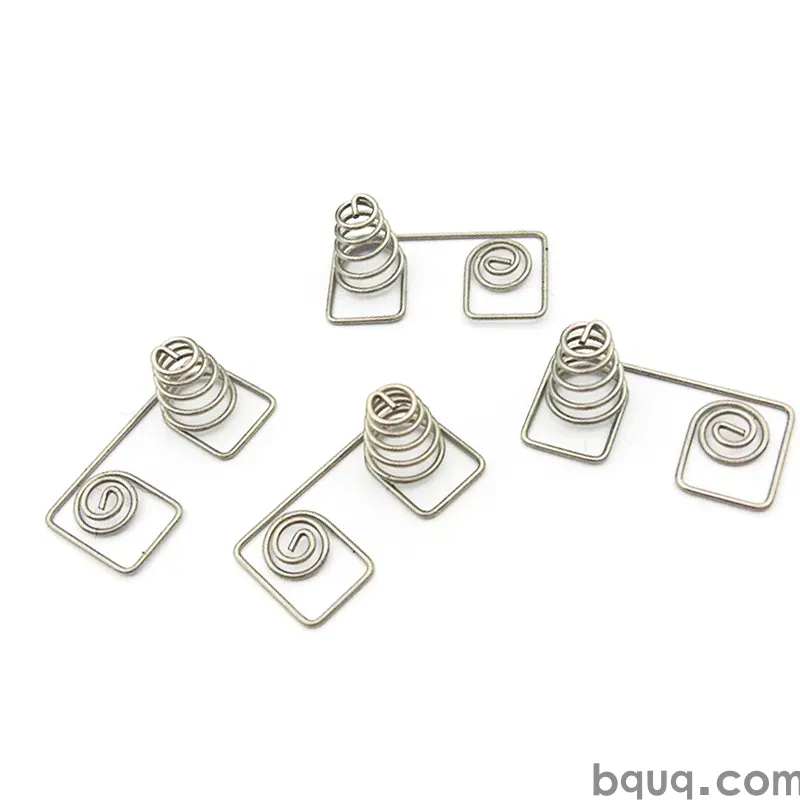
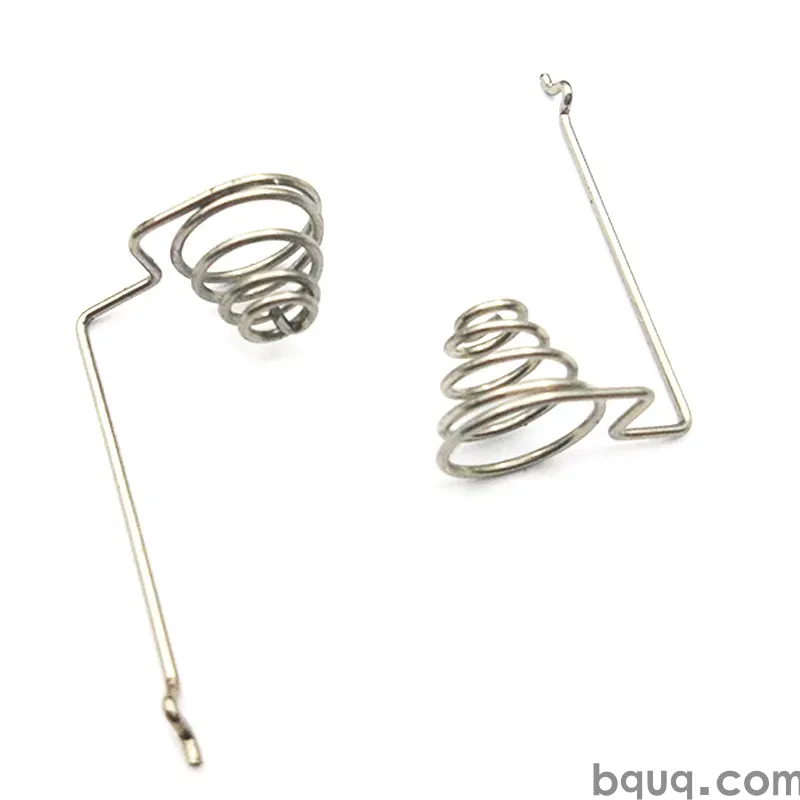
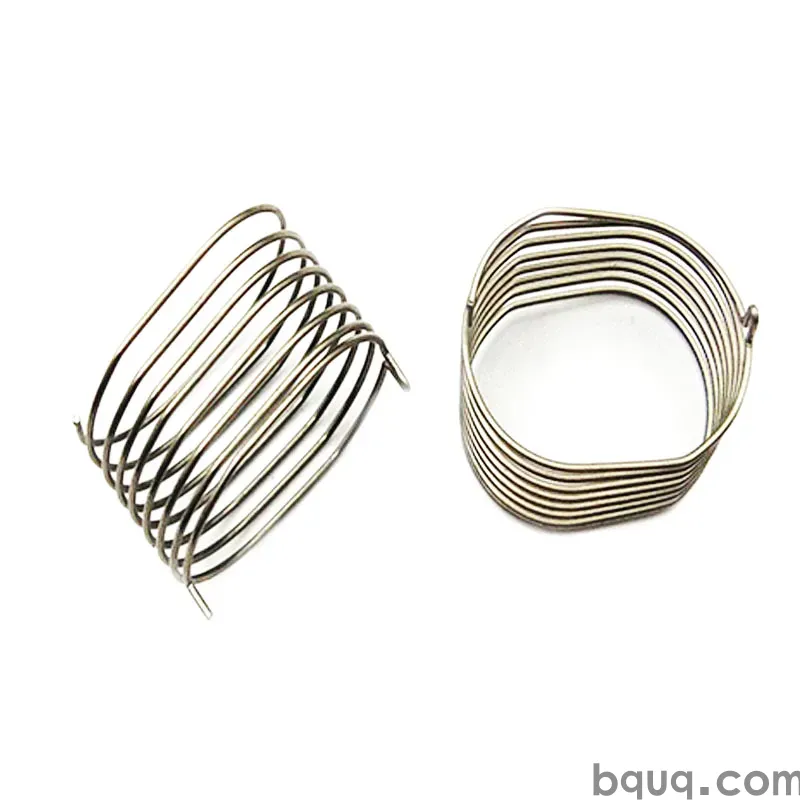
For springs, the wire diameter and material grade drive nearly everything: load capacity, fatigue life, and price. A custom spring specified in music wire instead of stainless can cost a fraction as much, if the environment allows it.
Process Route Selection
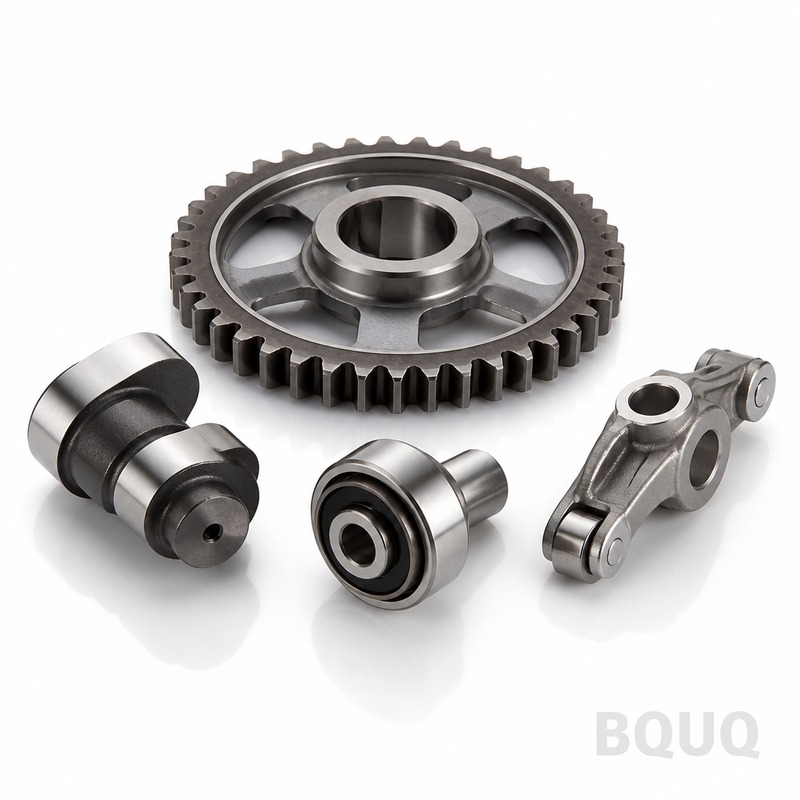
The biggest single decision is usually which process family to use. CNC machining and metal stamping overlap in the 1,000–20,000 piece range, and the crossover point depends heavily on part geometry.
| Volume (annual) | Typical Best Route | Notes |
|---|---|---|
| 1–500 | CNC machining | No tooling, fast iteration |
| 500–5,000 | CNC or soft-tool stamping | Depends on geometry complexity |
| 5,000–50,000 | Progressive die stamping | Tooling amortized over volume |
| 50,000+ | Progressive die, fine blanking, or deep draw | Tooling cost becomes negligible |
These thresholds are indicative, not rules. A part with tight 3D contours may stay in CNC at 20,000 pieces; a simple flat washer may go to stamping at 2,000.
Keeping the Loop From Becoming a Spiral
Iteration is valuable up to a point, then it becomes a cost of its own. Three guardrails help.
Set a loop budget. Decide in advance that you will run two rounds. Anything after that requires a written justification.
Assign one owner. One engineer owns the DFM response end to end. Distributed ownership is how comments get lost.
Timebox responses. A 48-hour turnaround on DFM decisions keeps momentum. If a decision needs a week, say so and ask the supplier to proceed with the unaffected portions.
Communication cadence is its own skill. Our guide to China communication cadence covers how to structure weekly touchpoints so engineering questions do not pile up between milestones.
What to Expect From a Supplier-Side DFM Process
A supplier running a genuine DFM loop has visible habits:
- They ask about function, not just dimensions
- They reference your 3D model, not only the 2D PDF
- They rank cost drivers instead of listing generic advice
- They tell you when a change will increase cost, and why it might still be worth it
- They flag manufacturability risks even when the fix costs them revenue
That last point is the real test. A supplier who recommends moving a part from CNC to stamping — where their margin may be thinner — is optimizing your total cost. That is the behavior you want to reinforce.
BQUQ runs four production lines in one Dongguan factory covering CNC machining, metal stamping, custom springs, and heat sinks. Because the processes sit under one roof, the DFM response can compare routes honestly rather than defending whichever machine is idle. More on how that engineering interface works is in our article on China engineering support.
Building the Cost Model Around the Loop
DFM changes the shape of your cost model. Instead of a single quoted price, you get a price per design revision. That is more useful for planning, because it shows the sensitivity of cost to design decisions.
A simple model: for each DFM option, record the unit price delta, the tooling delta, and the lead-time delta. Then rank by total cost of ownership over your forecast volume. An option that saves $0.40 per unit but adds $3,000 in tooling breaks even at 7,500 units — above that, take it; below, defer it.
Our China sourcing cost model walks through how to build that comparison properly, including freight, duty, and inventory carrying cost.
Frequently Asked Questions
Q: How long should a supplier take to return DFM feedback with a quote?
A: For straightforward machined or stamped parts, 12 working hours is a reasonable benchmark — BQUQ quotes and returns DFM notes within that window. Complex assemblies, multi-die stamping programs, or parts requiring new tooling design typically take two to five working days. If a supplier takes a week to return a simple quote with no engineering comments, the DFM loop is not really operating.
Q: Does DFM feedback cost extra?
A: No. DFM review should be part of the quoting process, not a paid engineering service. The supplier is already reading your drawing to price it; adding structured comments costs them little and builds trust. If a supplier charges separately for DFM analysis before quoting, treat it as a consulting engagement with its own deliverables — and expect a written report, not a few bullet points.
Q: How many DFM iterations are normal before freezing a design?
A: Two rounds is typical for most parts. The first round catches tolerance and feature issues; the second confirms the revised drawing prices as expected. Three rounds happens on complex assemblies. Beyond that, the problem is usually unclear requirements rather than a difficult design, and it is worth rewriting the specification before continuing.
Q: Can DFM feedback change the process from CNC to stamping?
A: Yes, and it often should. Between roughly 5,000 and 50,000 annual units, the choice between CNC machining and progressive die stamping depends on geometry more than volume. A supplier running both processes can compare honestly. If your supplier only offers one process, their DFM advice will be shaped by that limitation.
Q: What if I disagree with the DFM suggestions?
A: Say so and explain why. Suppliers learn from rejections. If a tight tolerance exists because of a mating component, tell them — they may propose a different way to hold it, or a different inspection method. Silent rejection is the worst outcome, because the supplier will keep proposing the same change and you will keep ignoring it.
Related Resources
- About BQUQ and our four Dongguan production lines: /about/
- CNC machining, metal stamping, springs, and heat sinks: /cnc-machining/, /custom-metal-stamping/, /compression-springs/
- Industry trends affecting sourcing decisions: /industry-dynamics/
- Technical articles and engineering guides: /bquq-blog/
- Frequently asked questions on quoting and tolerances: /faq/
- Case studies from precision manufacturing projects: /case/
- Contact the engineering team for a DFM review: /contact/
Authored by the BQUQ Engineering Team. BQUQ (Dongguan) runs CNC machining (±0.005 mm), metal stamping, custom springs, and heat sink production in one ISO9001 factory. Source-direct from Dongguan, China — quote in 12 hours: sc@bquq.com | WhatsApp +86 13713157787 | www.bquq.com