"Assessing Factory Capability: Machines, People and Systems"
Short answer: A factory capability assessment has three layers — machines (what the equipment can physically hold, e.g. ±0.005 mm CNC), people (who sets up, programs and inspects), and systems (how quality, traceability and change control are enforced when nobody is watching). Verify all three with evidence: machine lists with ages and calibration records, operator skill matrices, and documented process control. A factory strong in machines but weak in systems will pass first articles and drift on production. BQUQ runs four production lines in one Dongguan factory under ISO9001, quotes in 12 working hours, and accepts flexible MOQ so buyers can validate capability on a real order.
Most sourcing failures are not caused by a supplier lying about a machine. They are caused by a buyer assessing the wrong layer. A quote arrives with impressive photos of five-axis machining centers, the price is competitive, the sample is good — and six months later the parts drift out of tolerance, the lead time slips, and nobody can explain why. The machines never changed. The people and systems did not hold.
This guide walks through a practical three-layer assessment you can run on any precision manufacturing supplier, whether you are placing a first prototype order or auditing a production partner. It is written for engineers and sourcing managers who need to make a defensible decision, not just a fast one.
Why machine lists alone mislead buyers
A machine list tells you what is possible, not what is repeatable. Two factories can own identical CNC lathes and produce wildly different results, because capability comes from the combination of spindle condition, tooling strategy, thermal management, programming skill, and inspection feedback.
When you request a machine list, ask for more than model numbers:
- Age and condition — a ten-year-old machining center that is maintained and calibrated can outperform a new one that is run to failure.
- Calibration and maintenance records — when was the machine last verified, and against what standard?
- Spindle hours and duty cycle — high-utilization machines need documented maintenance intervals.
- Tooling and fixturing ownership — does the factory design its own fixtures, or does it improvise per order?
A useful test: ask the factory to describe the last time a machine failed a capability study and what they did about it. Factories with real process control have a specific answer. Factories without it have a vague one.
Reading a machine list properly
| What the list says | What it actually tells you | What to verify |
|---|---|---|
| "CNC tolerance ±0.005 mm" | Best-case achievable on a controlled feature | Capability study on your specific geometry |
| "20 CNC machines" | Capacity exists | Utilization rate, shift pattern, bottleneck station |
| "Five-axis capability" | Complex geometry possible | Programming staff, simulation software, post-processors |
| "In-house stamping presses" | Vertical integration | Tonnage range, die maintenance, tool room staffing |
| "Automated inspection" | Measurement speed | Calibration status, program ownership, sampling plan |
The right-hand column is where the assessment actually happens. Anyone can read a spec sheet; the value is in the evidence behind it.
What the people layer actually covers
People are the most under-assessed layer, and usually the reason capability collapses under volume. A factory with excellent machines and thin staffing will produce good prototypes and inconsistent production.
Assess four roles specifically:
Setup and programming. Who converts your drawing into a process? Do they program offline with simulation, or at the machine? Offline programming with verification reduces first-article surprises and protects the machine from crashes — a signal of a mature shop.
Operators. Are operators assigned to specific machine families, or rotated arbitrarily? Specialization builds intuition about tool wear and thermal drift that no work instruction can replace.
Inspection staff. Critically, are inspectors independent of production? If the same person who runs the machine signs off the part, you have self-inspection, not quality control. Independent inspection is a structural safeguard.
Tool room and maintenance. Does the factory grind its own tools, maintain its own dies, and repair its own fixtures? In-house tooling capability is one of the strongest predictors of lead-time stability, because it removes external dependency from the critical path.
Ask for a skill matrix: which operators are qualified on which machines, and how that qualification was verified. Factories that maintain one have a training system. Factories that cannot produce one are relying on whoever happens to be available.
Why systems decide whether capability survives scale
Systems are the rules that keep output stable when the order volume triples and the original team is spread thin. This is where the difference between a workshop and a manufacturing partner becomes visible.
The core systems to verify:
- Document control — is the drawing revision on the shop floor the same one you approved?
- Change control — if the factory wants to substitute a material or adjust a process, what triggers notification to you?
- Traceability — can they trace a finished lot back to material heat number, machine, operator, and inspection record?
- Non-conformance handling — what happens to a bad lot? Is it quarantined, dispositioned, and root-caused, or quietly sorted?
- Calibration system — are gauges on a schedule, and are records retrievable?
- Corrective action — do repeated defects trigger a documented response?
ISO9001 certification is a useful baseline signal that these systems exist on paper. It is not proof they operate daily — which is why the assessment should include evidence, not just a certificate. Ask to see a recent internal audit, a corrective action report, and a calibration log. The quality of those documents tells you more than the certificate itself.
A three-layer scoring model
| Layer | Weight | Evidence to request | Red flag |
|---|---|---|---|
| Machines | 30% | Machine list, calibration records, capability study | Spec sheet only, no calibration data |
| People | 30% | Skill matrix, org chart, tool room staffing | No independent inspection role |
| Systems | 40% | ISO9001 scope, change control, traceability sample | Cannot produce a corrective action record |
Systems carry the highest weight deliberately. Machines can be bought and people can be hired, but systems take years to build and are the hardest thing to fake under pressure.
How to run the assessment without flying to China
You do not need to visit to get real signal. A structured remote assessment followed by a paid trial order reveals most capability gaps.
Step 1 — Document request. Send a written request for machine list, calibration schedule, skill matrix, ISO9001 scope statement, and a sample corrective action report. Factories that respond within a day or two with organized documents are demonstrating document control in real time.
Step 2 — Technical call. Walk an engineer through your drawing. Ask how they would hold the tightest tolerance and how they would inspect it. Weak suppliers answer generically; strong ones ask about datum strategy, material condition, and volume.
Step 3 — Paid trial order. Place a small but real order at production specification. This tests quoting speed, DFM feedback quality, first-article documentation, packaging, and on-time delivery simultaneously. BQUQ's 12-working-hour quoting and flexible MOQ are designed to make this step low-friction.
Step 4 — Third-party inspection. For critical parts, commission an independent inspection on the trial lot. This validates the factory's own inspection data against an outside measurement — the single most useful cross-check available.
Step 5 — Score and compare. Use a scorecard so multiple suppliers are judged on the same criteria rather than on presentation quality. A structured approach to supplier scorecard metrics keeps the comparison honest across quotes that look different on the surface.
Where multi-process factories change the calculus
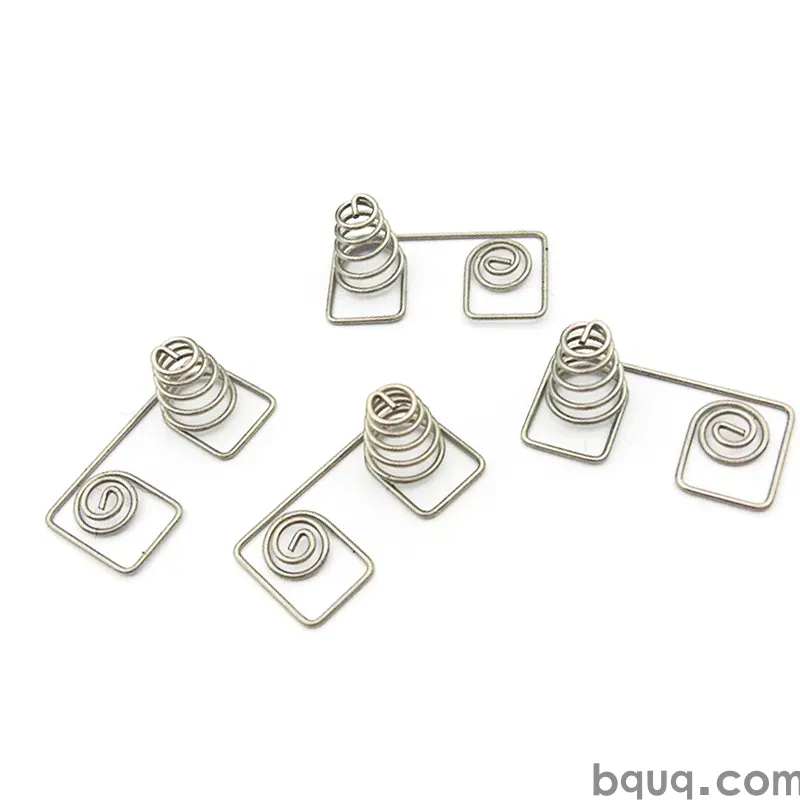
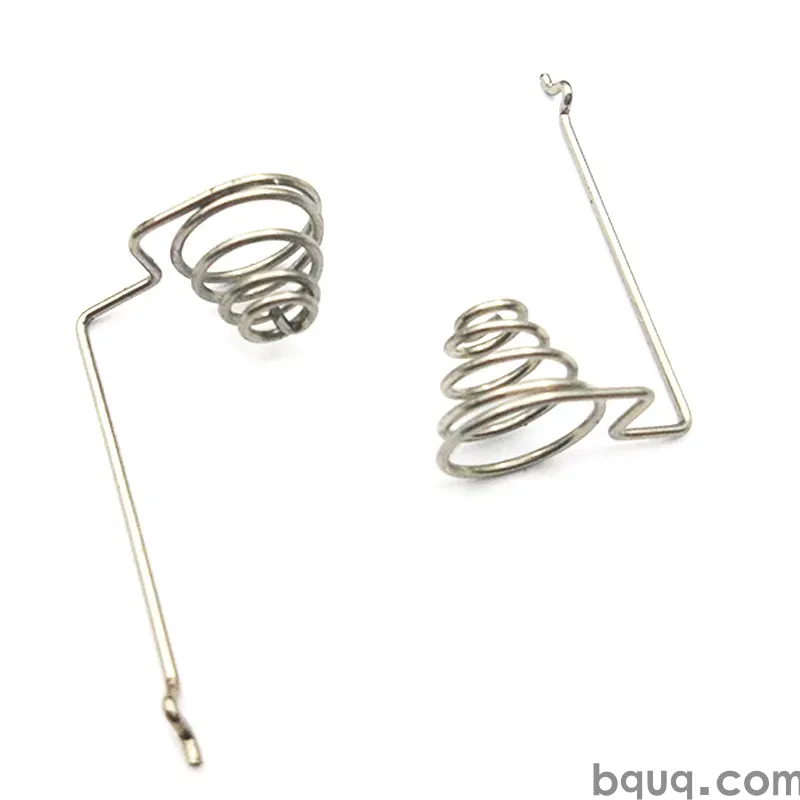
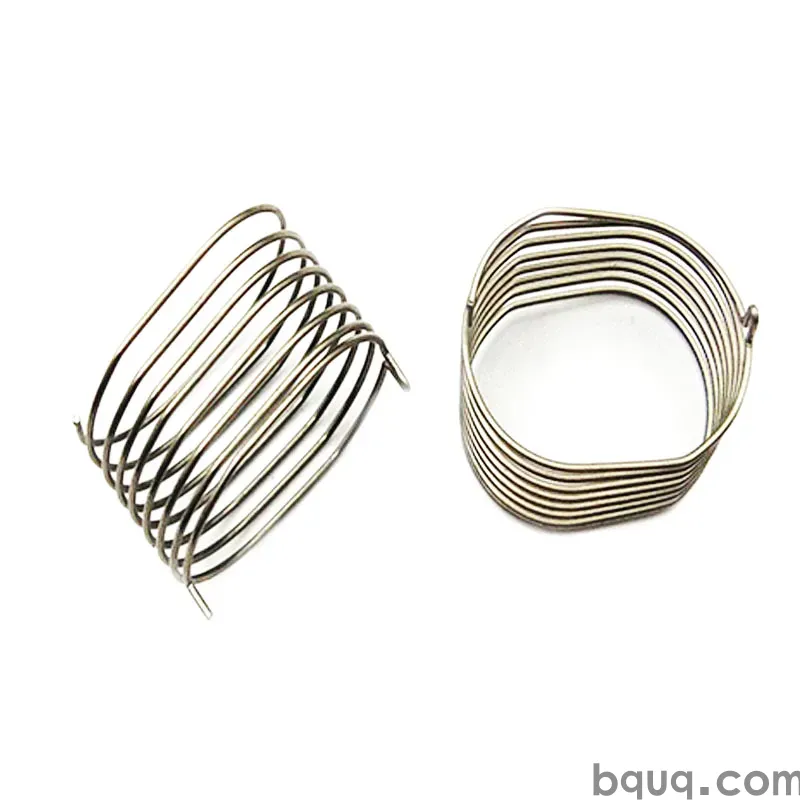
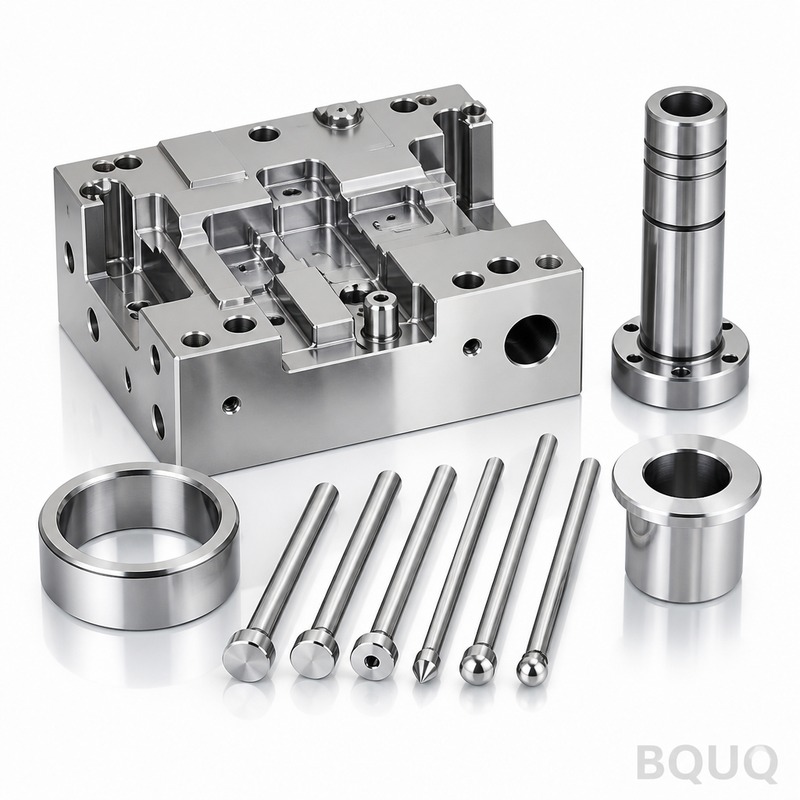
A factory that runs several processes under one roof — CNC machining, metal stamping, spring winding, heat sink production — reduces the number of capability assessments you need to perform. Each outsourced step is another supplier to vet, another lead time to manage, and another place where tolerance stack-up and accountability can break down.
For example, a stamped bracket that also requires a wound spring and a machined insert involves three process families. If they sit in one factory with shared inspection and one quality system, the custom metal stamping and compression springs teams work from the same drawing revision and the same change control. If they sit in three factories, you own the coordination risk.
This is a genuine capability question, not a marketing one. Ask how processes hand off internally: is there a shared traveler, a shared inspection standard, and a single point of accountability for the finished assembly?
Common assessment mistakes
Confusing certification with capability. ISO9001 confirms a system exists. It does not confirm the system is effective for your tolerance and volume.
Assessing only the sample. Samples are often produced by the best operator on the best machine with extra attention. Assess the process, not the artifact.
Ignoring the tool room. In-house tooling and die maintenance is a quiet but powerful indicator of lead-time reliability.
Skipping the people layer. Machine and system audits are easier to perform, so buyers over-index on them. The people layer is where most variability originates.
Not re-assessing. Capability changes with staffing, order mix, and equipment condition. A structured risk mitigation approach includes periodic re-scoring, not a one-time approval. Pairing this with a documented supplier vetting checklist keeps the process repeatable across new categories and new team members.
Frequently Asked Questions
Q: How long does a factory capability assessment take?
A: A remote assessment based on document review and a technical call typically takes one to two weeks. Adding a paid trial order extends it to three to five weeks depending on part complexity and material lead time. The trial order is the highest-value portion, so do not compress it. Budget the time once and reuse the framework across future suppliers.
Q: Is ISO9001 enough to prove a factory is capable?
A: No. ISO9001 confirms that documented systems exist and are audited, which is a meaningful baseline. It does not prove the factory can hold your specific tolerance at your specific volume. Always pair the certificate with evidence: calibration records, a corrective action report, and a capability study on geometry similar to your part.
Q: What tolerance should I expect from a capable CNC factory?
A: A capable precision CNC shop can typically hold ±0.005 mm on controlled features, with tighter results achievable on specific geometries under the right conditions. Treat any quoted tolerance as conditional on feature size, material, and volume. Ask the factory to run a capability study on your actual part rather than accepting a general tolerance claim.
Q: How do I verify inspection independence?
A: Ask for the organizational chart and confirm that inspection reports are signed by someone outside the production team. Then request a sample inspection record and check the signature against that chart. If the machine operator signs their own parts, you have self-inspection. Independent inspection is a structural control worth insisting on.
Q: Can I assess a factory without visiting in person?
A: Yes, for most categories. Document requests, technical calls, paid trial orders, and third-party inspection together give strong signal. An in-person visit adds value for high-volume or safety-critical programs, and for verifying that shop-floor conditions match the documents. Start remote, then visit once the relationship justifies the travel.
Related Resources
- About BQUQ and our four production lines in Dongguan: /about/
- CNC machining capability and tolerances: /cnc-machining/
- Metal stamping and in-house tooling: /custom-metal-stamping/
- Industry trends affecting sourcing decisions: /industry-dynamics/
- More technical articles for engineers and buyers: /bquq-blog/
- Frequently asked sourcing and manufacturing questions: /faq/
- Case studies and program examples: /case/
- Contact our engineering team: /contact/
Authored by the BQUQ Engineering Team. BQUQ (Dongguan) runs CNC machining (±0.005 mm), metal stamping, custom springs, and heat sink production in one ISO9001 factory. Source-direct from Dongguan, China — quote in 12 hours: sc@bquq.com | WhatsApp +86 13713157787 | www.bquq.com