Sourcing Precision Parts From China: A Complete Playbook
Short answer: Sourcing precision parts from China works when you treat it as a process, not a purchase. Define tolerances and inspection method on the drawing, send a complete RFQ package to 3–5 vetted ISO9001 factories, compare quotes on landed cost and lead time rather than unit price alone, approve a first-article sample, then scale with documented inspection. Expect ±0.005 mm on CNC work from capable shops, 12 working hours for a professional quote, and flexible MOQ at source-direct factories. Budget 15–30 days for tooling on stamped parts and 5–12 days for repeat CNC orders.
This playbook covers the full cycle: how to find real factories (not trading shells), what to put in an RFQ, how to read a quote, how to verify quality before volume, and how to keep the relationship healthy after the first container ships. It is written for engineers and sourcing managers who need parts that fit, not just parts that arrive.
Why China Still Leads for Precision Parts
The case for China in precision manufacturing is not just labor cost — it is depth of process. A single industrial cluster in Guangdong can supply CNC machining, metal stamping, spring winding, heat sink extrusion and skiving, surface finishing, and heat treatment within a 50 km radius. That density compresses lead time and makes secondary operations cheap.
Dongguan in particular has spent three decades building the tooling and die ecosystem that precision work depends on. When a stamped part needs a progressive die with 12 stations, or a CNC part needs a second-op fixture, the supplier network to support it already exists.
What has changed in the last decade is the floor. Modern factories run CNC centers with tool presetters, CMM inspection, optical comparators, and digital height gauges as standard. ISO9001 is the baseline expectation, not a differentiator. The gap between a good Chinese precision factory and a good European one is now mostly about documentation discipline and communication, not machine capability.
The cost structure you are actually buying
| Cost element | Typical share of unit price | Notes |
|---|---|---|
| Raw material | 20–45% | Copper and stainless swing most |
| Machine time | 25–40% | Drives CNC pricing |
| Tooling amortization | 5–20% | High on first stamping order |
| Labor | 8–18% | Lower share on automated lines |
| Inspection & QA | 3–8% | Higher for medical/automotive-grade |
| Packaging & freight | 5–15% | Depends on volume and mode |
Reading a quote against this table tells you quickly whether the supplier understands your part or is guessing.
How Do You Find a Genuine Precision Factory?
Start by separating factories from traders. Traders are not inherently bad — some add real value in logistics and consolidation — but you should know which one you are talking to, because it changes who controls quality and lead time.
Signals of a real factory:
- Process-specific answers. Ask how they hold a ±0.01 mm bore on a thin-wall part and a factory will talk about fixturing, coolant, and spring passes. A trader will talk about "good quality."
- Machine list with models. VMCs, CNC lathes with bar feeders, stamping presses by tonnage, spring coilers by axis count.
- In-house vs outsourced. Ask which operations happen on site. Four production lines under one roof — CNC, stamping, springs, heat sinks — means fewer handoffs and faster reaction.
- Sample policy. Factories send first articles with dimensional reports. Traders send photos.
A vetting scorecard
| Criterion | Weight | What "good" looks like |
|---|---|---|
| Process fit | 25% | Machines and experience match your part family |
| Quality system | 20% | ISO9001, documented inspection, CMM on site |
| Engineering response | 20% | DFM feedback within 24–48 hours |
| Lead time realism | 15% | Commits to dates with buffer, not best-case |
| Communication | 10% | Named engineer, English-capable, fast replies |
| Price competitiveness | 10% | Within 10–15% of best quote, not lowest |
Score each candidate, then shortlist two. A useful companion read is our breakdown of how to compare China quotes without getting burned.
What Goes Into a Complete RFQ Package?
Most sourcing failures start with an incomplete RFQ. The supplier guesses, you approve a guess, and the first shipment proves it. A complete package removes ambiguity.
Include:
1. 2D drawing with full GD&T. Datums, tolerances, surface finish, material spec, and heat treatment.
2. 3D model (STEP or IGES). For complex geometry and for the supplier's CAM programming.
3. Material and finish callouts. "Stainless steel" is not a spec. 304 vs 316 vs 17-4PH changes price and lead time.
4. Annual volume and batch size. This drives tooling strategy more than anything else.
5. Inspection requirements. Full dimensional report, CMM layout, or AQL sampling?
6. Packaging and labeling. Especially for parts that feed automated assembly.
7. Target date and destination. Door-to-door timing matters.
RFQ completeness checklist
| Item | Why it matters | Common omission |
|---|---|---|
| GD&T datums | Defines inspection setup | Missing datum callouts |
| Material grade | 20–40% price swing | "Steel" instead of grade |
| Surface finish | Drives secondary ops | No Ra value |
| Volume forecast | Tooling amortization | Only first-order qty |
| Inspection level | Cost and lead time | Assumed "standard" |
| Packaging spec | Damage and line-feed risk | Not mentioned |
Send the same package to every candidate. If one supplier asks three sharp questions and another asks none, the one asking questions is usually the one that will catch problems before they become scrap. For more on this dynamic, see why engineering support separates good suppliers from cheap ones.
How Do You Compare Quotes Properly?
Unit price is the least useful number on a quote. Compare on landed cost per good part.
Landed cost = (unit price × quantity + tooling + freight + duty + inspection + expected scrap) ÷ good parts received.
That last term is where cheap quotes lose. A supplier at $0.80 with 4% reject rate beats a supplier at $0.72 with 12% reject rate once you add rework, expedited replacements, and line downtime.
Quote comparison table
| Line item | Supplier A | Supplier B | Supplier C |
|---|---|---|---|
| Unit price (10k pcs) | $0.82 | $0.74 | $0.95 |
| Tooling (one-time) | $2,400 | $1,800 | $2,600 |
| Freight (est.) | $310 | $310 | $310 |
| Stated lead time | 18 days | 25 days | 14 days |
| First-article report | Included | $120 extra | Included |
| Expected reject rate | 1.5% | 6% | 0.8% |
| Effective cost/good part | $0.87 | $0.85 | $0.98 |
Supplier B looks cheapest on unit price and is nearly the same on effective cost — but carries three times the quality risk and a week more lead time. That is a decision, not a bargain.
Also ask what happens when something goes wrong. A supplier that quotes a rework policy up front is telling you they have one.
Tolerances, Materials, and Process Selection
Match the process to the feature, not the other way around.
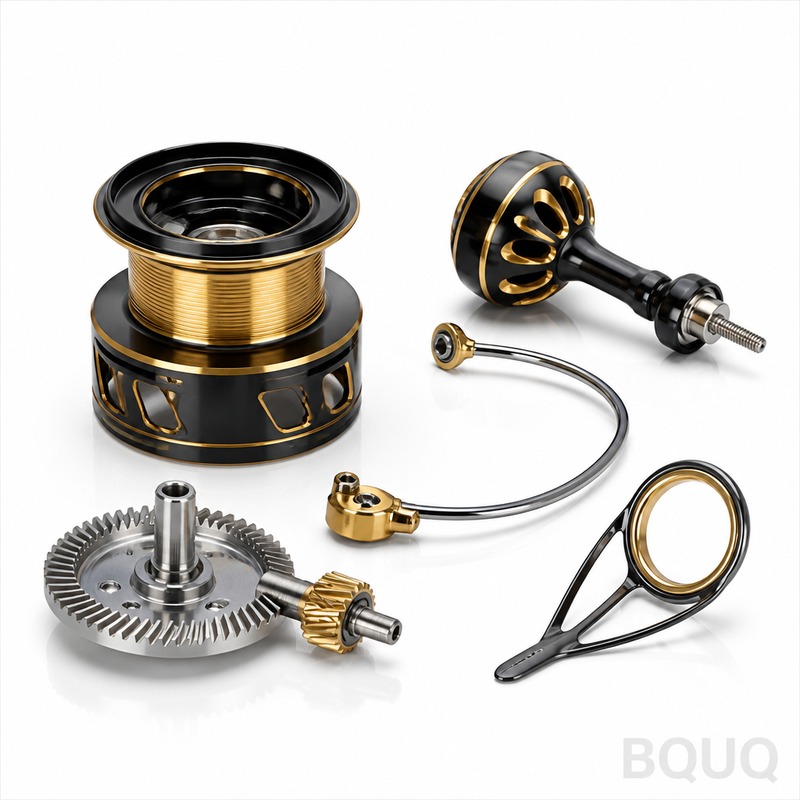
- CNC machining for tight tolerances (±0.005 mm achievable on critical features), low-to-mid volume, complex 3D geometry, and parts where tooling cost is not justified.
- Metal stamping for high volume, thin material, and parts where per-piece cost must fall below machining. Progressive dies pay back fast above roughly 20,000–50,000 pieces depending on complexity.
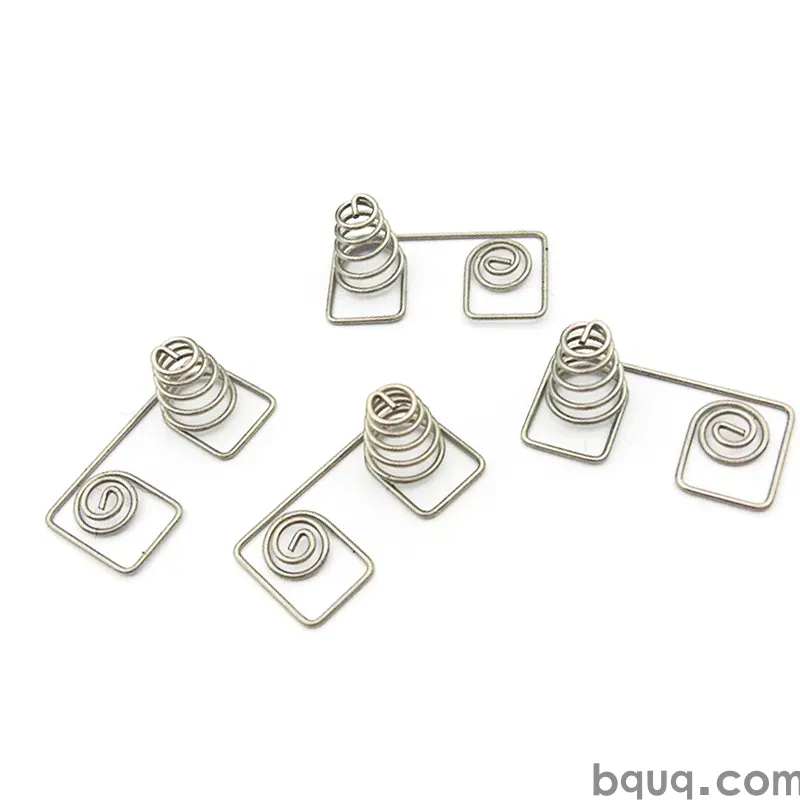
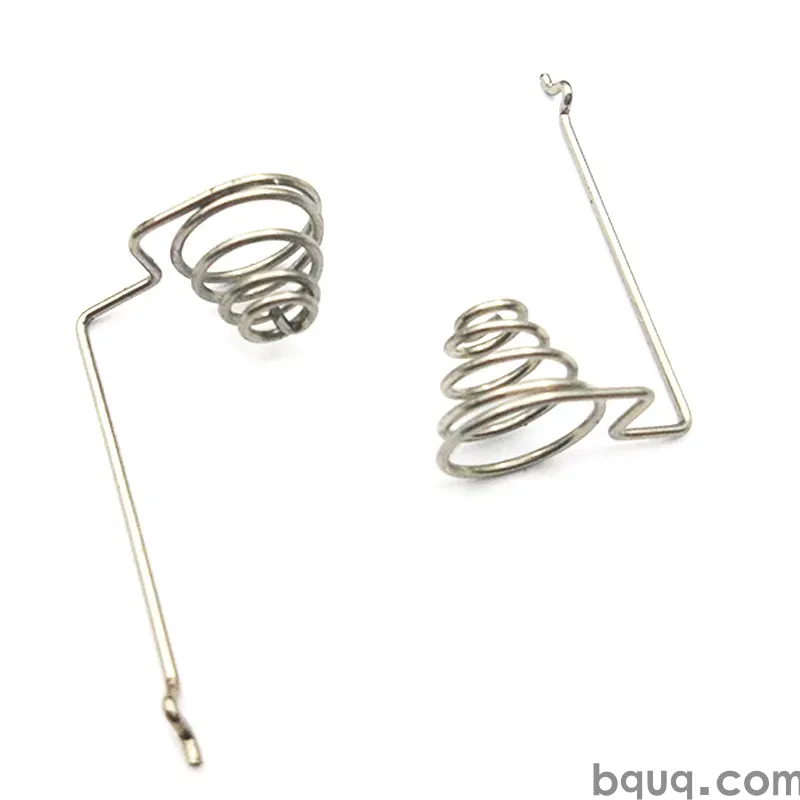
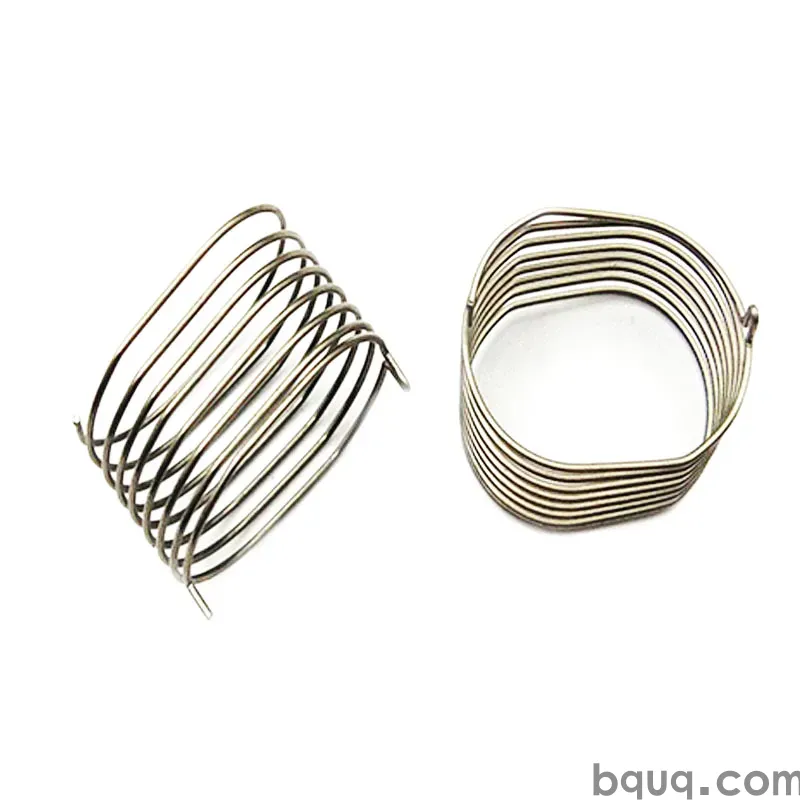
- Springs for force-critical components — compression, extension, torsion — where wire diameter, free length, and rate tolerance all matter.
- Heat sinks for thermal management, where fin geometry and base flatness drive performance.
A frequent mistake is over-specifying. Calling out ±0.005 mm on a feature that only needs ±0.1 mm adds cost with no functional benefit. Mark critical-to-function dimensions and let the rest follow general tolerance. Our dual-source strategy guide explains how to split work across processes without losing control.
How Do You Verify Quality Before Volume?
Never approve full production from a drawing alone. The sequence is: sample → first article inspection → limited production run → full release.
First Article Inspection (FAI) should include a ballooned drawing with every dimension numbered, measured values, and pass/fail against tolerance. For CNC parts, a CMM report on datum-referenced dimensions. For stamped parts, a layout inspection plus material certs.
Then run a pilot batch — typically 10–20% of the first order — and inspect it at a higher sampling rate than steady state. This catches tooling wear, fixture drift, and plating thickness variation before they scale.
Inspection stages and what to check
| Stage | Sample size | Focus |
|---|---|---|
| First article | 3–5 pcs | All dimensions, material cert, finish |
| Pilot run | 10–20% of batch | Process stability, Cp/Cpk on critical dims |
| In-production | AQL or 100% on critical | Drift, tool wear, plating thickness |
| Pre-shipment | AQL sample | Packaging, labeling, cosmetic, count |
If you cannot visit the factory, ask for a live video inspection of the pre-shipment sample. It is a small ask and it changes behavior.
Lead Time, Logistics, and Landed Cost
Typical lead times from a Dongguan factory, indicative only:
- CNC machining, repeat order: 5–12 working days
- CNC machining, new part with fixturing: 10–18 working days
- Metal stamping, new tooling: 15–30 working days, then 7–12 days per batch
- Springs, standard wire: 7–15 working days
- Heat sinks: 10–20 working days depending on process
Add transit: air freight 5–8 days door-to-door, sea freight 25–40 days depending on port and season. Express couriers handle small precision batches in 3–5 days.
Duty and tariff treatment depends on HS classification and origin rules, which is a topic in itself — see our China customs duties guide for how classification drives your landed cost.
How Do You Build a Supplier Relationship That Lasts?
The best pricing and the fastest lead times go to buyers who are predictable. That means:
- Forecast honestly. Share a 6–12 month rolling forecast even if it is approximate.
- Pay on time. It affects your position in the production queue more than you would think.
- Give feedback on defects with data. Photos, measurements, batch numbers. Vague complaints get vague fixes.
- Visit or video-call regularly. Relationships survive problems; transactions do not.
- Escalate through engineering, not just sales. Technical issues need technical people.
A factory running four production lines in one location can shift capacity between processes when a customer is in trouble. That flexibility is earned, not contracted.
Frequently Asked Questions
Q: How do I know if a Chinese supplier is a factory or a trading company?
A: Ask for their business license scope, machine list with models, and a live video walkthrough of the shop floor. Factories answer process questions with specifics about fixturing, tooling, and inspection equipment. Trading companies give general answers and route technical questions through a third party, which slows every engineering change and blurs quality accountability.
Q: What tolerances can I realistically expect from Chinese CNC suppliers?
A: Capable shops hold ±0.005 mm on critical features of rigid, well-fixtured parts, and ±0.01 to ±0.02 mm routinely on general CNC work. Tighter than ±0.005 mm is possible on select features but drives cost sharply and requires CMM verification. Always mark critical-to-function dimensions rather than applying tight tolerance across the whole drawing.
Q: Should I pay for tooling up front on stamped parts?
A: Yes, and treat it as a separate line item with its own terms. Tooling is typically a one-time cost amortized across the program. Clarify ownership, where the die is stored, who maintains it, and what happens if you move production. Get the die ownership in writing — it protects you if the relationship changes later.
Q: How do I handle quality problems after the first shipment?
A: Document the defect with measurements, photos, and batch numbers, then send it to both sales and engineering. Request a root-cause analysis and corrective action, not just a replacement. A good supplier responds with a containment plan within 48 hours and a permanent fix with verification. Track repeat issues — one is an incident, three is a pattern.
Q: What is a realistic MOQ for custom precision parts from China?
A: Source-direct factories are generally flexible, but economics set practical floors. CNC parts often make sense from a few hundred pieces; stamped parts need enough volume to amortize tooling, typically several thousand upward; springs and heat sinks vary by wire and extrusion setup. Ask for the MOQ that hits a sensible unit price, not the absolute minimum.
Related Resources
- About BQUQ and our four Dongguan production lines: /about/
- CNC machining services (±0.005 mm): /cnc-machining/
- Custom metal stamping and progressive dies: /custom-metal-stamping/
- Compression springs and custom spring design: /compression-springs/
- Industry trends and sourcing signals: /industry-dynamics/
- Technical articles and engineering guides: /bquq-blog/
- Case studies and FAQ: /case/ | /faq/
- Talk to an engineer: /contact/
Authored by the BQUQ Engineering Team. BQUQ (Dongguan) runs CNC machining (±0.005 mm), metal stamping, custom springs, and heat sink production in one ISO9001 factory. Source-direct from Dongguan, China — quote in 12 hours: sc@bquq.com | WhatsApp +86 13713157787 | www.bquq.com