Sourcing Collets and Workholding From China
Short answer: Sourcing collets and workholding from China works well when you specify the interface standard, the TIR limit, the hardness range and the inspection method before you ask for a price. Expect a competent Dongguan factory to hold ±0.005 mm on critical collet features, quote in about 12 working hours, and run flexible MOQ for a first trial batch. The failure mode is rarely capability — it is an under-specified drawing. Put concentricity, taper contact, material grade and marking on the drawing, agree on a first-article report, and collet sourcing becomes a routine, repeatable purchase instead of a gamble.
Collets look simple. A slotted sleeve with a taper, a bore, and a thread. That simplicity is exactly why so many buyers get burned: the part is cheap enough to buy without thinking, and precise enough that small errors destroy tool life, surface finish, and spindle runout. This guide covers what to put on the drawing, what to inspect, how to compare quotations, and how to structure the commercial side so you keep control of the tooling.
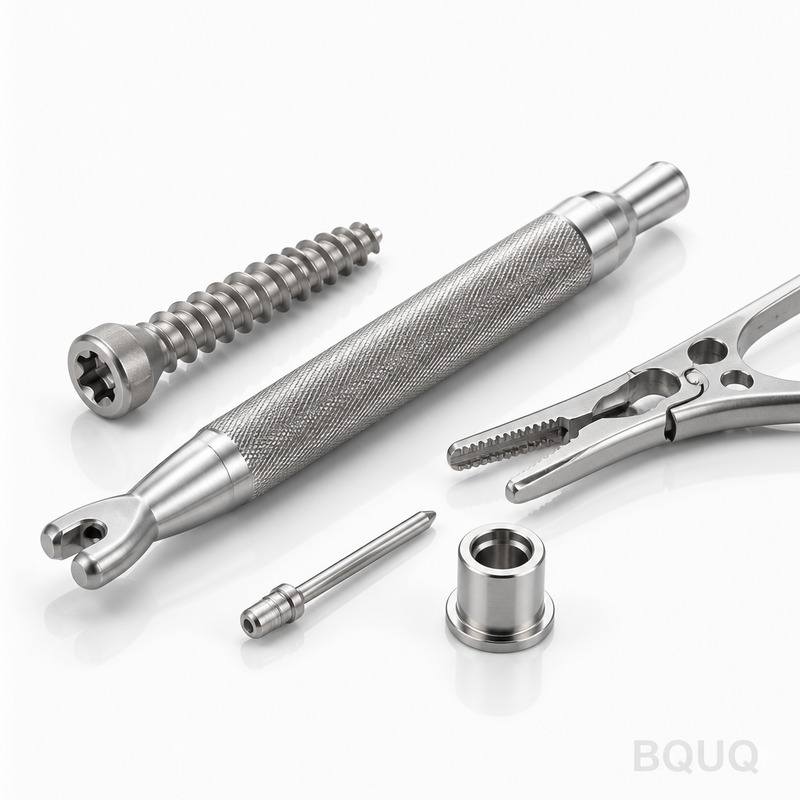
What counts as "workholding" in a China sourcing program?
Workholding is a broad category, and it helps to split it before you go to market, because different sub-families have different tolerance drivers.
| Workholding family | Typical function | Tolerance driver |
|---|---|---|
| ER / DIN 6499 collets | Tool holding in milling and drilling | Taper angle, TIR, slot symmetry |
| 5C and 16C collets | Lathe workholding, bar feeding | Bore size, thread pitch, drawbar grip |
| Collet chucks and holders | Spindle interface | Shank taper, nut thread, balance class |
| Custom split bushings | Fixture locating | Bore-to-OD concentricity |
| Spring-loaded grippers, fingers | Automation and feeding | Spring rate, fatigue life |
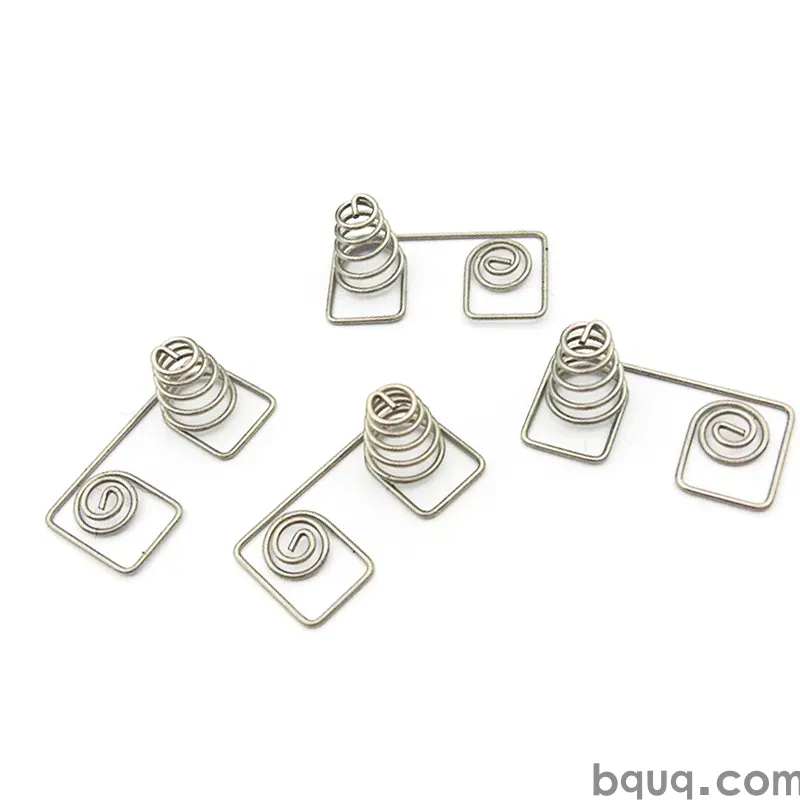
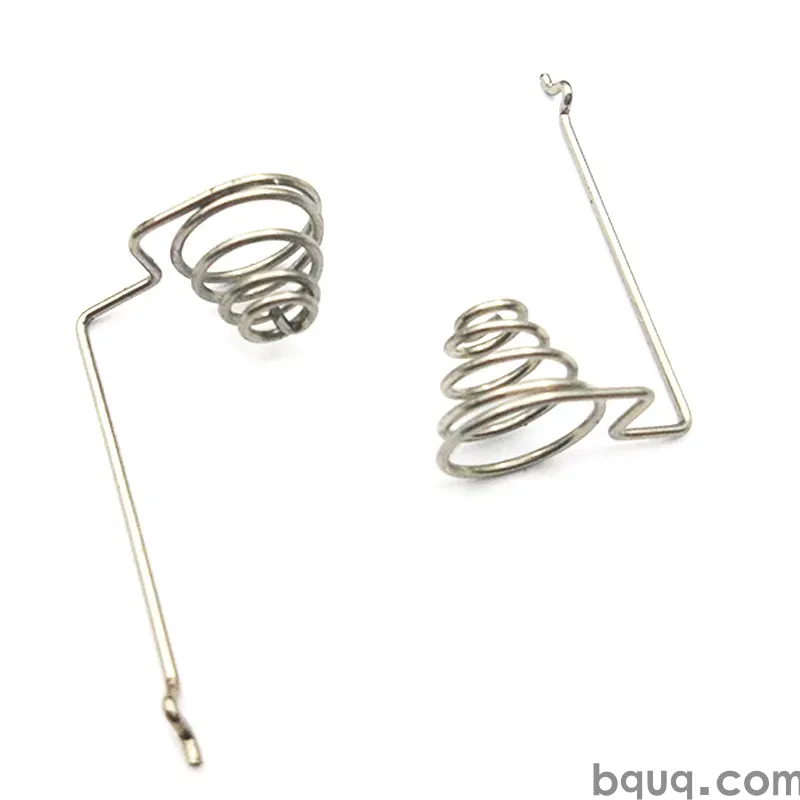
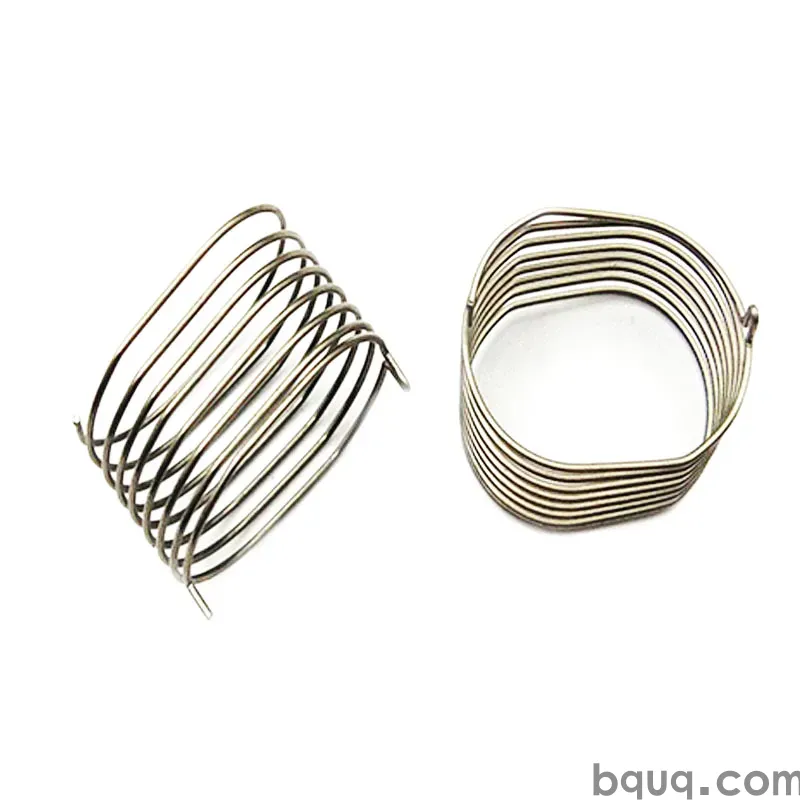
Note the last row. Several workholding components are not machined at all — they are formed from strip or wire. Gripper fingers, retaining clips, and spring-loaded locators often come off a stamping press or a spring coiler rather than a lathe. If your supplier only runs CNC turning, they will subcontract those parts, and you inherit a second quality system you never audited. A partner that runs metal stamping and compression springs alongside CNC machining in the same plant removes that blind spot.
The three interfaces you must define
Every collet program fails or succeeds on three interfaces:
1. The machine interface — the taper, the drawbar thread, the nut. Get this wrong and the collet will not seat.
2. The tool interface — the bore diameter and its tolerance band. This governs grip and runout.
3. The metrology interface — how you and the supplier both measure TIR. If you disagree on the gauge, you will disagree on the lot.
Most disputes are interface-three disputes wearing an interface-one costume.
Which standards should the drawing reference?
Do not rely on a catalogue name alone. "ER32 collet" tells a supplier the envelope, not the quality level. Reference the standard, then add your own requirements on top.
For ER collets, DIN 6499 (and its ISO 15488 equivalent) defines dimensions. For 5C, the classic 5C envelope is well documented but the tolerance classes are not universal. For R8, the drawbar thread and keyway are the classic failure points on cheap imports.
A practical drawing stack looks like this:
- Standard reference (e.g. DIN 6499, Type B)
- Material grade with hardness range (e.g. 65–68 HRC for a hardened spring-steel collet)
- Taper angle with tolerance in minutes of arc, not degrees
- Bore diameter with tolerance band
- Concentricity / TIR limit, and the gauge length at which it is measured
- Surface finish on the taper and bore
- Marking and traceability requirements
- Packaging requirement
If your drawing says only "ER32, 10 mm," you have specified perhaps 40% of what determines performance.
Material and heat treatment
Collets are usually made from alloy spring steel or tool steel, hardened and tempered, then ground. Two things matter commercially.
First, hardness range, not a single number. A range of 65–68 HRC is manufacturable and inspectable. "66 HRC exactly" invites argument.
Second, the sequence. A collet that is ground before heat treatment and not ground after will distort. The taper and bore must be finished after hardening. Ask your supplier to confirm the process sequence in writing — it is a fast, effective filter for traders who are passing your order to an unknown workshop.
What tolerances are realistic, and what should you actually pay for?
This is where sourcing discipline pays for itself. Over-specifying a collet triples the price and buys nothing.
| Requirement | Standard commercial | Precision grade | Notes |
|---|---|---|---|
| Bore tolerance | ±0.02 mm | ±0.005 mm | Precision grade needs post-hardening grinding |
| TIR at 2× D from face | 0.015–0.020 mm | 0.005–0.010 mm | State gauge length and setup |
| Taper contact | 70–80% blue check | 85%+ blue check | Blue-check method must be agreed |
| Hardness | 58–62 HRC | 65–68 HRC | Always a range |
| Slot symmetry | Visual | Measured | Affects grip uniformity |
The precision column is achievable. BQUQ holds ±0.005 mm on critical CNC features as a routine production capability, and that is the band precision collets live in. But note the word critical. Applying ±0.005 mm to every dimension on the drawing is a common and expensive mistake — it forces extra grinding passes, slows throughput, and raises unit cost without improving function.
Where the money actually goes
On a typical hardened collet, cost splits roughly like this (indicative, not a quotation):
- Raw material: modest
- Turning and slotting: moderate
- Heat treatment: modest
- Post-hardening grinding: the dominant cost
- Inspection and documentation: small but non-negotiable
If a quotation is dramatically below the market, the saving is almost always in the grinding step or in the inspection step. Both are invisible on arrival and both show up later as runout and short tool life. This is the same pattern described in our guide to sourcing risks and mitigation — the cheapest quote is frequently the most expensive line in the total cost of ownership.
How do you run a first article properly?
A first article inspection (FAI) is the single highest-value control you have. Do not skip it to save three weeks.
The FAI package
Ask for, at minimum:
- Dimensional report against the drawing, with the actual measured values — not just pass/fail
- Material certificate for the steel lot
- Heat treatment record with hardness readings
- Concentricity / TIR measurement with the gauge setup described
- Taper blue-check result with a photograph
- Sample parts, numbered to match the report
Numbered samples matter. If the report says part 3 has 0.008 mm TIR, you should be able to pick up part 3 and check it.
The approval gate
Approve the FAI in writing, and state explicitly that production lots must match the approved first article. Then define what happens if they do not. A short quality agreement covering AQL, rework, replacement, and who pays freight is worth more than a long negotiation over unit price. Our article on the China quality agreement walks through the clauses that actually get used.
How should you compare quotations from Chinese suppliers?
Quotations are only comparable if they cover the same scope. Build a comparison grid and force every supplier into it.
| Comparison item | Supplier A | Supplier B | Supplier C |
|---|---|---|---|
| Standard referenced | |||
| Material grade stated | |||
| Hardness range stated | |||
| TIR limit + gauge length | |||
| Post-hardening grind confirmed | |||
| FAI included in price? | |||
| Sample lead time | |||
| Production lead time | |||
| MOQ per size | |||
| Tooling / fixture cost | |||
| Tooling ownership stated | |||
| Packaging spec | |||
| Payment terms |
Two columns do most of the work: "post-hardening grind confirmed" and "tooling ownership stated." A supplier who cannot answer the first is not making the part themselves, or is not making it well. A supplier who will not address the second is planning to hold your program hostage later. On that second point, read tooling ownership in China before you place a collet chuck or custom bushing order — fixtures and gauges are tooling, and they should belong to you.
Lead time and MOQ expectations
For a standard collet size, indicative lead times are two to four weeks for production after FAI approval, with samples in roughly one to two weeks. Custom chucks and bushings run longer because of fixture build. MOQ is negotiable: a factory set up for flexible MOQ can run a trial batch of a few dozen pieces to validate the design before you commit to volume. Use that. A trial batch is cheaper than a bad container.
Quotation turnaround is a separate clock. BQUQ returns quotes in about 12 working hours, which is fast enough to keep a multi-supplier comparison moving in the same week rather than across a month.
What should the purchase order and packaging cover?
The PO is your last cheap opportunity to prevent a dispute. Include:
- Drawing revision number, explicitly
- Standard reference and type
- Material grade and hardness range
- TIR limit and the measurement method
- FAI requirement and approval gate
- Marking requirement (size, grade, and a lot code)
- Packaging requirement — individual slots, rust prevention, moisture barrier
- Traceability requirement — lot code linking parts to the material certificate
Collets are hardened steel. They rust. VCI paper or a vapour barrier plus desiccant is not optional for sea freight, and it is much cheaper than sorting a rusted lot at your dock.
Marking and traceability
Laser marking the size and a lot code on each collet costs very little and saves enormous time when a customer complains three months later. Ask for it. If the supplier resists, ask why.
Frequently Asked Questions
Q: Can a Chinese factory really hold ±0.005 mm on collets?
A: Yes, on critical features, when the process includes grinding after heat treatment and the drawing states the tolerance band and the measurement method. BQUQ holds ±0.005 mm on critical CNC features as routine production capability. The caveat is scope: applying that tolerance to every dimension raises cost sharply with no functional benefit. Specify it only where runout or grip actually depends on it.
Q: What is the minimum order quantity for custom collets?
A: MOQ is flexible and depends on whether the size uses existing fixtures or needs new ones. Standard sizes can often start with a trial batch of a few dozen pieces. Custom chucks, bushings, and non-standard tapers carry a higher first-order quantity because of fixture build. Agree the trial quantity before tooling starts, and confirm in writing who owns the fixtures afterwards.
Q: How long does quoting and sampling take?
A: BQUQ returns quotations in about 12 working hours. Samples for a standard collet typically take one to two weeks after drawing release, and production runs two to four weeks after first article approval. Custom workholding is longer because of fixture design and build. Ask for the sample and production dates separately — a single blended lead time hides where the real delay sits.
Q: Should I dual-source collets?
A: For standard sizes, yes — dual sourcing keeps pricing honest and protects against capacity crunches. For custom workholding, dual sourcing doubles your tooling investment and complicates traceability, so it is often better to single-source with a documented contingency. Our guide to a dual source strategy covers how to split the volume without losing leverage.
Q: What causes collet runout to drift between lots?
A: Almost always one of three things: heat treatment variation between steel lots, insufficient grinding after hardening, or a change in the gauge setup used for inspection. All three are controlled by a locked process, a material certificate per lot, and an agreed measurement method written into the drawing. If runout drifts, ask for the hardness record and the TIR setup before you ask for a price reduction.
Related Resources
- About BQUQ and our Dongguan factory: /about/
- CNC machining capability and tolerances: /cnc-machining/
- Custom metal stamping for grippers and clips: /custom-metal-stamping/
- Industry trends in precision sourcing: /industry-dynamics/
- Full technical article library: /bquq-blog/
- Common sourcing questions: /faq/
- Case studies from production: /case/
- Talk to an engineer: /contact/
Authored by the BQUQ Engineering Team. BQUQ (Dongguan) runs CNC machining (±0.005 mm), metal stamping, custom springs, and heat sink production in one ISO9001 factory. Source-direct from Dongguan, China — quote in 12 hours: sc@bquq.com | WhatsApp +86 13713157787 | www.bquq.com