Getting Engineering Support From a Chinese Factory
Short answer: Real engineering support from a Chinese factory means a named engineer reviews your drawings before you pay, returns written DFM feedback, and answers tolerance questions in hours — not days. At BQUQ, quotes and first-pass engineering comments go back within 12 working hours, covering CNC machining to ±0.005 mm, metal stamping, custom springs, and heat sinks across four production lines in one Dongguan factory. You should expect marked-up drawings, flagged features, and an alternate-process recommendation where it saves cost. If a supplier only sends a price with no technical notes, you are buying capacity, not engineering.
What "Engineering Support" Actually Means in Chinese Manufacturing
Most Western buyers use the phrase loosely. In practice, engineering support from an overseas factory falls into five distinct services, and suppliers rarely offer all five at the same level.
1. DFM review — a manufacturing engineer reads your 2D drawing or 3D model and tells you which features are hard, expensive, or impossible on the process you specified.
2. Tolerance negotiation — a discussion about which dimensions genuinely need ±0.01 mm and which can open up to ±0.1 mm without affecting function.
3. Process selection — deciding between CNC machining, stamping, deep drawing, or wire forming based on volume and geometry, not on what the factory happens to own.
4. Prototype-to-production bridging — keeping the same datum scheme, material callout, and inspection method from first article to mass production.
5. Corrective engineering — root-cause work when a dimension drifts, a burr appears, or a spring rate falls out of band.
A factory that only does item 1 at a superficial level will still quote, still ship, and still leave you with a part that costs 30% more than it should.
The difference between sales support and engineering support
Sales support answers "how much and how fast." Engineering support answers "why this way, and what breaks if we change it." When you send an RFQ to a Chinese supplier, watch who replies. If the response is a price table with no questions, no marked-up drawing, and no comments on your tolerance stack, you are talking to sales. If the reply includes three questions about datum references and a note that two holes cannot be tapped at that depth, you are talking to engineering.
How to Evaluate a Chinese Factory's Engineering Capability
Before you commit to a supplier, run a short technical screen. It costs nothing and filters out trading companies and under-equipped workshops quickly.
Ask for a written DFM response, not a phone call
Request comments in writing, in English, attached to your drawing. A written DFM response is auditable, shareable with your own team, and reveals whether the supplier actually opened your file. Vague verbal feedback like "we can make it" carries no information.
Send a drawing with one deliberate problem
Include a feature that is genuinely difficult — a deep narrow slot, a tolerance tighter than the process allows, or a thread too close to a bend line. See whether they flag it or quote it silently. A supplier that quotes an impossible feature without comment will discover the problem after you have paid a tooling deposit.
Check who owns the equipment
A factory with its own CNC machining, stamping presses, spring coilers, and heat sink lines can move a part between processes without a third party. That matters when a stamped bracket needs a machined boss, or a spring needs a custom end form.
| Evaluation signal | Weak supplier | Strong supplier |
|---|---|---|
| RFQ response time | 3-7 days | 12 working hours (BQUQ standard) |
| Drawing feedback | None, price only | Marked-up PDF with comments |
| Tolerance questions | Silent acceptance | Asks which dims are functional |
| Process choice | Only their own process | Recommends best-fit process |
| Sample inspection data | "It's fine" | Dimensional report with CMM values |
| Engineering contact | Sales only | Named engineer on the thread |
What a Good DFM Feedback Loop Looks Like
The DFM loop is where most of your cost savings live. A supplier that runs it properly will come back with specific, actionable notes rather than generic advice.
Typical DFM comments you should expect
- "This 0.5 mm internal radius requires EDM; increasing to 1.0 mm allows milling and cuts cost."
- "The ±0.01 mm on this non-functional dimension is achievable but adds inspection time; ±0.05 mm is sufficient."
- "This bend is 1.2 mm from the hole edge; move to 2.0 mm to avoid distortion."
- "At 50,000 pieces per year, stamping is cheaper than CNC; at 500 pieces, CNC is cheaper."
- "This spring's solid height is below the wire diameter limit; increase free length or reduce coil count."
Each comment should come with a reason and a suggested alternative. If you get a list of problems with no solutions, push back.
Why the loop should be fast
A slow DFM loop costs you calendar time, not just money. If every revision takes a week, three rounds of feedback burn a month before tooling starts. BQUQ's target is a 12-working-hour turnaround on the initial quote and first DFM pass, which compresses the review cycle enough to fit several iterations into a single week. For a deeper look at how this loop feeds into production readiness, see our article on closing the DFM feedback loop.
Matching Process to Part: Where Engineering Advice Pays Off
A supplier with four production lines under one roof can advise across processes instead of steering you toward the one they own. That is the single biggest structural advantage of a vertically integrated factory.
| Process | Best volume band | Typical tolerance | Tooling cost | Engineering lever |
|---|---|---|---|---|
| CNC machining | 1 – 10,000 pcs | ±0.005 mm (BQUQ capability) | Low / none | Fixturing and cycle time |
| Metal stamping | 5,000 – millions | ±0.05 mm typical | Medium – high | Strip layout and die stations |
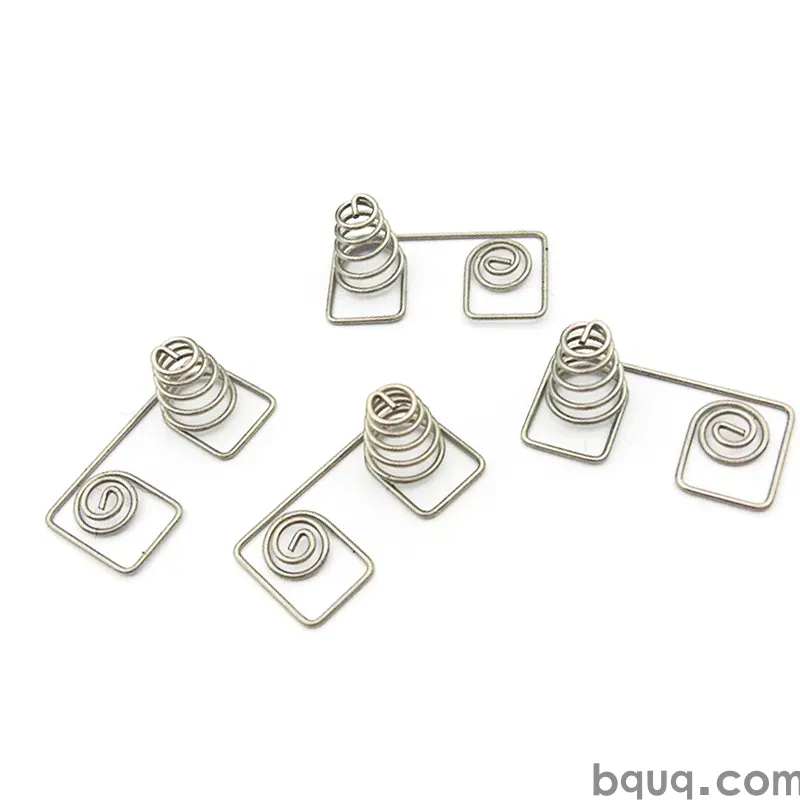
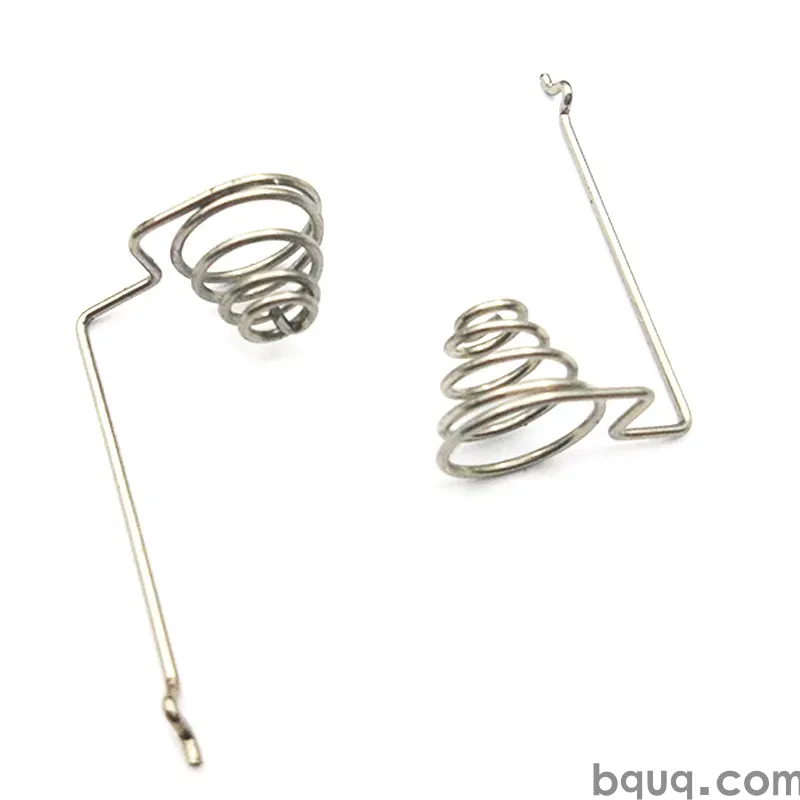
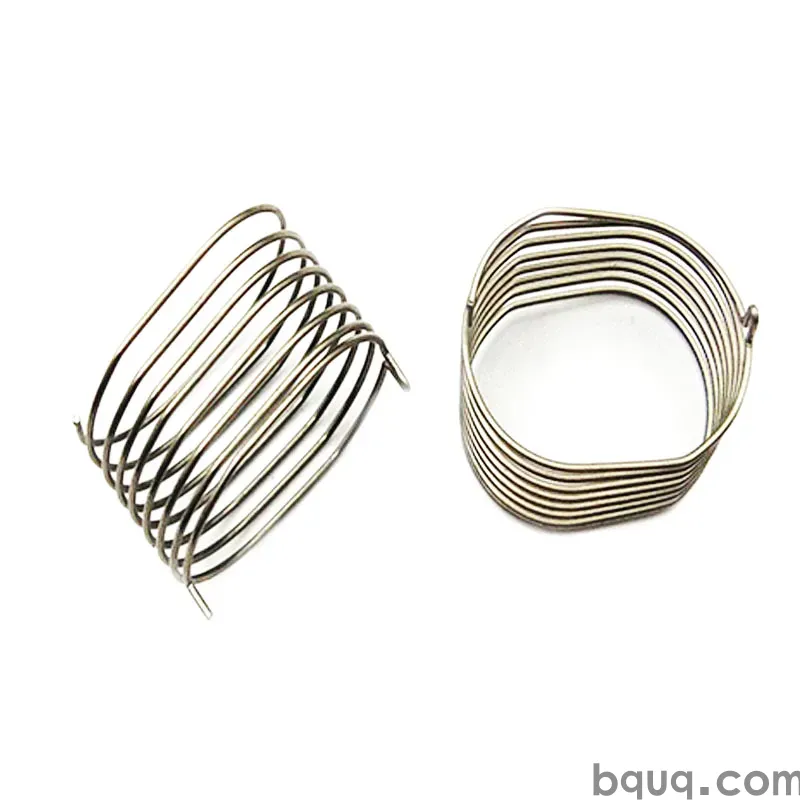
| Custom springs | 100 – millions | Rate ±10% typical | Low | Wire grade and coil geometry |
| Heat sinks | 500 – 100,000 pcs | ±0.1 mm typical | Medium | Fin ratio and base flatness |
The crossover point between CNC and stamping
This is the most common engineering question we field. As a rule of thumb, CNC machining wins below roughly 5,000 pieces per year because there is no tooling amortization. Above that, stamping's lower piece price usually overtakes the tooling investment within 12 to 18 months. The exact crossover depends on part complexity, material, and how many secondary operations the stamping needs. We cover the trade-offs in detail in CNC vs stamping supplier selection.
When to involve the factory before design freeze
The earlier the better, but the practical cutoff is before you release tooling drawings. Changes at the concept stage cost nothing. Changes after a die is cut cost the die. Send a preliminary model even if dimensions are not final — a one-page sketch with critical dimensions is enough to get useful feedback on process and feasibility.
Communication Practices That Keep Chinese Engineering Support Effective
Most failures in overseas manufacturing are communication failures dressed up as quality failures. A few habits prevent nearly all of them.
Write tolerances as numbers, not symbols
General tolerance blocks and title-block notes are interpreted differently across shops. If a dimension matters, put the number on the drawing. If it does not, say so explicitly with a note like "non-critical, reference only."
Use one thread per part number
Mixing multiple part numbers in one email chain is the fastest way to get a wrong revision manufactured. Keep one thread, one part number, one revision letter.
Confirm in writing after every call
A two-line summary email after a technical call prevents the classic mismatch where your team believes a change was approved and the factory believes it was a question.
Ask for the inspection method, not just the result
"The hole is good" is not data. Ask which gauge, which CMM, which sampling plan. BQUQ's ISO9001 system documents inspection method per feature, and first article inspection reports list measured values against nominal and tolerance.
| Communication habit | Problem it prevents |
|---|---|
| Numeric tolerances on drawing | Symbol interpretation disputes |
| One thread per part number | Wrong revision produced |
| Written recap after calls | "I thought you approved it" |
| Named engineer contact | Requests lost in sales inbox |
| Inspection method stated | Unverifiable quality claims |
| Revision letter on every file | Mixed old and new drawings |
Prototype to Production: Keeping Engineering Continuity
The riskiest moment in a sourcing project is the handoff from prototype to mass production. If the prototype came from one process and the production part from another, tolerances, datums, and surface finish can all shift.
The fix is to plan the transition before the prototype is made. Ask your supplier which process will run the production volume, and whether the prototype can be made on that same process or on a process with equivalent capability. When a prototype must be CNC machined and production will be stamped, request a bridging plan: which dimensions will be re-qualified, what the first-article inspection will cover, and how the die will be validated. Our walkthrough on sourcing from prototype to production covers the handoff checklist in detail.
Questions to ask before the tooling deposit
- Which dimensions will be re-qualified on the first stamped parts?
- What is the die validation plan and how many samples does it include?
- Who signs off on the first article, and against which drawing revision?
- What is the change-control process once the die is cut?
- How will the spring rate or heat sink flatness be verified in production?
Frequently Asked Questions
Q: How fast should a Chinese factory respond to a technical RFQ?
A: For straightforward parts with complete drawings, a first quote and DFM pass in 12 working hours is achievable and is BQUQ's standard. Complex assemblies, multi-part tooling packages, or drawings missing material and finish callouts take longer because the engineer has to ask clarifying questions first. If a supplier routinely takes more than three working days without explanation, their engineering bandwidth is likely thin.
Q: Do I need to visit the factory to get good engineering support?
A: No, but a visit accelerates trust. A one-day audit lets you meet the engineers, see the equipment, and review inspection records in person. If travel is not practical, request a video walkthrough of the specific production lines that will run your part, plus sample inspection reports. Written DFM feedback and dimensional data are the substance; the visit is confirmation.
Q: What information should I include in my first RFQ email?
A: Send 2D drawings with numeric tolerances, a 3D model if available, material and surface finish callouts, annual and first-order quantities, target unit price if you have one, and any functional requirements that are not obvious from the drawing. Note which dimensions are critical. The more context you give, the more useful the DFM response will be on the first pass.
Q: How do I handle language barriers with Chinese engineers?
A: Insist on written English technical communication and keep sentences short and literal. Use drawing callouts and part numbers instead of descriptive prose. Avoid idioms and vague qualifiers like "as smooth as possible." If a point is critical, restate it in the recap email and ask for written confirmation. Most engineering teams at export-oriented factories read technical English well.
Q: Can a Chinese factory help reduce my part cost through design changes?
A: Yes, and this is often the largest saving available. Typical levers include relaxing non-functional tolerances, increasing internal radii to allow milling instead of EDM, consolidating two parts into one stamping, changing material grade, and switching process at the volume crossover. Savings of 15-40% are common when the DFM loop runs before tooling is cut, but the changes must be validated against function.
Related Resources
- About BQUQ's Dongguan factory and four production lines: /about/
- CNC machining to ±0.005 mm: /cnc-machining/
- Metal stamping and die design: /custom-metal-stamping/
- Custom compression springs and wire forms: /compression-springs/
- Industry trends in China sourcing: /industry-dynamics/
- Technical articles and engineering guides: /bquq-blog/
- Frequently asked sourcing questions: /faq/
- Contact the engineering team: /contact/
Authored by the BQUQ Engineering Team. BQUQ (Dongguan) runs CNC machining (±0.005 mm), metal stamping, custom springs, and heat sink production in one ISO9001 factory. Source-direct from Dongguan, China — quote in 12 hours: sc@bquq.com | WhatsApp +86 13713157787 | www.bquq.com