Balancing Quality and Cost in China Sourcing
Short answer: Balance quality and cost by paying only for the tolerance, finish and documentation your product actually needs. Split the drawing into critical and non-critical features, then price each tier separately. On a typical CNC part, moving from ±0.05 mm to ±0.005 mm can add 30–60% to unit cost, while relaxing a non-functional cosmetic callout often removes 10–20%. Run a three-stage inspection plan (first article, in-process, final AQL) instead of full inspection, negotiate tooling as a one-time amortized cost, and keep MOQ flexible so you can validate before scaling. BQUQ quotes in 12 working hours from one Dongguan ISO9001 factory running four production lines.
Why quality and cost are not a single trade-off
Buyers often frame China sourcing as a dial: turn it toward cheap, or turn it toward good. In practice, cost is not one number and quality is not one number. Both are bundles.
On the cost side you are buying material, machine time, labor, tooling amortization, finishing, inspection, packaging and freight. On the quality side you are buying dimensional capability, surface condition, material certification, process consistency and documentation. The mistake is to negotiate the bundle as a whole. The professional move is to unbundle it, decide which quality elements are functional requirements, and delete the rest.
A stamped bracket does not care whether its cosmetic face is Ra 0.8 or Ra 3.2. A connector pin cares enormously whether its plating thickness is 0.8 µm or 2.0 µm. Treating both the same way either wastes money or creates field failures.
The three cost drivers buyers actually control
1. Tolerance and geometry. Tight tolerances require slower feeds, more passes, more frequent tool changes, and sometimes a different machine or a second operation.
2. Inspection and documentation. Full dimensional reports on every lot can cost more than the parts. Sampling plus a first article is usually enough.
3. Tooling and setup. Non-recurring engineering (NRE) is real money. How you amortize it changes unit price dramatically at low volume.
Everything else — material grade, finish, packaging — matters, but these three move the needle most.
How much does tighter tolerance really cost?
Tolerance is the single largest cost lever in precision manufacturing. The table below shows indicative cost multipliers for CNC turned and milled parts in aluminum and mild steel. Treat these as planning figures, not quotes; actual multipliers depend on geometry, feature count and batch size.
| Tolerance band | Typical process | Relative unit cost | Best used for |
|---|---|---|---|
| ±0.10 mm | Standard CNC, generous feeds | 1.0x (baseline) | Brackets, covers, non-mating features |
| ±0.05 mm | Standard CNC, controlled setup | 1.1–1.3x | General mating faces, hole positions |
| ±0.02 mm | Precision CNC, verified fixturing | 1.4–1.8x | Bearing seats, alignment features |
| ±0.005 mm | Precision CNC, temperature-aware | 1.8–2.6x | Shafts, spindles, collet interfaces |
| ±0.002 mm or finer | Grinding / lapping after machining | 2.5–4.0x | Only where function demands it |
The lesson is not "avoid tight tolerances." It is "localize them." A part with two ±0.005 mm features and twenty ±0.10 mm features should be priced as a mixed-tolerance part, not a precision part. Ask your supplier to quote the critical features separately.
Where tight tolerance is genuinely required
- Shaft-to-bearing or shaft-to-collet fits, where clearance drives vibration and life.
- Mating faces that set perpendicularity or parallelism across an assembly.
- Sealing surfaces and any feature controlling fluid or gas leakage.
- Electrical contact geometry, where contact force depends on spring deflection.
Where it usually is not
- Cosmetic edges and non-mating radii.
- Clearance holes with 0.5 mm of design slack.
- Internal cavities that no other part touches.
- Datum-free dimensions on a drawing that already has a functional datum scheme.
Stamping, springs and heat sinks: different cost curves
Not every process responds to tolerance the same way. A stamped part's cost is dominated by tooling and strip utilization, not by cycle time. A spring's cost is dominated by wire grade, coiling method and heat treatment. A heat sink's cost is dominated by extrusion or skiving method plus finishing.
| Process | Main cost driver | Where quality spend pays off | Where it does not |
|---|---|---|---|
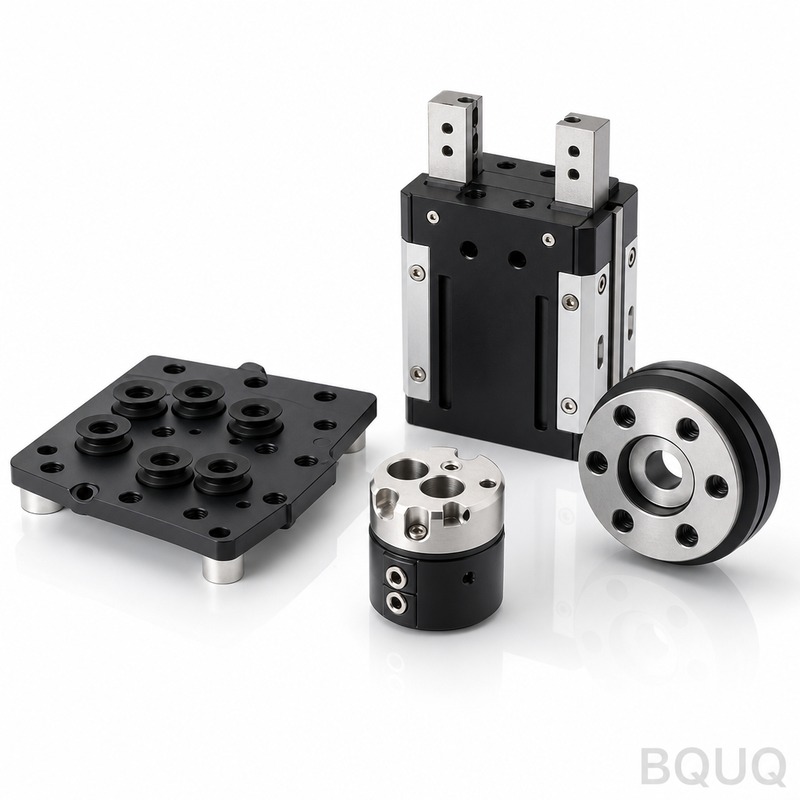
| CNC machining | Machine time, tooling, setup | Tight fits, surface finish on sealing faces | Cosmetic non-functional surfaces |
| Metal stamping | Die cost, strip yield, tonnage | Burr control, flatness, plating thickness | Over-tight tolerances on formed flanges |
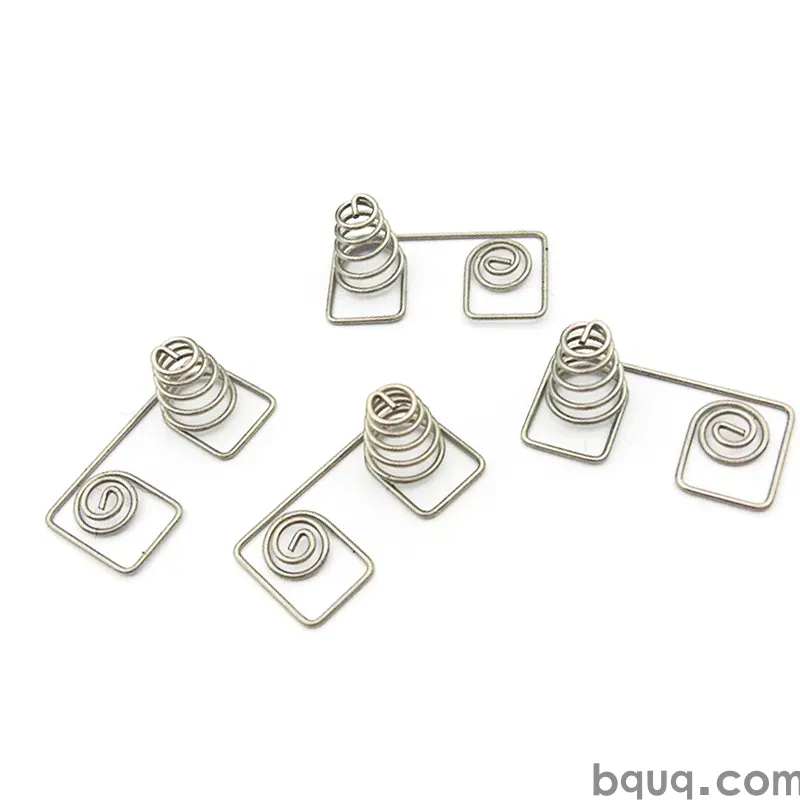
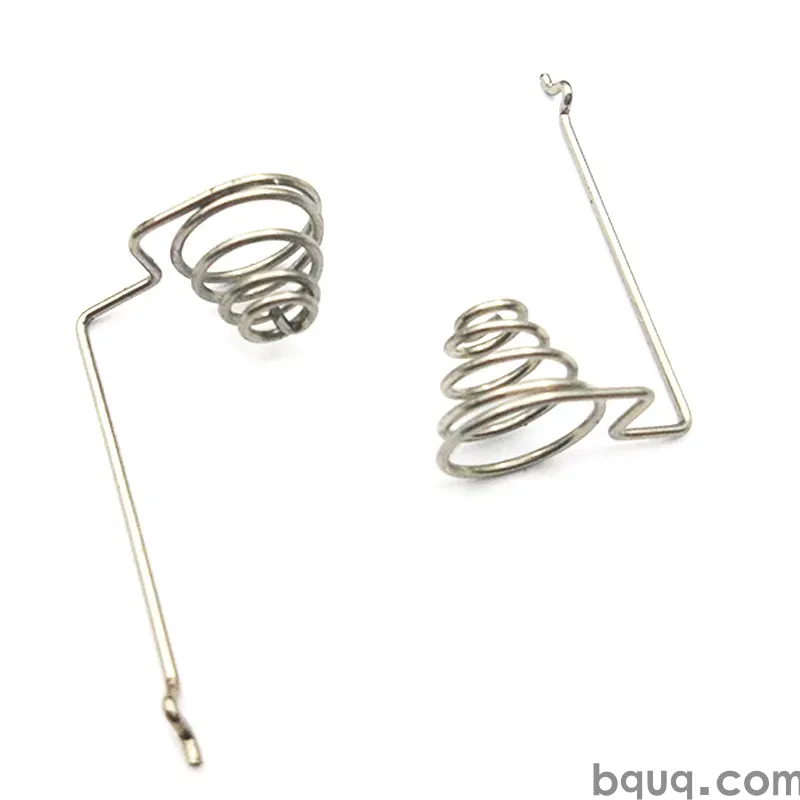
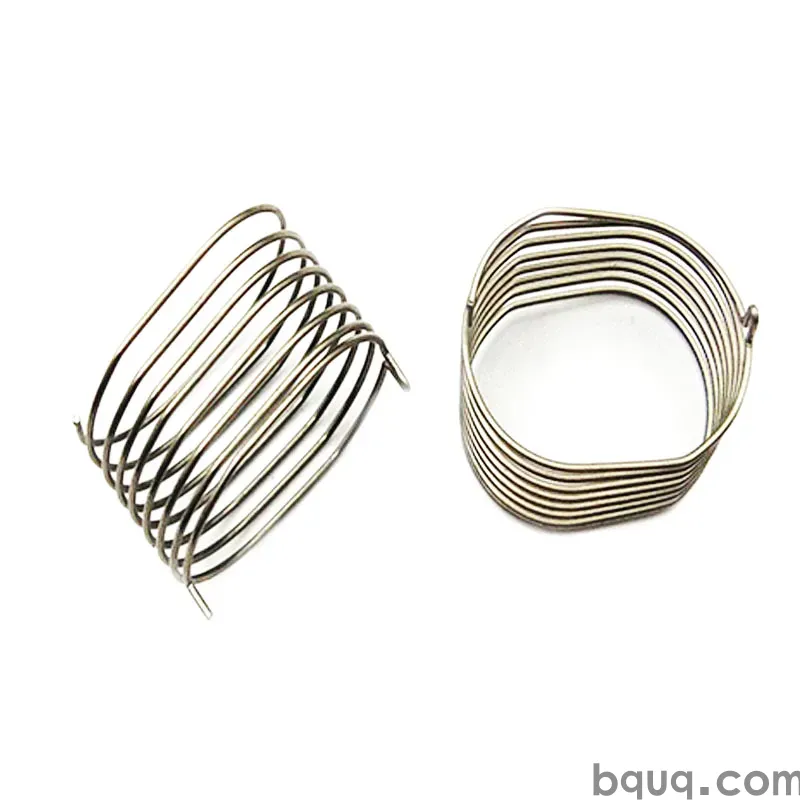
| Custom springs | Wire grade, coiling, heat treat | Load tolerances, fatigue life, plating | Cosmetic appearance of coil ends |
| Heat sinks | Extrusion/skiving, finishing | Flatness, thermal interface flatness, plating | Aesthetic anodize on hidden fins |
A practical consequence: if you are sourcing stamped parts, spend your quality budget on the die and on first-article approval, because the die determines everything downstream. If you are sourcing springs, spend it on material certification and load testing. If you are sourcing machined parts, spend it on the two or three features that actually mate.
For a deeper process-level walkthrough, see our guide to sourcing precision parts from China.
Build a tolerance-tiered drawing before you request quotes
The cheapest quality improvement available to any buyer is a better drawing. Suppliers quote what they see. If your drawing shows ±0.01 mm on every dimension, you will be quoted as a precision part even if only two features matter.
A workable tiering method
1. List every dimension and callout. Include GD&T, surface finish, plating thickness and material spec.
2. Mark each as Critical (C), Major (M) or Minor (N). Critical affects function or safety. Major affects assembly. Minor is cosmetic or reference.
3. Assign tolerances by tier. Critical gets the tight value. Major gets a standard value. Minor gets a generous block tolerance.
4. Send both versions to your supplier. Ask for a quote on the tiered drawing and a quote on the all-tight version. The gap is your savings.
5. Keep the tiered drawing as the controlled revision. Inspection follows the tiers.
This single exercise typically reduces quoted unit price by 10–25% on parts that were over-specified, without changing a single functional requirement.
Documentation that reduces cost
- A clearly defined datum scheme instead of dimension chains.
- Material grade with a recognized standard (for example, SUS304, AL6061-T6, C2680 brass).
- Plating thickness with a tolerance, not just a finish name.
- A stated inspection level rather than "inspect all dimensions."
- Packaging requirements stated once, clearly, including count per bag and moisture protection.
Inspection strategy: pay for evidence, not for activity
Full inspection of every dimension on every part is the most common hidden cost in China sourcing. It feels safe. It rarely is efficient.
A three-stage plan covers almost all risk:
| Stage | What happens | Typical scope | Cost impact |
|---|---|---|---|
| First article inspection (FAI) | Full dimensional report on first good part | 100% of drawing features | One-time, per revision |
| In-process inspection | Operator checks at defined intervals | Critical features only | Low, built into cycle |
| Final inspection | Sampling per AQL or agreed plan | Critical + major features | Low to moderate |
| Full inspection | Every part, every feature | Everything | High, rarely justified |
Matching inspection to risk
- High volume, stable process: FAI plus periodic sampling. Add SPC on critical features if the part is safety-related.
- Low volume, high mix: FAI on every revision, then final inspection sampling.
- New supplier or new die: FAI plus a short pre-production run before mass release.
- Cosmetic-critical parts: Add a visual standard sample, signed and retained by both sides.
The sample approval step is where most quality disputes are prevented. Our article on the China sample approval process covers how to structure golden samples, sign-off sheets and revision control.
Tooling, NRE and MOQ: the low-volume cost problem
At low volume, unit price is dominated by non-recurring costs. A stamping die, a machining fixture, a spring coiling setup or a heat sink extrusion die all have to be paid for by someone.
Three structures are common:
1. Tooling paid upfront, owned by buyer. Cleanest. You own the asset and can move it. Typical for stamping dies and dedicated fixtures.
2. Tooling amortized into unit price. Lower upfront cash, higher unit cost, and you need a volume commitment to make it fair.
3. Tooling included, supplier-owned. Cheapest upfront, but you have no asset and limited leverage later.
If you plan to scale, structure 1 is usually best. If you are validating a design, structure 2 with a modest MOQ keeps cash free. Our breakdown of China tooling depreciation terms explains how amortization schedules are typically written and where buyers lose leverage.
Practical MOQ tactics
- Ask for a prototype quantity separate from the production MOQ.
- Combine several low-volume parts into one setup to share fixture cost.
- Use a standard material and standard finish for the first build.
- Accept a longer lead time in exchange for a smaller first lot.
- Negotiate MOQ per revision, not per part number forever.
Flexible MOQ is a genuine advantage of working with a source factory rather than a trading layer. BQUQ, for example, runs four production lines in one Dongguan facility — CNC machining, metal stamping, custom springs and heat sinks — which means a low-volume mixed order can be scheduled without a middleman markup.
Communication cadence and its effect on total cost
Quality problems are usually communication problems discovered late. A weekly cadence with a fixed agenda — open orders, inspection results, deviations, next-week schedule — costs almost nothing and prevents expensive surprises.
Useful habits:
- One named contact per side, plus a technical backup.
- A shared deviation log, so any concession is written down before shipment.
- Photos or short videos for first-off parts, not just at final inspection.
- A clear escalation path for schedule risk, agreed before the order starts.
Our note on China communication cadence covers a simple weekly rhythm that works for both prototype and production phases.
A checklist you can apply to the next RFQ
1. Split the drawing into Critical, Major and Minor features.
2. Request quotes on both the tiered and all-tight versions.
3. Specify inspection level explicitly — FAI plus sampling, not "full inspection."
4. State material standard, plating thickness and finish with tolerances.
5. Ask for tooling cost, ownership and amortization terms in writing.
6. Confirm MOQ for the first lot separately from steady-state MOQ.
7. Agree the sample approval and deviation process before release.
8. Fix a communication cadence and a single point of contact.
Applied consistently, these steps typically reduce landed cost by 10–25% on over-specified parts while improving — not weakening — the quality evidence you hold.
Frequently Asked Questions
Q: Does a lower price in China always mean lower quality?
A: No. Price differences usually come from tolerance tiers, inspection scope, tooling amortization, material grade and order volume — not from hidden corner-cutting. Two suppliers quoting the same drawing can differ by 40% because one priced full inspection and a tighter tolerance band. Always compare quotes line by line before assuming the cheaper one is riskier.
Q: How do I decide which tolerances to tighten?
A: Tighten only features that mate, seal, rotate or carry electrical contact force. Everything else can use a generous block tolerance. A practical test: if the feature were 0.05 mm off, would the assembly still function and pass its own test? If yes, it does not need a precision callout. This usually leaves two to five critical features per part.
Q: Is full inspection worth paying for?
A: Rarely. A first article inspection covering all drawing features, plus in-process checks on critical dimensions and final sampling per an agreed AQL, catches almost all realistic defects at a fraction of the cost. Reserve full inspection for safety-critical parts, first lots from a new die, or after a documented quality escape.
Q: How should tooling costs be handled?
A: Decide based on your scaling plan. If you expect volume growth or want the option to move the tool later, pay upfront and own it. If you are validating a design, amortize it into unit price with a modest first-lot MOQ. Either way, get ownership, maintenance responsibility and end-of-life terms in writing before the order is placed.
Q: What lead time should I plan for?
A: For machined parts, allow roughly 5–10 working days for a first lot after drawing freeze, plus finishing and inspection. Stamped parts with a new die typically need 15–25 working days for tooling plus first article. Springs and heat sinks vary with tooling and finishing. Add buffer for sample approval, and confirm dates rather than assuming them.
Related Resources
- About BQUQ and our four Dongguan production lines: /about/
- CNC machining services and tolerance capability: /cnc-machining/
- Custom metal stamping and die-based production: /custom-metal-stamping/
- Custom compression springs and wire forms: /compression-springs/
- Industry trends in sourcing and manufacturing: /industry-dynamics/
- Technical articles and engineering guides: /bquq-blog/
- Frequently asked questions: /faq/
- Case studies: /case/
- Contact the engineering team: /contact/
Authored by the BQUQ Engineering Team. BQUQ (Dongguan) runs CNC machining (±0.005 mm), metal stamping, custom springs, and heat sink production in one ISO9001 factory. Source-direct from Dongguan, China — quote in 12 hours: sc@bquq.com | WhatsApp +86 13713157787 | www.bquq.com