Sourcing From Taiwan: When It Beats Mainland China
Short answer: Taiwan wins when your part needs sub-micron-class process control, a mature semiconductor or aerospace supply chain, or a supplier your end customer already approved — and you can absorb 15–40% higher piece prices plus slower, less flexible tooling changes. Mainland China wins on cost, speed, and scale for the vast majority of precision metal parts: CNC machining to ±0.005 mm, metal stamping, springs, and heat sinks, quoted in 12 working hours with flexible MOQ. The honest rule is that Taiwan is a fit for a narrow band of high-mix, high-spec, low-volume work; China is the better default for everything else.
Why do buyers even consider Taiwan?
Taiwan's manufacturing reputation was not built on marketing. It was built on decades of doing hard things at volume: semiconductor packaging and test, PCB fabrication, machine tool building, bicycle and fastener clusters, and a dense network of small and mid-size machine shops that grew up serving those industries.
That history produces three real advantages for a sourcing engineer:
Process maturity in regulated chains. Taiwanese suppliers have spent 30+ years inside semiconductor, medical device, and aerospace supply chains. Their documentation habits, change-control discipline, and measurement infrastructure reflect that. If your customer's quality team asks for a PPAP-style package or a full measurement report per lot, a Taiwanese shop is more likely to have the template ready on day one.
Deep engineering bench. Taiwan has a high density of mechanical engineers relative to its manufacturing base. DFM feedback tends to arrive fast and be technically specific. For a complex machined housing with thin walls and tight true-position callouts, that matters.
Supply chain proximity. If your assembly includes ICs, connectors, or PCBAs, Taiwan lets you co-locate mechanical and electronic sourcing in one geography and one time zone, with short domestic logistics.
None of that is free. You pay for it in piece price, tooling cost, and often in flexibility.
How does Taiwan pricing actually compare to mainland China?
The gap is not uniform. It varies enormously by process and volume. The table below reflects typical, indicative ranges we see when buyers benchmark quotes across both geographies for comparable parts and volumes. Treat these as planning numbers, not quotes.
| Process / part type | Typical Taiwan price index | Typical mainland China price index | Main driver of the gap |
|---|---|---|---|
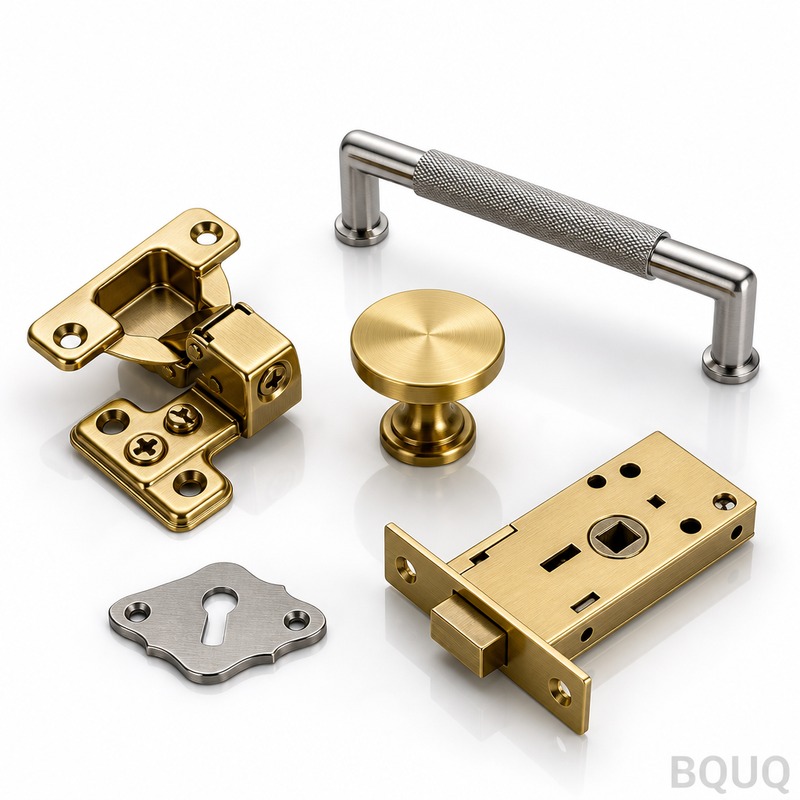
| CNC machined aluminum housing, 500 pcs/yr | 100 | 60–75 | Labor rate, machine-hour cost, tooling amortization |
| Precision stamped terminal, 500k pcs/yr | 100 | 55–70 | Strip material sourcing, die cost, press automation |
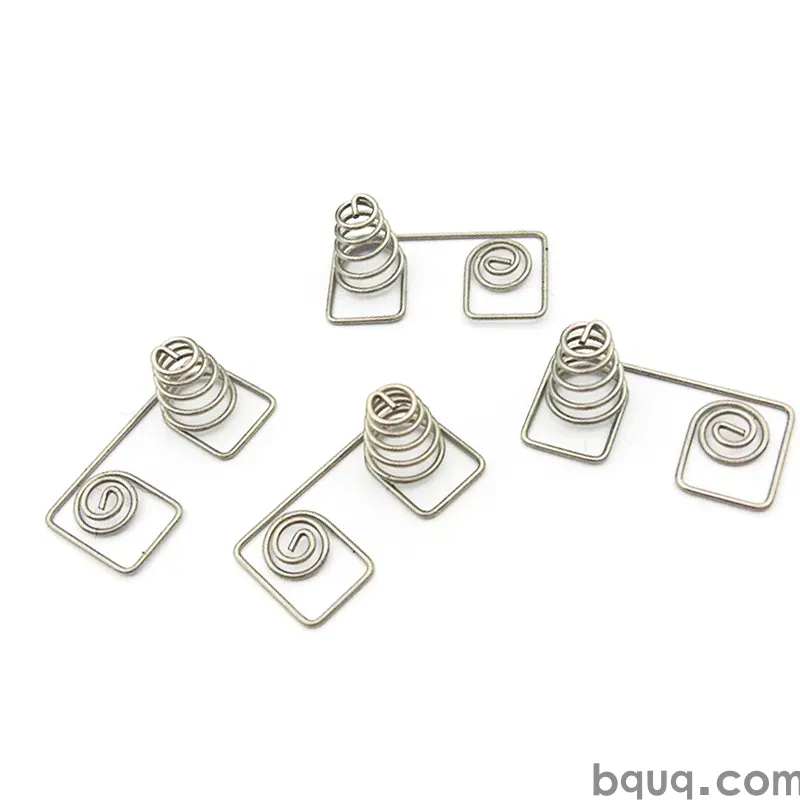
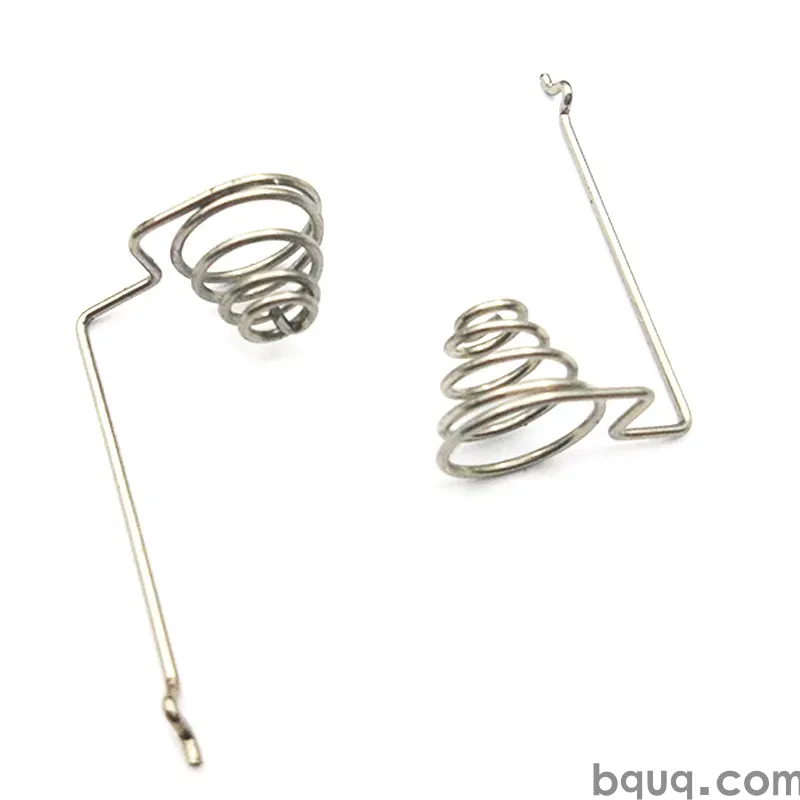
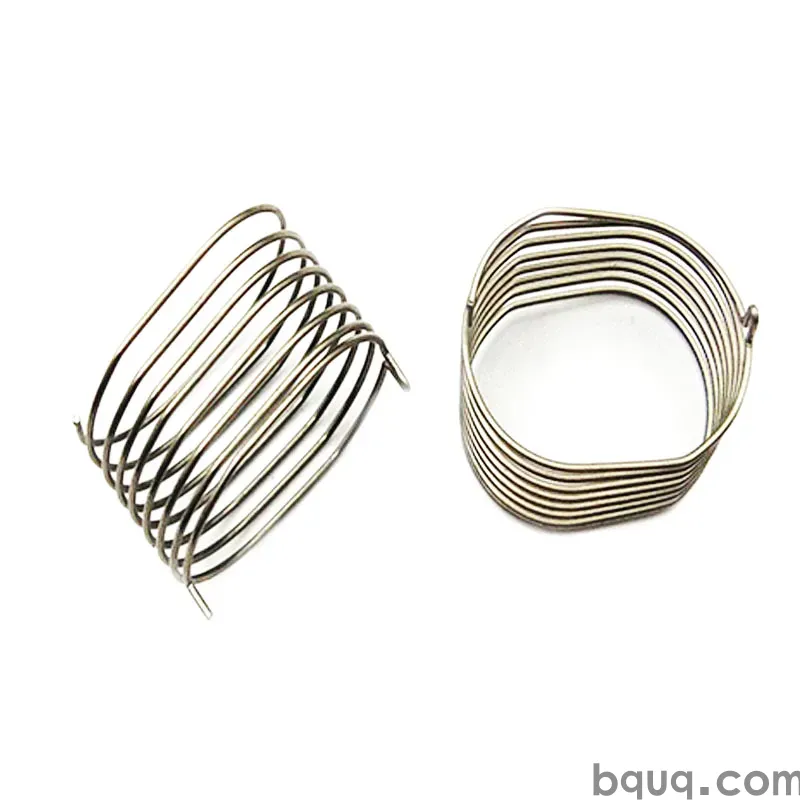
| Custom compression spring, 50k pcs/yr | 100 | 50–65 | Wire sourcing, coiling speed, secondary op labor |
| Extruded heat sink with CNC skiving, 5k pcs/yr | 100 | 60–80 | Billet cost, skiving machine throughput |
| Injection-molded enclosure tool | 100 | 45–65 | Tool shop labor, steel sourcing, polishing hours |
| Low-volume prototype machining, 10 pcs | 100 | 70–90 | Engineering time dominates; gap narrows |
Two patterns matter here.
First, the gap widens with labor content and narrows with engineering content. On a 10-piece prototype where 80% of the cost is programming and setup, Taiwan and China can be surprisingly close. On a 500,000-piece stamped terminal where the cost is strip steel plus press seconds, China's advantage is structural.
Second, the gap widens with volume. Taiwanese shops are often optimized for high-mix, moderate-volume, high-spec work. They are not always set up to chase cents on a million-piece run, and many will price accordingly — or decline.
For a fuller build-up of how landed cost actually assembles, including freight, duty, and quality cost, see our breakdown in the China sourcing cost model.
When does Taiwan genuinely beat mainland China?
There are four situations where Taiwan is usually the correct answer, and it is worth being precise about them.
1. Your end customer mandates it
This is the most common reason, and the least arguable. Aerospace primes, some medical OEMs, and certain defense-adjacent programs maintain approved supplier lists that are geography-specific or were qualified years ago. If your customer's drawing package carries a Taiwan-approved supplier note, no cost analysis will move them. Comply, and focus your cost work elsewhere.
2. The process is genuinely at the edge of capability
Taiwan has real strength in:
- Ultra-precision grinding and lapping where surface finish and flatness dominate
- Semiconductor-adjacent parts: vacuum chambers, gas delivery components, wafer handling hardware
- High-end machine tool spindles, ballscrews, and linear guide components
- Complex optical and photonics housings
In these niches, mainland China has capable suppliers too, but the density of proven process knowledge is higher in Taiwan. If your part sits at the edge of what a general machine shop can hold, paying a premium for a shop that does it every day is rational.
3. You need a specific alloy or component ecosystem
Taiwan's specialty steel, tool steel, and engineering plastics distribution is mature and well-stocked. If your part requires a niche grade with certified mill test reports and short lead time on small quantities, Taiwan can be faster than importing the same material into mainland China.
4. Volume is low, spec is high, and schedule is tight
A 200-piece run of a complex 5-axis part with a two-week deadline is a bad fit for a supplier optimized for large stamping or molding runs. Taiwanese job shops are built for exactly this. Mainland China has excellent prototype shops too — but the ones that compete on speed and spec tend to be in the same price band as Taiwan.
When does mainland China win?
For most precision metal parts, mainland China wins on the arithmetic. Consider what a Dongguan factory with four production lines under one roof can do:
| Decision factor | Taiwan | Mainland China (Dongguan) | Practical impact |
|---|---|---|---|
| Piece price, mid-volume precision part | Baseline | 25–45% lower | Direct COGS reduction |
| Tooling / die cost | Baseline | 35–55% lower | Lower NRE risk on design changes |
| Quote turnaround | 3–10 working days typical | 12 working hours typical (BQUQ) | Faster design iteration |
| MOQ flexibility | Often higher | Flexible, project-dependent | Easier pilot builds |
| Process breadth under one roof | Often specialized | CNC + stamping + springs + heat sinks | Fewer suppliers, less coordination |
| Tolerance capability | Excellent | ±0.005 mm on CNC (BQUQ) | Comparable for most parts |
| Logistics to EU/US | Similar transit, similar ports | Similar transit, similar ports | Roughly neutral |
The tolerance row is the one buyers underrate. A ±0.005 mm CNC capability is not exotic in 2026. It is standard among competent Dongguan shops serving export customers, and it covers the overwhelming majority of industrial part prints. Taiwan's advantage only becomes decisive when you need to go meaningfully tighter, or when the measurement uncertainty itself is the hard problem.
The other underrated factor is consolidation. If your BOM includes a machined bracket, a stamped contact, a compression spring, and a heat sink, sourcing all four from one Dongguan factory removes three sets of incoming inspection, three sets of shipping documents, and three sets of quality escalations. That coordination saving frequently exceeds the piece-price difference.
We wrote about this trade-off in more depth in balancing quality and cost in China sourcing.
What about lead time and responsiveness?
Lead time is where the Taiwan-versus-China conversation most often goes wrong, because people compare the wrong numbers.
Quoting speed is usually faster from mainland China. A well-run Dongguan factory can return a manufacturable quote in 12 working hours. Taiwanese shops typically take several days to a week or more, partly because engineering review is more thorough and partly because the quote queue is longer.
Production lead time is roughly comparable for similar processes at similar volumes. Neither geography has a structural advantage on a 20,000-piece stamped run.
Change responsiveness favors mainland China in most cases. Tooling modifications, material substitutions, and design revisions move faster when the tool shop is in the same building as the press, and when the supplier is not juggling a queue of higher-priority semiconductor work.
Schedule reliability is a genuine Taiwan strength in regulated industries, where delivery commitments are backed by formal systems and penalties. But this is a supplier-quality attribute, not a geography attribute. A well-managed Dongguan factory with ISO9001 systems and disciplined production planning will outperform a poorly managed Taiwanese shop.
The practical takeaway: do not choose a country for lead time. Choose a supplier, then verify their schedule claims with a pilot order. Our quote comparison guide covers how to normalize quotes so lead-time claims are actually comparable.
How should you structure a dual-geography sourcing strategy?
The most effective approach for most B2B buyers is not to pick a winner but to segment the BOM.
Segment by criticality, not by country
Tier 1 — Capability-critical parts. Tight tolerances, exotic materials, regulated end markets, or customer-mandated geography. Route to Taiwan or to a specialized supplier regardless of cost. Accept the premium.
Tier 2 — Volume-critical parts. Stamped terminals, contacts, springs, heat sinks, brackets at high annual volume. Route to mainland China. The cost delta is large and the process is well understood.
Tier 3 — Iteration-critical parts. Prototypes, pilot builds, and designs still in flux. Route to whichever supplier quotes fastest and tolerates low MOQ. In practice this is usually mainland China, where flexible MOQ and 12-hour quoting shorten the design loop.
Dual-source the parts that hurt
For any part where a stockout stops your line, qualify two suppliers in different geographies if the volume justifies the qualification cost. This is expensive and slow, so reserve it for genuine single points of failure.
Keep the quality system consistent
Whatever geography you choose, apply the same incoming inspection plan, the same drawing revision control, and the same first-article requirements. Geography changes the price. It does not change your responsibility for verifying what arrives. If you are building that plan, our third-party inspection guide walks through when to bring in an external inspector and when in-house AQL sampling is sufficient.
Do you need both?
For most buyers, no. A single well-chosen mainland China supplier covering CNC machining, metal stamping, springs, and heat sinks under one ISO9001 roof will handle the majority of a precision metal BOM at 25–45% below Taiwanese pricing, with faster quoting and comparable tolerances.
Taiwan earns its premium in a specific band: regulated end markets, capability-edge processes, customer mandates, and low-volume high-spec work. If your part sits in that band, pay for it without regret. If it does not, the premium is buying reassurance rather than capability.
The right question is not "Taiwan or China?" It is "which of my parts actually needs the premium, and which ones are being over-specified out of habit?"
Frequently Asked Questions
Q: Is Taiwan manufacturing more expensive than mainland China?
A: Yes, typically by 15–40% on piece price and 35–55% on tooling, though the gap varies widely by process and volume. On low-volume prototype machining where engineering time dominates, the gap can shrink to 10–30%. On high-volume stamping and springs, it often exceeds 40%. Always benchmark comparable parts at comparable volumes before concluding.
Q: Can mainland China suppliers hold the same tolerances as Taiwanese shops?
A: For most industrial parts, yes. Competent Dongguan factories routinely hold ±0.005 mm on CNC machining, which covers the large majority of precision metal prints. Taiwan retains an advantage in ultra-precision grinding, semiconductor-adjacent components, and cases where measurement uncertainty itself is the hard problem. Match the tolerance requirement to the process, not to a country.
Q: How fast can I get a quote from a Chinese supplier?
A: A well-organized Dongguan factory can return a manufacturable quote in 12 working hours when the drawing package is complete. Taiwanese shops typically take three to ten working days. If your design is still iterating, faster quoting materially shortens the development cycle and usually outweighs a modest piece-price difference.
Q: What MOQ should I expect when sourcing precision parts?
A: It depends on process and tooling. CNC machining and springs can often run at low or flexible MOQ because setup is the main cost. Stamping and deep drawing require a die, so MOQ is driven by amortization. Taiwanese suppliers often set higher MOQ floors than mainland Chinese ones, which matters most during pilot builds and early production.
Q: Should I dual-source between Taiwan and mainland China?
A: Only for parts where a stockout genuinely stops your line. Dual sourcing doubles qualification cost, doubles inspection overhead, and splits volume in ways that weaken your pricing. For non-critical parts, a single qualified supplier with a documented backup plan is usually more economical than maintaining two approved sources in different geographies.
Related Resources
- About BQUQ and our Dongguan factory: /about/
- CNC machining services (±0.005 mm): /cnc-machining/
- Custom metal stamping and tooling: /custom-metal-stamping/
- Compression springs and custom spring design: /compression-springs/
- Industry trends and sourcing shifts: /industry-dynamics/
- Technical articles and engineering guides: /bquq-blog/
- Frequently asked questions: /faq/
- Case studies: /case/
- Contact our engineering team: /contact/
Authored by the BQUQ Engineering Team. BQUQ (Dongguan) runs CNC machining (±0.005 mm), metal stamping, custom springs, and heat sink production in one ISO9001 factory. Source-direct from Dongguan, China — quote in 12 hours: sc@bquq.com | WhatsApp +86 13713157787 | www.bquq.com