Sourcing Fasteners and Standard Hardware From China
Short answer: Sourcing fasteners and standard hardware from China works best when you treat screws, bolts, nuts, washers, and clips as engineered items, not catalog commodities. Lock the standard (DIN, ISO, ANSI/ASME, JIS), the property class (for example 8.8 vs 10.9, or A2-70 vs A4-80), the coating and its salt-spray target, and the inspection method before you request pricing. Buyers who do this typically cut landed cost 20–40% versus Western distribution while holding incoming defect rates under 1%. BQUQ quotes fastener and hardware programs — including custom stamped clips and machined specials — within 12 working hours.
Fasteners are the cheapest part on the bill of materials and the most expensive when they fail. A $0.03 screw that strips in assembly can cost a $200 rework hour, and a plating that fails salt spray can trigger a field campaign. That asymmetry is why fastener sourcing deserves the same engineering discipline you apply to a machined housing or a stamped bracket.
This guide walks through the practical mechanics of buying standard hardware and custom fasteners from China: how to specify, how to compare suppliers, what to inspect, and where the hidden costs live.
What counts as "standard hardware" versus a custom fastener?
Standard hardware is any fastener defined by a published dimensional and material standard that multiple factories can produce interchangeably. Custom fasteners deviate from those standards in geometry, material, drive, head form, or performance envelope — and therefore need drawings, tooling, and first-article approval.
| Category | Examples | Typical sourcing route |
|---|---|---|
| Standard threaded | Hex bolts, socket cap screws, machine screws, nuts, studs | Catalog purchase, mill cert + dimensional spot check |
| Standard non-threaded | Washers, pins, retaining rings, rivets, keys | Catalog purchase, hardness/plating verification |
| Semi-standard | Shoulder screws, flange bolts, serrated nuts, weld studs | Catalog with drawing confirmation |
| Custom cold-formed | Non-standard heads, extended lengths, special threads | Tooling + PPAP-style first article |
| Custom machined | Precision shafts, spacers, standoffs, threaded inserts | CNC turning, ±0.005 mm capable |
| Custom stamped | Clips, brackets, contact springs, retainers | Progressive die stamping |
The practical test: if two factories can quote the identical part number from a published standard and both parts will interchange, it is standard hardware. If either factory needs your drawing to make it, it is custom — and it needs a different control plan.
Which standards should you specify on the PO?
Ambiguity is the number-one cause of fastener disputes. "M6 stainless bolt" is not a specification. A usable line item names the standard, the property class or grade, the thread tolerance, the coating, and the finish.
| Standard system | Common designations | Where it is used |
|---|---|---|
| ISO metric | ISO 4014/4017, ISO 4762, ISO 4032 | Global default, EU machinery |
| DIN | DIN 912, DIN 933, DIN 934, DIN 985 | Legacy EU drawings, industrial equipment |
| ANSI/ASME inch | ASME B18.2.1, B18.3, B18.6.3 | North American equipment, inch threads |
| JIS | JIS B 1180, B 1176 | Japanese-origin machinery, Asian supply chains |
| Property classes | 4.8, 8.8, 10.9, 12.9 (steel); A2-70, A4-80 (stainless) | Strength and corrosion selection |
| Coatings | Zinc trivalent, zinc-nickel, HDG, Dacromet, black oxide, PTFE | Corrosion and appearance requirements |
Thread tolerance matters more than people expect
A 6g external thread and a 6H internal thread are the ISO defaults and will assemble cleanly. If your drawing calls for 6e/6f (tight) or a preload-critical joint, say so explicitly — a supplier quoting the default will ship a part that technically meets "M6" but misses your fit requirement. For inch threads, specify class 2A/2B unless you deliberately need 3A/3B.
Property class is a strength claim, not a label
Class 8.8 means a minimum tensile strength of 800 MPa and a yield of roughly 640 MPa. Class 10.9 jumps to 1040 MPa. The jump in price between them is real, and so is the jump in hydrogen-embrittlement risk at high hardness with electroplating. For 10.9 and above in zinc-plated steel, ask for a bake cycle after plating and get the process recorded on the inspection report.
How do you compare fastener suppliers without flying to China?
You compare them on evidence, not on price alone. A credible fastener supplier from China should return, within a few working days, a quote that includes the standard reference, material source, coating spec, packing method, and a statement about which inspection documents ship with the lot.
Ask for these five things in the first exchange:
1. Standard and grade confirmation written back on your RFQ line, not implied.
2. Material origin — domestic mill, imported mill, or unspecified.
3. Coating specification with salt-spray hours and test standard (ASTM B117 is the common reference).
4. Inspection documents — mill cert, dimensional report, hardness, plating thickness.
5. Packing definition — bulk carton, bagged by size, labeled with lot traceability.
A supplier who answers all five quickly is usually a supplier who has done this before. A supplier who answers only price is a trading intermediary reselling from an unknown mill.
Where does the real cost sit in a fastener program?
Unit price is the visible cost. The invisible costs — sorting, rework, line stoppage, and expedited freight — usually dwarf it. This table shows a typical indicative breakdown for a mid-volume steel screw program.
| Cost element | Typical share of landed cost | Notes |
|---|---|---|
| Piece price (FOB) | 45–60% | Driven by material, volume, and coating |
| Ocean freight and insurance | 5–12% | Fasteners are dense; weight dominates |
| Duty and import charges | 3–10% | Depends on HS classification and country |
| Incoming inspection | 2–6% | Higher if you do sampling plus sorting |
| Quality escapes / rework | 0–15% | The swing factor; drives everything else |
| Inventory carrying cost | 3–8% | Long lead times force safety stock |
The lesson: shaving 5% off piece price while adding 10% of quality-escape cost is a losing trade. Buyers who get this right focus on process control at the source. Our guide to high-volume China sourcing covers the volume mechanics in more detail.
How should you structure a quality agreement for fasteners?
Fasteners are high-quantity, low-value items, which makes 100% inspection economically impossible. You control them with sampling plans, documented process control, and clear acceptance criteria. A fastener quality agreement should cover:
- Acceptance sampling: AQL levels per attribute (dimensions, plating, thread gauge, hardness).
- Critical characteristics: Which dimensions are functional and which are reference.
- Material traceability: Mill certificate retained per lot, with heat number where required.
- Plating control: Thickness range, salt-spray hours, and bake requirement for high-strength steel.
- Non-conformance handling: Who pays for sorting, who owns the scrap, and how the lot is dispositioned.
- Change control: Any change to material source, coating line, or tooling requires written approval.
A written agreement is not bureaucracy — it is the difference between a claim you can enforce and an argument you cannot win. Our template-level breakdown in China quality agreements walks through the clauses that actually get used.
When should you buy a custom fastener instead of a standard one?
Buy custom when the standard part forces a design compromise you will pay for elsewhere. Common triggers:
- Assembly time: A captured washer or a self-aligning head can remove a manual step.
- Corrosion: A standard zinc-plated screw in a marine or outdoor enclosure may need a different alloy or coating.
- Space: A standard head height may not clear a neighboring component.
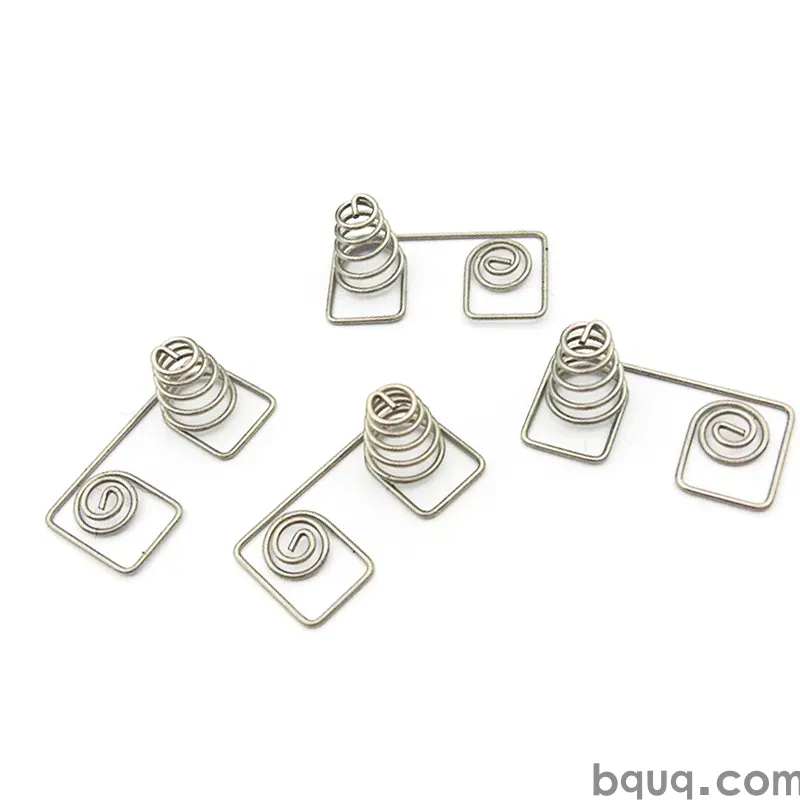
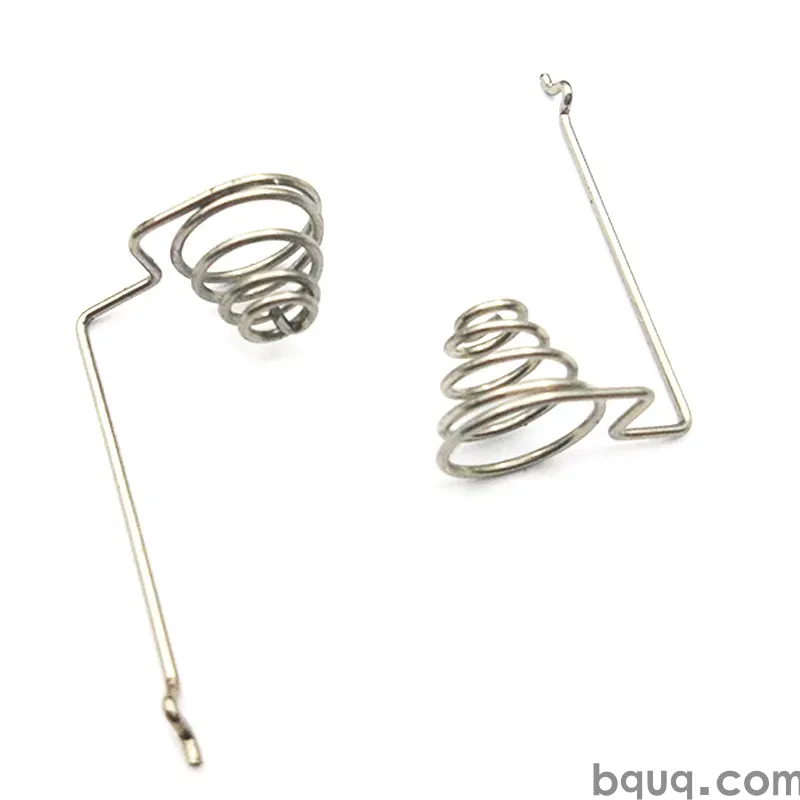
- Electrical function: Contact springs, EMI clips, and battery contacts are fasteners in name only — they are functional stamped parts.
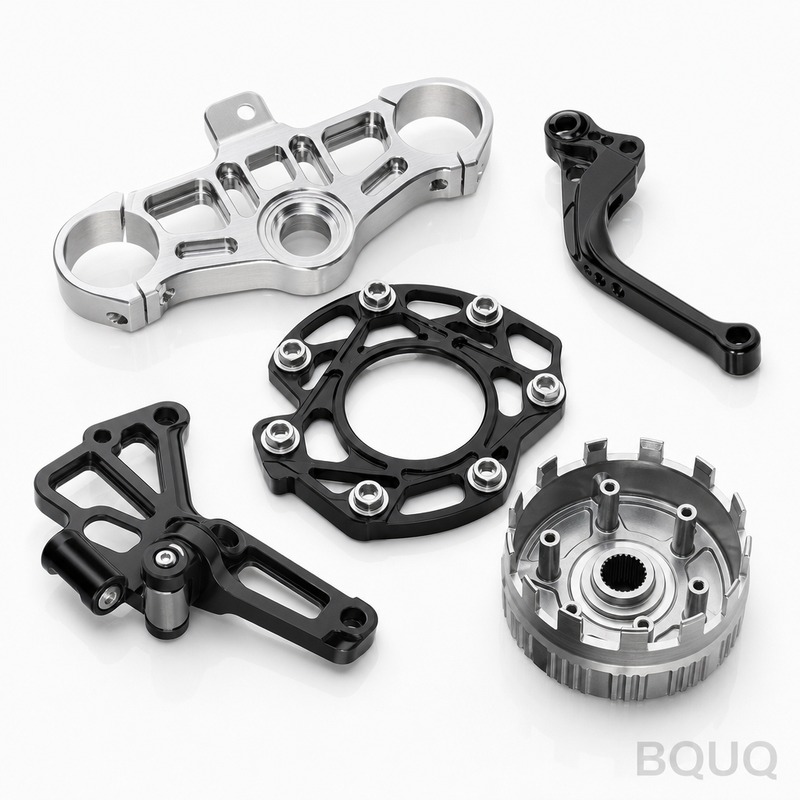
This is where a multi-process partner beats a pure fastener trader. A custom clip may start as a progressive-die stamped part, get a heat treat, and finish with selective plating. A precision spacer may be turned on a CNC lathe to ±0.005 mm. If your program mixes catalog hardware with custom stamped and machined items, consolidating suppliers reduces both freight and coordination overhead — the logic we lay out in sourcing a multi-process partner.
A worked example
A customer needed a stainless retaining clip for a connector housing. The catalog alternative was a standard E-clip that required a secondary bending operation at assembly. The custom route used a progressive die with an in-die bend, delivered the clip ready to install, and removed roughly 12 seconds of assembly labor per unit. At 200,000 units per year, the labor saving paid for the tooling in under two quarters. That is the kind of arithmetic that should drive the standard-versus-custom decision.
What does inspection actually look like on the factory floor?
For standard hardware, inspection is a sampling exercise backed by documents. For custom fasteners, it is a first-article plus ongoing process control.
| Inspection stage | What is checked | Typical method |
|---|---|---|
| Incoming material | Grade, heat number, diameter | Mill cert review, micrometer |
| In-process (cold forming) | Head form, thread start, length | Gauges, visual, SPC on critical dims |
| In-process (stamping) | Burr height, bend angle, cut-off | Vision or optical comparator |
| Heat treat | Hardness, case depth | Hardness tester, microstructural check |
| Plating | Thickness, adhesion, salt spray | XRF, tape test, salt-spray chamber |
| Final | Thread gauge, dimensions, torque | Go/no-go gauges, torque testing |
| Packing | Count, labeling, lot trace | Weight verification, label audit |
Two documents do most of the work: a dimensional report on the first article, and a lot-level certificate covering material and plating. Everything else is sampling.
How do you avoid the classic fastener sourcing traps?
Five traps account for most fastener failures in the field.
1. Grade substitution. A supplier ships class 8.8 when you specified 10.9 because the price looked better. Prevent it with hardness testing on incoming lots and a change-control clause.
2. Coating shortfall. Plating thickness drifts to the low end of the range, and salt spray fails months later. Prevent it with XRF verification and a defined minimum thickness, not a range.
3. Thread tolerance drift. Dies wear, and threads drift toward the loose end of the tolerance. Prevent it with periodic go/no-go gauge checks and die-life records.
4. Hydrogen embrittlement. High-strength steel plus electroplating without a bake cycle equals delayed cracking. Prevent it by requiring the bake and documenting it.
5. Mixed lots. Two heat numbers packed in one carton. Prevent it with lot labeling and a rule that one carton equals one lot.
None of these are exotic. All of them are preventable with a specification and a sampling plan.
Frequently Asked Questions
Q: Is it cheaper to buy standard fasteners from China or from a local distributor?
A: For commodity fasteners at volume, China is typically 20–40% cheaper landed, even after freight and duty, because dense parts ship efficiently and Chinese mills produce at scale. Below roughly 5,000 pieces per size, a local distributor often wins once you count freight, duty, and the working capital tied up in safety stock. Run the landed-cost math per line item, not per shipment.
Q: Do I need a custom drawing for a standard screw?
A: No, but you do need a complete specification. Name the standard (for example ISO 4762), the property class (8.8 or 10.9), the thread tolerance, the coating with a minimum thickness, and the inspection documents you expect. A drawing is only necessary when you deviate from the published standard in geometry, material, or performance.
Q: How do I verify that a supplier actually used the grade I specified?
A: Request the mill certificate with heat number, then verify independently with hardness testing and, for critical joints, tensile testing on a sample. XRF confirms alloy composition for stainless grades like A2-70 versus A4-80. Suppliers who resist providing a heat number are usually sourcing from multiple mills without traceability, which is a warning sign.
Q: What is a reasonable lead time for custom fasteners from China?
A: Cold-formed custom fasteners typically need 15–25 working days for tooling plus 15–25 working days for production, indicative and dependent on complexity. Stamped clips and brackets follow similar tooling timelines. Standard catalog hardware often ships from stock in 3–10 working days. Add 20–35 days for ocean freight, or use air freight for urgent first lots.
Q: Can one supplier handle standard hardware and custom stamped parts?
A: Yes, and consolidating usually reduces total cost. A factory with stamping, CNC machining, and spring capability can produce the clip, the spacer, and the spring while you buy catalog screws separately. Consolidation cuts freight legs, simplifies incoming inspection, and gives you one quality contact. BQUQ runs four production lines in one Dongguan factory for exactly this reason.
Related Resources
- About BQUQ and our Dongguan factory: /about/
- CNC machining services for custom spacers, shafts, and threaded parts: /cnc-machining/
- Metal stamping for clips, brackets, and contact springs: /custom-metal-stamping/
- Compression springs and wire forms: /compression-springs/
- Industry trends and sourcing signals: /industry-dynamics/
- Technical articles and engineering guides: /bquq-blog/
- Frequently asked questions: /faq/
- Case studies: /case/
- Contact our engineering team: /contact/
Authored by the BQUQ Engineering Team. BQUQ (Dongguan) runs CNC machining (±0.005 mm), metal stamping, custom springs, and heat sink production in one ISO9001 factory. Source-direct from Dongguan, China — quote in 12 hours: sc@bquq.com | WhatsApp +86 13713157787 | www.bquq.com