What a Shrapnel Stamping Part Actually Does in Your Assembly Shrapnel (also called contact spring or spring clip) is a thin metal stamping that provides electrical contact, mechan
BQUQ China Dongguan Hardware Stamping Parts Manufacturer Shrapnel Precision
What a Shrapnel Stamping Part Actually Does in Your Assembly Shrapnel (also called contact spring or spring clip) is a thin metal stamping that provides electrical contact, mechanical retention, or g
Get a Fast Quote for This Part
Send us your drawing / quantity / material — reply within 24h.
What a Shrapnel Stamping Part Actually Does in Your Assembly
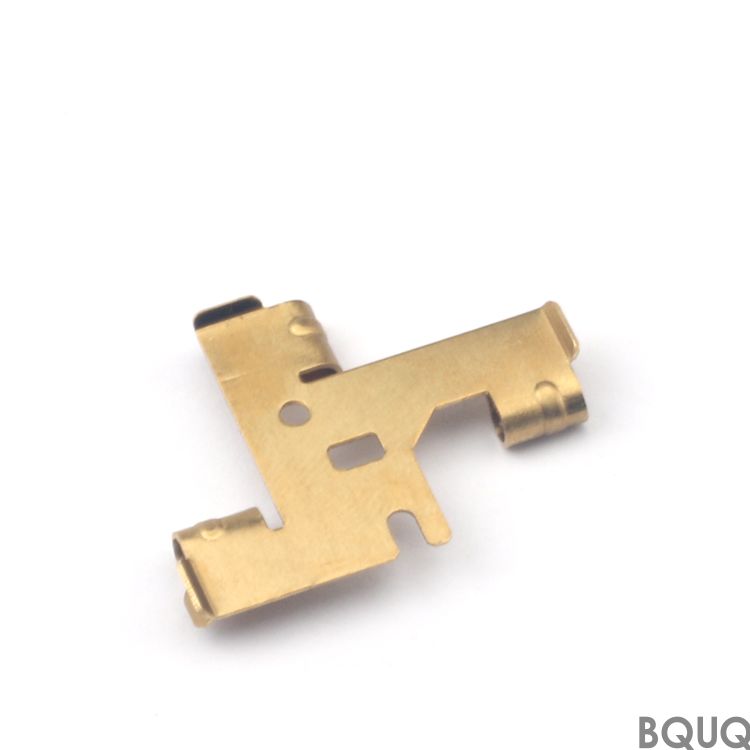
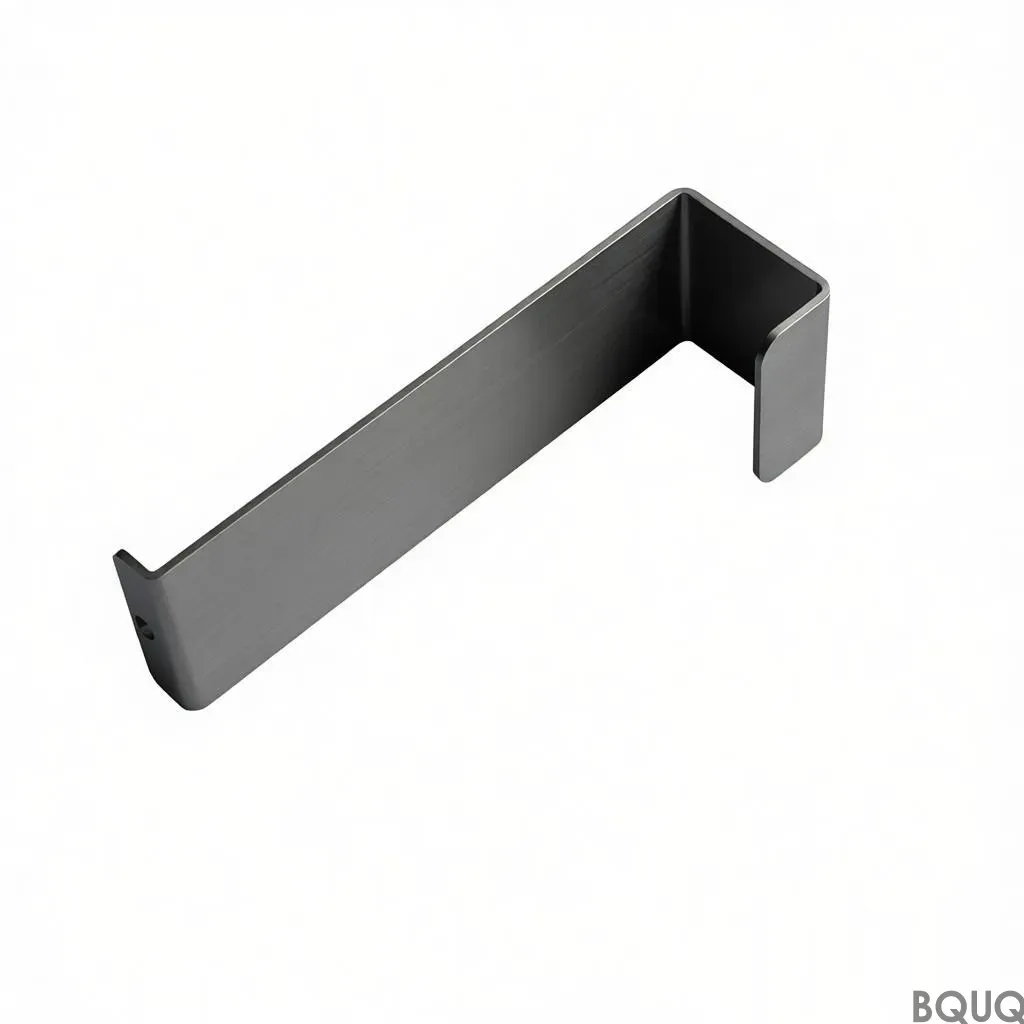
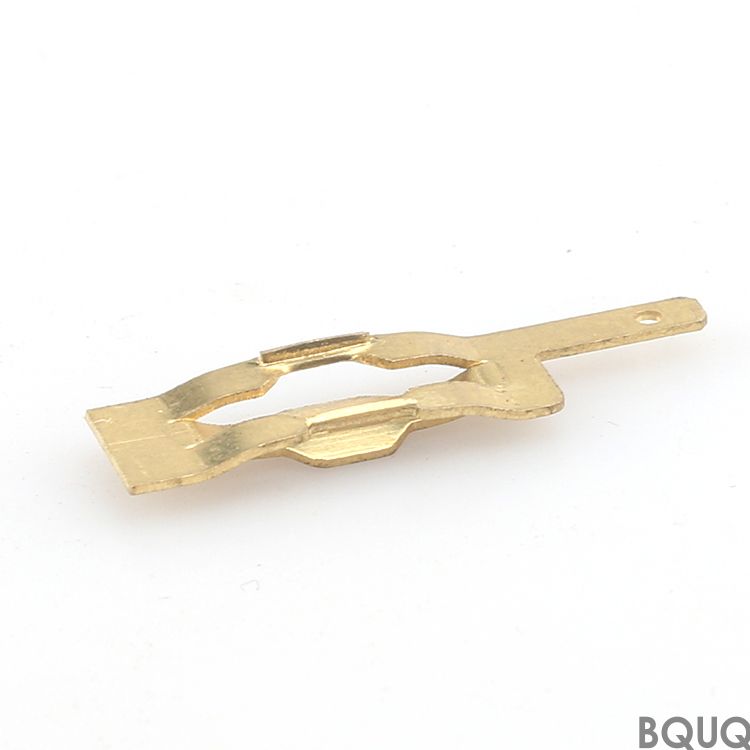
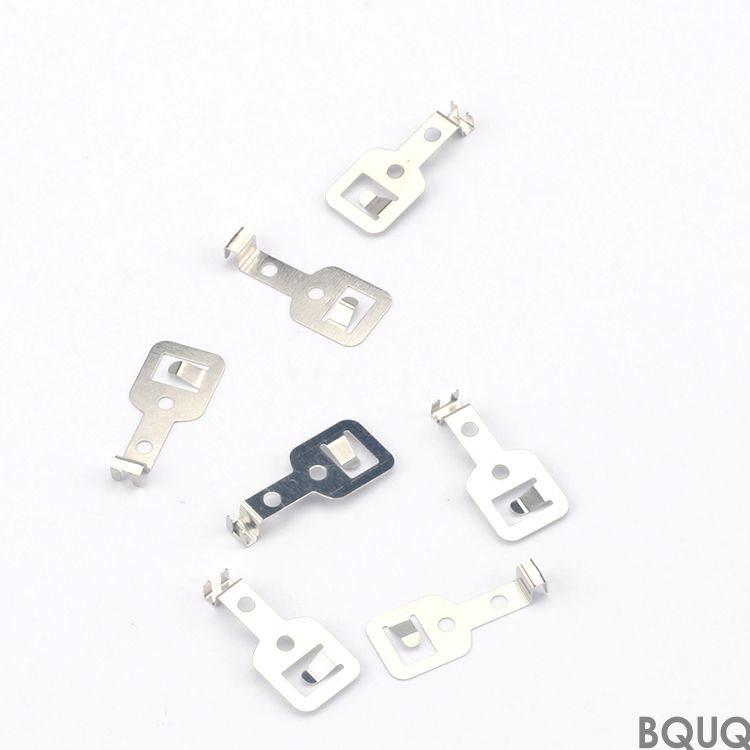
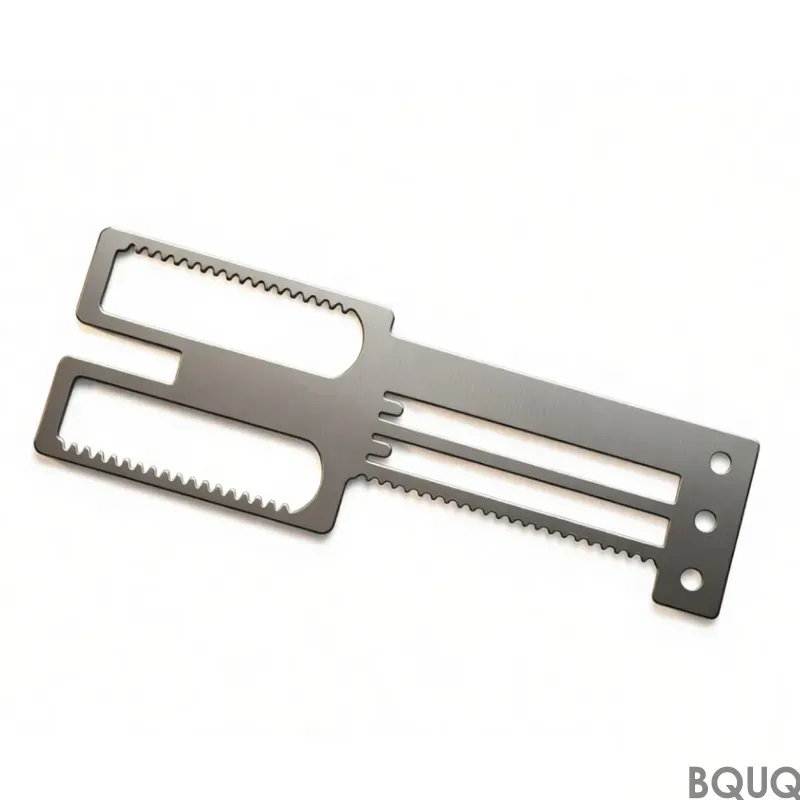
Shrapnel (also called contact spring or spring clip) is a thin metal stamping that provides electrical contact, mechanical retention, or grounding force in connectors, switches, battery holders, and automotive relays. We manufacture these in Dongguan with a dimensional tolerance of ±0.01 mm on critical features, flatness within 0.05 mm, and surface finish down to Ra 0.8 µm. You get parts that hold consistent contact force across 10,000 insertion cycles, and we ship standard tooling samples in 7 days.
How We Control Springback in High-Strength Shrapnel Alloys
Most shrapnel failures come from unpredictable springback after forming. Our press operators use a three-step compensation method: first, we simulate bend angles in CAD; second, we run a trial strip on a 110-ton high-speed press; third, we adjust the die radius by 0.02 mm increments until the released angle matches your print. For beryllium copper and stainless steel 301, we use coining dies that reduce springback variation to ±0.5 degrees across a 10,000-piece batch.
All stamping happens in our 6,500 m² Dongguan factory on 25 presses ranging from 25 to 250 tons. We run progressive dies at 400 strokes per minute for simple shrapnel, and compound dies for parts with tight co-planarity requirements. Every die is built in-house, so we can modify a feature within 48 hours without waiting for an overseas tool shop.
Materials and Heat Treatment We Use for Contact Force Longevity
Shrapnel needs both elasticity and wear resistance. We stock four primary materials: C5210 phosphor bronze (hardness 180–220 HV), C17200 beryllium copper (heat-treated to 36–42 HRC), SUS301 stainless steel (full-hard, 420–480 HV), and 65Mn spring steel (oil-quenched to 44–48 HRC). For high-cycle applications, we apply a selective heat treatment using induction hardening only on the contact nose, keeping the base spring section ductile.
If your shrapnel carries electrical current, we add a pre-plating step: nickel underplate 1–3 µm, then gold flash 0.1–0.3 µm on the contact area. This prevents galvanic corrosion and keeps contact resistance below 20 mΩ at 100 gf force. We have also run silver-plated shrapnel for high-frequency RF grounding, with plating thickness verified by X-ray fluorescence on every lot.
Typical Shrapnel Specs We Quote From Your Drawing
Parameter
Value Range
Material thickness
0.08 – 2.5 mm
Part size (L×W)
3 × 2 mm to 120 × 80 mm
Hardness (after heat treat)
36 – 48 HRC (depending on alloy)
Dimensional tolerance
±0.01 mm on critical, ±0.05 mm general
Flatness
0.05 mm over 25 mm length
Surface finish Ra
0.8 µm (standard), 0.4 µm (lapping)
Contact force at 0.3 mm deflection
50 – 300 gf (per design)
Burr height
≤ 0.03 mm, deburred on request
Lead time (samples)
7 days for standard tooling
MOQ
No MOQ – start with 100 pcs
Inspection Before Every Shipment: Force, Height, and Plating Thickness
Shrapnel is a functional part, so we do not rely only on calipers. Every batch goes through a 100% contact force check using a digital push-pull gauge mounted on a test fixture that mimics your mating connector. We also measure part height on a CMM with 0.5 µm resolution, and we verify plating thickness on three parts per lot using XRF. For high-volume orders, we use a vision system that checks bend angle and surface scratches at 200 parts per minute, rejecting anything outside your print limits.
We provide a full inspection report with each shipment, including material mill certificates, hardness test results, and a force-displacement curve graph. If you need PPAP level 3 documentation, we prepare it cost-free for the first order from our China Dongguan hardware stamping parts manufacturer facility. This is precision manufacturing with traceability — every part can be traced to the coil lot and the press operator.
When You Should Choose Stamping Over CNC for Shrapnel
If your shrapnel is thinner than 1.5 mm and you need more than 5,000 pieces per year, stamping is always cheaper than CNC machining. A progressive die produces one shrapnel every 0.15 seconds, while CNC milling takes 40–60 seconds per part. The tooling cost (typically $800–$3,000) pays back within the first 20,000 parts. But for extremely complex 3D shapes or prototypes under 200 pieces, we recommend CNC — we do both in the same factory, so you get an honest comparison.
For material selection and cutting strategies, see our CNC cutting tool selection guide if you are also machining a mating component. And before you finalize your print, review the CNC machining tolerances guide to avoid specifying tighter limits than the stamping process can hold at low cost.
What is your minimum order quantity for shrapnel stamping?
No MOQ — we accept 100 pieces for sampling and 1,000 pieces for production, made in China with full quality documentation.
Can you customize the contact force of my shrapnel?
Yes, we adjust the bend angle, material thickness, or heat treatment cycle to hit your exact force target, and we verify it on a test fixture before shipping.
How do you ensure quality for large shrapnel batches?
We use in-die sensors that check part presence and height every stroke, plus a final 100% vision inspection for dimensional and surface defects.
What is the typical lead time for a custom shrapnel tool?
Standard progressive die tooling takes 15–20 working days, and we ship first articles within 7 days of die approval.
Send Your Drawing for a Firm Quote Within 12 Hours
We do not charge for quoting, and we do not inflate prices for small quantities. Send your 2D drawing (PDF or DXF) or 3D model (STEP) to sc@bquq.com — our engineers will review formability, contact force, and material options within 4 hours. You will receive a firm quote with tooling cost, unit price, and lead time within 12 hours. For urgent questions, message us on WhatsApp at +86 13713157787. We are a China Dongguan hardware stamping parts manufacturer shrapnel specialist, and we are ready to run your part this week.