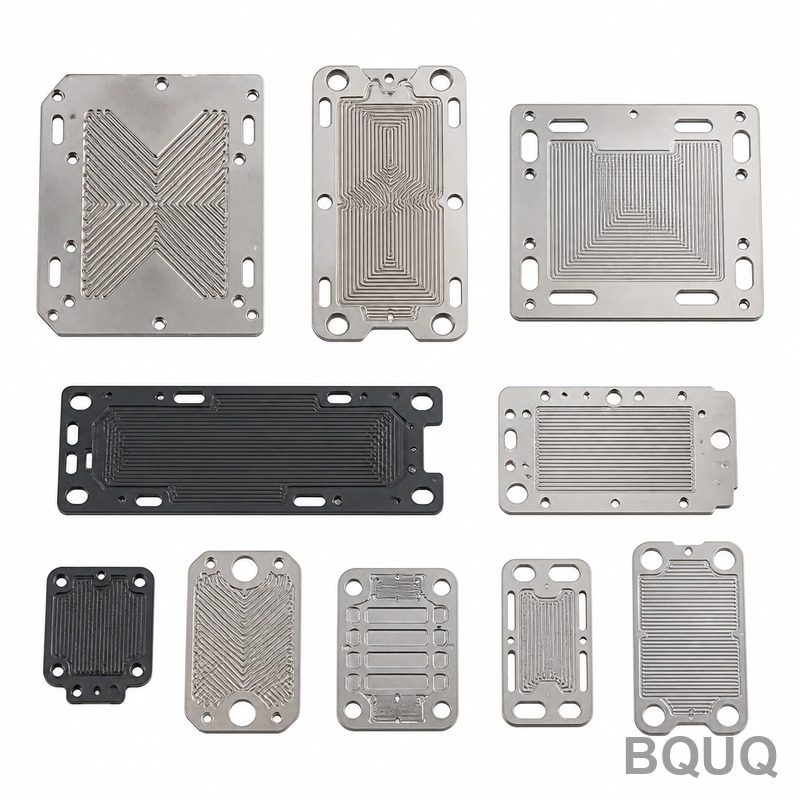
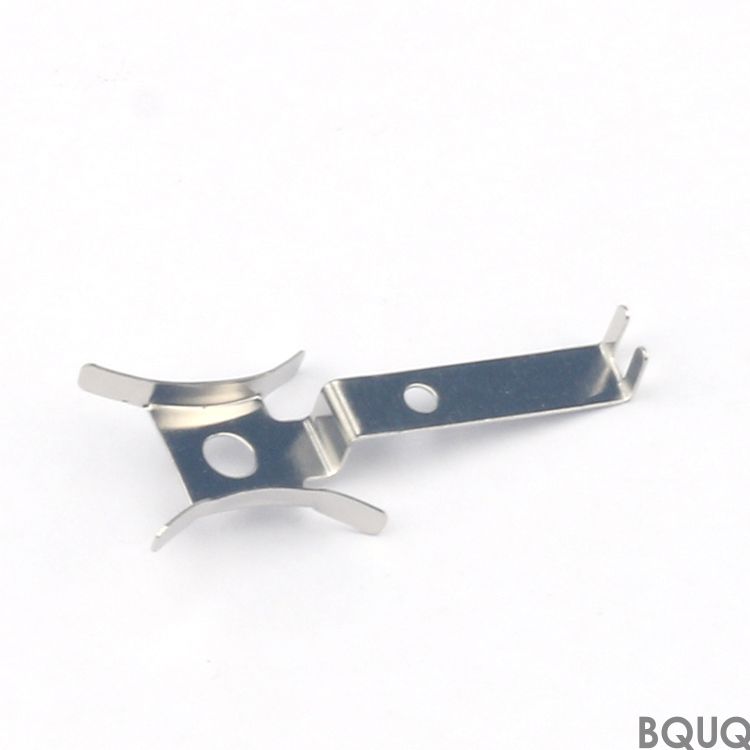
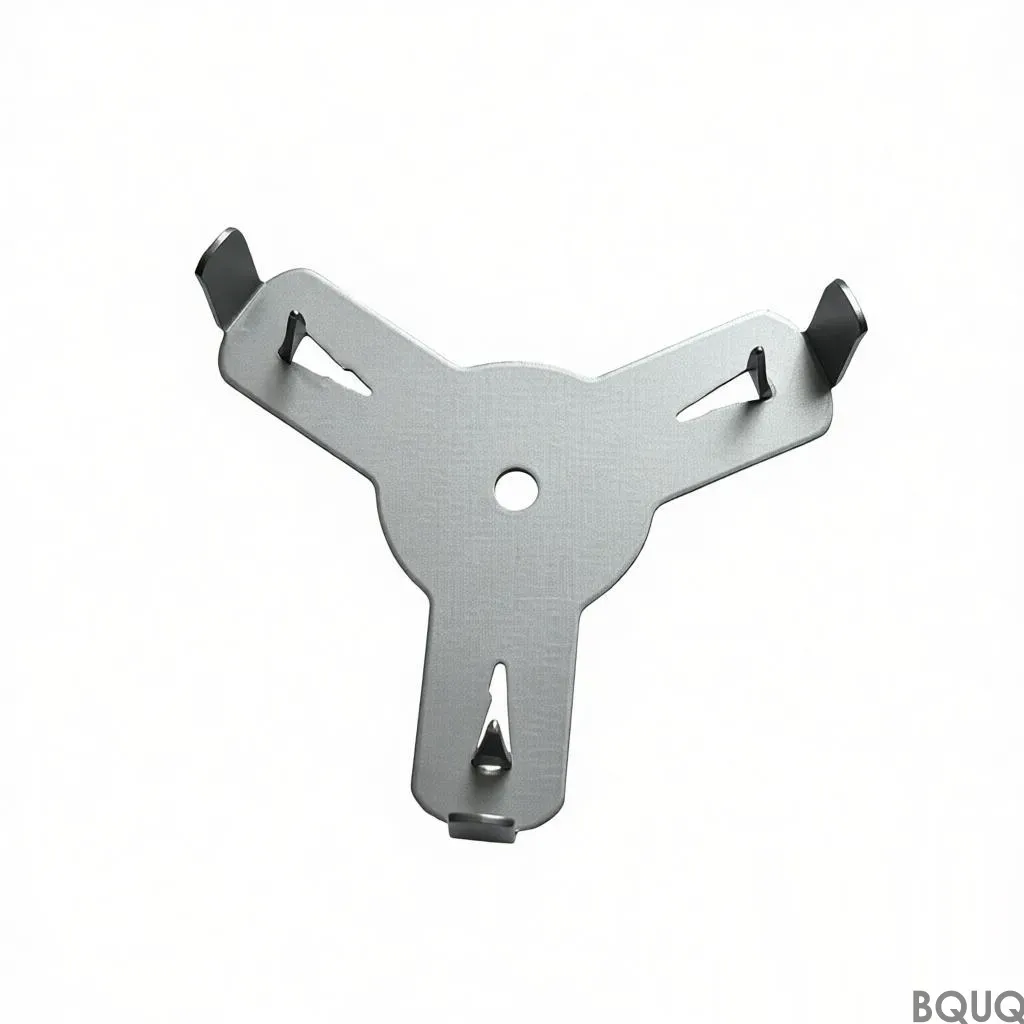
This Hydrogen Fuel Cell Bipolar Plates Collection is a set of metal-stamped plates (anode, cathode, and cooling flow fields) that form the backbone of PEM fuel cell stacks. You ge
This Hydrogen Fuel Cell Bipolar Plates Collection is a set of metal-stamped plates (anode, cathode, and cooling flow fields) that form the backbone of PEM fuel cell stacks. You get a flatness of 0.05
Get a Fast Quote for This Part
Send us your drawing / quantity / material — reply within 24h.
This Hydrogen Fuel Cell Bipolar Plates Collection is a set of metal-stamped plates (anode, cathode, and cooling flow fields) that form the backbone of PEM fuel cell stacks. You get a flatness of 0.05 mm per 100 mm, a surface finish of Ra 0.4 µm, and a hardness range of 40–55 HRC depending on substrate, with standard parts shipping in 24 hours and custom dies in 15 days. We are BQUQ, a 20-year precision manufacturing factory in Dongguan, China, and we stamp these plates on 250-ton high-speed presses with closed-loop force monitoring—no lapping needed after stamping.
Why Flow Field Depth Stays Within ±0.02 mm on Every Plate
Channel depth variation kills fuel cell efficiency. A difference of 0.05 mm changes local pressure drop by 11% and can starve the membrane. Our stamping dies are ground to a 0.005 mm profile tolerance, then we run a 100% optical scan on every plate—not a sample, not a batch—using a Keyence IM-8000. The scan maps 1,200 points per flow field and flags any channel deeper or shallower than ±0.02 mm. You get a digital report with each shipment, so you can trace the exact depth of every channel in every plate.
Materials That Survive 5000+ Hours of Acidic Electrolyte Exposure
Bipolar plates sit in a pH 2–3 environment at 80 °C. Standard 316L stainless steel corrodes and leaches metal ions that poison the catalyst. We use three proven options: 316L with a 1.5 µm electroless nickel-phosphorus coating (hardness 850 HV), SS 304 with a gold-plated edge seal (0.3 µm), and titanium grade 2 with a platinum sputter layer (0.5 µm). For high-volume stacks, we also stamp a 0.1 mm thick graphite composite that requires no coating at all. Each material is batch-tested in a 500-hour accelerated acid soak before we approve it for production.
How We Control Springback So Your Plate Stays Flat at 0.05 mm
Stamped metal always springs back. If we don't compensate, a 200 mm wide plate bows by 0.3 mm after release, and that gap breaks the seal with the membrane. We overbend the die by a calculated amount—measured from a pilot run of 50 pieces—and then run a secondary coining step at 80% of the press tonnage. This gives a final flatness of 0.05 mm per 100 mm, measured on a granite surface plate with a dial indicator. For plates wider than 250 mm, we offer a stress-relief anneal (400 °C, 2 hours) that locks the flatness to 0.03 mm.
Tooling Life and Die Maintenance That Keeps Your Cost Per Part Below $0.40
A worn die changes channel geometry within 10,000 strokes. Our D2 tool steel dies are vacuum-hardened to 60–62 HRC and TiN-coated, giving a life of 500,000 strokes before the first regrind. We monitor die wear with a laser profilometer after every 50,000 strokes and log the data in your part file. If a channel drifts more than 0.01 mm, we stop the press and regrind the die—you never receive a batch with drifting dimensions. Typical cost per plate (0.1 mm 316L, 100 cm² active area) is $0.35–0.40 at 100,000 pieces per year.
Inspection Before Every Shipment: Optical Scan, Leak Test, and Hardness Check
Every plate gets three checks. First, the Keyence optical scan for channel depth, width, and flatness (as described above). Second, a helium leak test at 2 bar pressure—leak rate must stay below 1×10⁻⁶ mbar·L/s. Third, a micro-Vickers hardness test on the coating surface (target 850 HV for Ni-P, ±50 HV). We attach the raw data files to the packing list. If you want a third-party inspection (SGS or TÜV), we hold the shipment until it passes—no extra charge, just a 2-day delay.
Custom Flow Field Designs Without a Full Die Cost
Not every stack uses a standard serpentine or parallel channel pattern. If you have a custom flow field (e.g., interdigitated, spiral, or biomimetic), we can cut a prototype from 0.1 mm sheet using laser machining with a 0.02 mm kerf, then validate it on your test bench. Once you approve, we convert the geometry into a hard die for production. Prototype lead time is 5 days, and we waive the die design fee if you order more than 5,000 plates. For standard patterns, our existing dies cover 90% of common PEM sizes (50–400 cm²) with no tooling cost.
Shipping and Packaging That Protects 0.05 mm Flatness in Transit
Thin plates bend in a box. We stack each plate with a 0.5 mm foam interleaf, place the stack in a rigid plastic tray, and vacuum-seal it in an anti-corrosion film. The tray is then boxed with corner foam blocks that prevent any edge impact. We ship via DHL or FedEx for small orders (1–2 days to USA/EU) or by sea freight for bulk orders (25–30 days to Los Angeles or Rotterdam). Every package includes a humidity indicator card—if it turns pink, the plates were exposed to moisture, and we replace them free.
Specifications for the Hydrogen Fuel Cell Bipolar Plates Collection
Parameter
Value
Materials
316L, SS 304, Ti Gr2, graphite composite (0.1–0.3 mm)
Standard sizes
50, 100, 200, 400 cm² active area (custom up to 600 cm²)
Channel depth tolerance
±0.02 mm
Flatness
0.05 mm per 100 mm (0.03 mm after anneal)
Surface finish (stamped)
Ra 0.4 µm on sealing areas
Hardness (coated surface)
850 HV Ni-P / 550 HV Ti Gr2 / 60 HRC die steel
Leak rate (helium, 2 bar)
<1×10⁻⁶ mbar·L/s
Lead time (standard parts)
24 hours from drawing approval
Lead time (custom die)
15 days (die design included)
MOQ
No MOQ—one piece for prototyping accepted
How to Avoid Common Stamping Defects in Bipolar Plates
Three defects kill bipolar plates: micro-cracks at channel edges, coating delamination at bends, and residual burr that pierces the membrane. We prevent them by (1) using a 0.05 mm corner radius in the die design—never a sharp edge, (2) coating after stamping, not before, so the Ni-P layer follows the metal shape without cracking, and (3) running a vibratory deburring step for 20 minutes that removes any microscopic edge burr. If you want to understand how tool geometry affects these defects, read our CNC cutting tool selection guide—the same edge-radius principles apply to stamping dies. For tolerance stack-up in your stack assembly, our CNC machining tolerances guide explains how to budget flatness vs. channel depth in a multi-plate system.
FAQ
What is the minimum order quantity for a custom bipolar plate design?
No MOQ—we will stamp a single prototype piece for your test bench, and the full production price only drops once you exceed 1,000 pieces per year.
Can you match my existing flow field geometry from a competitor's plate?
Yes, send us a sample or a 2D/3D drawing, and we will laser-scan the channel profile and reproduce it within ±0.02 mm, including the coating specification.
How do you verify quality on a high-volume order of 50,000 plates?
We run a 100% optical scan on every plate, not just a batch sample, and the helium leak test is performed on a 10% statistical sample per pallet—you get the full data file with each shipment.
What is the actual lead time for a custom die and first article?
Custom die design takes 5 days, die fabrication takes 7 days, and the first article (with full inspection report) ships on day 15; standard parts from existing dies ship within 24 hours.
Get a Firm Quote Within 12 Hours
Send your drawing (STEP, DXF, or PDF) or a sample plate, and we will return a firm quote with exact pricing, lead time, and a DFM note on any potential tolerance issue. We are a precision manufacturing factory made in China with 20 years of stamping experience—no MOQ, full traceability, and we speak English directly. Email sc@bquq.com or WhatsApp +86 13713157787. We respond within 12 hours, usually faster.