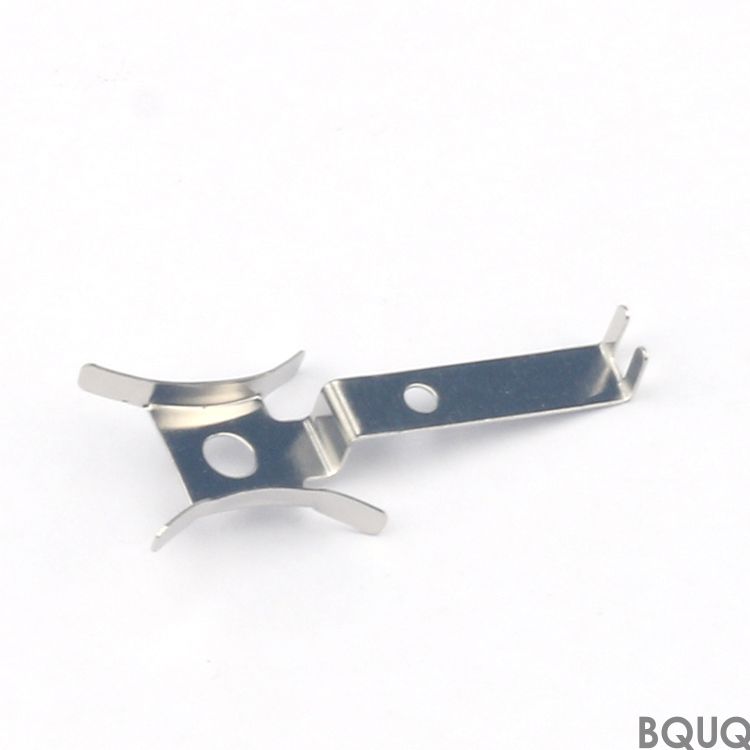
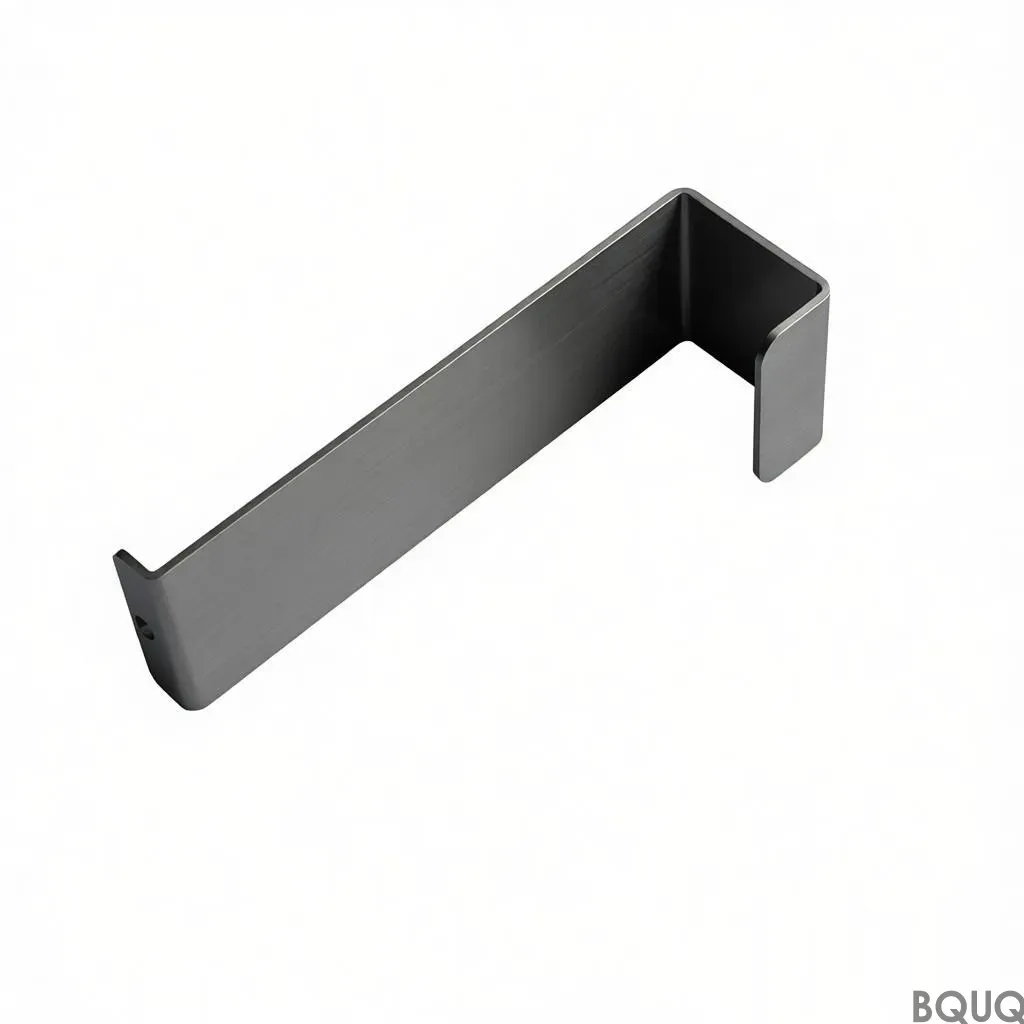
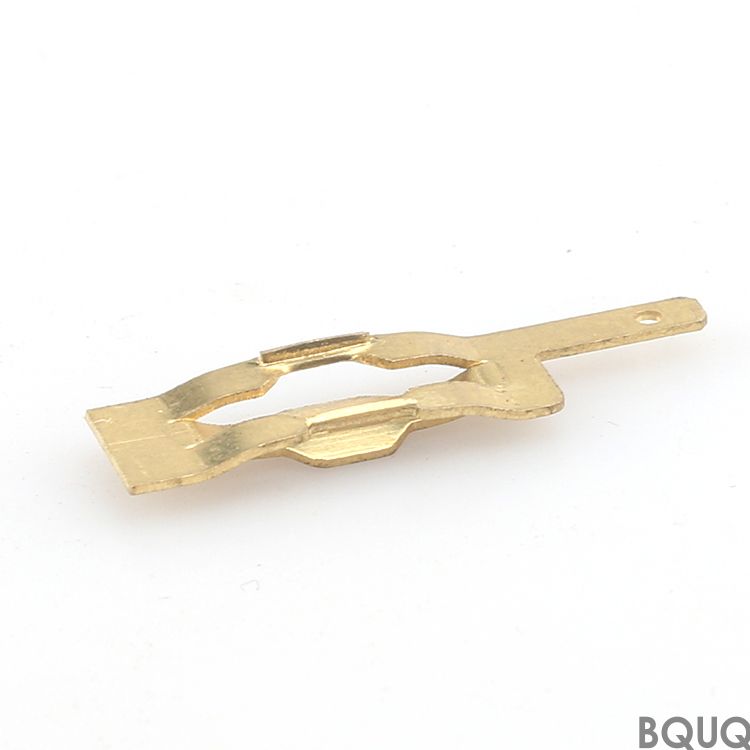
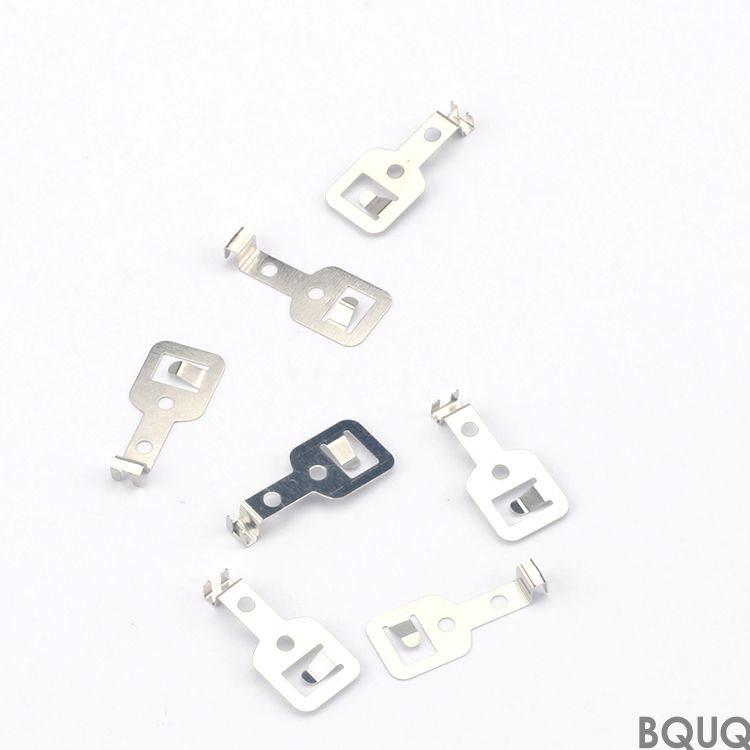
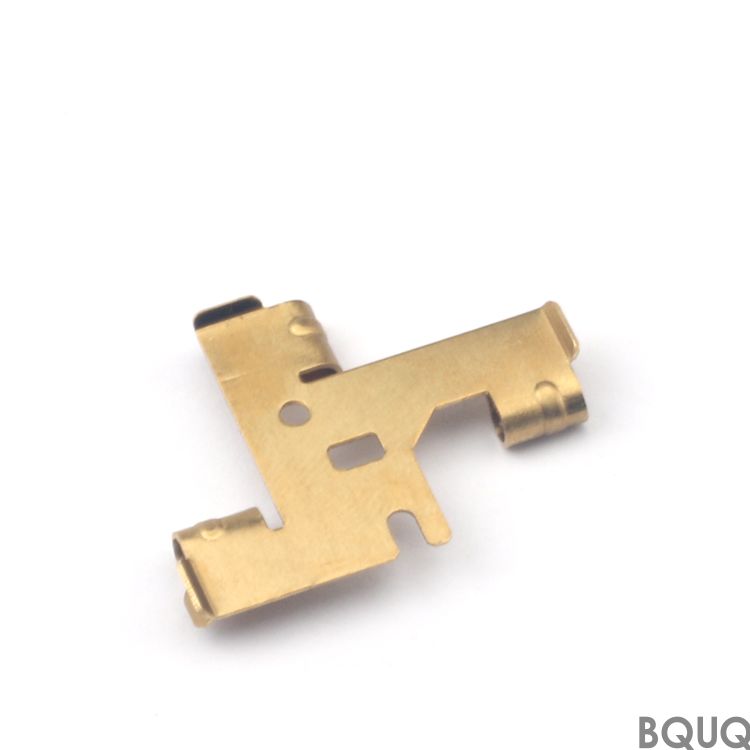
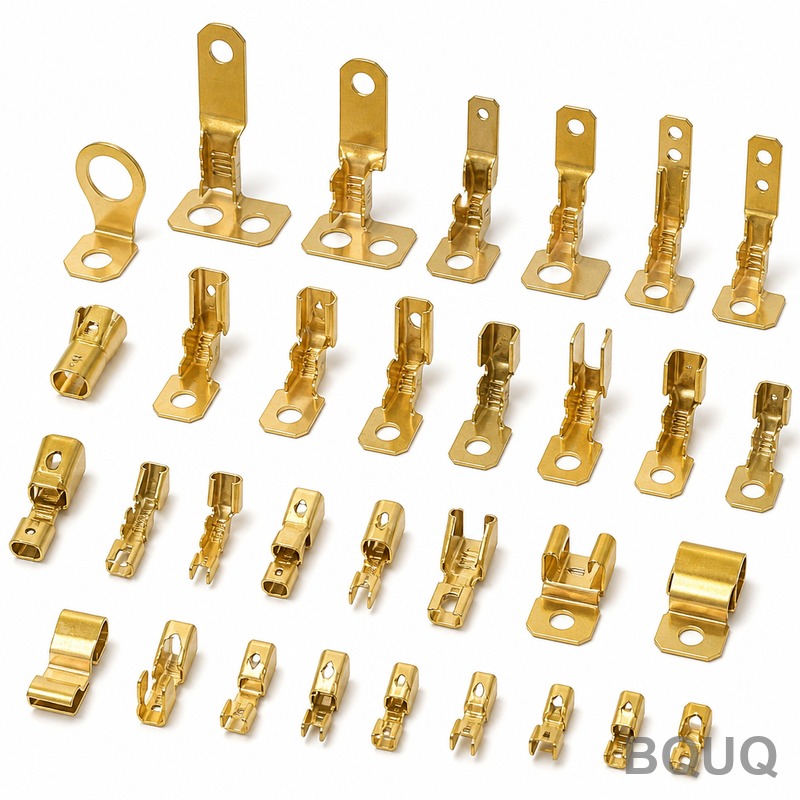
We make metal stamping shrapnel—the spring contacts, EMI fingers, and conductive clips that hold your assemblies together under vibration and thermal cycling. As a China Dongguan s
China Dongguan Stamping Manufacturer Supplier Shrapnel | BQUQ Precision Parts
We make metal stamping shrapnel—the spring contacts, EMI fingers, and conductive clips that hold your assemblies together under vibration and thermal cycling. As a China Dongguan stamping manufacturer
Get a Fast Quote for This Part
Send us your drawing / quantity / material — reply within 24h.
We make metal stamping shrapnel—the spring contacts, EMI fingers, and conductive clips that hold your assemblies together under vibration and thermal cycling. As a China Dongguan stamping manufacturer supplier, BQUQ delivers stamped parts with positional tolerances of ±0.01 mm, surface finish down to Ra 0.4 µm, and hardness up to HRC 45 after heat treatment. Prototype lead time is 7 days; production orders ship in 15–20 days from drawing approval.
Why Stamped Shrapnel Beats Machined or Formed Wire Contacts
Stamping is not just cheaper—it is dimensionally repeatable across millions of cycles. A stamped shrapnel part holds its bend radius and contact force because the tool steel die is ground to a fixed geometry. Compared to CNC machined contacts, stamped parts offer a 30–50% cost reduction at volumes above 10,000 pieces. Compared to wire-formed contacts, stamped shrapnel gives you flat surfaces for consistent soldering and a tighter tolerance on the beam height, typically ±0.03 mm.
Materials and Heat Treatment We Use for Contact Springs
We stock beryllium copper (C17200), phosphor bronze (C5210), stainless steel (301, 304, 316), and spring steel (SK5, 65Mn). For high-temperature or corrosive environments, we use Inconel 718 or titanium alloy. After stamping, we offer stress-relief annealing at 315°C for beryllium copper (to achieve hardness HRC 36–42) or precipitation hardening for 17-4PH. For stainless steel, we use cold-rolled temper grades (1/2H, 3/4H, full H) to reach hardness up to HRC 45 without extra heat treatment steps—this reduces your lead time by 3 days.
How We Control Contact Force and Beam Deflection
Contact force is a function of beam length, thickness, and material modulus. Our die design software simulates springback before we cut the tool steel. We correct the bend angle by 2–5 degrees in the die to compensate for material recovery. For every production batch, we test contact force on a custom fixture at a specified deflection (e.g., 0.5 mm) and record the value on the inspection report. We guarantee a force variation of ±10% from your nominal spec, which is tighter than the industry standard of ±15%.
Tooling and Die Life for Long-Run Shrapnel Production
Our progressive dies are built in-house from D2 or M2 tool steel, hardened to HRC 58–62. For high-volume shrapnel parts (over 500,000 pieces), we use carbide inserts on the punch and die areas that wear fastest. Typical die life before resharpening is 1–2 million strokes for beryllium copper and 800,000 strokes for stainless steel. We maintain a tool room with wire EDM and surface grinders, so we can adjust the die within 48 hours if you change a dimension after the first article.
Surface Finish and Plating Options for Conductive Shrapnel
Bare shrapnel parts get a surface finish of Ra 0.8 µm as stamped. If you need lower contact resistance, we offer selective gold plating (0.05–0.75 µm) on the contact area only, silver plating (2–5 µm), or tin plating (3–8 µm). Our in-house plating line handles nickel underplate of 1–2 µm to prevent copper migration. For parts that must withstand salt spray, we can apply a passivation layer that passes 48 hours of testing per ASTM B117.
Inspection Before Every Shipment: CMM, Optical, and Hardness Data
Every batch—even a 50-piece prototype—gets a full inspection. We use a CMM (Zeiss Contura) for critical dimensions, a Keyence optical comparator for bend angles and radii, and a Rockwell tester for hardness. Our QC plan follows ISO 9001:2015 and IATF 16949 procedures. We send you a dimensional report (PDF) with each shipment, including a CPK value for your key characteristics—typically CPK ≥ 1.33. If any dimension falls outside tolerance, we sort 100% of the batch and re-run the die.
Specification
Range / Value
Material thickness
0.05 mm – 3.0 mm
Material width (strip)
Up to 200 mm
Beryllium copper hardness (C17200)
HRC 36–42 (after anneal)
Stainless steel hardness (301 full hard)
HRC 40–45
Dimensional tolerance (critical features)
±0.01 mm
Bend angle tolerance
±0.5 degrees
Surface finish (bare stamping)
Ra 0.4 – 0.8 µm
Contact force variation
±10% of nominal
Burr height (max)
0.03 mm (on 0.5 mm thick material)
Prototype lead time
7 days (from drawing)
Production lead time
15–20 days (after approval)
MOQ
No MOQ (1 piece for prototype)
What Affects Your Stamped Shrapnel Quote—and How We Keep It Low
Your cost per piece depends on four factors: material type, thickness, tolerance, and plating. Beryllium copper costs 4–5 times more than phosphor bronze per kilo, but it lasts longer under cyclic load. Tolerances tighter than ±0.01 mm require secondary operations (e.g., coining) which add 15% to the unit price. We recommend reviewing your critical dimensions—often a ±0.05 mm tolerance on a non-contact surface saves you 20% without affecting function. Our engineers will suggest a lower-cost material or heat treatment path during the quoting stage. For a full comparison of tooling and material options, see our CNC cutting tool selection guide—it explains how material hardness interacts with cutting and forming processes. And if you are specifying tolerances for the first time, read our CNC machining tolerances guide to avoid over-specifying.
Shipping and Packaging for Fragile Stamped Contacts
Shrapnel parts are thin and can bend in transit. We pack each layer of parts between antistatic foam sheets, then vacuum-seal the bundle. For 50,000+ piece orders, we use tape-and-reel packaging (per EIA-481) so you can feed them directly into your SMT line. For bulk orders, we use partitioned cartons with a maximum stack height of 0.6 m to prevent crushing. We ship via DHL or FedEx for prototypes (3–5 days to the US/EU) and by sea freight for production orders (25–30 days to major ports). We label each box with a barcode that tracks the batch number, material heat code, and inspection status.
How to Avoid Common Stamping Defects (Splits, Wrinkles, and Springback)
Splits happen when the bend radius is smaller than 0.5 times the material thickness—for 0.3 mm thick steel, never specify a bend radius under 0.15 mm. Wrinkles occur on flanges when the die clearance is too loose; we set clearance at 5–8% of material thickness per side. Springback is the biggest issue for high-hardness materials; we compensate by over-bending 1–4 degrees, verified on the first article. If you see a defect in your received parts, check the material certificate first—we can send you the mill test report for every coil used in your order.
When You Need a Prototype vs. Production Run
We do not force you into a high MOQ. For a single prototype piece, we use a simplified die (or wire-cut the part if it is flat). This costs $150–$300 and ships in 7 days. Once you validate the design, we build a production progressive die (typical cost $1,500–$8,000 depending on part complexity) and give you a per-piece price that drops by 40–60% compared to prototype pricing. For orders under 10,000 pieces, we often recommend a steel-rule die to keep tooling cost under $500—you sacrifice some die life (max 50,000 strokes), but the unit price is still competitive.
Cost Breakdown: Tooling vs. Per-Piece Price
For a typical shrapnel part (10 mm × 5 mm, 0.2 mm thick beryllium copper), the tooling cost is about $2,800 and the per-piece price at 100,000 pieces is $0.018. At 500,000 pieces, the per-piece price drops to $0.012. If you reduce the tolerance from ±0.02 mm to ±0.05 mm on non-critical features, tooling drops to $2,200 and per-piece to $0.010. We provide a transparent quote that lists tooling, material, plating, and inspection costs separately—no hidden fees.
Contact BQUQ for Your Next Stamping Project
Send us your drawing (STEP, DXF, or PDF) and we will return a firm quote within 12 hours. Our engineers will check for manufacturability, suggest material alternatives, and confirm your lead time. We are a precision manufacturing facility in China with 20 years of experience in CNC machining, stamping, springs, and heat sinks. All parts are made in China under ISO 9001:2015 control, but we ship worldwide with full traceability. There is no MOQ for prototypes—try us with a single piece.