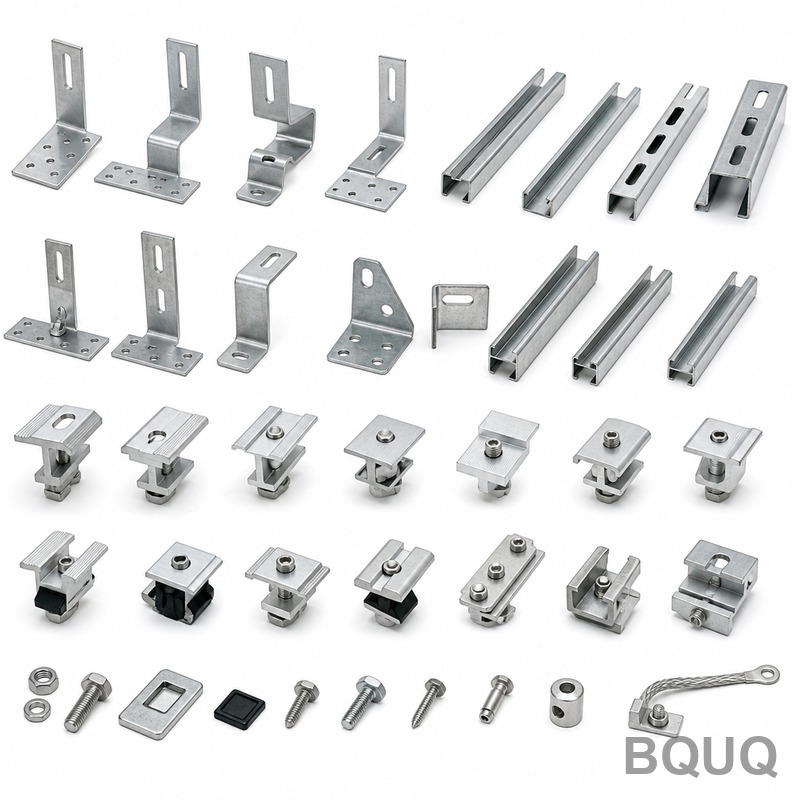
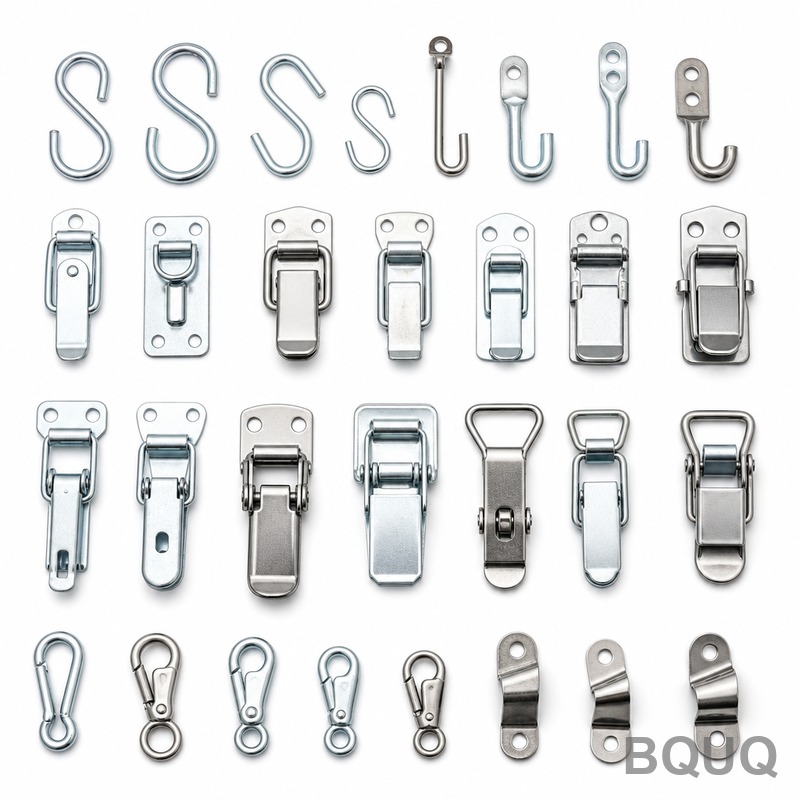
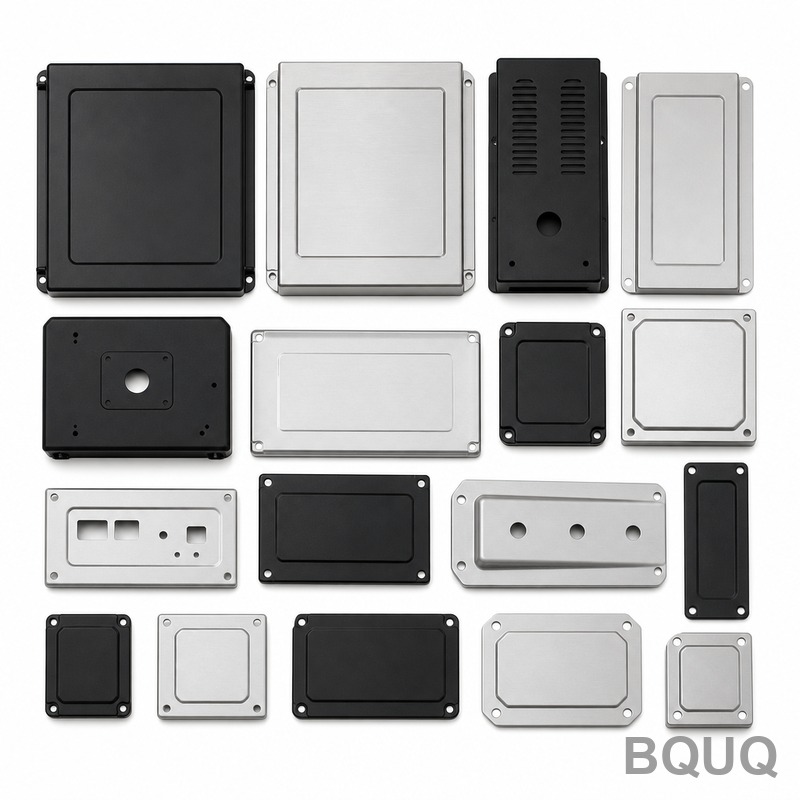
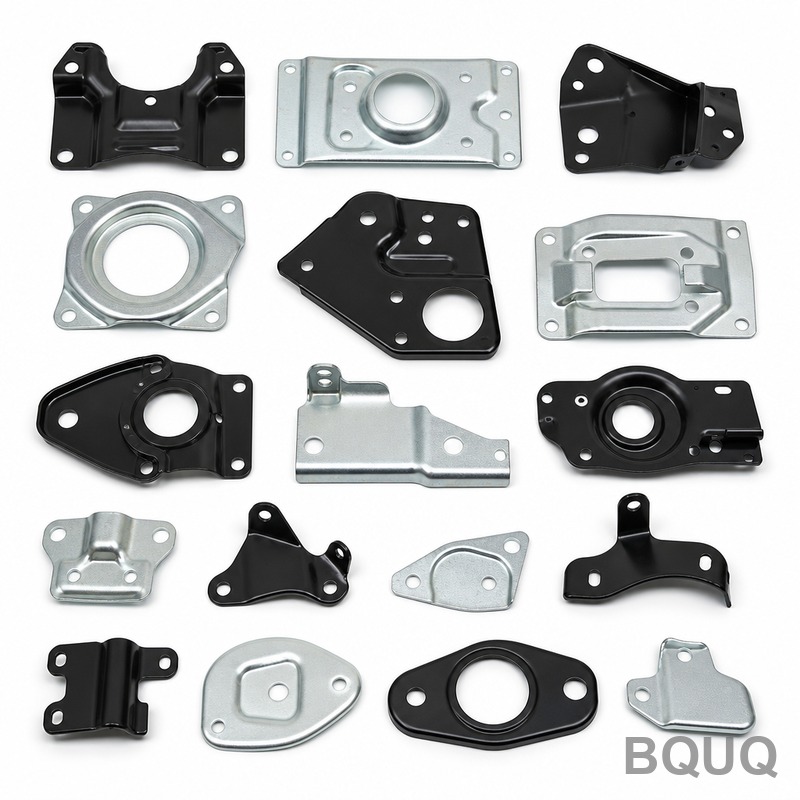
This is BQUQ’s Solar PV Mounting Brackets Collection: a full range of stamped steel and aluminum brackets for fixed-tilt, ground-mount, and rooftop solar arrays. Every bracket is s
BQUQ Solar PV Mounting Brackets Collection | Precision Metal Stamping
This is BQUQ’s Solar PV Mounting Brackets Collection: a full range of stamped steel and aluminum brackets for fixed-tilt, ground-mount, and rooftop solar arrays. Every bracket is stamped to ±0.05 mm t
Get a Fast Quote for This Part
Send us your drawing / quantity / material — reply within 24h.
This is BQUQ’s Solar PV Mounting Brackets Collection: a full range of stamped steel and aluminum brackets for fixed-tilt, ground-mount, and rooftop solar arrays. Every bracket is stamped to ±0.05 mm tolerance, with edge runout under 0.1 mm, and shipped in 12 days from drawing approval — no MOQ required.
Why Our Stamped Brackets Hold Panel Alignment Better Than Roll-Formed Parts
Roll-formed profiles drift in cross-section by ±0.3 mm over long runs. Our stamped brackets hold ±0.05 mm across the entire flat pattern because we use progressive dies with fixed pilot pins, not free-moving strip guides. This means your PV modules sit on a true plane — no micro-twist, no fastener binding, no stress cracks in the anodized coating. For a 40-module array, that is less than 2 mm of cumulative deviation across the full row.
Materials and Heat Treatment We Run for 25-Year Outdoor Life
We stamp from three base stocks: DC01 cold-rolled steel (1.5–3.0 mm), 5052-H32 aluminum (2.0–4.0 mm), and SUS304 stainless (1.0–2.5 mm) for coastal or high-humidity sites. Steel brackets get a zinc-nickel plating (8–12 µm) plus a clear chromate passivation — salt spray tested to 720 hours per ASTM B117. Aluminum parts are hard anodized to 28 HRC, which resists galling when you torque M8 bolts to 22 N·m. If your site is near a chemical plant, we substitute 316L stainless at no extra tooling cost.
Hole Patterns and Slot Tolerances That Match Your Rail System
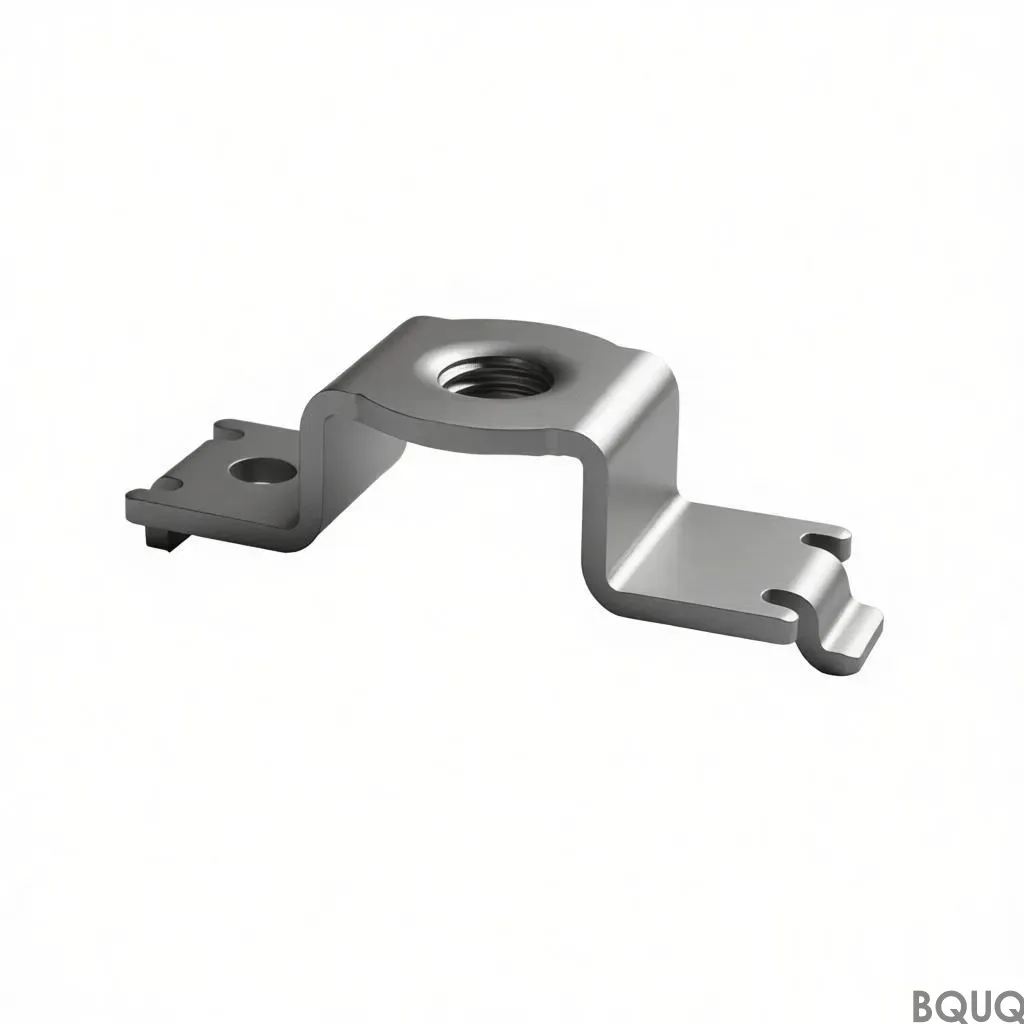
Most rail manufacturers specify 9×25 mm slotted holes for module clamps. We punch those slots with a ±0.05 mm position tolerance and a Ra 1.6 µm edge finish — no burrs that scratch the rail anodizing during installation. For custom hole patterns, our CNC tooling library holds 1,200+ punch shapes, so we do not need a new die for simple oblong holes or countersinks. We also offer pre-assembled captive nuts (staked rather than welded) to cut your field assembly time by up to 30%.
Load Testing and Simulation We Run Before You Order
Every bracket design in this collection is FEA-validated for 1.5 kN vertical load and 0.8 kN horizontal wind uplift at a 1.5 safety factor. We physically torque-test every 500th part to 22 N·m for M8 and 35 N·m for M10 — no thread stripping, no slot deformation. If your project requires a 2.0 safety factor (e.g., high-wind zones in Texas or cyclonic regions in Australia), we adjust the material grade and thickness, not the die, keeping your tooling cost unchanged.
Inspection Before Every Shipment: CMM and Salt Spray Data Included
We do not ship blind. Each lot gets a CMM report on 8 critical dimensions (hole position, slot width, flatness, bend angle) and a salt spray test certificate for the plating batch. Flatness is checked on a granite surface plate with a 0.05 mm feeler gauge — if it passes under the gauge, it fails; if it blocks the gauge, it passes. You get the PDF report with your packing list. For orders above 5,000 pieces, we add a hardness test (HV scale) on three random samples per 1,000 pieces.
Packaging and Pallet Schematics for Direct-to-Site Delivery
Brackets are interleaved with kraft paper (not foam) to prevent micro-abrasion on the anodized surface. Each pallet is capped with a 5 mm corrugated cardboard sheet and stretch-wrapped with a moisture barrier. For a 10 kW ground-mount system (about 60 brackets), the total pallet weight is 84 kg — fits on a standard Euro pallet (1200×800 mm) with no overhang. We print a pallet map on the label showing which layer holds which part number, so your installer does not dig through the stack.
Cost Breakdown: Tooling vs. Piece Price for Small and Large Arrays
For a typical 1.5 mm steel bracket (120×80 mm, four holes), our piece price is $0.18–$0.26 depending on quantity. Tooling (a progressive die with 6 stations) costs $2,800–$4,500 and is amortized over your first 20,000 pieces. If you need only 500 brackets for a pilot project, we run them on a CNC turret punch at $0.85 per piece — no die cost, 7-day delivery. This is why we say no MOQ: we match the process to your volume, not the other way around.
Specification
Value / Range
Notes
Material grades
DC01 steel, 5052-H32 Al, SUS304/316L
Coil thickness 1.0–4.0 mm
Stamping tolerance
±0.05 mm
On hole position and flat pattern
Edge runout
≤ 0.1 mm
Per linear meter of bracket length
Surface finish
Ra 1.6 µm
On cut edges and punched holes
Hardness (steel)
28–32 HRC
After zinc-nickel plating
Hardness (aluminum)
28 HRC (hard anodized)
Coating thickness 25–35 µm
Salt spray resistance
720 hrs (steel), 500 hrs (Al)
Per ASTM B117
Max part size
600 × 400 mm
Progressive die limit
Lead time (stamped)
12 days from drawing approval
For standard materials
MOQ
No MOQ
CNC turret punch for low volumes
How to Specify a Bracket for Your Next Quote
Send us a PDF or STEP file with three things: material grade (or site environment), mounting hole pattern (or rail brand), and max load requirement. If you do not have a drawing, we can reverse-engineer an existing bracket from a photo and dimensions — we do this weekly for retrofit projects. Our engineers will respond within 4 working hours with a DFM (design for manufacturability) note: whether we can cancel a hole, increase a bend radius, or reduce a slot length to cut cost. For tooling decisions, reference our CNC cutting tool selection guide to see how die wear affects your part tolerance over 100k cycles.
What Changes When You Order 500 vs. 50,000 Brackets
At 500 pieces, we run a CNC turret punch with a 7-day lead time and no tooling fee. At 5,000 pieces, we switch to a progressive die — your piece price drops from $0.85 to $0.22, and lead time stretches to 12 days. At 50,000 pieces, we add a second die for parallel running and cut lead time to 10 days, plus you get a 5% volume rebate on the total invoice. The dimensional tolerance is identical across all three paths — we do not relax specs for small runs.
Why Precision Manufacturing Engineers Choose BQUQ Over Local Shops
Our factory in Dongguan has run 20 years of continuous stamping — that is 1.2 million machine hours. We have 14 presses from 25 to 250 tons, all with automatic lubrication and die protection sensors. We are not a trading company; we own the tool room, the heat treat line, and the CMM lab. This vertical integration means we control the tolerance chain from coil to crate, which is why our reject rate is below 0.15% and our on-time delivery is 98.7% over the last 24 months. For a deeper look at how we hold that quality, read our CNC machining tolerances guide — it explains the math behind our ±0.05 mm guarantee.
What is the MOQ for the Solar PV Mounting Brackets Collection?
No MOQ — we run 500 pieces on a CNC turret punch and 5,000+ on a progressive die, with the same tolerance.
Can I customize hole patterns and slot sizes?
Yes, any hole or slot up to 600×400 mm part size is customizable, and we adjust the die or punch tooling at no extra cost for standard shapes.
How do you ensure quality for overseas shipments?
Every lot ships with a CMM report, salt spray certificate, and hardness test data, and we keep a 5-piece sample from each batch for 12 months.
What is the exact lead time from drawing approval?
Stamped parts ship in 12 days, CNC turret punch parts in 7 days, and tooling fabrication adds 15–20 days before production starts.
Get a firm quote within 12 hours. Send your drawing or a sketch to sc@bquq.com or WhatsApp +86 13713157787. Include your target quantity and site environment — we will reply with a DFM note, piece price, and tooling cost breakdown. No MOQ, no obligation, made in China with 20 years of precision manufacturing behind every part.