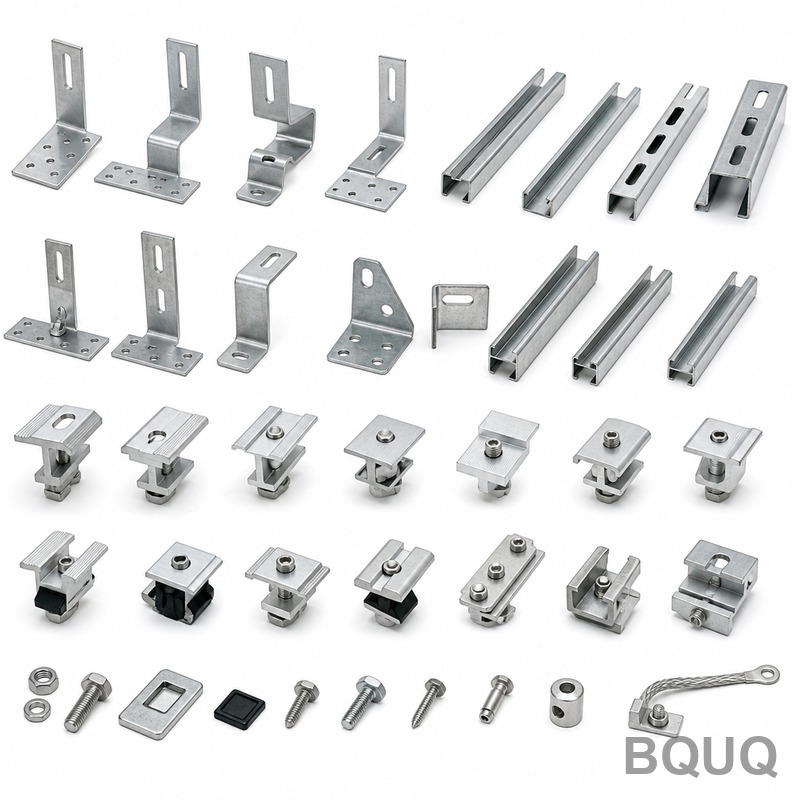
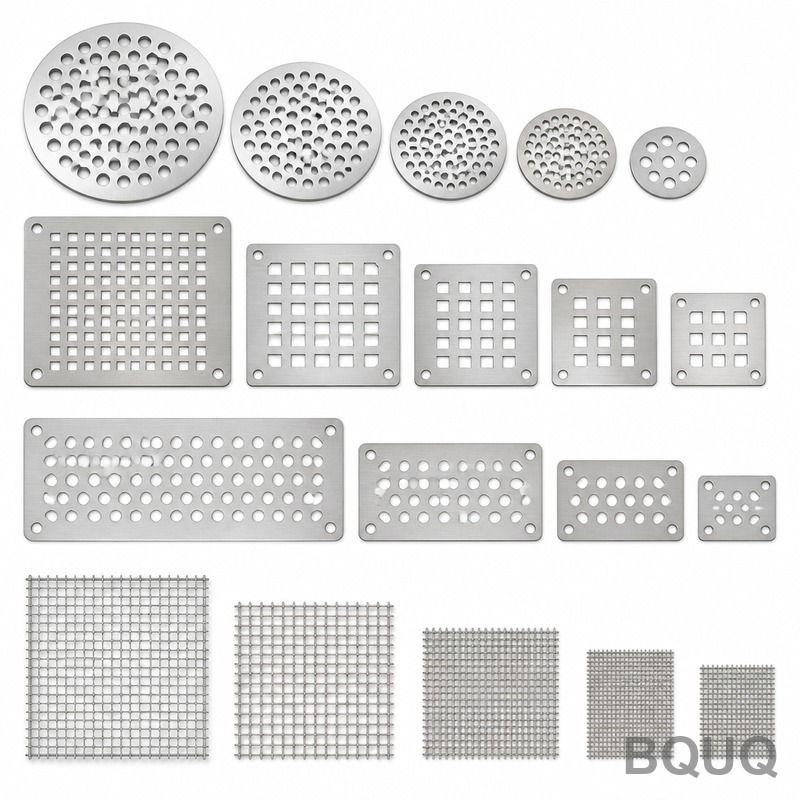
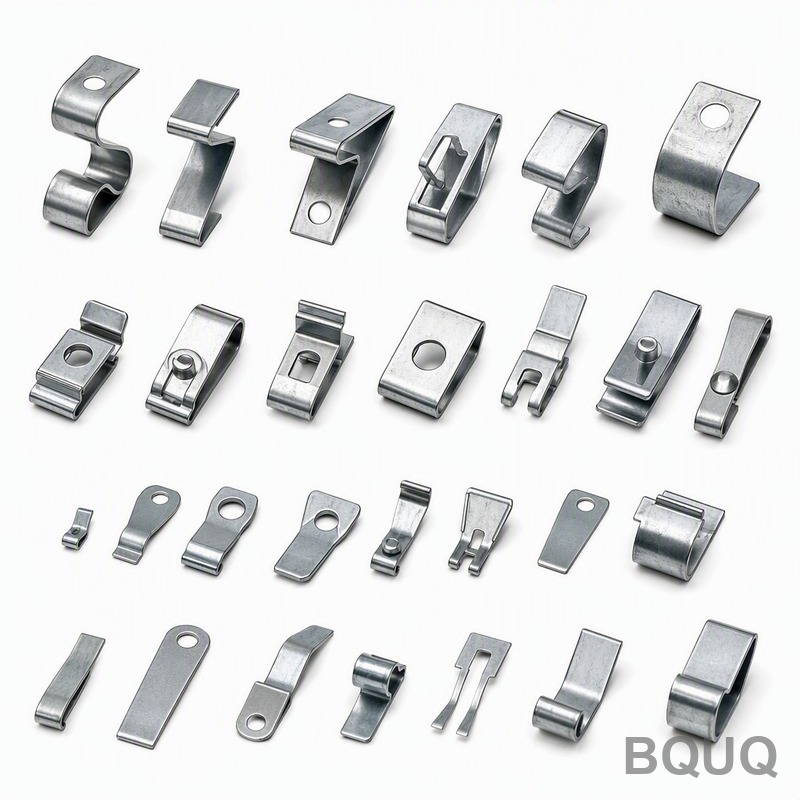
What This Collection Is and Why It Cuts Your Assembly Rejects This is a ready-to-order set of stamped mounting plates and flanges for automotive brackets, sensor housings, and chas
BQUQ Stamped Automotive Mounting Plates Flanges Collection – Precision Made in China
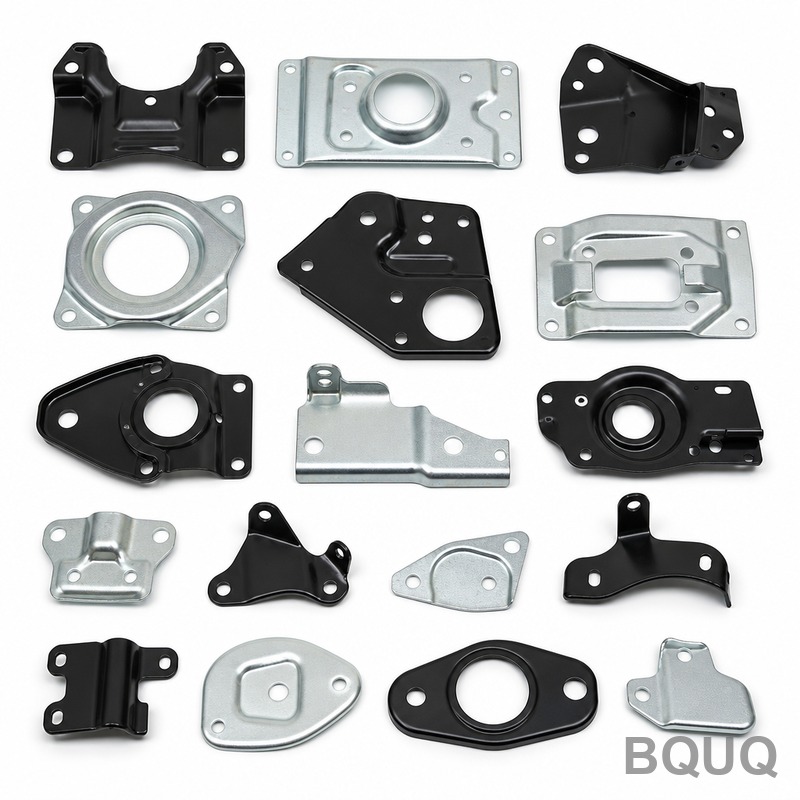
What This Collection Is and Why It Cuts Your Assembly Rejects This is a ready-to-order set of stamped mounting plates and flanges for automotive brackets, sensor housings, and chassis connection point
Get a Fast Quote for This Part
Send us your drawing / quantity / material — reply within 24h.
What This Collection Is and Why It Cuts Your Assembly Rejects
This is a ready-to-order set of stamped mounting plates and flanges for automotive brackets, sensor housings, and chassis connection points. You get flatness within 0.05mm and hole-to-hole tolerance ±0.05mm, which means your welded or bolted assemblies line up on the first try. Typical surface finish is Ra 1.6, and hardness can reach 42 HRC after heat treatment, so these parts survive vibration and corrosion without deforming.
Every plate and flange in this collection comes from our 20-year stamping line in Dongguan. We use progressive dies and servo presses from 80 to 400 tons, so you get repeatable geometry across millions of parts. Lead time for standard sizes is 15 days from drawing approval, and we offer no MOQ — order one prototype or 50,000 pieces at the same quality level.
How We Control Hole Position and Flatness on High-Volume Runs
Automotive mounting plates fail when holes shift or edges warp. We solve that with three-step inspection: in-die sensors check strip position every stroke, then a CMM verifies hole patterns on a 1:5 sampling basis, and finally a granite surface plate checks flatness on every batch. For flanges over 150mm wide, we use a coining step after blanking to remove internal stress. That gives you a consistent 0.05mm flatness even on 3mm thick steel.
We also control burr height to below 0.08mm on all cut edges. No secondary deburring needed for most applications — you can install these parts directly into your jig or weld fixture. If your design calls for critical hole-to-hole spacing less than 0.03mm, we can run a separate precision die at a slightly higher cost. Ask for our CNC machining tolerances guide to see how our stamping limits compare with machining.
Materials and Heat Treatment We Use for Corrosion and Fatigue
We stock DC01, DC04, SPCC, and 304 stainless steel for this collection. For mounting plates that see engine heat or road salt, we recommend 304 with a passivation finish — that gives you 200 hours of salt spray resistance. For structural flanges that carry load, we use SPCC with a zinc-nickel plating (8-12 microns) and a hardness of 25-35 HRC as stamped, or 40-42 HRC after quench and temper.
If your part needs extra strength without weight, we can switch to HC380LA high-strength steel (yield 380 MPa). That material is common for EV battery tray mounts. We also offer aluminum 5052-H32 for lightweight brackets — thickness from 1.0 to 4.0mm, with a flatness of 0.1mm after stress relief. All materials come with mill certificates, and we keep a traceable heat number for every coil used in your order.
Table: Standard Specifications for Stamped Automotive Mounting Plates and Flanges
Inspection Before Every Shipment — Not Just a Paper Certificate
We don't ship anything without a full dimensional report. Every lot gets a CMM check on critical holes, a hardness test on three random samples, and a visual inspection under 2x magnification for edge cracks or die marks. You receive a PDF report with actual measured values, not just a pass/fail stamp. For automotive tier-1 suppliers, we also provide PPAP Level 3 documents on request — including PFMEA, control plan, and capability studies (Cpk ≥ 1.33).
Our inspection team works independently from production. They have the authority to hold a lot if any parameter is off by more than 10% of tolerance. This has kept our customer return rate below 0.2% over the last five years. If you need a specific gauge or fixture for your part, we can build it in-house and include it in the inspection process — no extra charge for standard designs.
Why No MOQ Works for Prototypes and Production Runs Alike
Most stamping factories demand 5,000-piece minimums because die setup costs money. We don't. Our progressive dies are modular, so we can run a 50-piece trial lot with the same tooling as a 50,000-piece order. You pay only for the material and machine time — typically $80 to $150 for a prototype lot of 50 pieces, depending on material and size. This lets you test fitment, weldability, and coating adhesion before committing to a large volume.
For production, we offer a tiered pricing structure: the more you order, the lower the unit price, but the quality standard never changes. We've delivered single-piece orders for automotive repair shops and 200,000-piece annual contracts for EV manufacturers. No MOQ also means you can order replacement parts for your own fixtures without waiting for a full production run. If you're comparing us with other CNC cutting tool selection guide suppliers, note that our stamping tolerance holds even on thin materials — a common weak point for less experienced shops.
Custom Shapes and Hole Patterns Without Extra Tooling Wait
If your mounting plate needs a non-standard hole pattern — say, elongated slots, countersunk holes, or a mix of threaded and plain bores — we can adjust the die within 3 days. We use wire EDM to modify inserts in-house, so you don't pay for a brand-new die. For flanges with a bend angle between 15° and 90°, we add a bending station to the progressive die, keeping cycle time under 2 seconds per part.
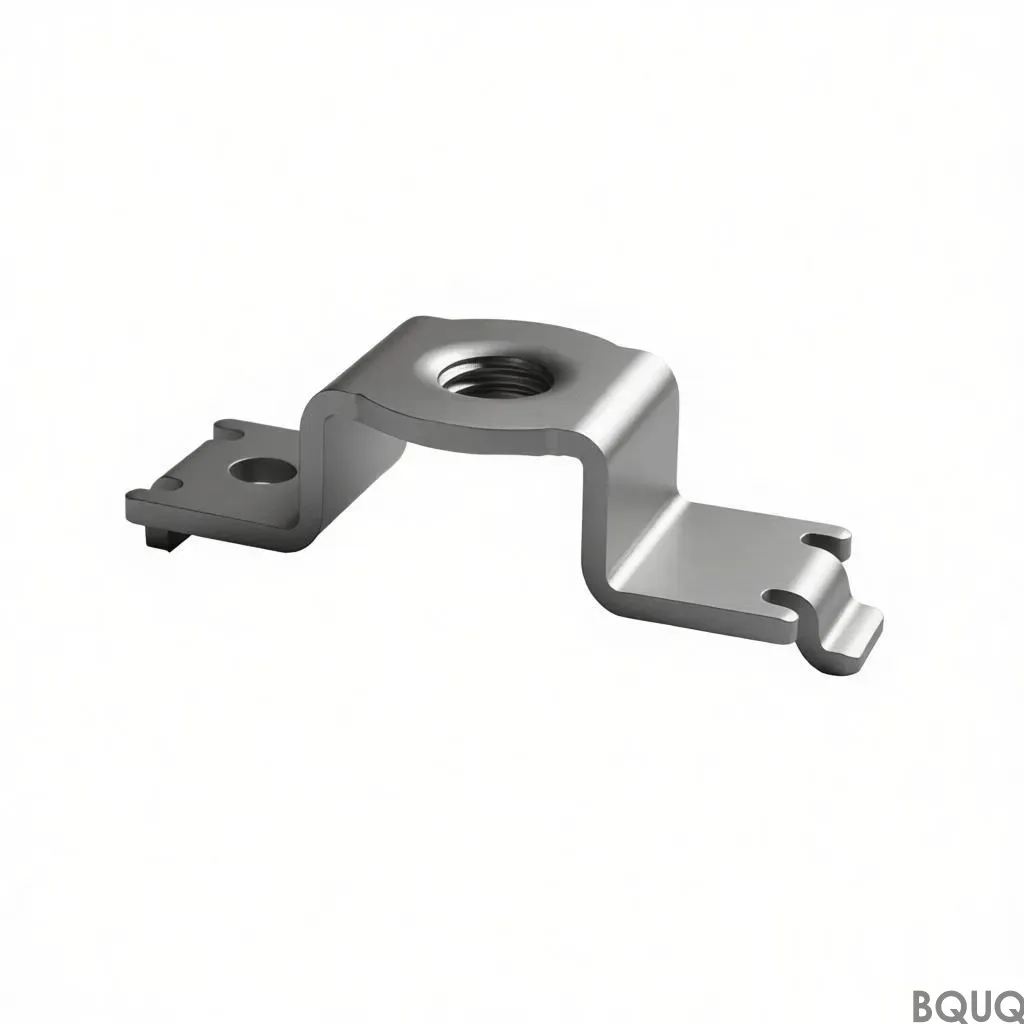
We also handle secondary operations: tapping (M3 to M12), countersinking, and surface grinding. Tapped holes get a go/no-go gauge check on 100% of parts if they're in a safety-critical area. For threaded flanges, we recommend a minimum of 1.5x diameter thread engagement — our standard die design ensures this without extra cost. Send us your 2D drawing or 3D STEP file, and we'll confirm the die modification cost within 24 hours.
What is the minimum order quantity for this stamped plates and flanges collection?
There is no MOQ — we accept orders from 1 piece for prototyping to 100,000 pieces for mass production, with the same tolerance and surface finish guarantee.
Can you match my exact hole pattern and flange width?
Yes, we modify our progressive dies via wire EDM for custom hole patterns and widths, typically adding only 3-5 days to the lead time.
How do you ensure quality on a small prototype lot?
We run the same die, same press, and same CMM inspection on a 50-piece lot as we do on a 50,000-piece lot — you get a full dimensional report with every shipment.
What is the actual lead time from drawing approval to delivery?
Standard collection parts ship in 15 days; custom dies add 7-10 days. Air freight to the US or Europe takes 5-7 days, sea freight 25-30 days.
Get a Firm Quote Within 12 Hours — Send Your Drawing Today
Send us your 2D PDF or 3D STEP file with material, thickness, and quantity. We'll return a firm unit price, tooling cost (if any), and delivery date within 12 hours during business days (GMT+8). Email sc@bquq.com or message us on WhatsApp at +86 13713157787. We're a precision manufacturing factory in Dongguan, China — 20 years in stamping, springs, and CNC machining. No sales pressure, just a clear quote and a sample if you need it.