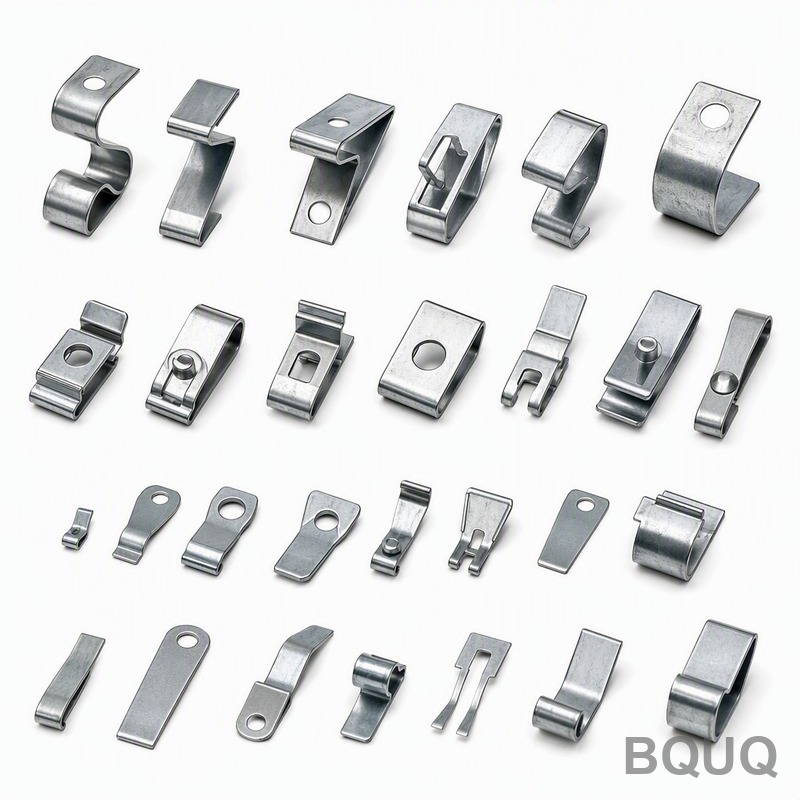
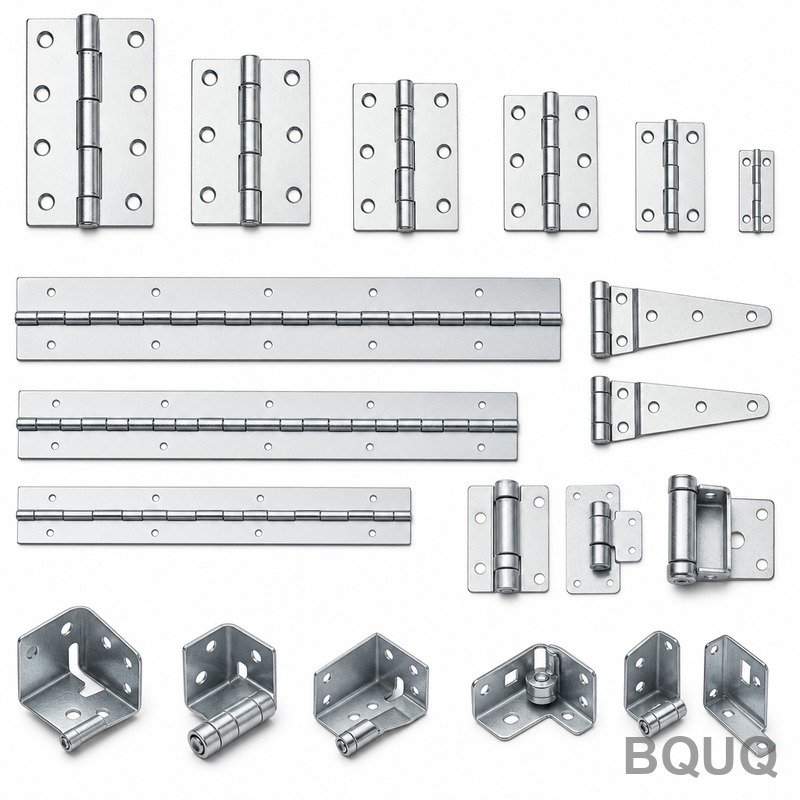
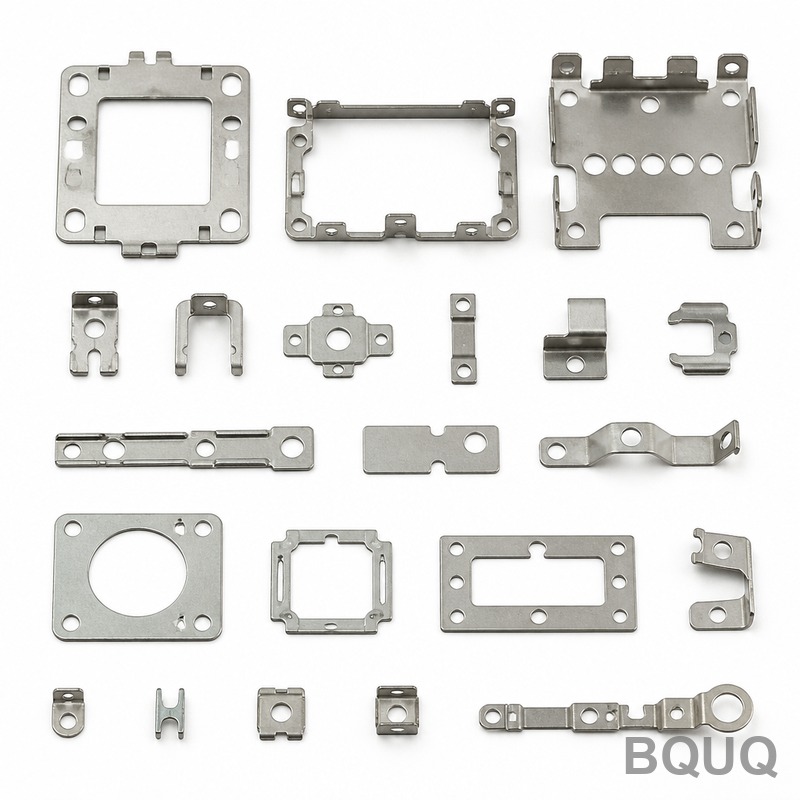
This is a ready-to-ship collection of stamped spring clips with zinc plating for corrosion resistance. You get consistent clamping force across batches, with dimensional tolerance
BQUQ Zinc Plated Stamped Spring Clips Collection | Precision Manufacturing
This is a ready-to-ship collection of stamped spring clips with zinc plating for corrosion resistance. You get consistent clamping force across batches, with dimensional tolerance held to ±0.05 mm and
Get a Fast Quote for This Part
Send us your drawing / quantity / material — reply within 24h.
This is a ready-to-ship collection of stamped spring clips with zinc plating for corrosion resistance. You get consistent clamping force across batches, with dimensional tolerance held to ±0.05 mm and hardness from 45 to 50 HRC after heat treatment. Lead time is 7 days for standard sizes, and we keep 20,000 pieces in stock for immediate sampling.
How the Zinc Layer Prevents Rust Without Changing Spring Rate
Zinc plating adds 8 to 12 microns of protective coating, which is enough to pass a 48-hour neutral salt spray test. The plating is applied after heat treatment, so the base metal's spring properties remain unchanged. We use a trivalent passivation process, which gives a bright finish and avoids the environmental issues of hexavalent chromium. This means your clips can sit in humid storage or outdoor assemblies without surface pitting, while still delivering the same deflection force as unplated versions.
Material Selection and Heat Treatment Data
We start with either 65Mn spring steel or SK5 high-carbon steel, both in strip form from certified mills. After stamping, parts go through oil quenching at 830°C and tempering at 400°C to hit the target hardness range. The result is a component that can cycle 100,000 times without fatigue failure under normal load. For corrosive environments, we also offer 301 stainless steel clips, but the zinc-plated carbon steel options give you the best cost-to-performance ratio.
Specification
Value
Material Options
65Mn, SK5, 301 Stainless Steel
Zinc Plating Thickness
8–12 microns
Hardness (after heat treat)
45–50 HRC
Dimensional Tolerance
±0.05 mm
Surface Finish (base metal)
Ra 0.8 μm
Burr Height (max)
0.05 mm
Flatness
0.1 mm
Max Strip Width
200 mm
Max Feed Length
300 mm
Standard Lead Time
7 days
MOQ
No MOQ (samples available)
Stamping Process Control for Consistent Clamp Force
We run high-speed presses at 400 strokes per minute, using progressive dies with 12 to 16 stations. Each station performs a specific operation like piercing, forming, or coining. The die is made from D2 tool steel, hardened to 60 HRC, and we inspect it for wear every 20,000 strokes. This control ensures that every clip in your batch has the same internal radius and bend angle, which directly affects the spring-back and final clamping force.
Sharp Edge and Burr Management on Thin Strip
Thin material, typically 0.3 to 1.5 mm thick, is prone to burr formation at the shear line. We limit burr height to 0.05 mm maximum, which is critical for parts that will sit against electrical contacts or plastic housings. After stamping, we run a vibratory deburring step for 15 minutes, using ceramic media. This gives a slight edge radius without altering the critical dimensions. If your application needs a completely smooth edge, we can add a micro-finishing pass, but standard clips already meet most automotive and appliance specifications.
Inspection Protocol Before Every Shipment
Every batch is checked for hardness using a Rockwell tester on two samples per 500 pieces. Dimensional checks use a CMM with a resolution of 0.001 mm, and we verify the zinc coating thickness with an X-ray fluorescence gauge. We also perform a 10,000-cycle deflection test on one sample per lot to confirm the spring rate hasn't shifted. The inspection report, which includes all these data points, is shipped with the goods. You don't need to ask for it; it's standard practice here.
No MOQ and How Sample Orders Work
We don't force you into bulk quantities. You can order 50 pieces or 50,000 pieces, and the unit price will adjust based on volume. For samples, we keep common sizes like 10 mm, 15 mm, and 20 mm width in stock. If you need a custom shape, we can make a sample set from a simple drawing within 5 days, charging only the tooling cost for the prototype die. After you approve the sample, production tooling takes about 2 weeks to build.
Compatibility with Your Existing Fastening Systems
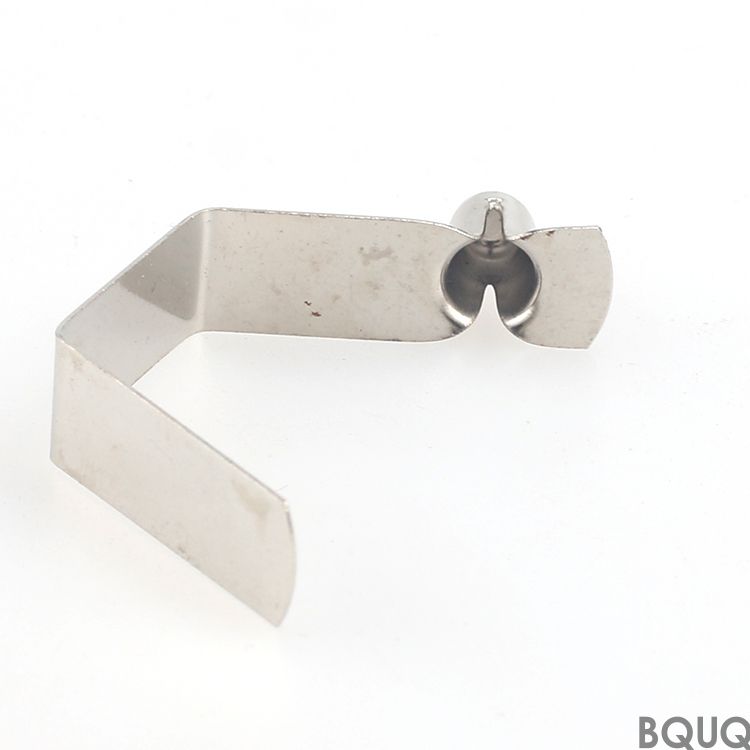
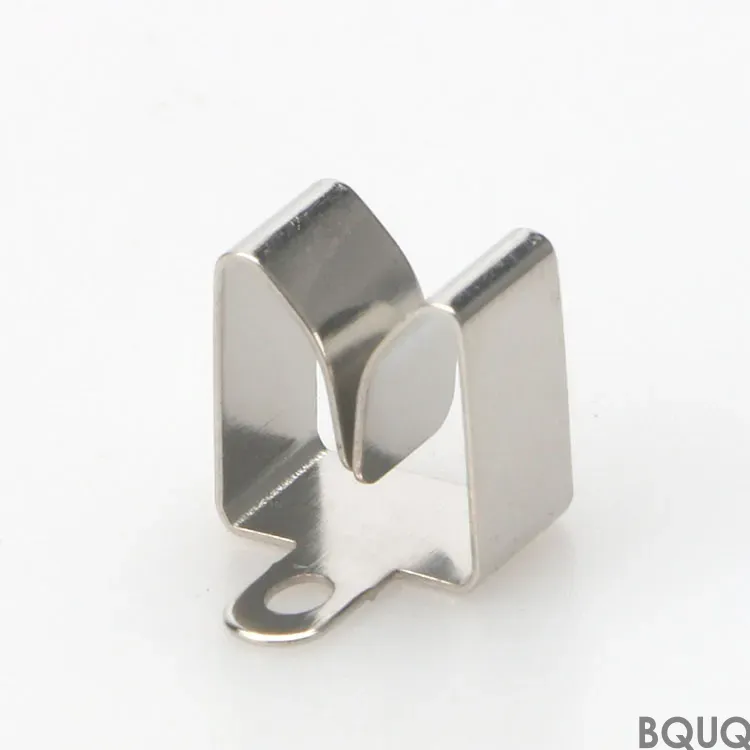
These clips are designed to work with standard shaft diameters and panel thicknesses. For example, a clip with an internal diameter of 5 mm will grip a 5 mm shaft with a retention force of 15 to 20 Newtons. We provide a force-deflection curve for every custom design, so you can verify the fit before placing a large order. This data is useful when your engineers are calculating assembly push-in force or removal force for maintenance access.
What is the MOQ for this collection?
There is no MOQ; you can start with a single sample order or go straight to production volume.
Can you customize the clip dimensions or material?
Yes, we can adjust width, length, bend angle, and material grade, but changes to the internal geometry may require a new die, which adds 2 weeks to the lead time.
How do you ensure quality for large batches?
We use SPC (Statistical Process Control) on key dimensions, measuring every 200th piece, and we stop the press immediately if any reading falls outside the control limits.
What is your typical lead time for 10,000 pieces?
For a standard zinc-plated clip, 10,000 pieces take 7 working days from material confirmation to shipment.
Why You Should Consider a Custom Die for Your Next Project
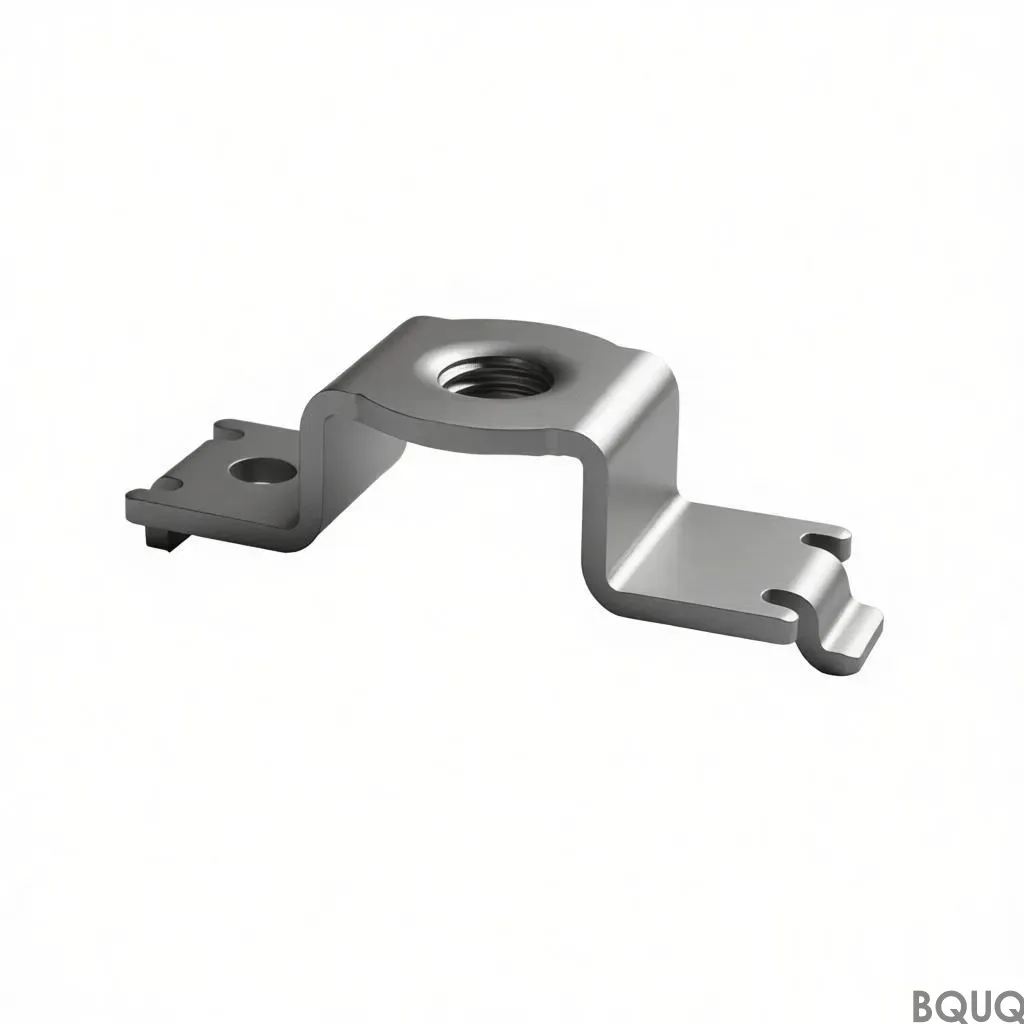
If you're currently using off-the-shelf clips, a custom die might reduce your assembly cost. For example, we can combine the clip with a spring washer or a grounding tab in one stamped piece, eliminating a separate component. This reduces your inventory count and shortens assembly time. The die cost pays back quickly when your volume exceeds 20,000 parts per year. We'll help you evaluate that trade-off with a free cost analysis.
Handling and Packaging for Long-Term Storage
Zinc plating is durable, but we still package clips in anti-rust VCI paper and sealed plastic bags to prevent white rust during transit. For export orders, we use cartons with a moisture barrier. If you plan to store the clips for more than six months, keep them in a dry environment below 60% relative humidity. We also label each box with the batch number and heat treat code, so you can trace the material back to the original coil.
Reference Guides for Your Engineering Team
When you're integrating these clips into a larger assembly, it's worth reviewing the tolerances and tooling maintenance requirements. Our CNC cutting tool selection guide covers how to match tooling materials to your production volume and batch size. For a deeper look at the limits of our stamping process, the CNC machining tolerances guide explains what features we can hold at ±0.02 mm versus looser standards. Both guides are written for engineers who need practical numbers, not theory.
Request a Firm Quote and Drawing Feedback
Send us your part drawing or the dimensions of the clip you need. We'll review it for manufacturability, suggest any cost-saving changes, and send you a firm quote within 12 hours. For urgent inquiries, contact us directly at sc@bquq.com or on WhatsApp at +86 13713157787. We're based in Dongguan, China, and we've been doing precision manufacturing for 20 years. No MOQ, no minimum order pressure, just clear answers and fast delivery.