20-Year CNC machining supplier from Dongguan, China, metal stamping processor, spring, metal heat sink, providing precision parts manufacturing, automated production and supply chain management services. Choose us to pro
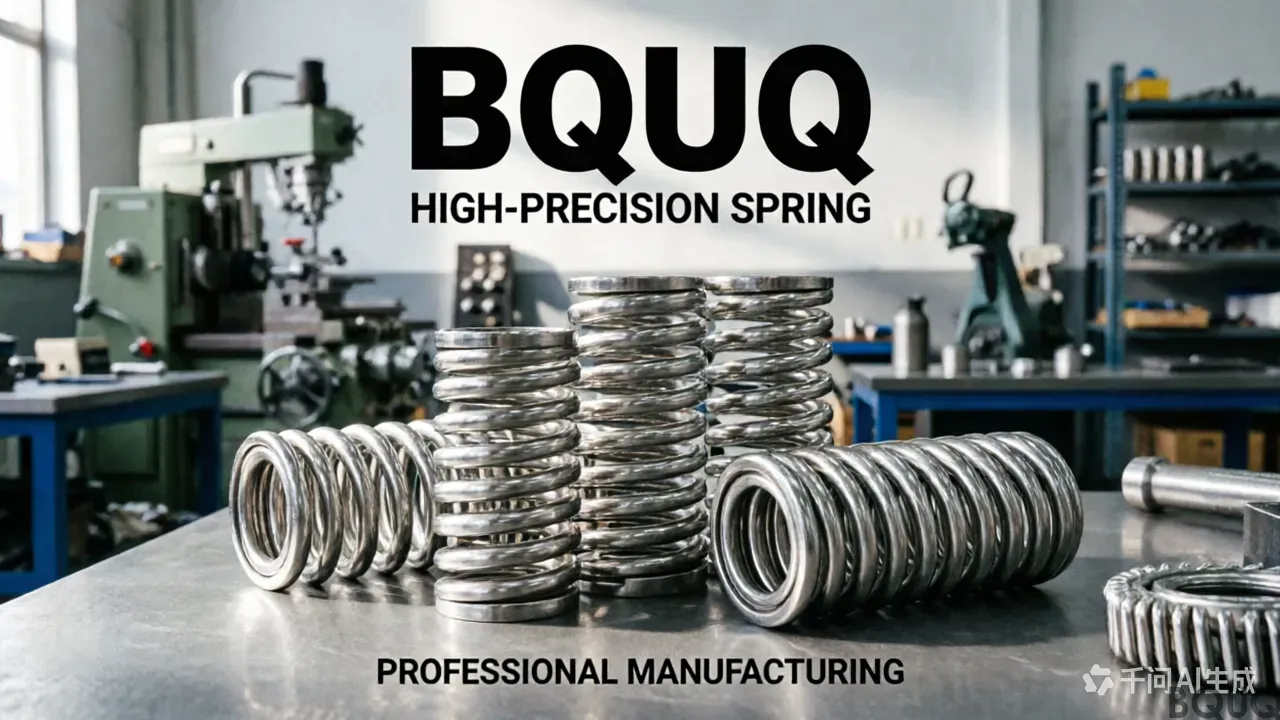
From "standard parts" to "functional parts": 2026 hardware spring industry technology trends and functional innovation engineering direction
As an industrial basic part, hardware springs are undergoing a profound transformation from traditional "standard parts" to customized "functional parts". The global precision spring market has reached 4.80 billion US dollars, and the market size of China's compression spring segment alone has reached 12.78 billion yuan in 2025
-
54This paper systematically analyzes the core technology evolution trend of hardware springs from the three dimensions of material science, manufacturing process and performance optimization, and reveals key innovation directions such as high-stress spring fatigue life breakthrough, surface strengthening process innovation, and mechatronics design for new energy scenarios. It provides reference for manufacturing engineers and industry practitioners with both theoretical depth and engineering practice value. research shows that spring design has transitioned from a single "geometric size satisfaction" to a "performance-oriented design" for system working conditions. The deep integration of materials and processes will become the core division that determines the competitiveness of the industry.
Introduction: The role of hardware springs
Hardware springs have long been regarded in industry as "conventional basic parts" - designed to meet common force values, dimensions and life requirements, with design inputs limited to simple load and space parameters, and procurement focused on controlling costs. However, this perception is being completely overturned.
In 2026, the global precision spring market size has reached 4.80 billion US dollars, and it is expected to grow to 7.91 billion US dollars by 2035, with a compound annual growth rate of 5.7%. China's spring industry is showing a trend of "total steady growth and structural upgrading". There are more than 4,000 spring enterprises in the country, but less than 200 with an annual output value of over 100 million. There are even fewer first-class suppliers with OEM qualifications. The structural contradiction between low-end overcapacity and high-end dependence on imports remains prominent.
Driven by emerging industries such as new energy, intelligent manufacturing, and aerospace, the role of hardware springs is being redefined. In new energy vehicle battery packs, springs must not only maintain stable contact pressure, but also achieve high-efficiency conduction, corrosion resistance, and vibration resistance; in humanoid robot joints, precision torsion springs need to synchronize force transmission and motion control in micro-spaces; in pacemakers, springs with a diameter of only 0.1 mm need to work stably in the human body for more than ten years. These new requirements make hardware springs no longer a cold code on drawings, but a system functional module that carries comprehensive indicators such as precise mechanics, electrical properties, and environmental tolerance.
The "hardware spring" discussed in this paper is a full chain technology system from material grades, manufacturing processes to application engineering, covering all types from micro-precision springs with a wire diameter of microns to heavy-duty suspension springs with a wire diameter of tens of millimeters. The material lineage includes carbon spring steel, alloy spring steel, stainless steel, nickel-based alloys and titanium alloys; the process route covers the whole process from precision coil spring, heat treatment, surface strengthening to intelligent detection; the application scenarios extend to almost all industrial fields such as automobiles, new energy, medical apparatus, aerospace, and electronics.
II. Material Revolution: The First Principles of Function Realization
2.1 Technological breakthroughs in alloy steel material systems
The mechanical properties of metal springs depend first on the choice of materials. Commonly used spring materials include high carbon steel, alloy steel, stainless steel and special alloys. The elastic modulus, yield strength, fatigue limit and corrosion resistance of different materials directly affect the bearing capacity and service life of the spring.
Carbon spring steel (65Mn, 60Si2MnA) has high strength, high elastic limit and good impact resistance, but poor corrosion resistance, suitable for general industrial use; stainless steel (SUS304, SUS316, SUS631) has strong corrosion resistance, suitable for medical apparatus, food machinery and other corrosive environments, but the strength is relatively low; alloy steel (50CrVA, 55CrSi, SUP12) has high strength, high fatigue life and good creep resistance, suitable for high temperature and high stress environments such as aerospace and high-end precision machinery; nickel-based alloys (Inconel X-750, Inconel 718) have super high temperature resistance, corrosion resistance and oxidation resistance, and are the core materials of aero-engine and nuclear industries; titanium alloy (Ti-6Al-4V) is light in weight, corrosion resistance and long fatigue life Low modulus of elasticity, suitable for aerospace and high-end medical apparatus.
In the field of alloy spring steel, the technological breakthroughs of Chinese enterprises deserve attention. The "Water Quenched Spring Steel Wire Production Process" independently developed by Warwick Technology significantly improves the strength and toughness of the material through rapid water quenching and tempering treatment of the spring steel wire. The strength of the spring steel wire has exceeded 2,200 MPa, standing in the same echelon as the international top enterprises. This level of material strength allows high-stress suspension springs to meet the load requirements under lighter weight, directly supporting the lightweight design of automobiles.
2.2 Frontier layout of special alloys and new materials
For high-end application scenarios, special alloys are indispensable. In the aerospace field, Inconel 718 superalloy ensures the stability of the spring in extreme temperature environments; in the medical apparatus field, nickel-titanium memory metal has a unique shape memory effect and superelasticity. Implantable springs need to pass biocompatibility tests and aseptic packaging processes to ensure non-allergenic and non-biotoxic.
The development of new materials is also accelerating. The use of shape memory alloys and composites will greatly improve the performance of springs in extreme environments. In addition, with the improvement of environmental protection requirements, the application of green production and recyclable materials will also become the focus of the industry.
2.3 Engineering decision model for material selection
The material selection of hardware springs is a systematic project that requires comprehensive consideration of the working environment, load requirements, and cost budget.
High corrosion environment: recommended SUS316 or Inconel alloy; high temperature environment: recommended Inconel 718 or titanium alloy;
High load requirements: recommended alloy steel such as 50CrVA; lightweight requirements: recommended titanium alloy (Ti-6Al-4V);
Economical options: carbon spring steel (65Mn); high-end applications: nickel-based alloys or titanium alloys.
It is worth noting that the essence of the spring force value lies in the influence of the difference in the rigidity modulus G of the material wire on the spring constant - the spring constant k = (Gd ^ 4)/(8Dm ^ 3Nc), where G depends on the wire material, and the difference in G value of different materials directly affects the design accuracy of the compression spring.
III. Manufacturing process innovation: from precision coil springs to intelligent production lines
3.1 Precision coil spring technology and process parameter control
The precision manufacturing of hardware springs begins with the coil spring. Traditional coil springs rely on mechanical cam control, which has problems of low precision and complicated debugging. Modern manufacturing generally adopts CNC numerical control spring coiling machine, which can precisely control the wire feeding, reducing diameter, cutting and other processes. Typical hardware spring manufacturing processes include: precision winding (CNC spring machine precisely controls wire diameter and pitch) heat treatment (eliminating residual stress, adjusting metallographic structure) end face grinding (ensuring vertical bearing surface) shot peening (introducing compressive stress) hot pressure or load treatment (stabilizing size) surface coating (anti-corrosion). The level of automation in the production line continues to improve. For example, Zhejiang Meili Technology has realized fully automatic operations from coil springs, tempering, grinding springs, shot blasting to thermal pressure, with a single valve spring production line capable of 3,500 to 4,000 pieces per shift.
3.2 Precise control of heat treatment process
Heat treatment is a key process that determines the metallographic structure and mechanical properties of springs. Precision springs are manufactured by quenching and medium temperature tempering process. The formation of martensite structure during the quenching process gives the spring high strength, and then the internal stress is reduced and the required elasticity and toughness are obtained by medium temperature tempering. In the application of high-end alloy spring steels (such as 50CrVA, 60Si2CrVA), it is necessary to optimize the microstructure with a precise quenching + tempering system to obtain the best combination of fatigue properties.
3.3 Shot Peening: "Nuclear Weapons" with Double Fatigue Life
Shot peening is one of the most technical processes in the field of hardware springs. Its physical mechanism is to use high-speed projectiles to impact the metal surface, causing plastic deformation of the surface and forming a residual compressive stress layer, which can effectively offset or reduce the tensile stress of the spring during use.
For today's automotive suspension springs, it is quite common for service stresses to exceed 1,000 MPa, which even exceeds the theoretical fatigue limit of the material and must be strengthened by means of shot peening. The strength and depth of the compressive stress on the spring surface are the core indicators for measuring the effect of shot peening - a good shot peening surface stress should be at least -600 MPa or more, and it can reach -800 MPa at a distance of 50 μm from the surface; the spring surface compressive stress of stress shot peening (shot peening while applying a static load) can reach -800 MPa or more, and can reach -1,200 MPa at a distance of 50 μm from the surface. After proper shot peening, the fatigue life of high-stress springs can be increased by more than 5 times.
In actual production, automotive suspension springs use multiple shot peening processes - first with larger diameter pellets for coarse spraying, and then with smaller diameter pellets for fine spraying, in order to establish the optimal compressive stress distribution at different depth levels. At the same time, the test standards for suspension springs by OEMs are extremely strict, and the longest single test period can reach 70 days (10 weeks). The reason is that suspension springs working under high stress conditions will cause corrosion fatigue failure once the surface is stress-corroded. If the broken spring port punctures the tire, it may cause serious safety accidents.
3.4 Deep embedding of intelligent manufacturing
Hardware spring manufacturing is evolving towards a high degree of automation, digitalization and intelligence. The landing of new quality productivity strongly advocated by the state in the spring industry is embodied in the data-driven whole-process quality control. Smart factory construction and the application of 3D printing technology will improve production efficiency and flexibility, and realize personalized customization. In the detection process, CNC precision measuring instrument, fatigue testing device, salt spray testing machine and other equipment to achieve 100% size detection, fatigue life test and corrosion resistance test, the failure rate can be controlled below 0.01%.
IV. Performance optimization: from mechanical analysis to life prediction
4.1 Engineering Correlation between Stress Distribution and Fatigue Life
During repeated loading of metal springs, the maximum stress usually occurs on the inside of the spring, that is, near the central axis - an inherent feature determined by the spring geometry. During compression deformation, the contact stress between the wires may lead to the initiation of microcracks, which may eventually lead to fatigue fracture. Therefore, the accuracy of stress analysis is directly related to the life prediction of the spring.
At the design level, CAD/CAE simulation-driven design has become the industry standard. Through finite element analysis (FEA) to simulate the stress distribution of springs under different working conditions, geometric parameters such as wire diameter, medium diameter, helix angle and effective number of turns can be systematically optimized to reduce local stress concentration.
4.2 Prestress treatment and anti-relaxation performance
Prestress treatment is to apply a preload or preload that exceeds the working load after the spring is formed, so that the spring is subjected to an overload compression, thereby establishing a residual stress field in the opposite direction of the working stress. This process can significantly reduce the actual stress level of the spring under the working state, improve the anti-relaxation performance and dimensional stability. Anti-relaxation treatment is particularly important for applications with high stability requirements such as aerospace and medical instruments.
In high-cycle application scenarios such as automotive valve springs, fatigue verification at the level of hundreds of millions or even billions of times is required. For example, the spring used for the engine valve mechanism needs to withstand up to 10 ^ 7 cycles of cyclic load without breaking, ensuring the reliability of the engine throughout its life cycle.
4.3 Surface integrity control system
Parameters such as projectile diameter, shot peening strength, and coverage rate need to be set systematically to obtain the optimal surface compressive stress distribution. For circular springs (spiral springs), due to their helical geometry, the strengthening treatment is more complicated than that of flat-surface leaf springs. The production line uses a continuous conveyor chain system to send into the shot blasting chamber. The parallel rollers in the shot blasting chamber drive the circular spring edge to rotate and move forward to ensure that the high-speed shot flow can pass between the various rings of the circular spring and hit the metal surface with the most concentrated stress in the inner ring. For production lines with high production capacity requirements, a strengthening equipment that can handle two circular springs at the same time can be selected, and multiple nozzles can be combined on the basic shot blasting equipment to perform "targeted" strengthening on the specific stress concentration area of the spring
V. Functional innovation driven by application scenarios
5.1 New energy vehicles: a new paradigm of mechatronics
New energy vehicles are the core power source to promote the functional innovation of hardware springs. In traditional fuel vehicles, springs mainly meet the mechanical load requirements; while in the field of new energy, springs are given more diverse missions. In new energy vehicle battery packs, springs are used as conductive connectors, and mechanical properties (providing stable contact pressure) and electrical properties (resistance, electric corrosion) must be considered when designing. In addition, the fatigue strength needs to meet more than 10 ^ 7 cycles, and the operating temperature range covers a wide temperature range of -40 ° C to 200 ° C, which perfectly adapts to the high reliability requirements of new energy.
In the context of the trend of lightweight vehicle design, the demand for key components of the new energy chassis, such as suspension springs and stabilizers, continues to grow, while the application of higher-strength materials allows springs to reduce weight by 20-30% while maintaining or even enhancing load-bearing capacity.
5.2 Medical and Humanoid Robots: The Battle for Precision in the Micron Age
In the field of medical apparatus, the three demanding requirements of biocompatibility, miniaturization and ultra-high reliability are put forward for springs. Taking Dongguan Du's Chengfa as an example, the self-developed nickel-titanium shape memory alloy vascular guide wire spring has a wire diameter of only 0.008 mm (equivalent to one-tenth of the diameter of a hair). It needs to be used in the human skull for a long time and has a design life of up to ten years. The spring used for the heart valve frame needs to pass 380 million durability tests, which is equivalent to opening and closing more than 50,000 times a day and working continuously for 20 years.
The rise of humanoid robots poses new challenges to joint torsion springs and grasping mechanism springs. When the robotic arm performs grasping tasks, the spring is required to provide accurate and stable force output; in multi-degree-of-freedom joints, the torsion spring needs to simultaneously complete force transmission, buffering and return control. Engineers must not only consider the force value, but also simulate its dynamic response under repeated start-stop and high-frequency vibration to avoid resonance.
5.3 The Extreme Challenge of Special Springs
In the aerospace field, lightweight, high-temperature, and corrosion-resistant springs are used in aircraft landing gear and spacecraft structural parts, and need to withstand extreme temperature differences from -60 ° C to 300 ° C and salt spray corrosion environments. In the field of high-speed railways, springs are key components in train braking, suspension, and close-fitting coupler buffers, withstanding the dual test of high-frequency shock and heavy-load fatigue. In addition, new ring springs such as spring contact fingers are widely used in high-voltage connectors, which can transmit strong currents in small spaces and are suitable for a variety of static or dynamic high-voltage environments. Their unique load-deformation curve provides technical support for new energy charging facilities.
VI. Future trends and engineering practice recommendations
6.1 Three core directions in the era of "functional parts"
Looking to the future, the technological evolution of the hardware spring industry will focus on three core directions:
First, the change of design thinking from "standard parts" to "functional parts". Spring design is no longer satisfied with universal force value and size requirements, but customized development based on system working conditions as input - the design side shifts from parameter selection to performance-driven, the manufacturing side shifts from meeting tolerances to full-process data traceability, and the value side shifts from cost control to reliability guarantee.
Second, the deep integration of materials and processes. Materials are the ceiling of spring performance, and process is the execution path to reach this ceiling. The essence of spring competition is the competition between materials and processes, and in the future, more attention will be paid to the integration of the whole chain technology of "material research and development - process innovation - intelligent manufacturing".
Third, the deep embedding of intelligent and digital twins. Intelligent spring integrated sensors monitor stress, deformation and fatigue status to achieve predictive maintenance. The deep combination of numerical control spring coiling machine and Internet of Things technology makes the production line have remote monitoring and early warning capabilities.
6.2 Industry practitioners' engineering advice
For hardware spring industry practitioners, it is recommended to grasp the following strategic priorities:
Increase investment in material research and development: the upper limit of spring performance is determined by the material, and the development and application of high-strength, high-temperature, and corrosion-resistant new materials is a ticket to win the high-end market.
Building a full-chain quality control system: a complete closed loop from raw material inspection, online process control to finished product performance testing is the fundamental guarantee to ensure batch consistency.
Embrace intelligent design and simulation tools: CAE simulation and digital twin technology can predict fatigue failure at the design source, optimize stress distribution, significantly shorten development cycles, and reduce trial and error costs;
Emphasizing surface integrity engineering: fine control of shot peening parameters, heat treatment regimes, and surface coatings is often the core watershed for the performance gap between conventional springs and high-end springs.
BQUQ is a professional metal spring manufacturer, please send us drawings, and our company will quote you within 12 hours.
Frequently Asked Questions
What is the current market size for precision springs and compression springs?
The global precision spring market has reached 4.80 billion US dollars. In China specifically, the compression spring segment alone reached a market size of 12.78 billion yuan in 2025, reflecting strong demand for these components.
How has spring design evolved from traditional standard parts?
Spring design has transitioned from a single 'geometric size satisfaction' approach to a 'performance-oriented design' that considers system working conditions. This shift means springs are now customized as functional parts rather than standard components, with deep integration of materials and processes determining industry competitiveness.
What are the key innovation directions in hardware spring technology?
Key innovation directions include breakthroughs in high-stress spring fatigue life, surface strengthening process innovations, and mechatronics design tailored for new energy scenarios. These advances span three dimensions: material science, manufacturing process, and performance optimization.
Who is the target audience for this spring technology analysis?
The analysis is designed for manufacturing engineers and industry practitioners. It provides both theoretical depth and engineering practice value, offering reference material for those involved in spring design, production, and application across industrial sectors.