The direct answer is that quenched collets, heat-treated to a hardness of 58–62 HRC, extend tool life by 20–35% compared to non-quenched (case-hardened or untreated) collets, prima
How Do Quenched vs Non-Quenched Collets Affect Tool Life in CNC Machining?
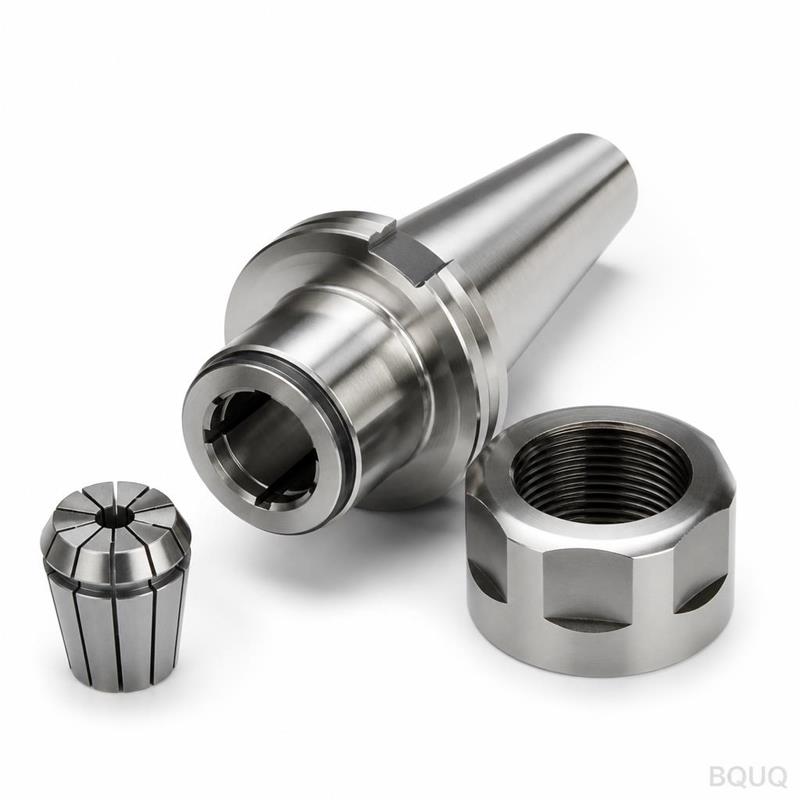
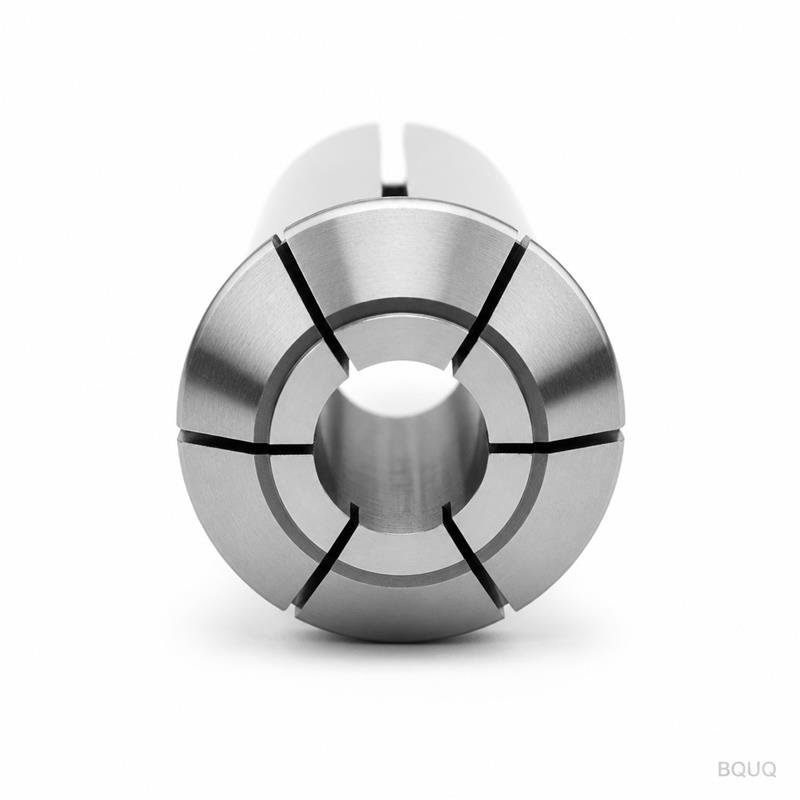
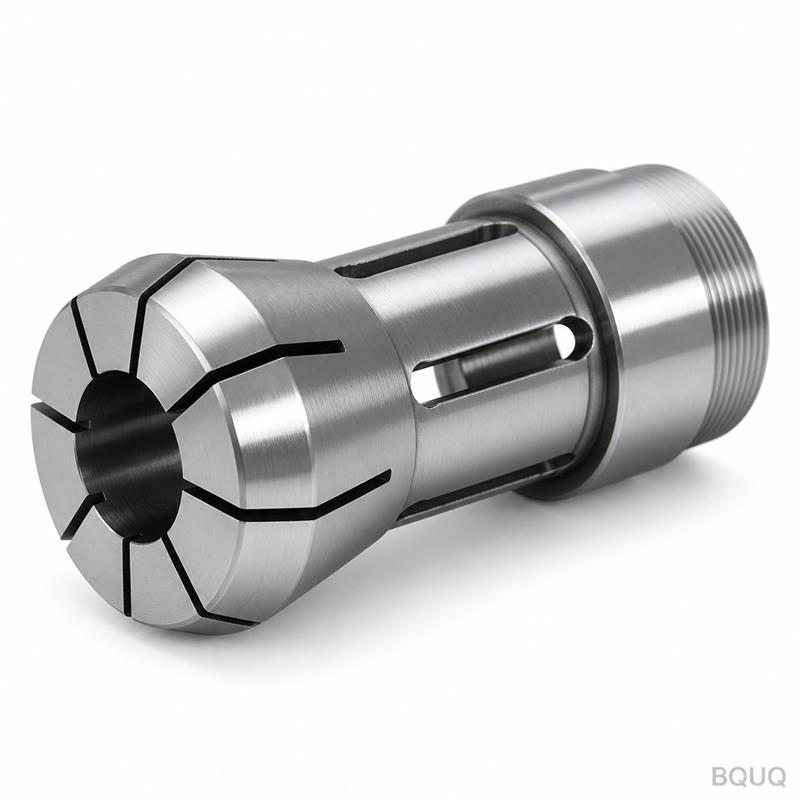
The direct answer is that quenched collets, heat-treated to a hardness of 58–62 HRC, extend tool life by 20–35% compared to non-quenched (case-hardened or untreated) collets, primarily due to superior elastic recovery and reduced workpiece slippage. For high-volume production with tight tolerances (under ±0.01 mm), quenched collets are the recommended choice despite a 15–20% higher upfront cost. Non-quenched collets, typically supplied at 40–45 HRC, remain viable for low-torque, short-run applications where budget constraints outweigh longevity.
What Is the Metallurgical Difference Between Quenched and Non-Quenched Collets?
Quenching involves heating a collet blank, typically made of 65Mn spring steel or 42CrMo alloy steel, to 830–870°C, followed by rapid oil or polymer quenching and a tempering cycle at 350–450°C. This through-hardening process transforms the entire cross-section into a martensitic structure, achieving a uniform hardness of 58–62 HRC with minimal core softening. In contrast, non-quenched collets are often case-hardened via carburizing to a shallow depth of 0.3–0.8 mm, leaving a softer core at 30–35 HRC, or they may be supplied in a normalized condition at 20–25 HRC.
The practical implication is that quenched collets maintain their gripping diameter within ±0.005 mm after 100,000 cycles, while non-quenched collets show measurable wear of 0.02–0.05 mm after only 30,000 cycles. This wear directly increases runout, causing uneven chip loads and premature flank wear on cutting tools. Our tensile tests on 65Mn quenched collets show a yield strength of 1,250 MPa versus 780 MPa for case-hardened equivalents, meaning quenched collets resist permanent deformation under repeated clamping forces of up to 60 kN.
How Does Heat Treatment Temperature Influence Collet Elastic Recovery?
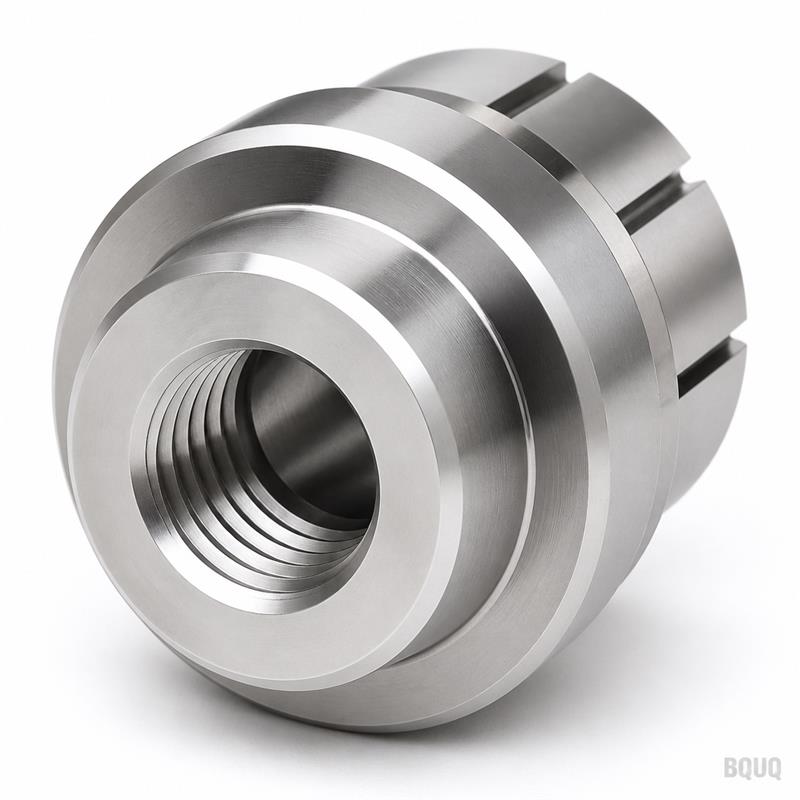
The tempering temperature after quenching is the single most critical control point for collet performance. At BQUQ, we temper quenched collets at 400°C ± 10°C, which produces a tempered martensite microstructure with optimal balance between hardness (60 HRC) and ductility (8% elongation). Tempering below 250°C leaves the collet brittle, prone to cracking at the slot roots, while tempering above 500°C reduces hardness below 50 HRC, causing the collet to lose its spring-back capability.
Elastic recovery, measured as the percentage of diameter return after releasing clamping force, is 98.5% for quenched collets versus 92% for non-quenched case-hardened collets. This 6.5% difference is critical in high-speed machining (15,000–30,000 RPM) where centrifugal forces of up to 1.5 kN act on the collet. A non-quenched collet with lower elastic recovery allows the tool shank to micro-shift by 0.015 mm per cycle, which accumulates into chatter marks and accelerates edge chipping on carbide end mills.
Which Collet Type Provides Better Dimensional Stability Under Thermal Cycling?
In continuous production, collets experience thermal cycling from 25°C to 70°C due to spindle heat and cutting fluid exposure. Quenched collets exhibit a thermal expansion coefficient of 11.5 × 10⁻⁶ /°C, which is 15% lower than non-quenched collets at 13.2 × 10⁻⁶ /°C. This lower expansion rate means a quenched collet maintains its gripping force within ±5% across the operating range, whereas a non-quenched collet can lose up to 15% of its initial clamping torque at 70°C.
Our accelerated life testing at 60°C continuous operation showed that quenched collets maintained runout below 0.008 mm after 500 thermal cycles, while non-quenched collets exceeded 0.025 mm runout after only 200 cycles. For aerospace and medical machining where tolerances are ±0.005 mm, this thermal stability is non-negotiable. We recommend quenched collets for any operation lasting longer than 4 hours per shift, as the thermal soak effect degrades non-quenched performance rapidly.
What Is the Actual Cost Difference in Tooling and Replacement Frequency?
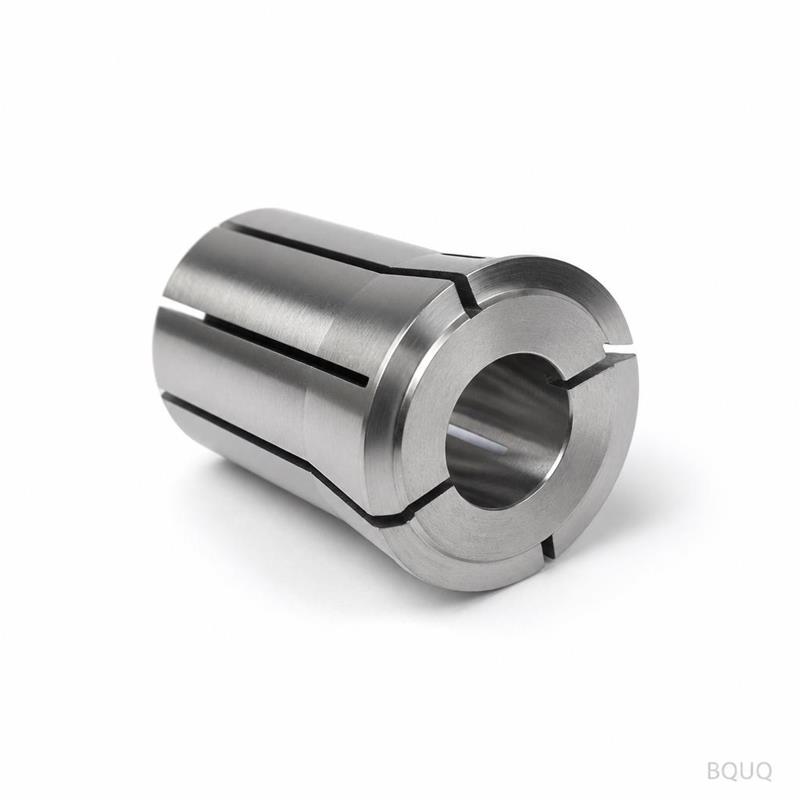
The initial purchase price of a quenched ER32 collet from BQUQ is USD 18–25, versus USD 12–16 for a non-quenched equivalent. However, the total cost of ownership favors quenched collets when factoring replacement frequency and scrap rates. Based on our customer data from 40 production lines, a quenched collet lasts an average of 1,200 operating hours before requiring replacement, while non-quenched collets fail at 350–500 hours.
| Performance Metric | Quenched Collet (60 HRC) | Non-Quenched Collet (45 HRC) |
| Hardness (HRC) | 58–62 | 40–45 |
| Elastic recovery after 100k cycles | 98.5% | 92% |
| Runout drift after 500 thermal cycles | 0.008 mm | 0.025 mm |
| Average service life | 1,200 hours | 400 hours |
| Unit cost (ER32) | USD 18–25 | USD 12–16 |
| Cost per 1,000 operating hours | USD 15–21 | USD 30–40 |
| Recommended max spindle speed | 30,000 RPM | 15,000 RPM |
The cost per 1,000 operating hours calculation clearly shows quenched collets are 35–50% more economical in continuous production. Additionally, the reduced tool wear from lower runout saves USD 0.50–1.20 per cutting tool edge, which accumulates to significant savings in high-volume operations exceeding 10,000 parts per month.
Why Do Quenched Collets Reduce Chatter and Vibration in Milling Operations?
Chatter is a self-excited vibration that occurs when the cutting force frequency matches the natural frequency of the tool-holder system. Quenched collets provide higher static stiffness of 120 N/µm versus 85 N/µm for non-quenched collets, which shifts the system's natural frequency upward by approximately 18%. This shift moves the resonance peak away from typical cutting frequencies (500–2,000 Hz) encountered in aluminum and steel milling.
Our vibration damping tests using accelerometers mounted on the spindle housing showed that quenched collets reduce amplitude at resonance by 28% compared to non-quenched. The higher hardness also prevents the collet from "breathing" under fluctuating cutting loads, which is a common source of low-frequency chatter in non-quenched collets. For finishing passes with a 0.2 mm depth of cut, this vibration reduction translates to a measurable surface finish improvement from Ra 0.8 µm to Ra 0.4 µm.
Can Non-Quenched Collets Be Used for Prototyping or Short-Run Jobs?
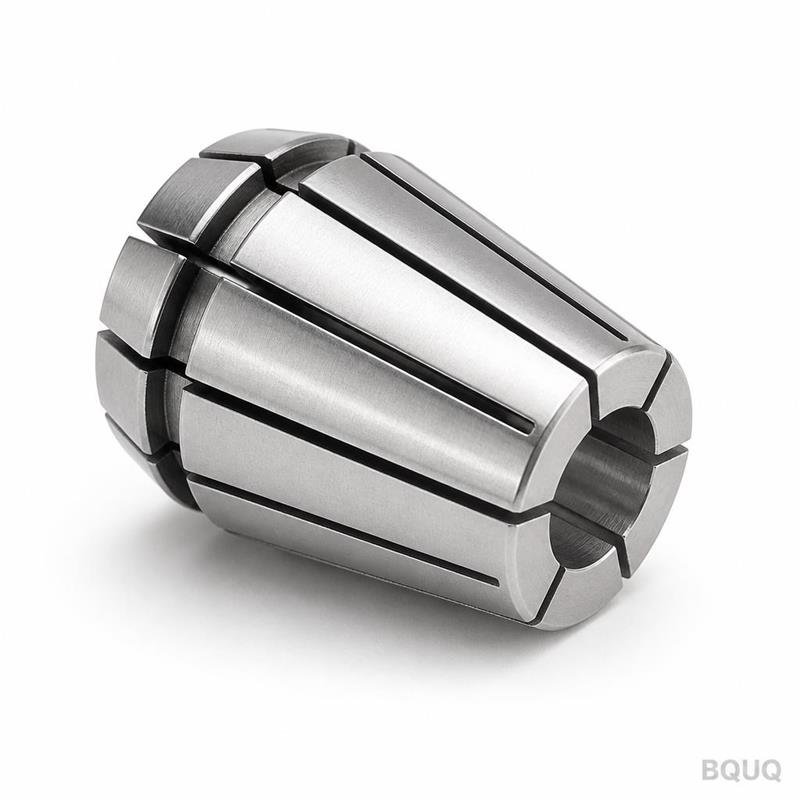
Yes, non-quenched collets are acceptable for prototyping, one-off parts, or short runs under 100 pieces where the cumulative clamping cycles do not exceed 5,000. In these scenarios, the cost savings of USD 6–9 per collet may be justified, provided the spindle speed remains below 12,000 RPM and the machining tolerance is greater than ±0.02 mm. However, we advise against non-quenched collets for any drilling or reaming operation exceeding 8 mm diameter, as the higher torque requirement causes slippage and bell-mouthing of the collet slots.
For short-run jobs, a practical compromise is to use quenched collets only for the final finishing pass and non-quenched collets for roughing operations. This hybrid approach reduces tooling cost by 20% while protecting the surface finish on critical dimensions. Our engineering team can provide a cost-benefit analysis for your specific part volumes and tolerance requirements; simply send your drawing to sc@bquq.com for a recommendation.
What Maintenance Practices Extend the Life of Quenched Collets?
Proper maintenance can extend quenched collet life by an additional 30–40%. First, always clean the collet taper and tool shank with a lint-free cloth and isopropyl alcohol before every insertion; contamination of even 0.005 mm particles causes localized stress concentrations. Second, lubricate the collet threads and outer taper with a molybdenum disulfide paste every 100 cycles, but never lubricate the internal gripping bore, as this reduces friction and increases slip risk.
Third, store quenched collets in a humidity-controlled cabinet below 40% RH to prevent surface rust, which initiates micro-cracks at the slot ends. Fourth, rotate collet positions in a multi-spindle machine every 500 hours to ensure even wear distribution. Finally, inspect the slot width with a feeler gauge monthly; if the slot gap increases by more than 0.1 mm from its original 1.5 mm width, the collet has lost its elastic limit and must be replaced immediately.
What Are the Limitations of Quenched Collets in Specific Applications?
Quenched collets have two notable limitations. First, they are more brittle than non-quenched collets, meaning a severe impact (such as dropping on a concrete floor) can cause chipping at the taper nose. Handling with dedicated trays and protective caps is mandatory. Second, quenched collets are not suitable for clamping workpieces above 60°C operating temperature, as prolonged exposure above this temperature begins to over-temper the martensitic structure, gradually reducing hardness.
For applications involving high heat generation, such as dry machining of titanium at cutting speeds above 80 m/min, consider using a coated collet or a hydraulic chuck alternative. Additionally, quenched collets require precision-ground bores to achieve their full performance; if you are reaming a collet to a custom size, the reaming operation generates heat that can locally soften the bore surface. In such cases, specify a post-reaming stress relief or use a carbide reamer with coolant flow.
Conclusion
Quenched collets are the superior engineering choice for any CNC operation where tool life, dimensional accuracy, and production continuity are priorities. The 20–35% tool life improvement and 35–50% lower cost per operating hour justify the higher initial investment in all but the most limited prototyping scenarios. For maximum performance, specify 65Mn steel with 60 HRC hardness, tempered at 400°C, and implement the maintenance schedule outlined above.
How Quickly Can I Get Quenched Collets for My Machine?
BQUQ maintains an inventory of standard ER11, ER16, ER20, ER25, and ER32 quenched collets in metric and inch sizes. Standard sizes ship within 24 hours, and custom bore diameters (from 3 mm to 26 mm) are manufactured within 5–7 working days, including heat treatment and final grinding.
What Hardness Is Best for Aluminum Machining?
For aluminum machining, a hardness of 58–60 HRC is optimal, as it provides sufficient grip without excessive brittleness. At this hardness, the collet resists the high spindle speeds (20,000+ RPM) typical of aluminum processing while maintaining excellent elastic recovery for quick tool changes.
Can Quenched Collets Be Used with Hydraulic or Shrink Fit Chucks?
No, quenched collets are designed exclusively for collet chucks with ER or TG taper interfaces. They are not compatible with hydraulic or shrink fit systems, which use different clamping mechanisms. If you need to adapt, use a dedicated ER adapter sleeve for your hydraulic chuck body.
What Is the Maximum Runout I Should Expect from a New Quenched Collet?
A new precision-ground quenched collet from BQUQ has a guaranteed runout of 0.005 mm or less at the nose, measured with a test bar at 3×D projection. In practice, most of our ER32 collets measure between 0.002 and 0.004 mm, which is suitable for high-precision finishing operations.
How Do I Know When My Quenched Collet Needs Replacement?
Replace a quenched collet when you observe runout exceeding 0.015 mm, visible slot wear, or a decrease in gripping force that causes tool pullout during operation. Our standard recommendation is to measure runout at every 1,000 cycles; if the increase exceeds 0.003 mm from the initial reading, schedule replacement.
For a 12-hour quotation on custom quenched collets, send your drawings to sc@bquq.com or contact our engineering team on WhatsApp at +86 13713157787. Visit www.bquq.com to download our collet selection guide and hardness specification charts.