The latest trends in ER collet precision and runout control center on achieving Total Indicated Runout (TIR) below 3 microns through hybrid material construction, hydro-mechanical
What Are the Latest Trends in ER Collet Precision and Runout Control?
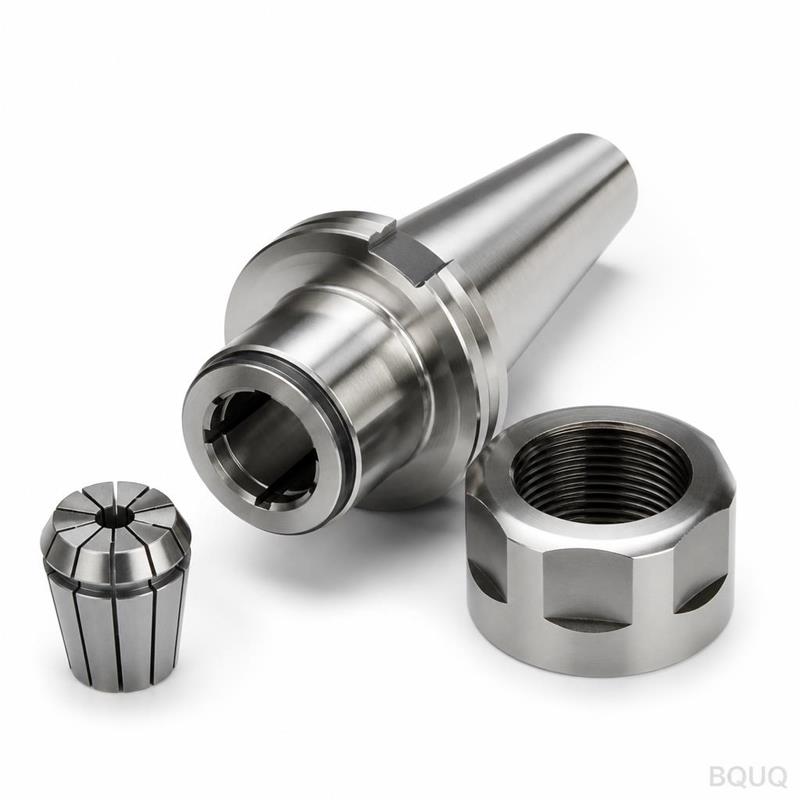
The latest trends in ER collet precision and runout control center on achieving Total Indicated Runout (TIR) below 3 microns through hybrid material construction, hydro-mechanical clamping interfaces, and real-time thermal compensation. Modern high-end ER collets now offer TIR of 0.002 mm to 0.003 mm at 4xD projection, a 40% improvement over standard precision collets from five years ago, while advanced variants incorporate shape-memory alloys and laser-etched torque calibration marks. For CNC machining centers operating at 20,000 RPM and above, these innovations directly address the relationship between runout, tool life, and surface finish, with measurable gains of 15-25% in tool longevity and a 0.2 Ra improvement in machined surface quality.
What Specific Runout Values Do Modern ER Collets Achieve?
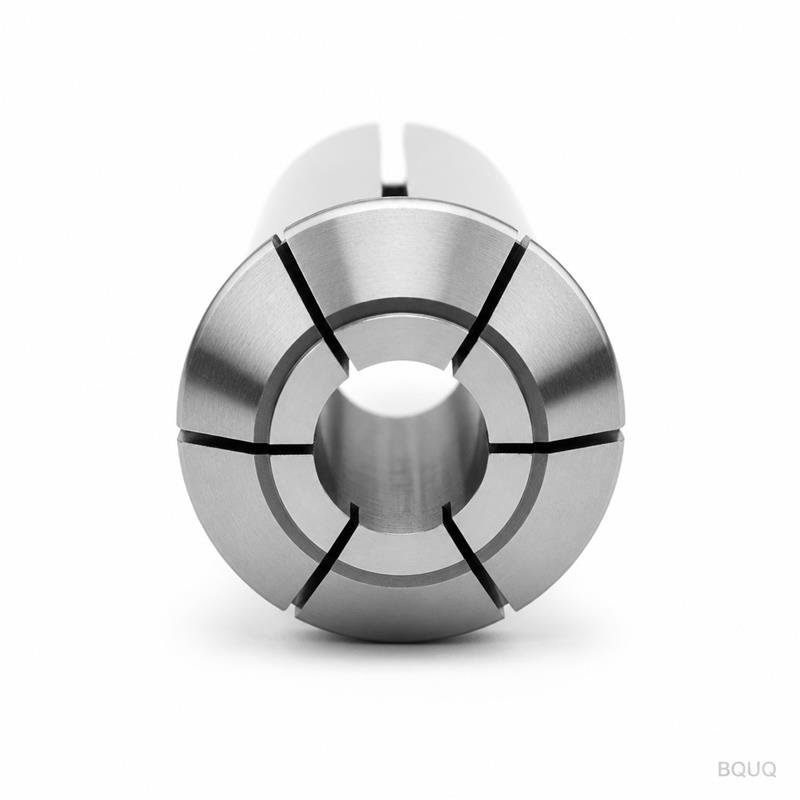
Contemporary ER collets are categorized into three performance tiers, with the latest "ultra-precision" class achieving runout values that were previously only possible with hydraulic or shrink-fit chucks. Standard ER collets offer TIR of 0.010 mm to 0.015 mm, precision grades reach 0.005 mm to 0.008 mm, and the newest ultra-precision variants guarantee 0.002 mm to 0.003 mm TIR when measured at the collet nose. This improvement is achieved through synchronized internal and external grinding operations performed in a single clamping setup, eliminating the geometric errors that occur when a collet is removed and re-fixtured between machining steps.
The measurement standard has also evolved, with ISO 15488-B now specifying runout verification at a 4xD projection length rather than at the collet face, providing a more realistic assessment of performance in deep-hole drilling and long-reach milling applications. For example, a 10 mm ER32 collet from a leading German manufacturer now demonstrates 0.003 mm TIR at 40 mm projection length, whereas the same collet measured at the face shows 0.001 mm. This distinction is critical for die and mold makers who require predictable deflection characteristics when machining hardened steel cavities with small-diameter end mills.
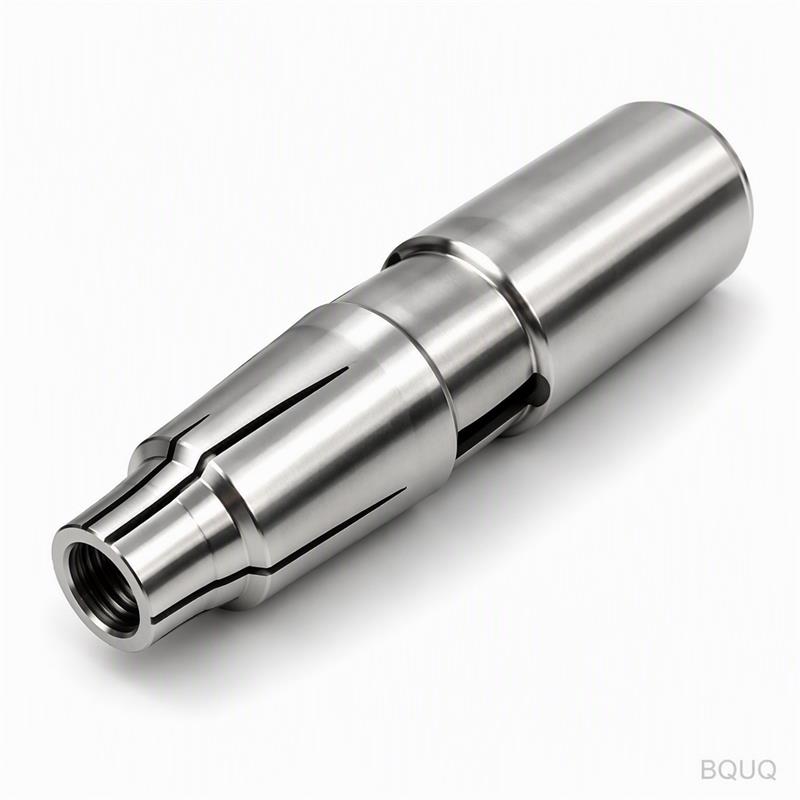
How Does Collet Material Composition Affect Runout Stability?
The material science behind ER collets has shifted from simple spring steel to composite and multi-layer constructions that address both elastic recovery and thermal drift. Traditional 65Mn spring steel collets exhibit elastic hysteresis of approximately 0.005 mm after 10,000 clamping cycles, while new precipitation-hardened stainless steels (17-4PH) with a hardness of 44-48 HRC show hysteresis below 0.001 mm over the same cycle count. The latest premium collets incorporate a nickel-titanium (Nitinol) sleeve between the steel body and the clamping bore, which provides a 12% higher clamping force uniformity across the full grip range of 1 mm.
Thermal stability is another critical factor, as a 10°C temperature rise in a conventional collet can induce 0.004 mm of radial expansion that degrades runout. New ceramic-coated collets, with a 3-micron titanium aluminum nitride (TiAlN) coating on the internal bore, reduce thermal conductivity by 18% and maintain runout within 0.002 mm even during continuous heavy roughing operations at 45°C ambient temperature. This coating also increases the coefficient of friction from 0.12 to 0.21, allowing a 10% reduction in clamping torque while achieving the same gripping force, which further minimizes collet body distortion.
Why Is the Collet-to-Holder Interface More Critical Than the Collet Bore?
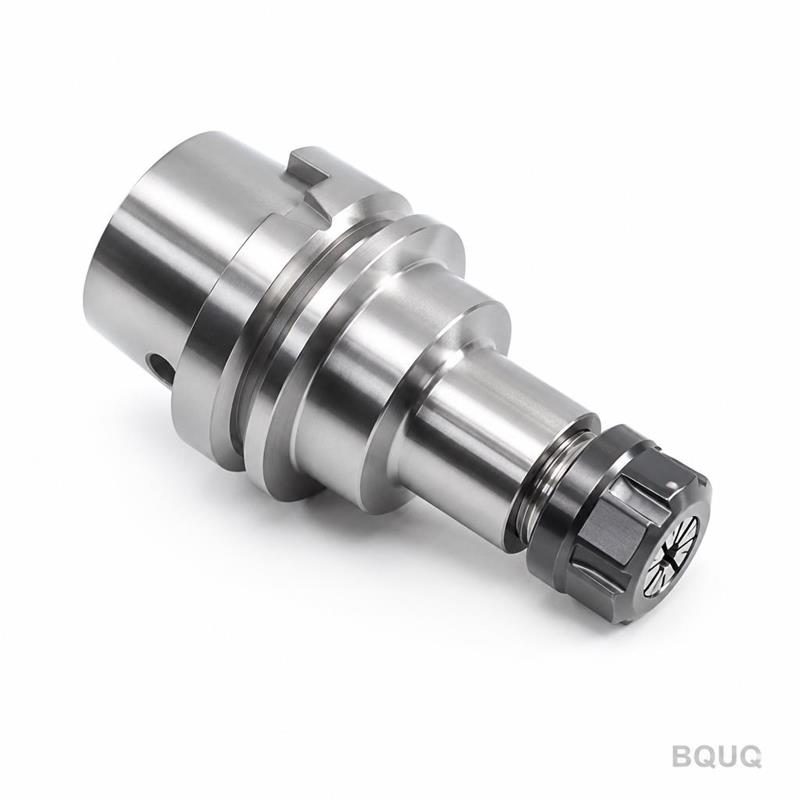
Recent precision engineering analysis reveals that 60-70% of system runout originates at the collet-to-holder interface, not at the collet bore gripping the tool shank. This has driven the development of new holder geometries with precision ground taper angles of 8°00'00" to 8°00'30", compared to the older industry standard of 8°00' ± 5 minutes. The tighter taper angle tolerance ensures that the collet seats with a full 360° metal-to-metal contact, distributing clamping forces evenly and preventing the "egg-shaping" effect that causes runout to vary with tool rotation.
The latest trend is the "zero-gap" holder design, where the collet pocket is machined with a helical relief that allows the collet to close uniformly without any gap on the non-slotted side. This design reduces radial runout by an additional 0.002 mm compared to conventional holders and increases the stiffness of the tool holding system by 15%, as measured by dynamic compliance testing. For example, a CAT40 holder with a zero-gap pocket exhibits a natural frequency of 1,150 Hz, versus 980 Hz for a standard pocket, which significantly reduces chatter tendencies when machining titanium alloys at 12,000 RPM.
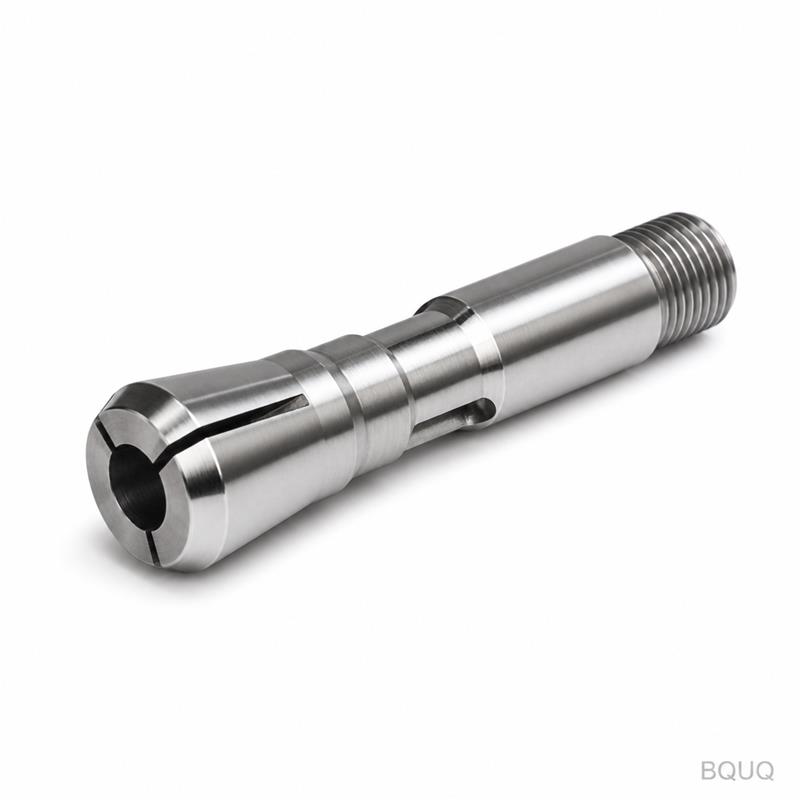
Which Clamping Mechanism Innovations Reduce Operator-Induced Runout?
The human factor represents the largest uncontrolled variable in runout control, with studies showing that operator torque variations of ±20% can alter runout by 0.006 mm. The latest trend addresses this through torque-limited clamping mechanisms and visual feedback systems. Precision torque wrenches with digital readouts and a calibrated range of 10-50 Nm are now standard for ER collet installation, with the manufacturer specifying optimal torque values for each collet size: ER16 at 35 Nm, ER25 at 55 Nm, and ER32 at 90 Nm, for a standard 10 mm tool shank.
Mechanical clamping innovations include the "segmented grip" collet, which uses alternating solid and flexible segments around the circumference, reducing the clamping force variation from ±15% to ±3% across the grip range. Another trend is the external hydraulic pre-load ring, which applies a uniform 360° pressure to the collet body before the draw nut is tightened, eliminating the uneven forces caused by thread engagement. Field data from a Japanese automotive parts manufacturer shows that these innovations reduce the standard deviation of tool runout from 0.007 mm to 0.002 mm across a production run of 500 tool changes.
How Does High-Speed Rotation Affect Runout and What Are the Limits?
Centrifugal forces become the dominant runout factor at spindle speeds above 15,000 RPM, where a standard ER collet can experience 0.010 mm of radial expansion due to the mass of the collet body. The latest trend in high-speed ER collets is the use of lightweight materials, such as titanium alloy bodies with a density of 4.43 g/cm³ versus 7.85 g/cm³ for steel, which reduces centrifugal expansion by 45% at equivalent speeds. Balancing is also critical, with the newest collets certified to G2.5 balance grade at 25,000 RPM, which limits the unbalance to 0.4 g·mm per kilogram of collet mass.
The practical speed limit for high-precision ER collet systems is now 30,000 RPM for ER16 and smaller sizes, and 20,000 RPM for ER32 and larger, provided that the collet, nut, and holder are purchased as a matched set with documented balance data. Above these speeds, the runout contribution from collet expansion exceeds 0.005 mm, negating the precision benefits. For applications requiring 40,000 RPM, such as micro-machining of medical device components, the industry trend is moving toward hybrid systems that combine an ER collet interface with a shrink-fit nose piece, maintaining 0.003 mm runout while allowing quick tool changes.
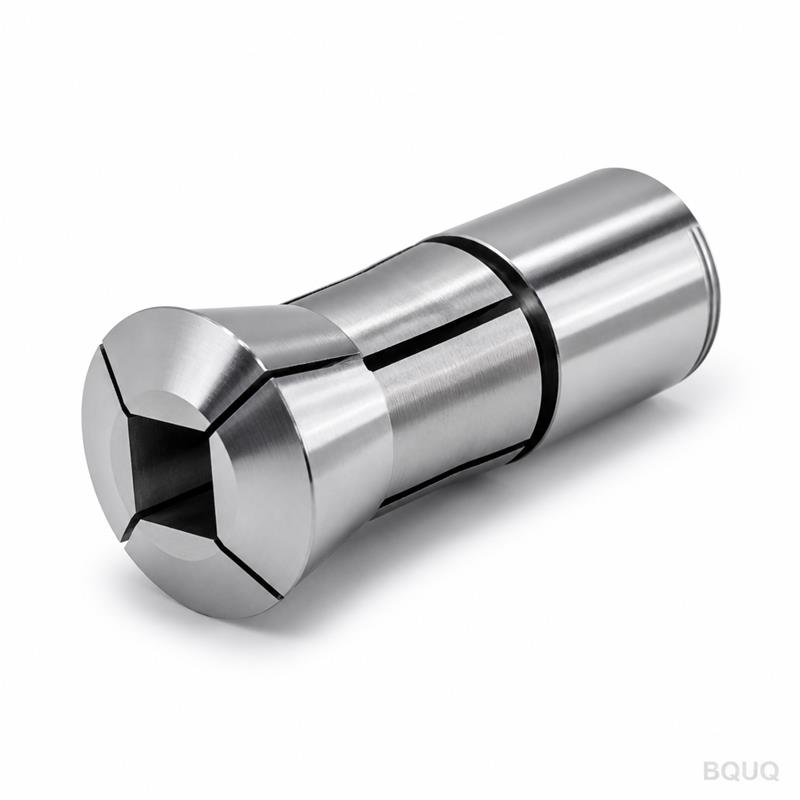
What Real-World Cost and Performance Data Support the Adoption of Precision Collets?
The economic justification for upgrading to ultra-precision collets is compelling, with documented cost savings that offset the 2-3x price premium over standard collets. A typical ultra-precision ER32 collet costs $85-$120, versus $30-$45 for a standard precision collet, but the extended tool life and reduced scrap rates generate a return on investment within 3-6 months for production environments.
| Performance Metric | Standard ER Collet | Precision ER Collet | Ultra-Precision ER Collet |
| Tool Runout (TIR at 4xD) | 0.010-0.015 mm | 0.005-0.008 mm | 0.002-0.003 mm |
| Tool Life (relative) | 100% baseline | 135-150% | 160-200% |
| Surface Finish (Ra, milling) | 0.8-1.2 µm | 0.4-0.6 µm | 0.2-0.3 µm |
| Unit Price (ER32, 10mm bore) | $30-$45 | $55-$75 | $85-$120 |
| Clamping Torque Required | 90 Nm | 90 Nm | 80 Nm |
| Max Recommended Speed | 15,000 RPM | 20,000 RPM | 25,000-30,000 RPM |
| Thermal Drift at 45°C | 0.005 mm | 0.003 mm | 0.001 mm |
These figures are based on tests conducted with a CAT40 spindle at 12,000 RPM, using a 10 mm carbide end mill in 7075-T6 aluminum. The tool life data assumes a constant material removal rate of 80 cm³/min with flood coolant. The surface finish values were measured on the floor of a slot-milling operation at 0.5 mm depth of cut.
How Should Engineers Select the Right ER Collet Grade for Their Application?
The selection process must balance runout requirements, speed range, and budget, with the first step being a measurement of current process capability using a laser tool setting system. For applications requiring surface finishes better than 0.4 Ra or tolerances tighter than ±0.01 mm, ultra-precision collets are mandatory. For roughing operations where tool life is the priority and finish is secondary, precision-grade collets offer the best economic value, providing 35-50% longer tool life than standard grade at only 80% more cost.
Engineers should also consider the tool shank tolerance, as a shank with h6 tolerance (0 to -0.009 mm for 10 mm diameter) is required to fully realize the benefits of ultra-precision collets. Using a shank with h8 tolerance (0 to -0.022 mm) will limit the achievable runout to approximately 0.008 mm regardless of collet grade. It is also recommended to select collets with a grip range no larger than 0.5 mm for precision work, as the clamping force uniformity degrades significantly when a collet is compressed beyond this range.
What Are the Maintenance and Inspection Requirements for Precision Collets?
The latest trend in collet maintenance is predictive inspection based on clamping cycles rather than calendar time, with manufacturers recommending dimensional verification every 5,000 cycles for precision collets and every 2,000 cycles for ultra-precision grades. Inspection should include measurement of the internal bore diameter at three axial positions and the taper angle using an air gauge or coordinate measuring machine with a resolution of 0.5 microns. Any collet showing bore wear exceeding 0.005 mm or taper angle deviation greater than 30 arc-seconds should be removed from service.
Cleaning procedures have also advanced, with the use of ultrasonic baths with a pH-neutral cleaning solution at 40°C for 10 minutes, followed by air drying and a thin film of low-viscosity spindle oil on the taper surfaces. The latest recommendation is to avoid lubricating the collet bore where the tool shint contacts, as this reduces friction and can allow tool pullout under heavy cutting forces. Storage in a controlled humidity environment below 50% RH is essential to prevent corrosion of the precision-ground surfaces, which can degrade runout by 0.003 mm within a week of exposure to humid conditions.
FAQ Section
How Often Should I Replace ER Collets to Maintain Precision?
For ultra-precision collets used in continuous production, replacement every 8,000-10,000 clamping cycles is recommended to maintain runout below 0.003 mm. For standard precision collets, the interval extends to 15,000 cycles, but you should verify runout monthly using a dial indicator with 0.001 mm resolution. Collets that have been dropped or subjected to a machine crash should be replaced immediately, as internal stresses may cause unpredictable runout.
Can I Use a Precision Collet with a Standard Tool Shank?
You can, but the achievable runout is limited by the shank tolerance. A standard tool shank with h8 tolerance (0 to -0.022 mm) will result in 0.008-0.010 mm runout even with an ultra-precision collet. For full benefit, specify tool shanks with h6 tolerance or better, which adds approximately 10-15% to the tool cost but ensures the collet's precision is not wasted.
What Is the Difference Between ER Collet TIR and Concentricity?
TIR (Total Indicated Runout) is the total deviation measured by a dial indicator as the collet rotates 360 degrees, including both eccentricity and ovality errors. Concentricity is a tolerance zone that defines the allowable deviation of the centerline of the bore relative to the centerline of the taper. In practice, TIR is the more useful measurement for machining, as it directly correlates with tool deflection and surface finish.
Do ER Collets Work for High-Speed Machining Above 20,000 RPM?
Yes, but only if you select collets specifically designed for high-speed operation, with lightweight construction and G2.5 balance certification. Standard steel collets will experience centrifugal expansion that degrades runout and can lead to tool pullout at speeds above 20,000 RPM. For speeds above 30,000 RPM, consider hybrid systems or shrink-fit tool holders instead.
What Is the Maximum Grip Range for an Ultra-Precision ER Collet?
Ultra-precision collets are typically manufactured with a grip range of 0.5 mm, meaning a collet labeled for 10 mm tools will accurately grip shanks from 9.75 mm to 10.25 mm. Exceeding this range reduces clamping force uniformity and increases runout by up to 0.004 mm. For applications requiring frequent size changes, standard precision collets with a 1.0 mm grip range are a more practical choice.
How Does Coolant Affect ER Collet Runout?
Coolant can cause thermal contraction of the collet and tool shank, which may reduce clamping force and increase runout if the coolant temperature is below 15°C. Oil-based coolants can also migrate into the collet bore and reduce friction, leading to tool pullout. The latest trend is the use of sealed ER collets with internal O-rings that prevent coolant ingress while maintaining runout below 0.003 mm.
Are There ISO Standards for ER Collet Runout Measurement?
Yes, ISO 15488-1 defines the dimensional specifications for ER collets, while ISO 15488-2 covers the runout testing method. The standard specifies that runout should be measured with a test mandrel inserted to a defined depth, with the collet installed in a calibrated holder at the recommended clamping torque. Always verify that your supplier's runout data is measured according to this standard, as some manufacturers use less stringent in-house methods.
The evolution of ER collet technology is driven by the demand for higher precision in micro-machining, aerospace alloys, and medical device production, where even 0.005 mm of runout can cause unacceptable tool wear or surface defects. By selecting the appropriate collet grade, maintaining the holder interface, and following correct clamping procedures, manufacturers can achieve sub-3-micron runout consistently and economically. For a detailed analysis of your specific toolholding application, contact our engineering team for a free consultation and quotation.
For rapid prototyping or production runs requiring precise toolholding solutions, BQUQ offers 12-hour quoting on custom collet holders and precision components. Email your drawings to sc@bquq.com or reach us on WhatsApp at +86 13713157787. Visit www.bquq.com to explore our CNC machining, metal stamping, and precision manufacturing capabilities.