CNC Machining for EV Components: Bushings, Housings and Busbars
Short answer: CNC machining fits EV components that need tight tolerances, low volume, or design flexibility — battery housings, motor and inverter bushings, sensor mounts, cooling plates, and prototype busbars. Bushings and housings are typically machined from aluminum or stainless to ±0.005 mm on fits; busbars move to stamping once volume passes roughly 5,000–10,000 pieces a year. BQUQ machines EV parts in Dongguan under ISO9001 and returns a quotation within 12 working hours.
Electric vehicle hardware changes fast, and that pace shapes the process decision. A design that is stable for years belongs in a die; a design that is still being revised every quarter belongs on a machine. Most EV programs start with machining, validate the design, and then migrate the stable, high-volume parts to stamping or casting. Knowing which components fall on which side of that line is the whole game.
Which EV Components Suit CNC Machining?
The parts that stay in machining longest are the ones where tolerance, sealing, or low volume dominate. These include:
- Battery module housings and end plates that must seal and hold flatness.
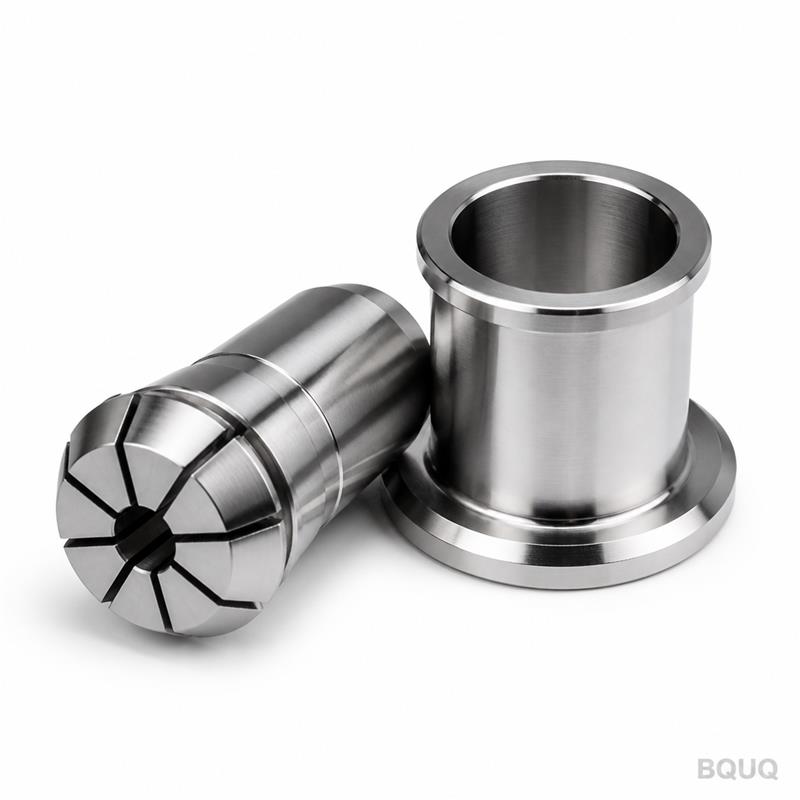
- Motor and inverter bushings with bearing fits and concentricity requirements.
- Sensor mounts, connector backshells, and small precision brackets.
- Cold plates and cooling manifolds for thermal management.
- Prototype and low-volume busbars and interconnect hardware.
These parts share a trait: their function depends on geometry that a forming process cannot easily repeat. A bushing that locates a rotor must be concentric to within microns; a housing that seals against a gasket must hold flatness, not just size. Machining delivers that geometry from billet, one piece at a time, with no tooling.
Bushings and Housings: Materials and Tolerances
Material choice follows function. Aluminum gives light weight and good thermal conductivity for housings and plates. Stainless and steel give strength and wear resistance for bushings and stressed inserts. Engineering plastics handle electrical isolation and thermal break duties.
| Component | Typical material | Critical tolerance | Why it matters |
|---|---|---|---|
| Motor bushing | Steel / stainless | ±0.005 mm bore | Bearing fit, concentricity |
| Inverter housing | Aluminum 6061 | ±0.02 mm | Sealing, flatness |
| Battery end plate | Aluminum 6061 | ±0.05 mm | Flatness, weight |
| Sensor mount | Aluminum / plastic | ±0.05 mm | Position repeatability |
| Cooling plate | Aluminum | ±0.05 mm | Seal path, flatness |
Two values deserve attention. Bearing bores run to ±0.005 mm or tighter and are verified with a CMM, not a caliper. Housing flatness for a sealed joint is usually called as a flatness tolerance around 0.05–0.1 mm across the sealing face, because a face can be within its size tolerance and still leak. Our production capability is ±0.005 mm on critical features; we will tell you when a callout is beyond what a milling process can defend.
Busbars: Machined or Stamped?
This is the most common EV process question. A machined copper busbar is right for prototypes and low volume; a stamped busbar is right for volume. The crossover depends on thickness, geometry, and annual quantity.
| Factor | Machined busbar | Stamped busbar |
|---|---|---|
| Economic range | 1–1,000 pcs | 5,000–1,000,000+ pcs |
| Tooling cost | None | Moderate to high |
| Design changes | Cheap | Expensive (tooling re-cut) |
| Thickness range | Any | Best in thin to medium gauge |
| Typical use | Prototype, low volume, custom | Volume production |
Copper is soft and conductive, which makes both processes viable and makes the volume decision mostly financial. Above roughly 5,000–10,000 pieces a year, tooling is amortized and stamping wins on unit cost. Below that, machining avoids the tooling investment entirely. Because design changes are cheap in machining and expensive in stamping, keep busbars machined until the current path and the geometry are frozen. The trade-offs are covered in more depth in our busbar stamping guide.
Thermal and Electrical Considerations
EV parts often carry two jobs at once. A cooling plate must conduct heat and seal; a bushing must locate a shaft and sometimes insulate. That dual role shapes both material and finish:
- Electrical isolation: anodized aluminum forms a thin insulating oxide layer, useful for creepage and clearance on some housings, but anodizing is not a substitute for a proper insulation barrier. Verify dielectric requirements separately.
- Thermal contact: a machined flat plate offered to a thermal interface material needs flatness and a controlled Ra, typically 0.8–1.6 µm, so the interface makes real contact.
- Corrosion: under-hood and under-vehicle environments punish unprotected steel; specify zinc plating, black oxide, or stainless where fluid and salt exposure is likely.
- Conductivity at joints: for copper busbars, joint faces often need a defined finish and flatness to keep contact resistance low; specify Ra and flatness for the joint, not the whole part.
How Does BQUQ Support EV Programs?
We machine turned and milled EV components on stable CNC equipment, verify critical features with a CMM, and hold ±0.005 mm as a production capability. Prototypes ship quickly because there is no tooling, and low-volume runs are routine. Where a part clearly belongs in stamping at higher volume, we say so and can produce both — machining for validation, stamping for production — inside one factory. That matters for busbars, heat sink hardware, and the small pressed contacts that sit inside an EV assembly.
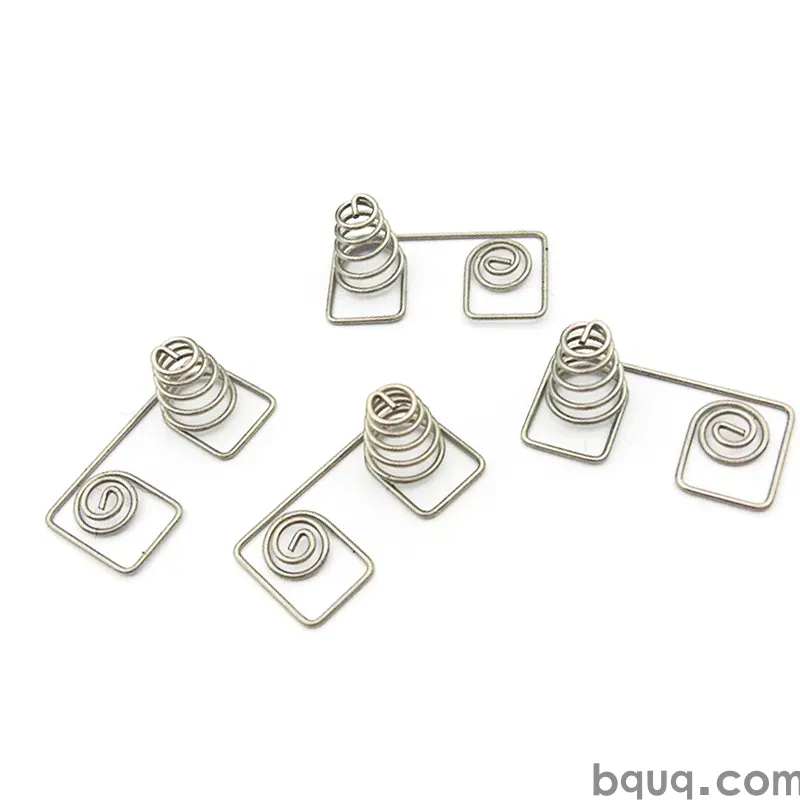
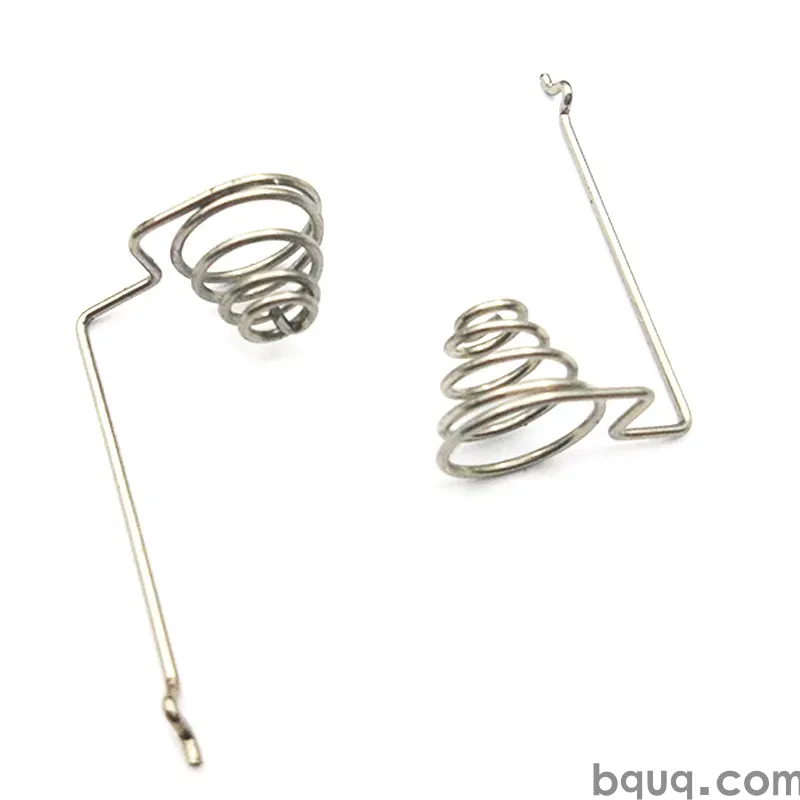
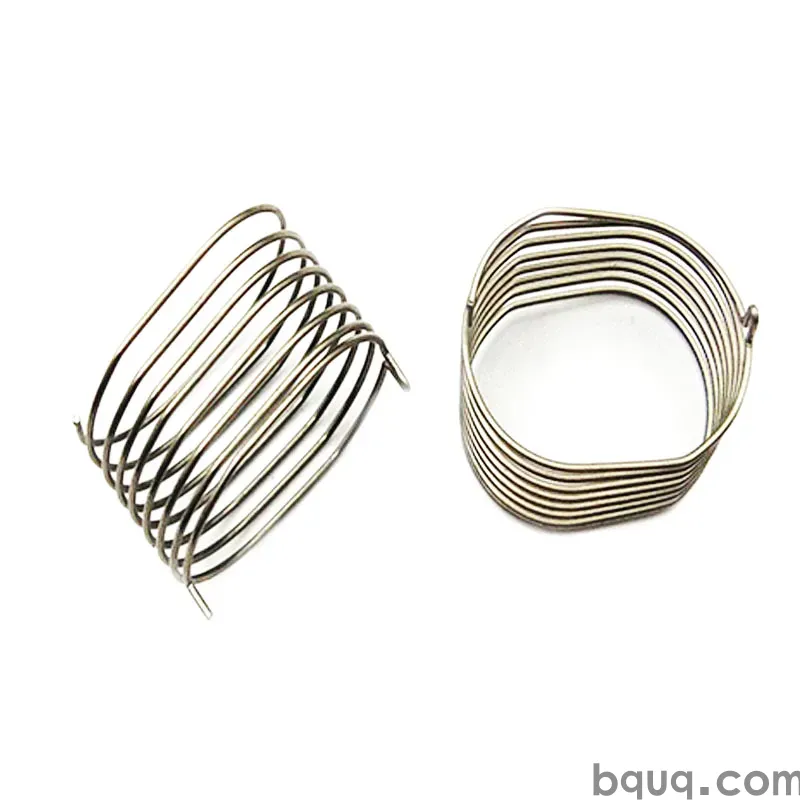
Send the model or drawing with material, quantity, finish, and any documentation requirement. If the part involves a spring, a stamped contact, or a heat sink as well, send the whole assembly and we will quote it as one package. We return a quotation within 12 working hours.
EV Design Details That Prevent Problems Later
EV programs move quickly, and details that are invisible on a prototype become expensive in production. These are the ones worth settling early:
- Datum structure and stack-up. Battery modules and motor assemblies are built from many parts, so the tolerance that matters is the assembly stack-up, not any single component. Define the datum structure on each drawing and check the stack before freezing a design, because tightening one part rarely fixes an assembly that is loose at the top level.
- Sealing faces. A housing that seals against a gasket needs flatness and a controlled surface finish, not just a size tolerance. Specify flatness across the sealing face and a Ra value suited to the gasket material.
- Material pairing at joints. Copper and aluminum in contact corrode in the presence of moisture, so a busbar joint between dissimilar metals needs either a plated barrier or a design that keeps the metals apart.
- Thermal path continuity. A cooling component only works if the heat can reach it. That means flatness and finish at the thermal interface, correct interface material, and mounting pressure that does not bow the plate.
- Insulation creepage and clearance. Electrical isolation requirements are geometry, not finish. Anodizing provides a thin oxide layer but should not be treated as the primary insulation barrier; verify dielectric performance against the finished part.
- Documentation at the prototype stage. Even a one-off EV part benefits from a dimensional report and a material certificate, because those records feed the eventual production release.
Get these right while the design is still on a screen, and the move to production tooling becomes routine rather than a redesign.
Frequently Asked Questions
Q: Is CNC machining or stamping better for EV busbars?
A: For prototypes and low volume, machining is better because there is no tooling cost and design changes are cheap. Above roughly 5,000–10,000 pieces a year, stamping usually wins on unit cost. Keep busbars machined until the geometry and current path are frozen.
Q: What tolerances can you hold on EV bushings and housings?
A: ±0.005 mm on critical features such as bearing bores, verified with a CMM. Housing flatness for sealed joints is typically called around 0.05–0.1 mm across the face. We flag any callout that a machining process cannot defensibly hold.
Q: Can you machine copper and aluminum EV parts?
A: Yes. We machine copper for busbar and interconnect work, aluminum for housings, plates, and brackets, and steel or stainless for bushings and stressed parts. Copper is soft and gummy, so it machines with dedicated feeds and tooling rather than the same setup as steel.
Q: Do you provide inspection reports for EV parts?
A: Yes. Each batch ships with a dimensional inspection report by default, and we provide material certification and FAI reports when your program requires them. Tell us the documentation package at the RFQ stage.
Q: How fast can I get a quote for EV machined parts?
A: Send the drawing or 3D model to sc@bquq.com or WhatsApp +86 13713157787 with material, quantity, and finish. We return a quotation within 12 working hours.
Related Resources
- Busbar Stamping Guide — when a stamped busbar beats a machined one, and by how much.
- CNC machining services — turning and milling from a Dongguan source factory.
- About BQUQ — an ISO9001:2015 factory running CNC, stamping, springs, and heat sink lines under one roof.
- Contact us — send your drawing and get a quote within 12 working hours.
Authored by the BQUQ Engineering Team. BQUQ is an ISO9001-certified source factory in Dongguan, China, running CNC machining, metal stamping, custom springs, heat sink and collet lines under one roof. Send drawings to sc@bquq.com or WhatsApp +86 13713157787 for a quote within 12 working hours. www.bquq.com