EV and power busbars: stamped vs machined copper compared on conductivity, edge quality, tolerance and volume cost, from an ISO9001 Dongguan source factory.
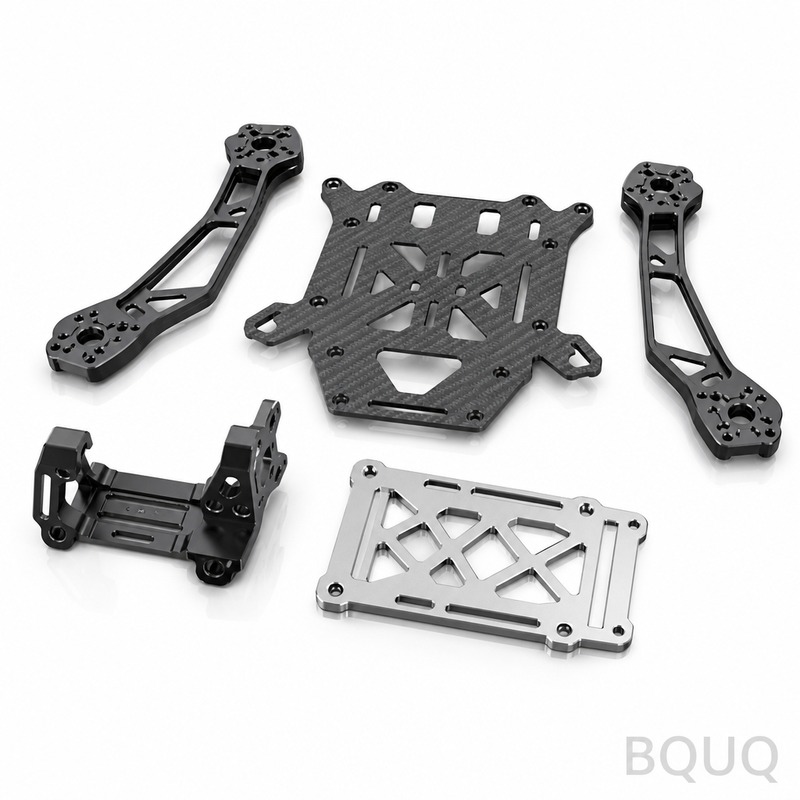
Busbars for EVs and Power: Stamping vs Machining Copper
Short answer: thin, high-volume busbars get stamped; thick, low-volume or high-precision busbars get machined. A stamped copper busbar in the 1–3 mm range can be produced at many times the speed of a machined one, and is the standard answer for EV battery interconnect boards and power distribution at scale. Machining earns its cost above roughly 3–6 mm thickness, for small batches, or where the drawing demands clean machined edges and tight dimensional control that stamping shear cannot give.
A busbar is a current-carrying strip of copper — sometimes aluminum — that moves power from cells to modules, modules to packs, or packs to inverters and distribution panels. It must carry the current without overheating, stay within a tight resistance budget, and survive vibration and thermal cycling for the life of the vehicle or installation. How it is made decides its edge quality, its tolerance, and most of its cost at volume.
Copper Grades for Busbars
The metal is mostly the same regardless of process: high-conductivity copper in the 99.9% range. The drawing usually calls for C110 (electrolytic tough pitch), C102 or C101 (oxygen-free), because conductivity is the entire point of the part. Alloys and plating change at the interfaces — contact areas get tin, nickel or silver where connections are made.
| Grade | Conductivity (IACS) | Notes |
|---|---|---|
| C110 ETP copper | ~100% | Standard busbar copper, economical |
| C102 OFHC | ~100% | Oxygen-free, for critical welding and brazing |
| C101 OFE | ~100% | Highest purity, premium applications |
| C145 tellurium copper | ~90%+ | Only where machinability beats conductivity |
| Aluminum 6061/6101 | ~40–55% | Lightweight busbars, larger cross-sections |
Takeaway: for a copper busbar the grade choice is mostly about purity and joining method, not strength. If the busbar is welded or brazed in assembly, oxygen-free grades avoid embrittlement at the joint; if it is purely bolted, ETP copper is the economical standard.
Stamping a Busbar
A stamped busbar is blanked from copper strip, then formed: pierced for mounting holes, bent into its 3D shape, often coined or flattened at contact pads to control thickness and surface finish. Progressive dies run the whole sequence — blank, pierce, coin, form, and sometimes cut to length from coil — in one pass. At thicknesses up to roughly 3 mm this is fast and precise, with positions held to typical ±0.05–0.15 mm across the part.
The limits are real. Blanking leaves a shear-and-break edge, so the profile edge is not perfectly square and can carry a small burr. Sharp inside corners and very tight bend radii near holes are risky because copper work-hardens and the edge can crack. Thick copper above 3–6 mm needs heavy press tonnage and progressively harder-to-control springback, which is where stamping stops being the obvious answer.
| Aspect | Stamped busbar | Machined busbar |
|---|---|---|
| Thickness sweet spot | 0.5–3 mm typical | 3 mm and up, solid bar |
| Edge condition | Shear + break zone, deburred | Clean square machined edges |
| Corner radii | Generous, die-dependent | Sharp as drawn |
| Hole position | ±0.05–0.15 mm typical | ±0.01–0.05 mm typical |
| Unit cost at 10k pcs | Very low | High |
| Tooling | Die, weeks to build | Minimal |
| Design change cost | Die modification | Program edit |
Takeaway: read the table as a thickness and volume story. Stamped busbars are the volume product of the EV industry; machined busbars are the solution for thick cross-sections, prototype and low-volume programs, and drawings where edge and hole precision dominate.
When Machining Is the Right Call
Machined busbars start from copper bar or plate and get profiled on a CNC mill — or blanked oversize and then machined — which gives clean edges, controlled thickness at contact pads, and tolerances that a die cannot guarantee. Machining also handles the geometry stamping cannot: thick sections, threaded holes, precision pockets, stepped profiles and one-off shapes for validation builds.
| Scenario | Better route | Why |
|---|---|---|
| 100 pieces, prototype pack | CNC machining | No die cost, days not weeks |
| 0.8 mm interconnect board, 50k pcs | Stamping | Unit cost and speed win decisively |
| 6 mm thick main pack busbar | Machining | Press tonnage and springback fight stamping |
| Multi-bend module busbar, 10k pcs | Stamping with forming die | Forming cost is one die, not per part |
| Busbar with tapped holes and tight faces | Machining | Threads and flatness are machined features |
The takeaway: volume decides the process, thickness decides the practical limit, and features decide the rest. A factory that quotes stamping for a 6 mm thick bar or machining for a 100,000-piece thin interconnect is not serving the drawing. We run both lines at BQUQ in one ISO9001 factory, and hybrid parts — stamped body, machined contact faces and holes — are common because they combine the two cost curves.
Surface Finish and Plating at the Joints
Contact areas decide whether the busbar stays cool and reliable. Bare copper oxidizes and builds resistance over time, so bolted and mated interfaces are usually plated: tin for general power connections, nickel where higher temperatures or corrosion resistance matter, silver for the highest-current switchgear and EV high-voltage joints. Plating is often applied selectively so only the contact pads are coated.
The plating follows the process choice. A stamped busbar is typically plated on the strip before forming, or plated as a finished part with the contact zones masked. A machined busbar is plated after machining, since cutting removes any prior coating. Whichever route, the plating spec — thickness, type, and the surface prep under it — belongs on the drawing, because plating stamped contacts is where field failures actually start.
What a Busbar Drawing Needs
Send the material grade, thickness, current-carrying cross-section intent, hole pattern with positions, bend radii and angles, plating spec on contact zones, and the annual quantity. With those five inputs a stamping house can say quickly whether your part is a die part, a machining part, or a hybrid. The stamped terminals and contacts and brackets and mounts lines we run handle the thin precision end of that range daily; CNC handles the thick end, and the two quotes come from the same roof so the recommendation matches your volume.
Email sc@bquq.com or WhatsApp +86 137 1315 7787 with your PDF/DXF/STEP file. An engineer reviews it and replies with price, lead time and DFM notes on working days.
Frequently Asked Questions
Q: Can busbars be stamped from thick copper like 5 mm plate?
Yes, but it gets harder and more expensive as thickness rises: tonnage grows, edges show more break, and springback becomes difficult to control. Above roughly 3–6 mm, machining copper bar is usually the more reliable and economical route.
Q: Does stamping a copper busbar reduce its conductivity?
No. Conductivity is set by the alloy and cross-section, not by how the profile was cut. What stamping does change is edge quality and dimensional tolerance; resistance is unaffected as long as the material grade and cross-section meet the drawing.
Q: Why are EV busbars plated even though copper conducts well?
Because the interface corrodes, not the bulk. Copper oxide builds resistance at bolted joints and can overheat. Tin, nickel or silver plating on contact pads keeps joint resistance low and stable over the life of the pack.
Q: What is the fastest way to get prototype busbars before the die exists?
CNC machine them from copper bar or plate. No tooling, parts in days, and the design can still change. Once the design freezes and volume justifies it, the same drawing moves to a stamping die with the machined parts as the validation reference.
Q: How tight can stamped busbar hole positions be held?
Typically ±0.05–0.15 mm across the part in a well-built progressive die, depending on size and thickness. If the drawing demands tighter, the holes move to a secondary machining step — which is the hybrid route we use when a die alone cannot hold the print.
Authored by the BQUQ Engineering Team. BQUQ is an ISO9001-certified source factory in Dongguan, China, running CNC machining, metal stamping, custom springs, heat sink and collet lines under one roof. Send drawings to sc@bquq.com or WhatsApp +86 13713157787 for a quote within 12 working hours. www.bquq.com