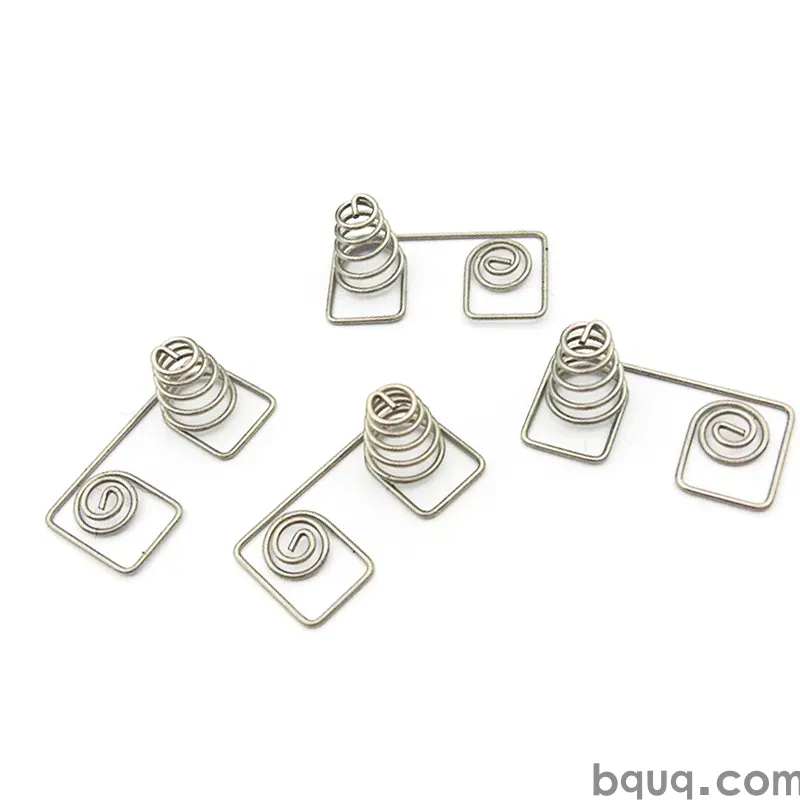
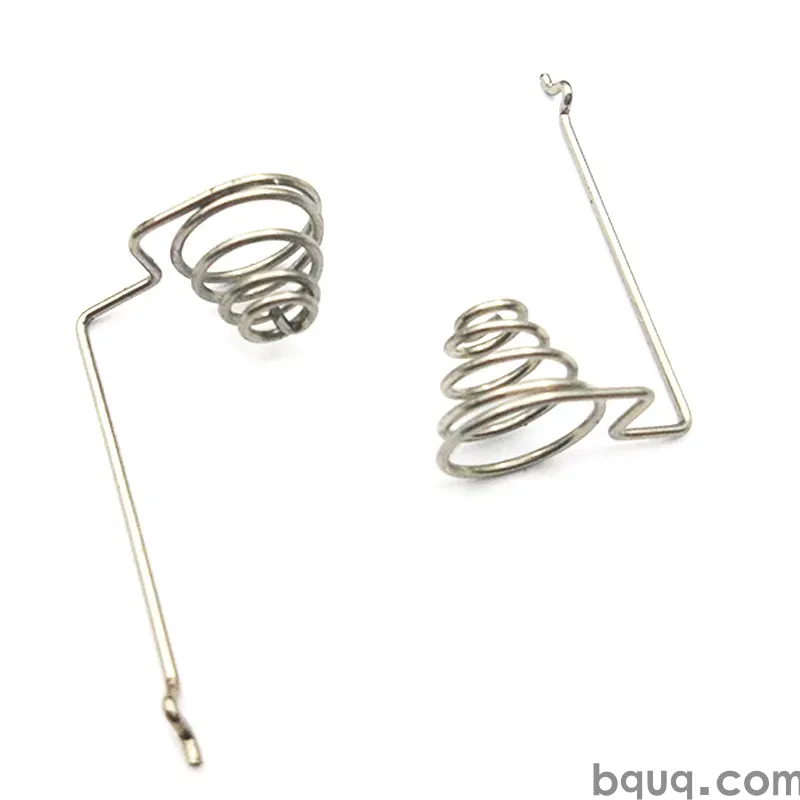
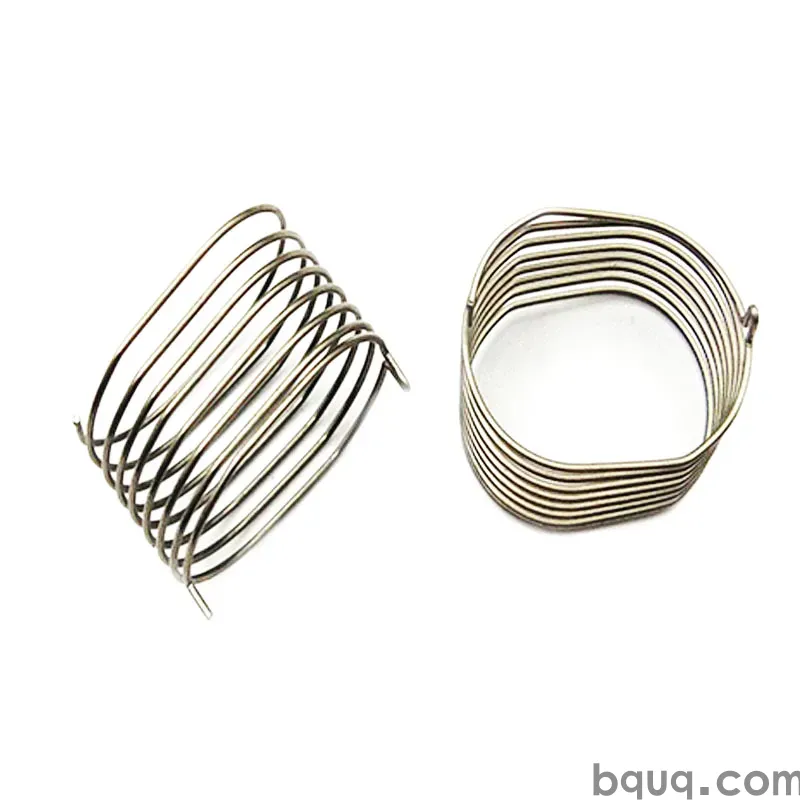
Stamping materials: steel strip, brass, phosphor bronze, coil temper and thickness specs for terminals and brackets, from an ISO9001 factory.
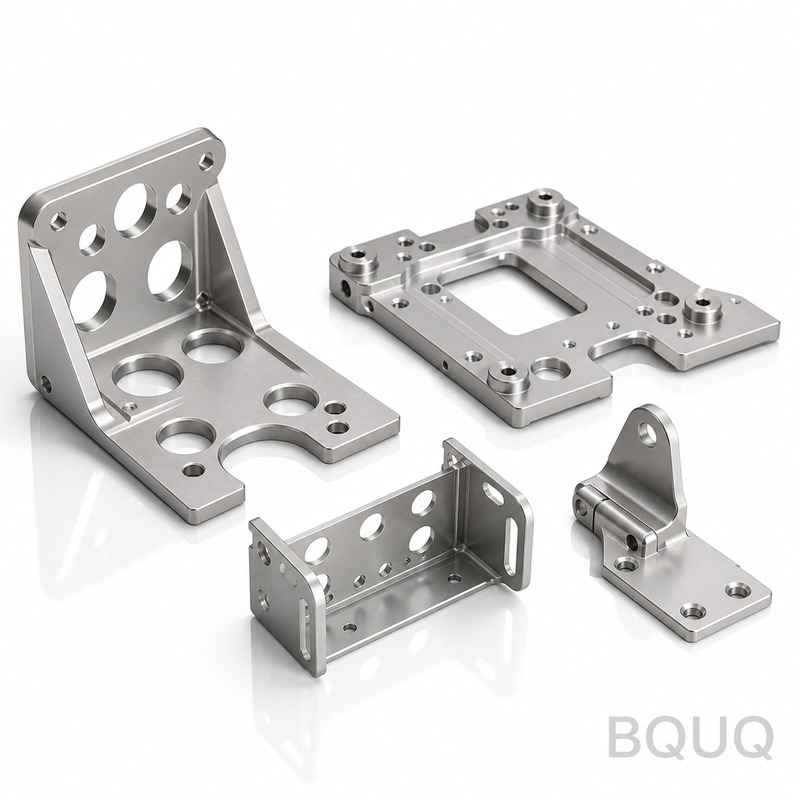
Stamping Materials: Steel Strip, Brass, Phosphor Bronze and Coil Specs
Short answer: stamping materials are bought as coil or strip, and the spec is four numbers — alloy, temper, thickness and width. Cold-rolled steel handles structural parts, brass and phosphor bronze handle electrical contacts, and beryllium copper handles springs that must not relax. Temper decides bendability versus strength, and getting the temper wrong is the most common reason stamped parts crack in the die or spring back out of tolerance.
A stamped part inherits its mechanical and electrical properties from the strip it was cut from, so material selection happens before die design, not after. On the stamping line at BQUQ's Dongguan factory we run coils of steel, stainless, brass and phosphor bronze daily, and the questions engineers ask are consistent: which alloy, which temper, what thickness tolerance, and what does it cost. This guide answers those four questions in order.
The Four Numbers in Every Coil Spec
A strip order that only names an alloy is incomplete. A correct coil spec names the alloy, the temper, the thickness with tolerance, and the width. All four change how the die behaves: thickness drives die clearance, temper drives bend radius and springback, width drives the strip layout, and the alloy drives tool wear.
| Spec element | Example | What it controls in the die |
|---|---|---|
| Alloy | SPCC steel, C260 brass, C5210 phosphor bronze | Strength, conductivity, wear on tooling |
| Temper | Annealed, H02 (half-hard), H04 (hard) | Bendability, springback, edge quality |
| Thickness | 0.3 mm ±0.03 | Die clearance, tonnage, part stiffness |
| Width | 50 mm ±0.1, slit edge | Strip layout, material utilization, camber |
The takeaway: a coil ordered with a vague spec ("0.3 brass, hard") forces the die builder to guess. Guessing wrong means cracked bends or parts that do not hold angle, and the fix — changing temper mid-production — is expensive because the die was already proven on the wrong material.
Steel Strip: The Structural Default
Cold-rolled steel in grades like SPCC and DC01 is the workhorse for brackets, enclosures, shields and mounting plates. It is cheap, strong enough for most structural duty, and stamps cleanly. For parts that need corrosion resistance, zinc plating or powder coating after stamping is the standard route. Stainless strip, typically 301 or 304, replaces it where rust resistance must live in the material itself.
Spring steel strip — carbon grades in the 0.6–0.8% carbon range, or hardened stainless like 301 full-hard — is the choice when the part itself must act as a spring: clips, shrapnel-style contacts and stamped flat springs that flex in service. The rule: if the stamped feature must return to shape after deflection, the strip must be specified and supplied in a spring temper, not bent from soft stock.
| Steel strip | Typical use | Temper notes |
|---|---|---|
| SPCC / DC01 CR steel | Brackets, enclosures, shields | Annealed or skin-passed, forms easily |
| 301 stainless | Corrosion-resistant springs, clips | Hard tempers give spring properties |
| 304 stainless | Enclosures, food and medical hardware | Softer, deeper draw capability |
| Carbon spring steel ~0.7% C | Flat springs, clips, snap rings | Hard-rolled; heat treat optional after forming |
| Galvanized / pre-plated | Parts used without post-plating | Edge cut exposes base metal — watch corrosion |
Takeaway: for a steel part, decide first whether corrosion resistance is a coating question or a material question, and whether any feature flexes. Both answers drive the strip grade before the die is cut.
Brass and Phosphor Bronze: The Conductor Family
Electrical terminals and contacts need conductivity, formability and corrosion resistance in one material. Brass C260 (70/30 cartridge brass) is the default: it conducts well, stamps beautifully, solders and crimps reliably, and costs less than the copper alternatives. Phosphor bronze — C5100/C51000 at around 5% tin, C5210/C52100 at around 8% tin — trades some conductivity for springiness and fatigue life, which is why it dominates contact springs and connector pins that must grip under repeated insertion.
Beryllium copper C172 sits at the top of the stack: the best fatigue and relaxation resistance of the stamping alloys plus good conductivity, used where a contact must hold force at elevated temperature for years. Its cost is multiples of phosphor bronze, so it is reserved for the contacts that genuinely cannot relax.
| Alloy | Conductivity (IACS typical) | Strength | Typical stamped part |
|---|---|---|---|
| Brass C260 | ~28% | Moderate | Terminals, fuse clips, lugs |
| Brass C268 | ~27% | Moderate | General electrical hardware |
| Phosphor bronze C5100 | ~15% | High | Contact springs, connector pins |
| Phosphor bronze C5210 | ~13% | Higher | Heavy-duty spring contacts |
| Beryllium copper C172 | ~22% | Highest | Precision contacts, EMI fingers |
| Nickel silver / cupronickel | ~7–12% | Moderate | Corrosion-resistant springs, battery contacts |
The takeaway: pick the alloy by the electrical and mechanical duty, then pick the temper by the forming severity. A terminal that is merely bent can use harder temper for strength; a terminal with a tight U-bend needs softer temper or it cracks at the bend line.
Temper Is Half the Spec
Temper is the most misunderstood number on a coil order. A hard strip makes a stronger, springier part but needs larger bend radii and springs back more after forming. A soft strip bends easily and holds the die shape, but has no spring properties and dents in service. Designers who want "as strong as possible" order hard temper and then discover the part cracks at a 0.5× thickness bend radius that the soft version formed without trouble.
The standard fix is to choose temper by bend severity, then verify springback in the die tryout. H02 (half-hard) and H03 (three-quarter-hard) cover most formed conductor parts; H04 and above are for flat parts and mild forming only. When a spring function is required, use the spring-tempered grades and design the bend radius to suit them — typically one to two times thickness minimum for the copper alloys.
Coil Specs That Matter on the Press
Strip quality shows up as scrap rate on the press. Thickness tolerance changes die clearance: a ±0.05 mm swing on 0.3 mm strip is a large percentage shift in cutting clearance and burr height. Width tolerance and camber control feed alignment. Edge condition matters for fine-pitch progressive dies, where a ragged slit edge can misregister the strip in the pilots.
| Coil parameter | Typical commercial spec | Why it matters |
|---|---|---|
| Thickness | ±0.03–0.05 mm on thin strip | Die clearance, burr, tonnage stability |
| Width | ±0.1–0.3 mm slit | Pilot registration, layout economy |
| Camber | < 1 mm per 1000 mm typical | Feed straightness in progressive dies |
| Coil weight | 500–3000 kg typical | Run length between coil changes |
| Edge | Slit or rolled | Burr-free feed, fine-pitch stamping |
| Flatness | Per ASTM/mill tolerance | Forming consistency, secondary ops |
Takeaway: when a quote asks about strip spec, it is not paperwork — it is the factory telling you that material quality and press performance are the same variable. Tighter strip tolerance buys fewer stoppages and more consistent parts, which is why precision stamped brackets and mounts are quoted against a specified strip, not "any steel."
Where Material Choice Meets the Quote
Material is typically 40–70% of a stamped part's unit price, so alloy choice moves quotes more than die efficiency does. Copper alloys cost several times steel per kilogram, and beryllium copper costs several times brass. Before requesting a quote, confirm the alloy is actually required: many "must be beryllium copper" contacts run fine in C5210 phosphor bronze, and many "must be phosphor bronze" terminals run fine in brass. We will flag it when a drawing overspecifies material — under our ISO9001 system the material certificate and incoming coil inspection follow the order, so the grade you approve is the grade that runs.
Email sc@bquq.com or WhatsApp +86 137 1315 7787 with your PDF/DXF/STEP file. An engineer reviews it and replies with price, lead time and DFM notes on working days.
Frequently Asked Questions
Q: What is the difference between brass and phosphor bronze for contacts?
Brass C260 conducts better and costs less; phosphor bronze C5100/C5210 is springier and resists fatigue and relaxation better. Use brass for static terminals and lugs, phosphor bronze for contacts that flex repeatedly under load.
Q: What does H02 temper mean on a brass coil spec?
It means half-hard: the strip was cold-rolled to a moderate strength level between annealed and hard. H02 forms reasonably tight bends while keeping more strength than soft material — the common starting point for formed electrical terminals.
Q: Can a stamped spring be made from stainless steel strip?
Yes. Hardened 301 stainless is a standard spring material for stamped clips and flat springs, offering good corrosion resistance. For the highest fatigue life and relaxation resistance, beryllium copper or spring-tempered phosphor bronze usually beat stainless.
Q: How does strip thickness tolerance affect the stamped part?
Thickness directly sets the die cutting clearance. If strip thickness wanders outside tolerance, the clearance is wrong, burr grows, and edge quality and dimension shift. Tighter strip tolerance means fewer press adjustments and more consistent parts.
Q: Which material should I choose for a battery contact spring?
Phosphor bronze C5210 is the usual answer — good conductivity, stable spring force and long fatigue life. Beryllium copper C172 earns its higher cost where contact force must hold at elevated temperature or after millions of cycles.
Authored by the BQUQ Engineering Team. BQUQ is an ISO9001-certified source factory in Dongguan, China, running CNC machining, metal stamping, custom springs, heat sink and collet lines under one roof. Send drawings to sc@bquq.com or WhatsApp +86 13713157787 for a quote within 12 working hours. www.bquq.com