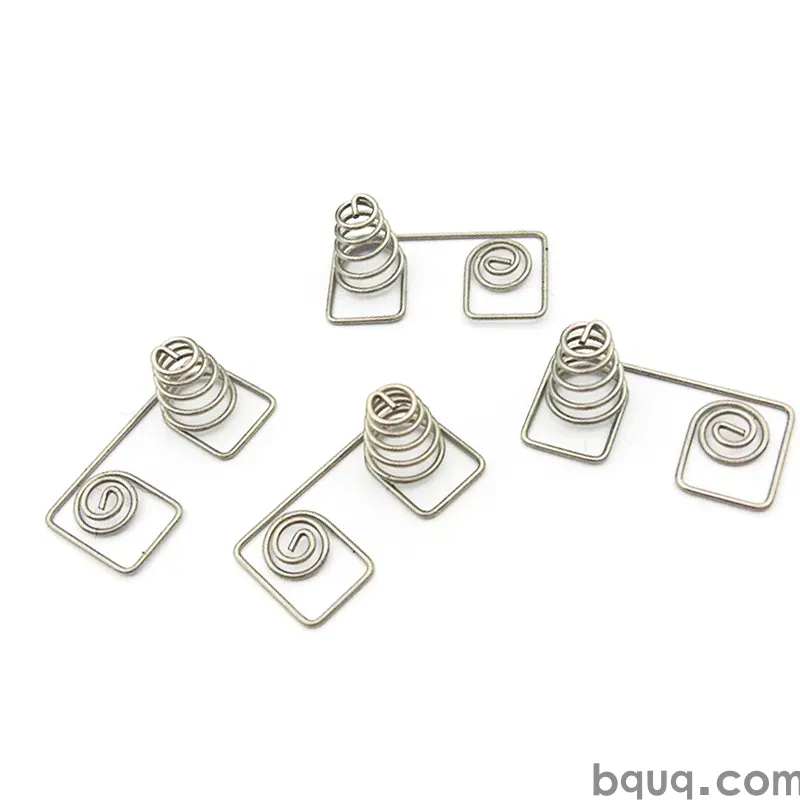
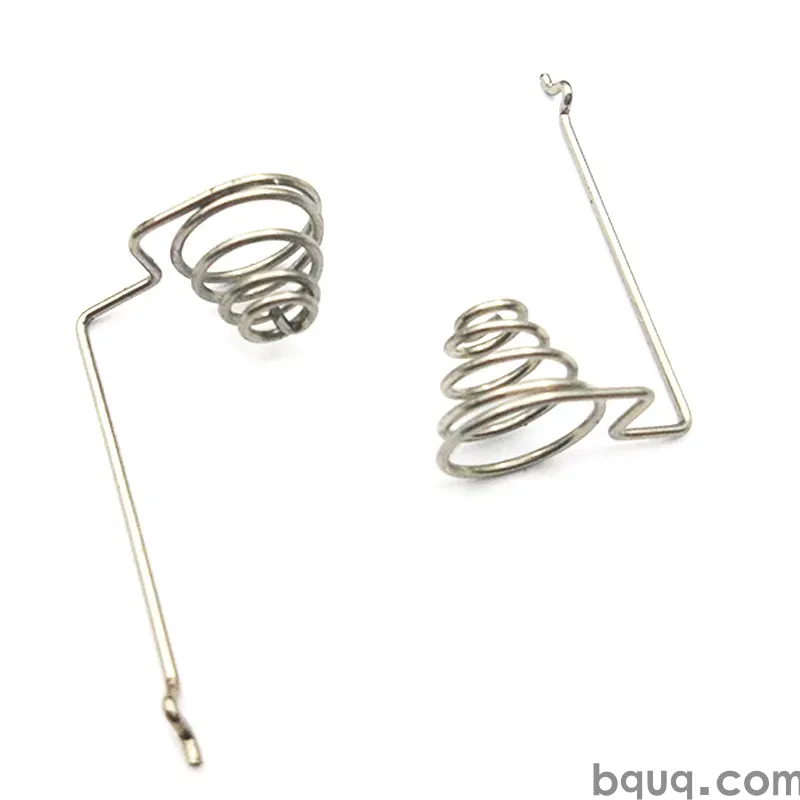
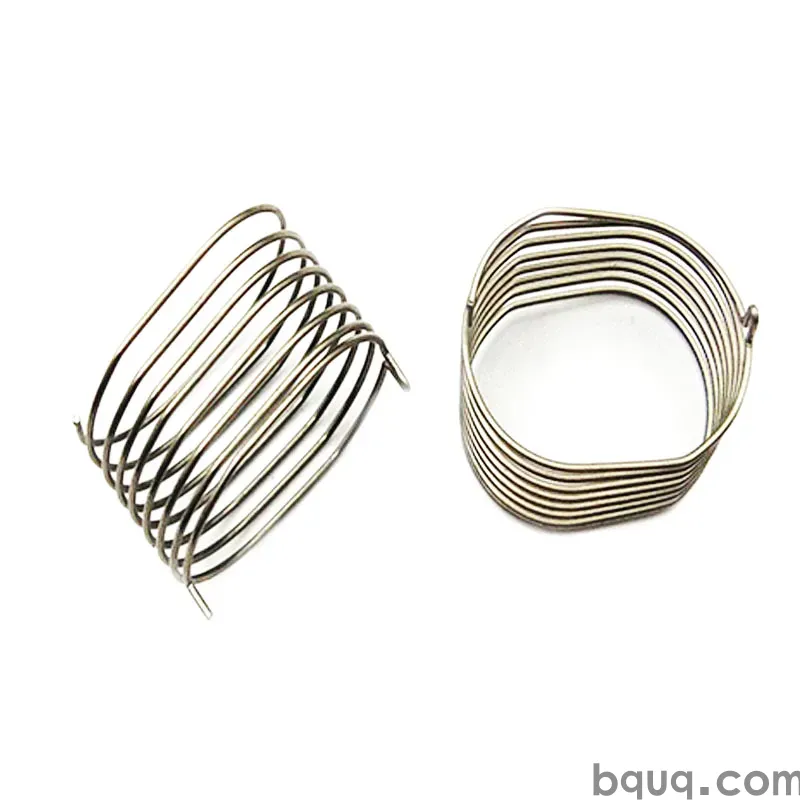
Prototype stamping without full tooling: CNC samples, laser-cut blanks, and soft dies of zinc or aluminum for low-volume runs.
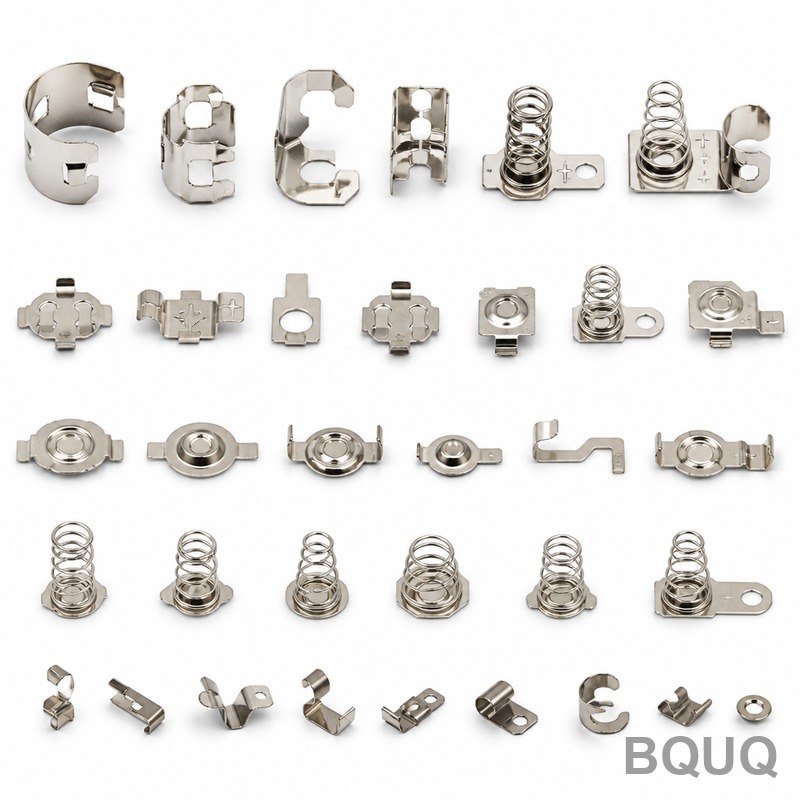
Prototype Stamping Without Full Tooling: Soft Dies and Low-Volume Routes
You do not need a $20,000 production die to validate a stamped part: laser-cut blanks with press braking cover simple brackets and enclosures from a few pieces to a few hundred, CNC machining makes true functional samples of small terminals and contacts, and soft dies of zinc alloy or urethane produce a few thousand pieces before wearing out. Production-hardened tooling only becomes rational when the design is frozen and volume justifies it — prototypes exist to freeze the design, not to pay for the die.
The trap in stamping development is ordering production tooling before the part is proven. A progressive die is built to a drawing; if the drawing changes, the die changes at full cost. Prototype stamping exists to answer the design questions — does the material bend without cracking, does the contact hold its force, does the part assemble — with the smallest possible tooling investment. This guide maps the low-volume routes and where each one stops making sense.
Route One: CNC Machined Prototypes
For small precision parts — terminals, contacts, clips — CNC machining is often the fastest prototype route of all, because no die exists at all. A machined sample from the real production material (say, phosphor bronze strip cut to thickness) proves geometry, plating adhesion, and assembly fit. It will not prove stamping-specific behavior like edge quality or grain flow, but it proves the design.
Machining is the right call when you need one to fifty pieces and the part is small enough to machine economically. We run this route constantly at BQUQ because our stamping line sits next to CNC machining: a customer gets machined samples of terminals and contacts this week while the production die is still being quoted. The sample answers the mechanical questions; the die answers the cost questions.
| Route | Typical quantity | Lead time | Tooling cost |
|---|---|---|---|
| CNC machined sample | 1–50 pcs | Days | None |
| Laser/waterjet cut + bend | 50–1,000 pcs | Days | None to minimal |
| Soft die (zinc/urethane) | 500–5,000 pcs | 2–4 weeks | Low ($1k–$8k indicative) |
| Production hard die | 50,000+ pcs | 4–8+ weeks | Full die cost |
The takeaway from the route table: every step up in tooling buys you volume, and every step costs more time and money up front. Match the step to what the prototype run must actually prove.
Route Two: Laser Cut and Press Brake
For brackets, shields, and enclosures — parts made from sheet rather than tiny strip — the flat blank can be laser cut or waterjet cut directly from sheet, then formed on a press brake. No die is needed for the cutting, and standard V-dies handle the bending. This route handles fifty to a few thousand pieces and tolerates design changes between batches, because each new blank is just a new cutting file.
The limits are honest ones. Laser-cut edges differ from stamped sheared edges — slightly rougher, with a heat-affected zone that matters on plated or spring parts. Production rates are far below a press, so unit cost stays high. And features that only a die can make reliably — tight curls, coining, multi-bend forms done in one handling — may not be reproducible on a brake. If the prototype exists to validate the production process itself, this route under-sells it; if it exists to validate the design, it is ideal.
Route Three: Soft Dies
When the design must be validated in an actual stamping press — to prove edge quality, springback compensation, and tooling feasibility — soft dies are the middle ground. Instead of hardened tool steel, the die is made from a zinc-based alloy (Kirksite-style), machined aluminum, or with urethane die sections, sometimes cut quickly with CNC or wire EDM rather than fully precision-ground. A soft die runs at reduced press speeds and produces from a few hundred to a few thousand parts before wear takes it out.
| Soft die material | Strengths | Typical useful life |
|---|---|---|
| Zinc alloy (Kirksite) | Cheap, castable, formable | 1,000–10,000 hits |
| Aluminum | Machinable fast, dimensionally stable | 5,000–20,000 hits |
| Urethane / elastomer sections | Excellent for forming without scoring | Varies by use |
| Carbide inserts in soft die | For the wear-prone cut stations | Extends soft die life |
The honest limit: soft dies prove the process but do not give production die life or full production speed, and a very complex part may need a near-production die anyway. The decision rule we use at BQUQ: if the prototype run exists to lock springback compensation and bend sequence before committing to hard tooling, a soft die pays for itself. The cost and life numbers above are indicative ranges, not quotes — send the drawing for a route recommendation.
When Production Tooling Is the Prototype
There is one case where skipping straight to production tooling is correct: when the part is simple enough that the tooling risk is low and the volume is certain. A straightforward bracket with two bends and five holes carries little development risk, and a hard die at full speed may be cheaper per part than any prototype route from the first month. The same logic applies when the customer's schedule cannot absorb a prototype cycle — sometimes the die is the fastest path to the first good part.
The counter-case is equally clear: complex forms, spring contacts, drawn features, or an unfrozen design must never jump to hard tooling. A design change after hard die cutting is a full re-tooling bill. The engineering discipline is to match tooling commitment to design certainty, and our die type selection guide explains how tooling choices scale from compound to progressive as the part and volume firm up.
Email sc@bquq.com or WhatsApp +86 137 1315 7787 with your PDF/DXF/STEP file. An engineer reviews it and replies with price, lead time and DFM notes on working days.
Frequently Asked Questions
Q: Can I get stamped parts without paying for a full die?
Yes. CNC machined samples work up to about 50 pieces, laser cutting plus press braking covers hundreds to a few thousand, and soft dies of zinc or aluminum produce a few thousand pieces at a fraction of hard die cost. All are normal prototype routes.
Q: What is a soft die in stamping?
A die made from zinc alloy, aluminum, or urethane instead of hardened tool steel, often produced quickly with CNC or wire EDM. It runs a stamping press at reduced speed and produces typically 1,000–10,000 parts before wear, which is enough to validate a design.
Q: How many prototype parts can I get before committing to production tooling?
Realistically, prototype routes deliver from a handful (machined) to around 5,000 pieces (soft die) before costs favor production tooling. If your pilot run needs more than that, compare soft die cost against a production die directly.
Q: Do prototype parts behave the same as production stamped parts?
Not exactly. Machined and laser-cut prototypes cannot reproduce sheared edge quality or stamping grain flow, though they prove geometry and assembly. Soft dies run in a real press and come closest to production behavior, which is why they are used to validate springback and forming.
Q: What information does a factory need to recommend a prototype route?
The 2D or 3D drawing, material grade and thickness, target quantity, and the purpose of the prototype run — design validation, process validation, or pre-production stock. That determines whether machining, laser forming, soft tooling, or hard tooling is the cheapest answer.
Related Articles
- sheet-metal-bending-allowance-guide — More from the BQUQ Metal Stamping engineering series.
- stamped-spring-contact-materials — More from the BQUQ Metal Stamping engineering series.
- metal-stamping-tolerances-guide — More from the BQUQ Metal Stamping engineering series.
Data Sources and Verification
Tolerances, cycle times and price ranges in this guide come from BQUQ production records at our Dongguan plant, where CNC machining (±0.005 mm), stamping, custom springs and heat sinks run under one roof. BQUQ is an ISO 9001:2015 certified factory; the certificate and batch inspection reports are available on request with every quotation.
Related Resources
- About BQUQ: an ISO9001-certified source factory in Dongguan running four production lines under one roof.
- Stamping and sheet metal: terminals, brackets and enclosures from the press line — stamped terminals and contacts, stamping brackets and mounts, sheet metal enclosures.
- Industry trends: manufacturing, material market, and sourcing analysis for buyers.
- Technical articles: engineering guides and process comparisons — more where this article came from.
- FAQ hub: quick answers on CNC, stamping, springs, and heat sinks.
- Case studies: real parts and real numbers from projects we engineered and delivered.
- Contact us: send your drawing and get a quote within 12 working hours.
Authored by the BQUQ Engineering Team. BQUQ is an ISO9001-certified source factory in Dongguan, China, running CNC machining, metal stamping, custom springs and heat sink lines under one roof. Send drawings to sc@bquq.com or WhatsApp +86 13713157787 for a quote within 12 working hours. www.bquq.com