CNC Machining Watch Components: Beauty and Tolerance
Short answer: Watch components are among the hardest cosmetic-plus-precision parts to machine, because a bezel, case, or bracelet link must satisfy two masters at once: sub-0.01 mm functional tolerance and a mirror-grade surface with no visible tool marks. On a well-set-up 3-axis or 5-axis CNC platform, cosmetic watch parts typically hold ±0.005 mm on critical features and reach Ra 0.4 µm or better on polished faces. The real difficulty is not the tolerance itself — it is holding that tolerance while finishing the surface, since polishing removes material and can drift a diameter or edge radius out of spec. BQUQ machines watch bezels, cases, bracelet links, and clasp parts in one ISO9001 factory in Dongguan, with quotes returned in 12 working hours.
Why Are Watch Components So Demanding to Machine?
A watch is a small object that people inspect at close range, in bright light, and for years. That changes the machining brief completely compared with, say, a bracket or a heat sink, where function dominates and a faint tool mark is acceptable.
Three requirements collide on watch parts:
- Tolerance. Case and bezel fits, crystal seats, crown tube threads, and bracelet pivot holes all need to assemble without visible gaps. Gaps of 0.02 mm read as a defect to the eye even though they are mechanically harmless.
- Surface quality. A brushed or polished face must be uniform across the whole part. Any change in feed rate, tool wear, or vibration shows up as a band or smear.
- Edge quality. Watch parts live or die on their edges. A sharp burr on a bezel edge or a rounded-over chamfer on a bracelet link is immediately visible.
Because these three interact, watch machining is less about hitting a single tight number and more about controlling a whole process window. That is why many watch brands treat CNC suppliers as long-term partners rather than quoting each batch from scratch.
The cosmetic-precision conflict
Here is the core problem in plain terms. Cutting metal leaves a surface. To improve that surface you either cut it more finely (slower, more tool wear, more heat) or you polish it afterward (removes material, rounds edges, risks dimensional drift).
If you polish a bezel outer diameter after machining, you might remove 5–15 µm of material. On a nominal Ø40.00 mm bezel with a ±0.01 mm tolerance, that polish alone can push the part out of spec. The solution is to machine undersize by a known, measured amount and let the finishing step bring it to final size — which requires the polishing process to be repeatable, not artisanal.
What Tolerances and Surface Finishes Are Realistic?
The table below shows typical capability for watch-scale components on a properly fixtured CNC platform. Treat these as indicative planning figures, not a guarantee for every geometry.
| Feature | Typical achievable tolerance | Notes |
|---|---|---|
| Bezel outer diameter | ±0.005 mm | After controlled finishing allowance |
| Case bore / crystal seat | ±0.005 mm | Requires temperature-stable inspection |
| Bracelet pivot hole | ±0.008 mm | Hole position matters more than size |
| Crown tube thread | Class 6g/6H typical | Thread flank finish affects feel |
| Flatness on caseback | 0.005 mm | Sealing face, critical for water resistance |
| Surface roughness, machined | Ra 0.8–1.6 µm | As-cut, before finishing |
| Surface roughness, finished | Ra 0.2–0.4 µm | Brushed or polished, per drawing |
| Edge break / chamfer | ±0.02 mm | Visual consistency is the real spec |
For comparison, a general-purpose machined part might be specified at ±0.05 mm with Ra 3.2 µm and nobody would blink. Watch parts are roughly an order of magnitude tighter on both axes simultaneously.
Materials that behave well at watch scale
Material choice drives both the achievable finish and the machining strategy:
| Material | Typical watch use | Machining character |
|---|---|---|
| 316L stainless steel | Cases, bracelets, clasps | Tough, gummy; needs sharp tooling and coolant control |
| 904L / super austenitic | Premium cases | Harder to cut, excellent polish response |
| Titanium Grade 2 / Grade 5 | Lightweight cases, bracelet links | Low thermal conductivity, heat builds at the edge |
| Brass (CuZn alloys) | Movement plates, decorative parts | Excellent machinability, tarnishes without plating |
| Beryllium copper | Springs, contacts | Machines well, requires dust control |
| Aluminum 6061 / 7075 | Prototypes, tooling, some cases | Fast to cut, dents easily, needs anodizing for wear |
| Zirconia / ceramic | Bezels, casebacks | Ground, not cut; diamond tooling, long cycle times |
Brass is a favorite for internal components because it machines cleanly and holds fine detail. If you are evaluating brass parts for a mechanism, our notes on brass finishing and machinability go deeper into how alloy choice and finishing interact.
Which Processes Actually Make a Watch Component?
A finished watch part usually passes through several operations. No single machine does everything.
CNC turning for round, concentric parts
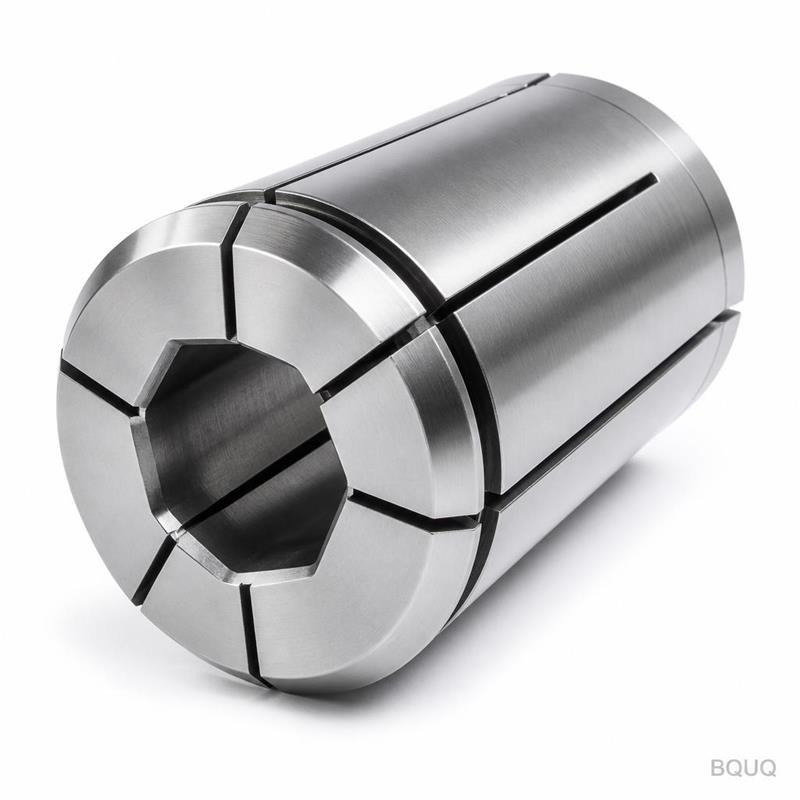
Cases, bezels, crowns, and pushers are fundamentally turned parts. A CNC lathe with live tooling can cut the outer profile, bore the crystal seat, face the caseback, and drill radial holes in one or two setups. Concentricity between the bore and the outer diameter is the number that decides whether the crystal sits flush.
For round watch parts, the turning platform is usually the right starting point — see our CNC turning parts capability for the envelope and spindle options.
CNC milling for links, lugs, and complex geometry
Bracelet links, clasps, lugs, and any part with pockets or non-round contours go on a mill. Five-axis work is common here because it lets you cut an angled lug face and a pivot hole in the same setup, which protects the relationship between them.
Finishing: brushing, polishing, and the drift problem
Finishing is where most watch projects either succeed or quietly fail. Options include:
- Mechanical polishing — abrasive wheels and compounds, high skill dependency
- Brushing / satin — directional grain, must be consistent link to link
- Bead blasting — matte, hides small defects, changes dimensions slightly
- PVD / electroplating — adds a thin layer, typically 1–5 µm, which affects fit
- Anodizing — aluminum only, builds oxide into the surface
Each of these changes the part. If your drawing tolerance is ±0.005 mm and your coating adds 3 µm per surface, you have consumed more than half your tolerance band before the part ever ships. Good watch drawings account for this explicitly.
Inspection: the part you cannot eyeball
You cannot inspect a watch bezel with calipers and confidence. Typical inspection for watch work includes:
- CMM with a small-tip stylus for bore position and profile
- Optical comparators or vision systems for edge and chamfer consistency
- Surface roughness testers on finished cosmetic faces
- Visual inspection under controlled lighting against a golden sample
The golden sample matters more in watch work than in almost any other industry. A written tolerance cannot fully describe "the grain should look like this." Our quality control workflow covers how first-article and golden-sample approval is structured.
How Do You Keep Beauty Consistent Across a Production Run?
The first part is easy. The thousandth part is the job.
Consistency comes from removing human judgment wherever possible:
| Control | What it prevents |
|---|---|
| Dedicated fixtures, not vises | Setup-to-setup position drift |
| Tool life tracking and scheduled changes | Surface change mid-batch |
| Coolant temperature control | Thermal growth on tight bores |
| In-process probing | Scrap discovered too late |
| Fixed polishing parameters (pressure, time, compound) | Link-to-link cosmetic variation |
| Golden sample under fixed lighting | Subjective "looks fine" decisions |
The single biggest cause of inconsistency in watch parts is finishing variability, not machining variability. A polisher who "works it until it looks right" will produce parts that differ by several micrometres and visibly different grain. A polisher following a documented cycle time and pressure produces parts that match.
Why small batches are normal in watch work
Watch production rarely looks like automotive. A microbrand might order 50 cases. A established brand might order 300 bracelet links in three finishes. Tooling amortization therefore dominates unit cost at low volumes, which is why flexible MOQ matters more than headline piece price.
If you are weighing batch sizes, our analysis of small-batch machining economics explains where the break points usually fall.
What Should a Watch Part Drawing Include?
A drawing that produces good watch parts has more information than a general machining print. Include:
1. Datum scheme — pick datums that match how the part assembles, not how it is held.
2. Finishing allowance — state whether dimensions are pre- or post-finish.
3. Coating thickness — and whether it is inside or outside the tolerance.
4. Edge specification — chamfer size, or "sharp edge, deburr only."
5. Cosmetic zones — mark which faces are visible and which are hidden.
6. Grain direction — for brushed finishes, show the direction on the drawing.
7. Golden sample reference — attach a photo or physical sample where words fail.
Ambiguity in these areas causes more watch-part rejections than machining error does. A supplier who asks about them before quoting is a supplier who has made watch parts before.
How BQUQ Approaches Watch Component Machining
BQUQ is a Dongguan-based ISO9001 factory running four production lines under one roof: CNC machining, metal stamping, custom springs, and heat sink production. That combination is useful for watch work because a watch assembly often needs more than one process — a machined case, a stamped clasp component, and a small spring in the crown mechanism can all be sourced from a single qualified supplier.
Our CNC platform holds ±0.005 mm on critical features, and we quote custom watch components in 12 working hours with flexible MOQ. For round watch parts, the CNC machining line covers turning and milling in the same production flow; for parts with complex contours, CNC milling handles pockets, lugs, and angled faces.
We do not claim certifications we do not hold. What we can tell you is what our process window is, what we have measured, and where we would recommend a different approach.
Frequently Asked Questions
Q: Can CNC machining really hold ±0.005 mm on a watch bezel?
A: Yes, on a stable setup with temperature-controlled inspection, ±0.005 mm is achievable for diameter and bore features at watch scale. The harder constraint is usually the cosmetic finish, because polishing removes material after machining. The practical approach is to machine with a measured finishing allowance and let a repeatable finishing cycle bring the part to final size.
Q: What surface finish should I specify for a watch case?
A: Specify the finish that matches your design intent and state whether it applies before or after coating. Machined-only faces typically land around Ra 0.8–1.6 µm; brushed and polished faces commonly reach Ra 0.2–0.4 µm. Vague specifications like "polished" cause disputes, so attach a golden sample or reference photo with the drawing.
Q: Is titanium harder to machine than stainless steel for watch parts?
A: Titanium is generally harder to machine well. Its low thermal conductivity concentrates heat at the cutting edge, which accelerates tool wear and can degrade surface finish if feeds and speeds are not tuned. Stainless steel is gummy and work-hardens, which brings its own challenges. Both are routine for an experienced watch-part supplier, but both need process control rather than generic parameters.
Q: How many watch components can I order as a first batch?
A: Flexible MOQ is normal for watch work because volumes are low and tooling cost dominates. First batches of a few dozen to a few hundred pieces are common for cases and bracelet links. The unit price at those volumes is driven mainly by fixture and programming time, so it drops noticeably once tooling is amortized across repeat orders.
Q: Do you machine watch movements and internal mechanism parts?
A: We machine structural and external components — cases, bezels, casebacks, crowns, lugs, bracelet links, clasps, and mechanism parts such as plates, levers, and small brass or steel components. We do not assemble or regulate movements. For internal parts, provide the drawing, material, and any plating specification, and we will confirm feasibility before quoting.
Related Resources
- About BQUQ and our Dongguan factory: /about/
- CNC machining, turning, and milling capabilities: /cnc-machining/
- Industry trends in precision manufacturing: /industry-dynamics/
- Technical articles on tolerances, finishing, and process control: /bquq-blog/
- Frequently asked questions for buyers: /faq/
- Case studies from custom manufacturing projects: /case/
- Request a quote in 12 working hours: /contact/
Authored by the BQUQ Engineering Team. BQUQ (Dongguan) runs CNC machining (±0.005 mm), metal stamping, custom springs, and heat sink production in one ISO9001 factory. Source-direct from Dongguan, China — quote in 12 hours: sc@bquq.com | WhatsApp +86 13713157787 | www.bquq.com