Small-Batch CNC Economics: Tooling Avoidance and Setup
Short answer: In small-batch CNC work, the part price is rarely the problem — the setup is. A typical 3-axis job carries 1.5–4 hours of programming, fixturing and first-article verification before a single good part ships, and that fixed block gets divided by your order quantity. At 50 pieces a 2-hour setup adds roughly 2.4 minutes of cost per part; at 500 pieces it adds 0.24 minutes. Tooling avoidance is the second lever: machining from billet or extrusion eliminates the mold, die or stamping tool that would otherwise cost thousands and lock you into one geometry. Below roughly 1,000–2,000 pieces per year, avoiding tooling usually beats chasing a lower piece price.
Why Does Small-Batch CNC Cost More Per Part Than Mass Production?
Because you are buying time, not material. In a 10,000-piece stamping run, the die cost is spread so thin it disappears into the piece price, and the cycle time is measured in fractions of a second. In a 100-piece CNC run, the machine still has to be programmed, the fixture still has to be indicated in, the first article still has to be measured, and the operator still has to load and unload every part by hand.
That fixed block — programming, workholding, tool selection, first-article inspection — is what engineers mean when they say "small-batch economics." It does not scale down with quantity. It only dilutes.
The practical consequence: when you compare two quotes for the same part, compare the setup line, not just the unit price. A shop quoting a lower unit price with a 6-hour setup can be more expensive at 80 pieces than a shop quoting a higher unit price with a 90-minute setup.
The Fixed Cost Block, Broken Down
| Cost element | Typical small-batch range | Scales with quantity? |
|---|---|---|
| CAM programming | 0.5–2.0 h | No |
| Fixture / soft jaw setup | 0.3–1.5 h | No |
| Tool selection and presetting | 0.2–0.5 h | No |
| First-article inspection | 0.3–1.0 h | No |
| In-process inspection | 5–15% of cycle time | Yes |
| Deburring / finishing | 0.5–5 min per part | Yes |
| Material (billet, bar, extrusion) | Per kg | Yes |
| Machine cycle time | Per part | Yes |
The top four rows are your enemy at low volume. Everything a good manufacturing engineer does on a small-batch program is aimed at shrinking them.
How Much Does CNC Setup Time Actually Cost Per Part?
Setup amortization is simple arithmetic, and it is worth doing before you argue about unit price.
Assume a fully loaded shop rate of USD 45–75/hour for 3-axis work in a Dongguan source factory (indicative; your region and machine class will differ). Take a 2-hour setup block at USD 60/hour = USD 120 fixed. Now divide:
| Order quantity | Setup cost per part | Share of a USD 8 part |
|---|---|---|
| 10 | USD 12.00 | 150% |
| 50 | USD 2.40 | 30% |
| 100 | USD 1.20 | 15% |
| 250 | USD 0.48 | 6% |
| 500 | USD 0.24 | 3% |
| 1,000 | USD 0.12 | 1.5% |
Read that table again, because it explains almost every sourcing decision in low-volume hardware. At 10 pieces you are essentially buying engineering time with a part attached. At 500 pieces the setup has become background noise and the cycle time, material and finishing dominate.
This is also why a competent supplier will push back gently when you ask for 25 pieces of a complex 5-axis part. The honest answer is not "we don't want the order" — it is "the setup will be 40% of your invoice, and here is how we can restructure it."
Where Setup Time Hides
Setup is not one event. On a real job it appears at least four times:
- Programming — geometry cleanup, toolpath strategy, stock definition, simulation.
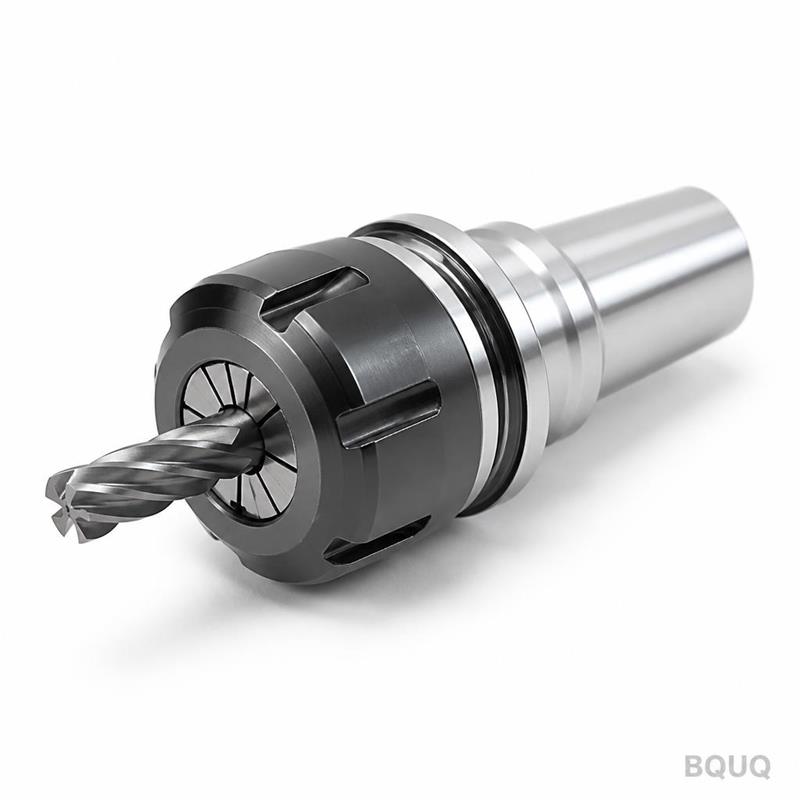
- Workholding — vise jaws, soft jaws, custom fixtures, vacuum plates, or a collet chuck for turned parts.
- Proving — dry run, single-block, first-article cut, offset adjustment.
- Verification — CMM or optical check against the drawing, plus any dimensional report the buyer requires.
A shop that quotes "setup: 1 hour" for a part with six tight tolerances and two datum schemes is either very good or not being honest. Ask which.
What Is Tooling Avoidance, and When Does It Pay?
Tooling avoidance means choosing a manufacturing process that requires no dedicated tool — no injection mold, no die, no casting pattern, no forging tool. CNC machining is inherently tooling-free in this sense: the "tool" is a generic end mill, drill or insert that can be reprogrammed for the next job.
The economics are stark. A simple two-plate injection mold might run USD 8,000–30,000. A progressive stamping die for a small bracket might run USD 3,000–15,000. A die-cast tool sits in a similar band. None of that money buys you a single part; it buys you the right to make parts cheaply later.
The Break-Even Calculation
| Process | Typical tooling | Piece price at 100 | Piece price at 5,000 |
|---|---|---|---|
| CNC from billet | ~USD 0 | Higher | Higher |
| Stamping (progressive die) | USD 3,000–15,000 | Very high (amortized) | Low |
| Die casting | USD 5,000–25,000 | Very high (amortized) | Low |
| Injection molding | USD 8,000–30,000+ | Very high (amortized) | Very low |
The cross-over point is where the CNC premium per part equals the tooling cost divided by quantity. For a bracket with a USD 4 CNC premium over a USD 1.20 stamped price, a USD 6,000 die breaks even at roughly 2,100 pieces. Below that, CNC wins on total cost — and it wins outright if the design is still moving.
Tooling Avoidance Is Also Risk Avoidance
The financial argument is only half of it. A tool is a commitment:
- Design freeze. Once the die is cut, a geometry change means welding, re-cutting or scrapping the tool.
- Volume commitment. You need to run enough parts to justify the tool, which encourages over-ordering and inventory carrying cost.
- Lead time. Die lead times of 4–8 weeks sit in front of your first production part.
- Obsolescence. If the product is discontinued at 1,200 units, the tooling is a write-off.
CNC carries none of these. That flexibility has a price, and for most low-volume programs it is the correct price to pay.
How Do You Reduce Setup Cost Without Sacrificing Quality?
Setup reduction is a design and communication exercise as much as a machining one. The buyer controls more of it than they think.
1. Design for Fewer Setups
Every additional workholding orientation is a new setup. A part that can be machined in two orientations costs less than one that needs four. Where possible:
- Put all critical tolerances on faces reachable from one or two directions.
- Avoid features on the "back" that require a second op with its own datum.
- Use a 5-axis or 3+2 setup only when the geometry genuinely demands it — the machine rate is higher, but one 5-axis setup can beat three 3-axis setups.
2. Tolerances Should Match Function
A ±0.005 mm capability is a tool, not a default. BQUQ machines to ±0.005 mm where the drawing requires it, but applying that tolerance to a non-functional clearance face forces slower feeds, more passes, more inspection, and sometimes a second finishing operation. Tighten only what moves, seals, or locates.
3. Standardize Workholding Across the Family
If you have five variants of a bracket, design them around one stock size and one datum scheme. The shop then builds one soft-jaw setup and runs all five variants with a program change instead of a fixture change. This is one of the largest single savings available in low-volume work, and it costs nothing but a design conversation.
4. Send Complete Information Up Front
Quoting and programming both stall on missing data. A package that includes 3D STEP, 2D drawing with GD&T, material spec, surface finish callouts, critical-to-quality list, and annual volume estimate can cut programming time meaningfully. BQUQ returns quotes in 12 working hours when the package is complete; incomplete packages add a day of back-and-forth before the clock even starts.
5. Batch Your Variants
Running 100 pieces of variant A, then 100 of variant B, means two setups. Running 50/50 in one campaign with a program change means one setup and one material buy. If your demand allows it, campaign batching is free money.
When Should You Switch From CNC to a Dedicated Tool?
The honest answer is: later than most teams think, and only when the design is genuinely frozen.
| Signal | Still CNC | Time to tool up |
|---|---|---|
| Annual volume | Under ~2,000 pcs | Over ~5,000 pcs |
| Design status | Any change pending | Frozen 12+ months |
| Part complexity | High, multi-feature | Simple, 2D profile |
| Material | Aluminum, brass, stainless, titanium | Die-cast alloy, sheet |
| Lead time need | Weeks | Quarters |
| Inventory strategy | Build to order | Build to stock |
A useful rule: tool up when the annual tooling amortization per part drops below roughly 10–15% of the piece price and you are confident the geometry will not change. Until both conditions hold, CNC remains the lower-risk, lower-total-cost route.
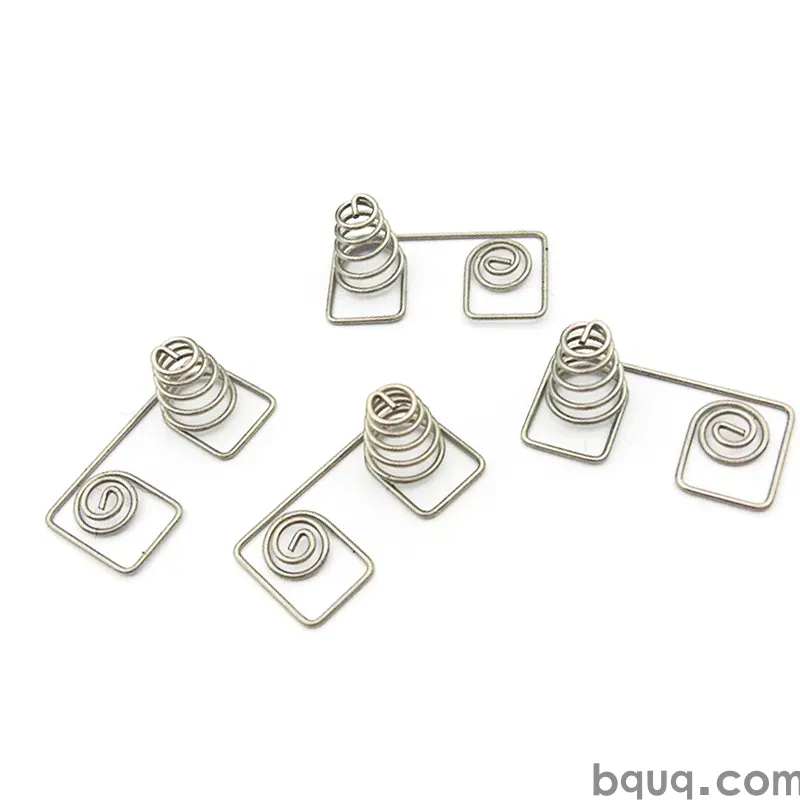
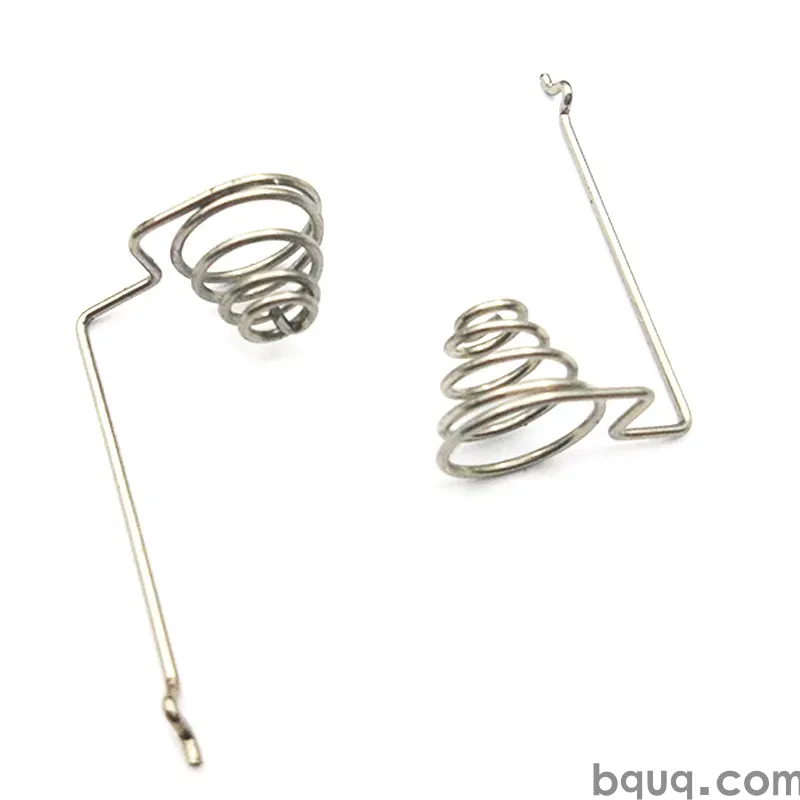
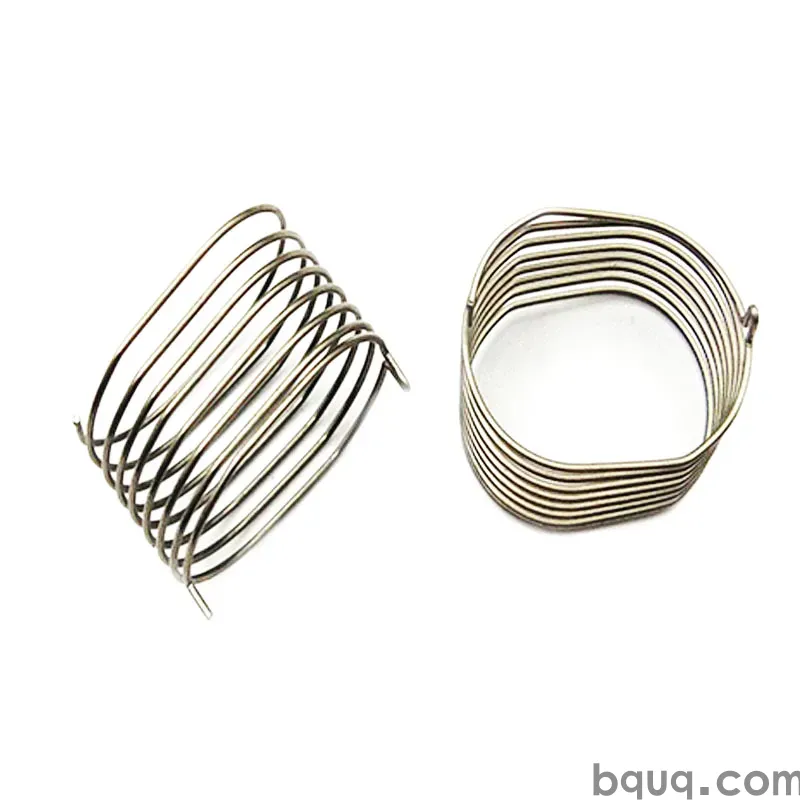
There is also a hybrid path many buyers miss. A stamped or die-cast part usually still needs secondary CNC operations — drilling, tapping, facing, boring a bearing seat. BQUQ runs CNC machining, metal stamping, custom springs and heat sink production across four production lines in one Dongguan factory, which means a part can move from a die-cast blank to a machined finished component without a second supplier, a second purchase order, or a second freight leg.
What Does This Mean for Your RFQ?
Three practical changes to how you request quotes on small batches:
1. Give the volume range, not a single number. "50 now, 500 over 12 months" lets the shop quote setup amortization intelligently and often produces a better blended price than quoting 50 in isolation.
2. Ask for the setup line separately. A quote that shows programming, fixturing, first article and unit price as distinct lines tells you where to negotiate. It also tells you whether the shop actually thought about your part.
3. Ask what would make it cheaper. A good manufacturing partner will tell you that moving one tolerance from ±0.01 to ±0.05 mm saves a finishing pass, or that a slightly wider corner radius eliminates a small end mill and its associated risk. Flexible MOQ exists precisely so that this conversation can happen before the PO, not after.
If you want a second opinion on a low-volume program, send the drawing package to BQUQ and you will get a quote in 12 working hours, with the setup broken out. For background on how lead time interacts with these decisions, see our notes on prototype lead time, and for the workholding side of setup reduction, soft jaws and workholding is worth reading before you finalize tolerances. Finishing and deburring also carry per-part labor that scales differently at low volume — covered in deburring practice.
Explore our capabilities in CNC machining, CNC turning parts and CNC milling parts.
Frequently Asked Questions
Q: What is the minimum order quantity for small-batch CNC machining?
A: BQUQ works with flexible MOQ — there is no hard floor that forces you into thousands of pieces. In practice, the economic floor is set by setup amortization rather than policy: below roughly 20–30 pieces, the fixed setup block dominates the invoice. Many buyers start with 25–50 pieces to validate fit and function, then scale to 250–500 once the design is frozen.
Q: Is CNC machining cheaper than stamping for 500 parts?
A: Usually yes, on total cost. A progressive die for a small bracket typically runs USD 3,000–15,000 (indicative), which at 500 pieces adds USD 6–30 per part before any stamping cost. CNC has effectively zero dedicated tooling, so the comparison is setup plus cycle time. The cross-over generally sits somewhere between 1,000 and 3,000 pieces, depending on part complexity and die cost.
Q: How is CNC setup time calculated on a quote?
A: Setup is quoted as hours at the shop rate and covers CAM programming, fixture or soft-jaw build, tool presetting, first-article machining and inspection. It is a fixed line item, not a per-part charge. Ask for it to be shown separately — a transparent quote lists setup, material, cycle time and finishing independently, which lets you see exactly where your money goes at low volume.
Q: Can tight tolerances increase small-batch cost significantly?
A: Yes. Tightening a tolerance from ±0.05 mm to ±0.01 mm or better can force slower feeds, additional finishing passes, more frequent tool changes and extra inspection time — sometimes a second operation. On a 100-piece run that can add 20–40% to the unit price. Apply tight tolerances only to features that locate, seal or move; leave cosmetic and clearance faces looser.
Q: Does BQUQ handle both machining and stamping in one factory?
A: Yes. BQUQ runs four production lines in one Dongguan facility covering CNC machining to ±0.005 mm, metal stamping, custom springs, collet chucks and heat sinks, under ISO9001. That means a stamped blank can receive secondary CNC operations — drilling, tapping, boring — without leaving the building, which removes a supplier handoff, a second freight leg and a second quality system from your supply chain.
Related Resources
- About BQUQ — ISO9001 factory in Dongguan with four production lines under one roof
- CNC machining services — milling, turning and finishing to ±0.005 mm
- Industry trends — sourcing and supply-chain shifts affecting low-volume hardware
- Technical articles — engineering notes on tolerances, workholding and finishing
- FAQ — MOQ, lead time, quoting and quality documentation questions
- Case studies — how buyers structured small-batch programs
- Contact — send drawings, get a quote in 12 working hours
Authored by the BQUQ Engineering Team. BQUQ (Dongguan) runs CNC machining (±0.005 mm), metal stamping, custom springs, and heat sink production in one ISO9001 factory. Source-direct from Dongguan, China — quote in 12 hours: sc@bquq.com | WhatsApp +86 13713157787 | www.bquq.com