BQUQ machines robot parts in small batches at 0.005 mm in Dongguan: grippers, links, mounts, end effectors. ISO9001 factory, prototype to 1,000 pcs. Quote in 12 hours.
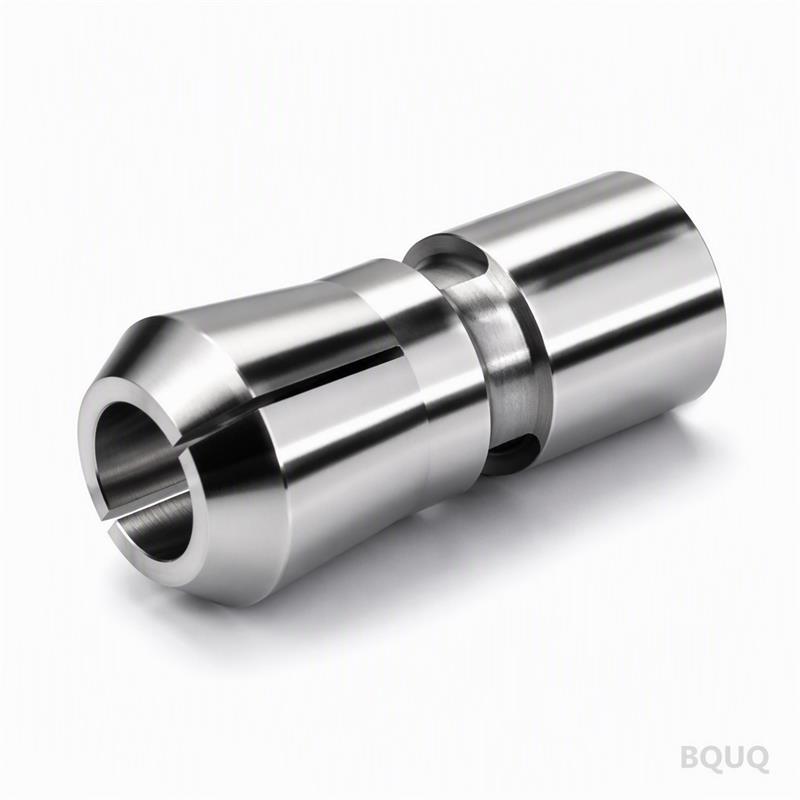
CNC Parts for Robotics: Precision in Small Batches
Short answer: most robotics hardware orders are 5–500 pieces of machined aluminum, and CNC is the only process that makes sense at that volume. A gripper finger or camera mount typically runs $8–$60 per part at ±0.05 mm, with critical bore fits down to ±0.01 mm or tighter. Because there is no mold, you can change the design between batches for $0 in tooling and get parts back in 1–3 weeks. That is why robot builders machine rather than cast.
Robotics is a development-driven industry. A startup iterates the end effector weekly; an integrator customizes a gripper per customer; even a volume robot maker needs bracket and mount changes each revision. CNC machining fits that rhythm exactly: no tooling commitment, small batches priced fairly, tolerances that let servo-driven parts actually align. As a Dongguan source factory running CNC, stamping, springs and heat sinks under one roof, we machine robot parts daily. This guide covers what gets machined, what tolerances matter, and how to buy small-batch robot parts without overpaying.
Why Robotics Volumes Favor CNC Over Casting or Stamping
Robot hardware has a volume problem: nobody knows how many they will sell, and the design keeps moving. Die casting needs a mold costing $5,000–$50,000 and works at 10,000+ pieces a year. Progressive stamping pays off above roughly 50,000 pieces for flat parts, but a robot link is not flat — it has bosses, pockets and threaded holes on multiple faces. CNC has zero tooling beyond a fixture, holds ±0.05 mm as routine, and machines one piece or one thousand at similar quality.
The economic crossover is well below what most people assume. At 100 pieces, a machined aluminum bracket is typically cheaper per piece than the amortized mold cost of the same bracket cast. At 500 pieces CNC is still competitive unless the geometry is casting-only, like internal draft-required cavities. If a robot part later reaches five-figure annual volumes, you can revisit die casting then — and a multi-process source factory can quote both sides honestly. Meanwhile, CNC keeps your BOM cost predictable while the robot itself is still changing.
What Gets Machined on a Robot
Walk around any robotic arm or mobile platform and nearly every structural piece is machined: joint housings, link arms, wrist flanges, gripper bodies, camera mounts, wheel hubs, sensor brackets. Turned parts appear too — motor shafts, pulley spacers, threaded inserts — which is why Swiss-type and CNC turning usually sit beside the milling machine in the same shop.
| Robot subsystem | Typical machined parts | Common material | Batch size seen |
|---|---|---|---|
| Arm and links | Link housings, mounting brackets | 6061-T6 or 7075-T6 aluminum | 10–500 |
| End effector | Gripper fingers, jaw blanks, flange adapters | 6061, tool steel for wear faces | 5–200 |
| Drive train | Motor shafts, pulley hubs, bearing housings | 6061, 1045 steel, stainless 303 | 20–1,000 |
| Mobile base | Chassis plates, wheel hubs, sensor pods | 6061, 5052 sheet if bent | 10–500 |
| Vision / payload | Camera mounts, IMU blocks, antenna brackets | 6061, occasionally PEEK | 1–100 |
The pattern: aluminum dominates because it is light, machines fast and anodizes cleanly. Steel and stainless appear where stiffness, threads or wear matter. Plastics like PEEK or Delrin show up in payload and electrical isolation parts, covered in our CNC machined plastics guide. Whatever the material, quantities stay small and revision cycles stay short.
Tolerances That Actually Matter on Robot Parts
Not every surface on a robot needs ±0.01 mm. The mistake is calling tight tolerances everywhere and paying for it on every feature. What matters is where parts register against each other: bearing bores, dowel pin holes, motor pilot diameters, and the mating face between link and joint housing. Everything else — cosmetic pockets, lightening holes, outer profiles — can run at ±0.1 mm and cost far less.
| Feature type | Typical tolerance | Why |
|---|---|---|
| Bearing bores, dowel holes | ±0.01 mm or better | Preload, alignment, no play in joint |
| Motor pilot fits | H7/g6 style fits, ~±0.01 mm | Concentricity with the drive train |
| Link mating faces | ±0.05 mm flat/square | Stack-up across a multi-axis arm |
| Lightening pockets, outer profile | ±0.1 mm | No functional mate |
| Threaded holes | Class 2B / 6H | Standard fastener fit |
A practical number: holding critical features at ±0.01 mm and the rest at ±0.1 mm typically adds 10–25% over an all-loose drawing, not the 50–80% of tightening everything. Repeatability between batches matters just as much as absolute accuracy — if batch two machines 0.01 mm off from batch one, replacement parts and spares stop fitting. Ask your supplier how they verify first articles and whether they keep CMM records per batch; a source factory doing this properly will happily show you. We hold ±0.005 mm on critical features at BQUQ and report the numbers on the inspection sheet, which is why our CNC machining tolerances guide is worth reading before you finalize a drawing.
Materials: Picking the Right Aluminum (and When to Leave It)
For a robot link, the standard conversation starts and ends with 6061-T6: machinable, weldable, anodizes well, and cheap enough to iterate on. Upgrade to 7075-T6 when a link is stiffness- or stress-limited and you cannot add section. Expect 7075 to cost roughly 1.4–1.8× 6061 in material and to machine with a slightly more brittle chip — fine in production, harder in thin walls. Titanium earns its 15–25× price only where you need maximum strength-to-weight at a stressed joint and can tolerate slower machining. For wear parts like gripper jaws that touch the payload, hardened tool steel or a steel insert usually beats exotic alloys.
Finishing on robot parts is mostly functional. Hard anodize (type III, 25–50 µm) protects aluminum wear surfaces and gives a low-friction face on gripper fingers; regular black anodize is for corrosion and looks; bead blasting before anodize gives the uniform matte finish most robot makers want for photos and demos. If the robot works in food, medical or outdoors, tell the factory — it changes finish and material choices up front rather than after a field failure.
Designing Robot Parts for Small-Batch Machining
Machined robot parts get cheaper per gram of design effort than almost anything else you can do. Rule one: put datum features on the drawing — a machined datum hole and flat face — so the factory orients the part the same way every batch. Rule two: keep wall thickness above 1.5 mm where possible; thin walls machine slowly, vibrate, and invite distortion in long links. Rule three: standardize hole sizes and thread depths so one tool set does most of the work. Rule four: leave 0.5–1.0 mm of stock on faces that mate with other machined parts if you are unsure of the final stack-up; a second machining pass is cheap, a welded extension is not.
Small-batch also rewards ordering "kits": if the gripper needs a body, two fingers, and a flange, order them together and machine them from the same bar lot. Same material lot means consistent anodize color and consistent thermal response, and one setup conversation instead of three. If you are early in development, our CNC prototyping and low-volume guide walks through how to structure prototype orders that flow into production without re-quoting everything.
Buying Robot Parts From a China Source Factory
Robot builders source from China for the same reason everyone else does: a 12-hour quote, real production capability, and pricing that lets a startup ship a first batch without a tooling loan. To make that work, send a STEP or STP file plus a PDF with tolerance callouts, material, quantity and finish. If the factory must guess, it will guess the expensive interpretation and you will pay for safety margin. Ask specifically what tolerance each quote assumed, whether the material is domestic or imported stock, and what the inspection report covers — three questions that separate factories from traders, covered further in our CNC RFQ guide.
Lead times for machined robot parts from Dongguan typically run 5–10 working days for prototypes and 2–3 weeks for production batches, plus 5–7 days air freight or 25–40 days sea. For a demo or trade show, split shipping — air a few pieces, send the balance by sea — is a standard trick that keeps both deadline and freight bill sane.
Frequently Asked Questions
Q: What batch sizes make CNC the right choice for robot parts?
A: From 1 piece to roughly 2,000–5,000 pieces per year, CNC is usually the cheapest way to make a structural robot part because there is no tooling to amortize. Above that, look at die casting or stamping — and at BQUQ we will tell you when one of our other lines beats CNC, since we run all of them.
Q: Can you hold bearing-fit tolerances on robot joints?
A: Yes. Critical bores and dowel locations are machined at ±0.01 mm as standard, and we hold ±0.005 mm on features that need it, verified with CMM and reported per batch. Send the drawing so we can confirm the fit class against your bearing spec.
Q: Which aluminum should I use for a robotic arm link?
A: 6061-T6 for almost everything, because it machines fast, anodizes consistently and costs the least. Step up to 7075-T6 only where a link is stress- or stiffness-limited and you cannot add section, and accept roughly 1.4–1.8× material cost. Steel or titanium belongs only at heavily loaded joints where strength-to-weight genuinely demands it.
Q: Do you machine one-off prototypes as well as production runs?
A: Yes, the same CNC machines cut both. A one-piece prototype carries setup cost that spreads across a batch, so expect a higher per-piece price at quantity one — that is normal everywhere. We keep the program and fixture on file, so your follow-up production order reuses the setup instead of paying for it again.
Q: How fast can I get a quote for robot parts?
A: Send the STEP or STP file and PDF drawing with material, quantity and finish notes to sc@bquq.com or WhatsApp +86 13713157787, and you get a quotation within 12 working hours. If the drawing is missing tolerances or material, we ask before quoting rather than padding the price.
Related Resources
- CNC prototyping and low-volume machining guide — structuring prototype orders that flow into small production batches.
- CNC machining and milling services — the ±0.005 mm capability and material range we machine every day.
- About BQUQ — an ISO9001-certified source factory in Dongguan running CNC, stamping, spring and heat sink lines under one roof.
- Contact us — send robot part drawings and get a quote within 12 working hours.
Authored by the BQUQ Engineering Team. BQUQ is an ISO9001-certified source factory in Dongguan, China, running CNC machining, metal stamping, custom springs, heat sink and collet lines under one roof. Send drawings to sc@bquq.com or WhatsApp +86 13713157787 for a quote within 12 working hours. www.bquq.com