Read collet size charts for 36/46/52/60/630/643 stock-first: bore matches bar, hex by across-flats. BQUQ machines them to the 0.005 mm class (ISO9001).
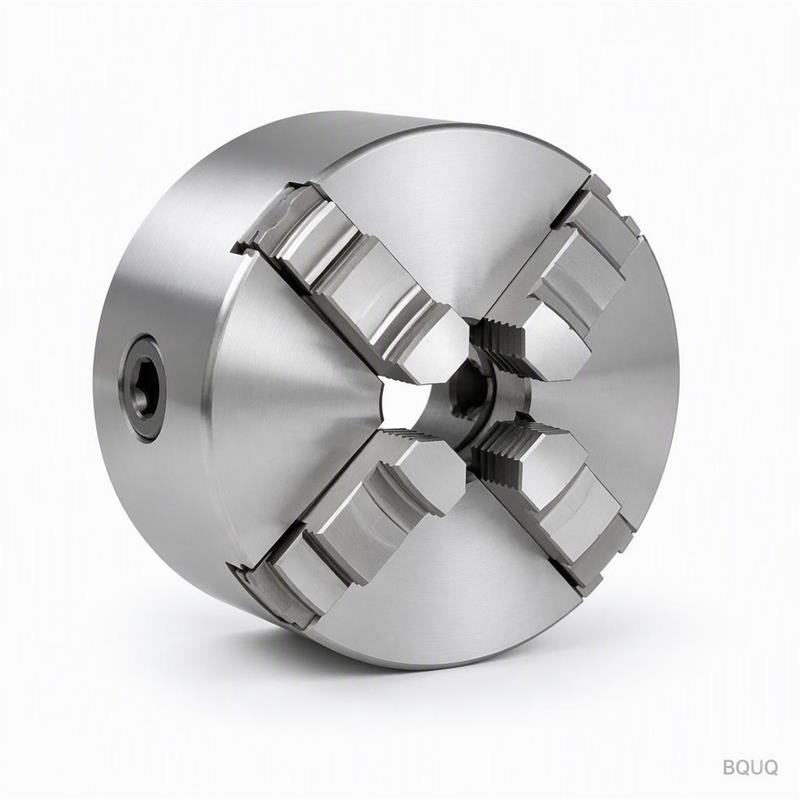
Collet Size Charts: 36, 46, 52, 60, 630, 643 — How the System Works
A collet size chart is read stock-first: find your bar's nominal dimension in the bore ladder for the collet family (36, 46, 52, 60, 630, 643), then confirm the bore matches the stock shape and tolerance window. The chart's job is matching bore to bar, not machine to bar — every chart is organized around the sizes of stock the collet can hold, in metric or inch steps.
Size charts look intimidating because they are printed as dense tables of bores per family. Strip the formatting and a collet size chart answers one question: for this stock dimension, which bore do I order? The answer is nearly always "the bore equal to your bar's nominal size" within the family your machine uses. The chart exists to catch the cases where that simple rule fails — imperial bar in a metric collet, hex stock ordered by diameter instead of across-flats, or undersize bar that falls outside the grip window.
How a Collet Size Chart Is Organized
Charts are nested: family first, then shape, then bore ladder. Under "52 type," you find sections for round, hex and square bores, and within each shape a column of bore sizes. The bore ladder is the heart of the chart — it is the list of stock diameters the collet can grip, and it tells you which sizes are standard and which are custom.
Most producers stock round bores in steps that mirror common bar sizes: finer steps at the small end of the range, coarser steps higher up. A typical metric ladder runs 0.5 mm steps up to around 10 mm and 1 mm steps above, because bar stock itself is drawn to those increments. Half-millimeter and 0.1 mm steps exist as custom bores — that is where a chart meets a drawing and the standard list ends.
| Metric bar (mm) | Nearest inch bar | Equivalent (mm) | Note |
|---|---|---|---|
| 3.0 | 1/8 in | 3.175 | Order 3.175 bore for inch bar |
| 4.0 | 5/32 in | 3.969 | Common pin stock |
| 5.0 | 3/16 in | 4.763 | |
| 6.0 | 1/4 in | 6.350 | Very common auto-lathe size |
| 7.0 | 9/32 in | 7.144 | |
| 8.0 | 5/16 in | 7.938 | |
| 9.0 | 3/8 in | 9.525 | |
| 10.0 | — | — | Metric ladder continues in 1 mm steps |
| 12.0 | 1/2 in | 12.700 | Order 12.7 bore for inch bar |
| 14.0 | 9/16 in | 14.288 | |
| 16.0 | 5/8 in | 15.875 |
Exact inch-to-metric conversions are shown because that is where chart mistakes happen. A 6 mm bore and a 1/4 in (6.35 mm) bore are different collets; forcing inch bar into a metric bore leaves 0.35 mm of clearance and the fingers cannot grip. If your part is dimensioned in inches, convert the bar to millimeters first and order the converted bore, or order a collet cut for the exact inch size.
Why Bore Equals Stock, Not Stock Plus Slack
New buyers often ask for a bore slightly larger than the bar "so it feeds easier." That logic inverts the design. A spring collet grips by closing a few hundredths of a millimeter onto the bar; the working clearance is built into the bore, typically in the 0.01–0.05 mm range depending on family and bar tolerance. Add visible slack and the fingers close to their natural stop before they touch the bar, leaving the stock loose.
The chart assumes bar at a sane tolerance. Cold-drawn round bar runs coarse grades; ground bar runs fine grades, and the grade changes how the same bore behaves.
| Bar tolerance (ISO 286, 10–18 mm) | Deviation (µm) | Effect at a fixed bore |
|---|---|---|
| h6 (ground) | 0 / −11 | Consistent grip, best runout |
| h7 (drawn and sized) | 0 / −18 | Good grip for most work |
| h8 (precision drawn) | 0 / −27 | Acceptable, check grip window |
| h9 (drawn) | 0 / −43 | Marginal at small bores |
| h11 (rough drawn) | 0 / −110 | Grip unreliable; re-center or grind bar |
Takeaway: when runout matters, buy bar at h7 or better and tell the collet maker the grade. A collet cannot correct stock that is 0.1 mm undersize — the slot geometry simply does not have that much travel.
Reading the Shape Columns: Round, Hex, Triangle, Square
The shape column changes what "size" means. Round bores are sized by diameter. Hex and square bores are sized by across-flats (AF), the distance between parallel sides, because that is the dimension that locates in a V or on the flats. Triangle bores are sized across the flats as well, and are used only when the stock cross-section is genuinely triangular.
Ordering a hex collet by the bar's corner-to-corner diameter is the classic error: it produces a bore that never touches the flats. Always cut polygon collets across the flats dimension. A hex collet grips on its flat faces with the fingers arranged so the corners of the stock sit in the slots or between support points — which is why polygon collets carry more slots than round collets of the same size.
| Stock shape | Dimension to match | Common slotting |
|---|---|---|
| Round | Diameter | 3 slots |
| Hex | Across-flats | 3 slots, corners supported |
| Square | Across-flats | 4 slots typical |
| Triangle | Across-flats | 3 slots, corner-aligned |
We detail the geometry differences in round, hex and triangle bore collets. The short version: if your stock is not round, stop reading the round column of the chart.
Where the Family Column Fits In
Charts are printed per family because the bore ladder repeats under every type code. A 46-type round chart and a 52-type round chart list similar bores; what differs is everything outside the bore — body diameter, cone, thread. When you pick a bore from a chart, you must pick it from the chart of the family your machine uses.
The number sequence 36, 46, 52, 60, 630, 643 is a series of machine-interface families, not a size progression from small to large. A 643 family is not "bigger than 60" in the way a 60 is bigger than a 36; the codes simply identify different interface geometries used across automatic lathe classes. Choose family by the machine and chuck, then read the bore ladder. Our auto lathe collet guide explains the family logic in full.
When the Chart Ends: Custom Bores
Charts cover standard bar. Real production runs on odd sizes: 5.56 mm wire, a 7.94 mm hex, imperial stock in a metric machine, or stock held to a tight grade that needs a bore cut to its actual measured size. That is when the chart hands over to the drawing.
A custom bore is a normal order for a collet factory, not an exotic one. The factory machines the collet blank from the family, then cuts and grinds the bore to your stock dimension with the working clearance and slot pattern matched to your bar tolerance. Lead time is longer than a stock bore and the price is slightly higher, but the grip and runout are predictable because the bore was designed for your bar.
If your size sits between chart steps or your stock is a non-standard shape, send the bar spec to the factory rather than forcing the nearest listed bore. At BQUQ we cut custom bores across the 36/46/52/60/630/643 families on the same CNC line that machines our standard range, holding bore geometry to the 0.005 mm class with grinding after hardening. Our auto-lathe collet range lists the standard families, including 52-type collets with hex bores, and our custom collet design guide covers the drawing requirements for non-standard sizes. If the machine side is also being upgraded, the same factory builds the Swiss and 2J collet chucks those collets seat in.
Email sc@bquq.com or WhatsApp +86 137 1315 7787 with your PDF/DXF/STEP file. An engineer reviews it and replies with price, lead time and DFM notes on working days.
Frequently Asked Questions
Q: Should my collet bore be exactly the bar diameter?
A: Yes for nominal sizing, with a small working clearance of roughly 0.01–0.05 mm typical so the bar feeds through. Never add visible slack: a spring collet needs to close onto the bar, and excess clearance means the fingers stop before they grip.
Q: What is the difference between type numbers and bore sizes on a chart?
A: The type number (36, 46, 52, 60, 630, 643) selects the collet family that fits your machine interface. The bore size, read from the chart inside that family, selects the stock the collet holds. Charts are organized bore-first because that is what changes per order.
Q: Can one collet cover a range of bar sizes?
A: Only within the slot travel, which is a few hundredths of a millimeter. A collet made for 6 mm bar will not hold 6.5 mm bar reliably. For multiple bar sizes, buy multiple bores or a design with a wider grip range if the application tolerates the runout trade-off.
Q: How do I size a hex collet from the chart?
A: Use the across-flats dimension of the hex bar, never the corner-to-corner diameter. Find that value in the hex column of your family's chart. If your across-flats size is not listed, it is a custom bore order.
Q: My bar is inch-measured but the machine is metric. Which bore do I order?
A: Convert the inch bar to millimeters exactly — 1/4 in is 6.350 mm, not 6.0 mm — and order a collet cut for the inch size. A metric bore on inch bar leaves clearance that destroys grip. Send the exact bar dimension and the factory will cut the right bore.
Authored by the BQUQ Engineering Team. BQUQ is an ISO9001-certified source factory in Dongguan, China, running CNC machining, metal stamping, custom springs, heat sink and collet lines under one roof. Send drawings to sc@bquq.com or WhatsApp +86 13713157787 for a quote within 12 working hours. www.bquq.com