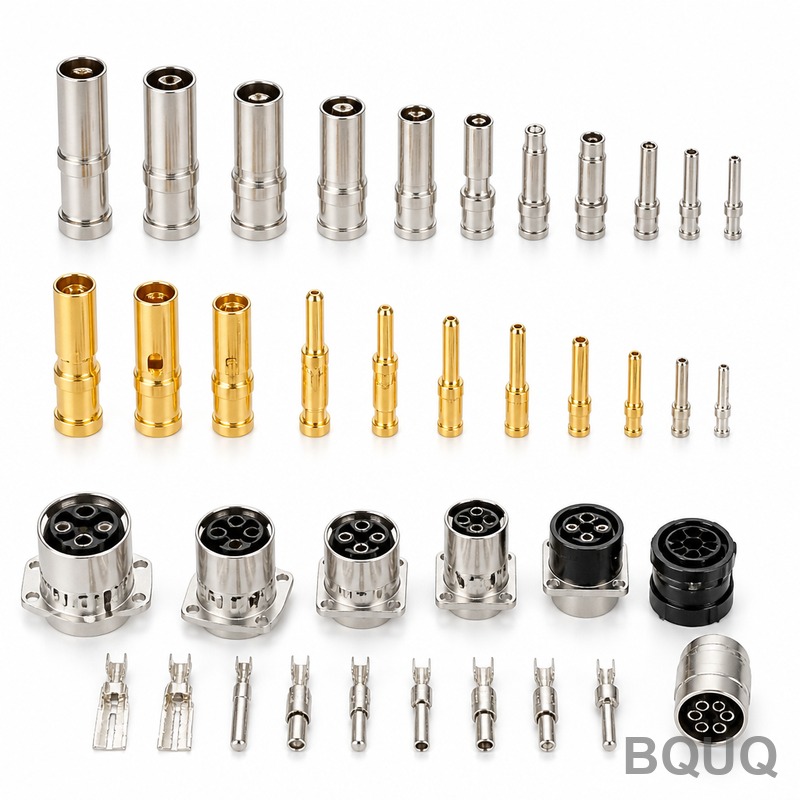
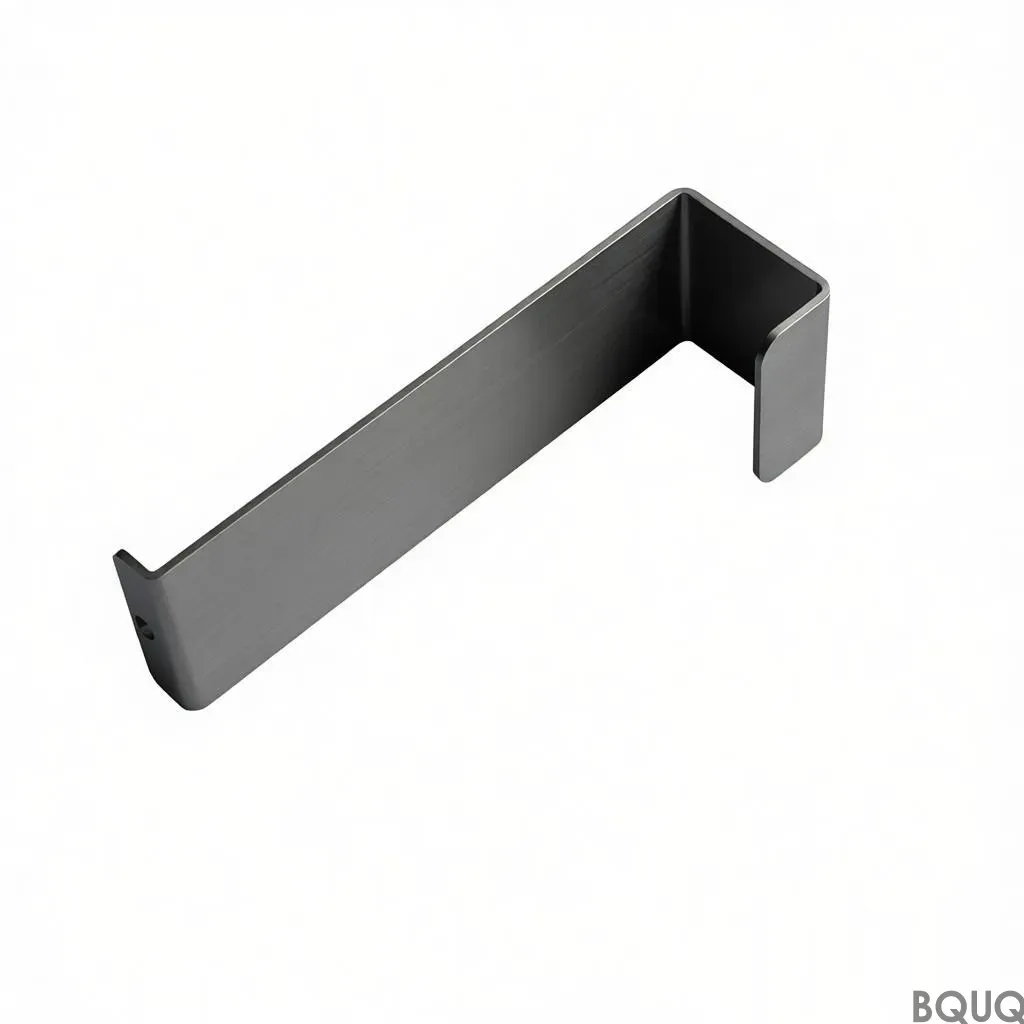
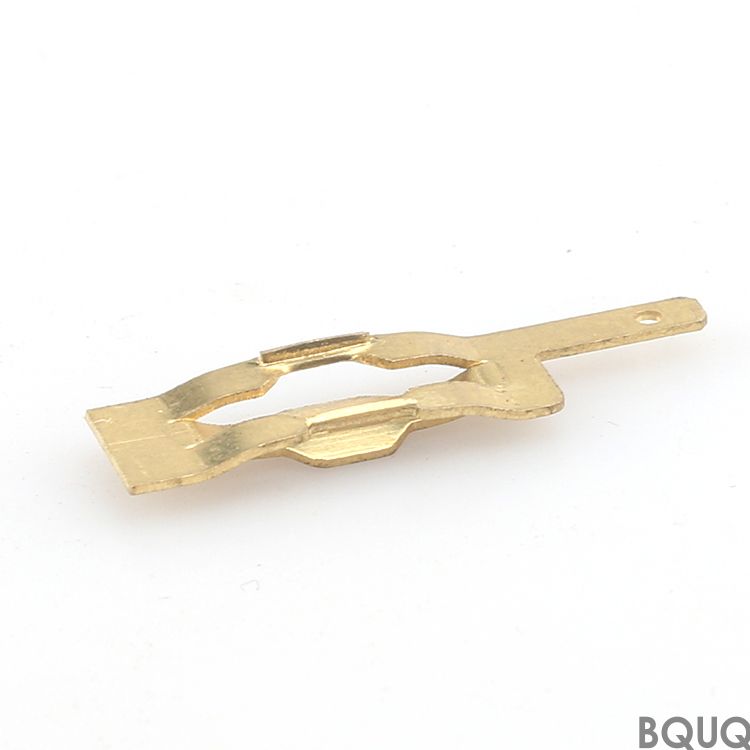
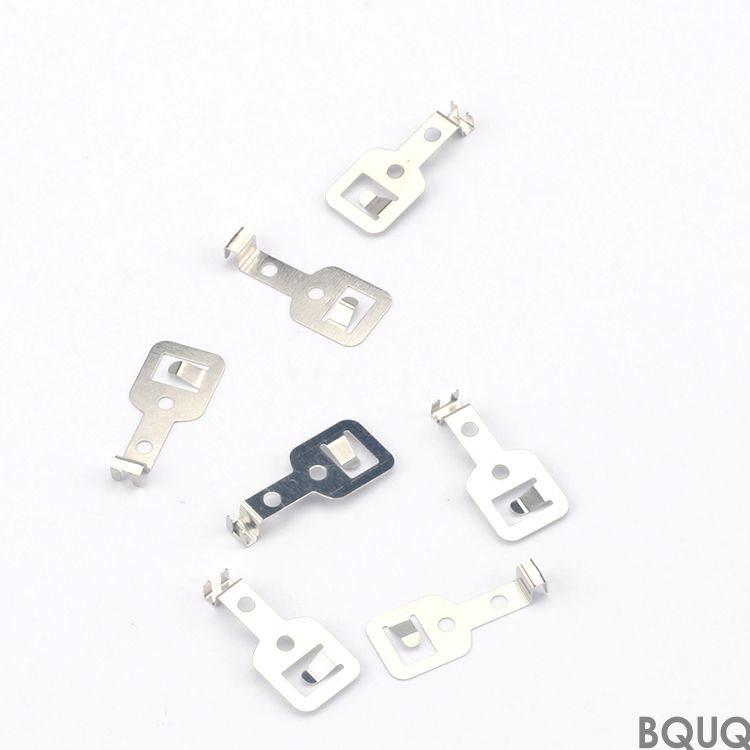
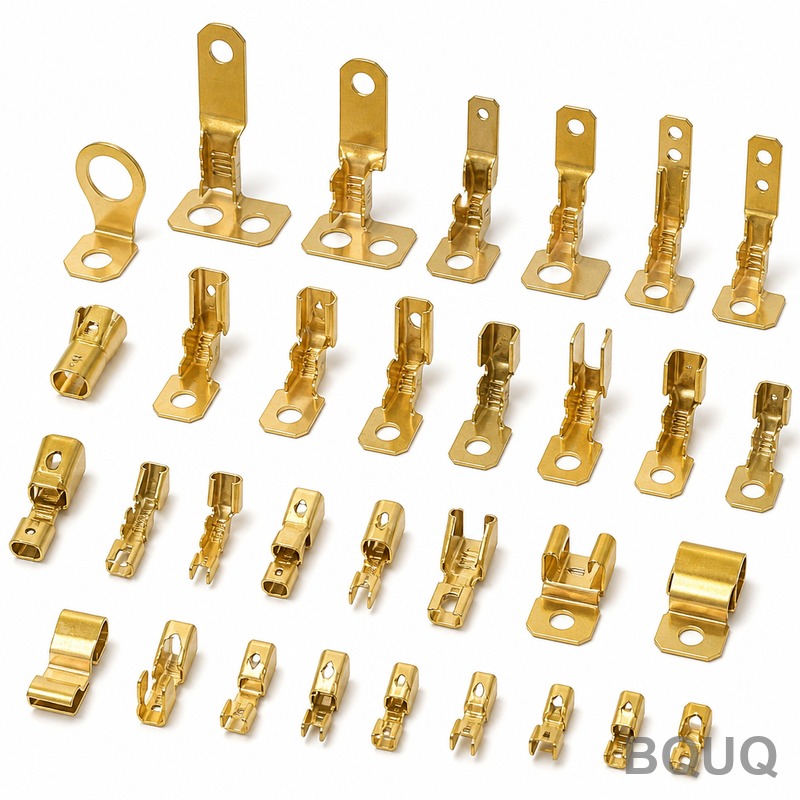
This is BQUQ’s EV Charging Connector Terminals Collection — a family of high-current, high-cycle metal stampings designed for CCS1, CCS2, GB/T, and CHAdeMO plugs and inlets. We hol
EV Charging Connector Terminals Collection | BQUQ Precision Stamping China
This is BQUQ’s EV Charging Connector Terminals Collection — a family of high-current, high-cycle metal stampings designed for CCS1, CCS2, GB/T, and CHAdeMO plugs and inlets. We hold flatness to 0.05 m
Get a Fast Quote for This Part
Send us your drawing / quantity / material — reply within 24h.
This is BQUQ’s EV Charging Connector Terminals Collection — a family of high-current, high-cycle metal stampings designed for CCS1, CCS2, GB/T, and CHAdeMO plugs and inlets. We hold flatness to 0.05 mm and terminal width tolerance to ±0.01 mm, with surface finish Ra 0.4 µm on contact areas. Typical lead time is 15 days for standard blanks, and we run hardness up to HRC 45 for spring-loaded latch terminals.
Why Copper Alloy Thickness and Grain Direction Decide Your Connector’s Life
EV charging terminals fail from overheating or fatigue cracks, not from poor plating. We stamp from C11000, C17200, and C5191 strips in thicknesses from 0.20 mm to 3.00 mm. Grain direction is controlled parallel to the bend axis — this prevents micro-cracks after 10,000 insertion cycles. For high-frequency charging (350 kW+), we recommend C17200 beryllium copper, which holds its elastic modulus after repeated thermal cycling from -40°C to +125°C.
Hardness and Heat Treatment: Matching the Contact Spring to the Socket
Cylindrical socket terminals need a spring beam that does not yield under 50 N insertion force. We use solution-annealed C17200, then age-harden to HRC 38–45. For plug blade terminals, we use half-hard C11000 at HRB 45–55, which keeps conductivity above 85% IACS. No soft annealing after stamping unless you specify a higher ductility for crimping. Every coil is certifiable to Mill Test Certificate EN 10204 3.1.
Stamping Dies: How We Hold ±0.01 mm on a 0.3 mm Thin Wall
Terminals have thin walls near the locking window — that is where tolerance slips. Our carbide progressive dies use six-station piloting with a pitch accuracy of ±0.005 mm. We grind the die punch to a clearance of 4–6% of material thickness per side. The result: burr height under 0.03 mm, no rollover on the contact face. You can measure the terminal with a CMM on arrival and it will match our inspection report within 0.005 mm.
Surface Finish Ra 0.4 µm: Why We Polish Only the Contact Zone
Do not polish the entire terminal — that removes the nickel underplate. We selectively brush-polish the male blade contact area to Ra 0.4 µm, while leaving the crimp barrel at Ra 1.6 µm for wire grip. Then we apply selective silver plating (2–4 µm) or tin plating (3–5 µm) only on the contact window. This cuts plating cost by 30% compared to full plating, and it prevents galvanic corrosion at the crimp joint.
Inspection Before Every Shipment: X-Ray, CMM, and Salt Spray
We do 100% dimensional inspection on critical contact dimensions using a Zeiss CMM, not just a first-article report. For every lot, we run a salt spray test (48 hours, 5% NaCl) on plated terminals per ASTM B117. For BeCu spring terminals, we perform a 360-degree bend test and a 50,000-cycle insertion test with a mating pin. You receive an inspection certificate with each batch — no extra charge. If a terminal fails the CMM check, the whole coil is rejected, not just the strip.
Packaging and Traceability: Anti-Tarnish Bags and Lot Coding
Copper tarnishes within hours in humid Dongguan weather. We pack terminals in VCI (Vapor Corrosion Inhibitor) bags, then vacuum-seal them in rigid cartons with desiccant. Each box carries a lot code that traces back to the exact coil batch, die number, and operator. For automated assembly lines, we offer tape-and-reel packaging (per EIA-481) or tube packaging for loose terminals. Shipment is by DHL or FedEx, FOB Shenzhen, with full customs documentation.
How to Specify Your Terminal Without Over-Specifying Cost
Most engineers over-specify tolerance on non-contact surfaces, which doubles die cost. Send us your drawing with a clear functional requirement: contact resistance target (e.g., 0.5 mΩ max), insertion force, and cycle life. We will suggest the cheapest material and heat treatment to meet it. For example, you do not need C17200 if your socket is stationary — C5191 at HRB 90 saves 40% material cost. Read our CNC cutting tool selection guide to see how we pick die steels for high-volume stamping. Also check the CNC machining tolerances guide if you are mixing stamping with machined housings.
What is the MOQ for the EV Charging Connector Terminals Collection?
No MOQ — order 100 pieces for a pilot run, or 100,000 pieces for production; tooling cost is quoted separately for custom dies.
Can you customize the terminal shape or plating?
Yes, we modify die geometry, strip thickness, and plating area (silver, tin, or gold) within 5 working days for a new tooling quote.
How do you guarantee quality for high-cycle charging connectors?
We run 50,000-cycle insertion tests, CMM inspection on 100% of critical dimensions, and salt spray testing per ASTM B117 on every lot.
What is your lead time for a custom terminal stamping?
15 working days for standard tooling, 25 working days for new dies; we ship DHL or FedEx from Shenzhen, China.
Send your terminal drawing or sample part for a firm quote within 12 hours. Email sc@bquq.com or WhatsApp +86 13713157787. Include your target insertion force, current rating, and annual volume — we will reply with a stamped price and DFM feedback. Precision manufacturing, made in China, no MOQ required.