What This Collection Is and Why It Eliminates Relay Bounce This is a family of stamped contact reeds for electromagnetic relays, automotive flashers, and industrial switching mod
BQUQ Precision Stamped Relay Contact Reeds Collection | 0.005mm Tolerance
What This Collection Is and Why It Eliminates Relay Bounce This is a family of stamped contact reeds for electromagnetic relays, automotive flashers, and industrial switching modules. Each reed is p
Get a Fast Quote for This Part
Send us your drawing / quantity / material — reply within 24h.
What This Collection Is and Why It Eliminates Relay Bounce
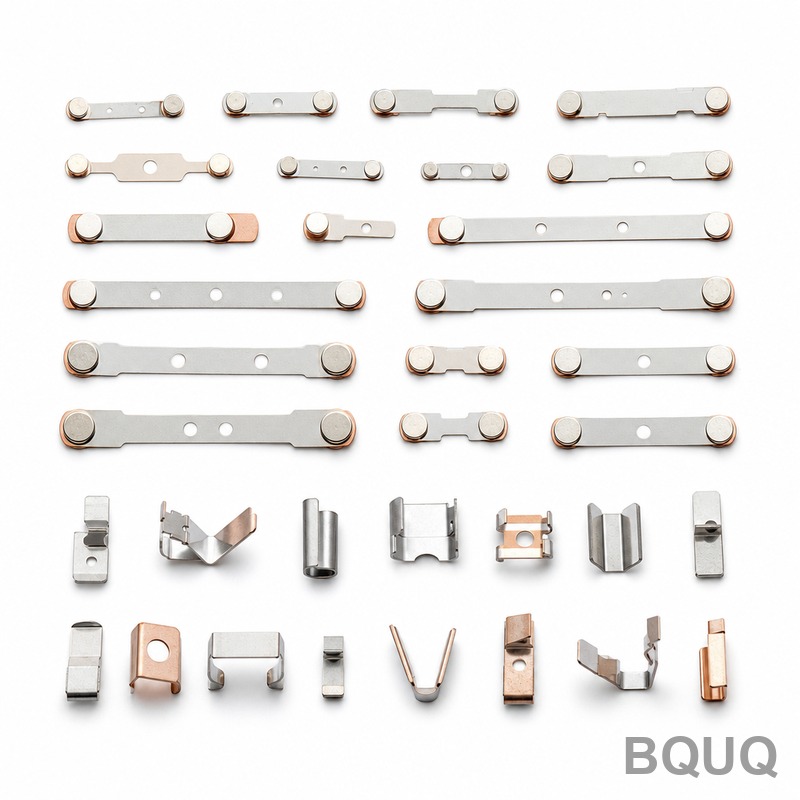
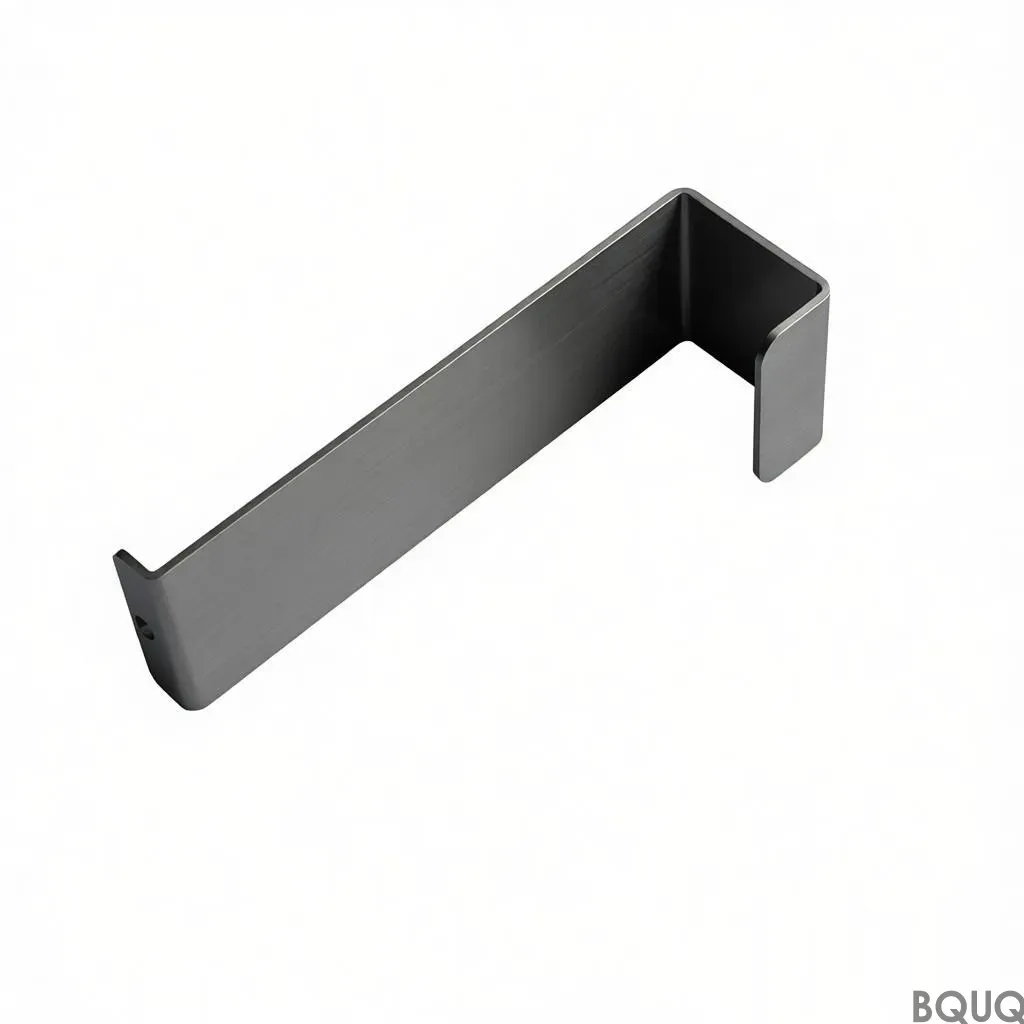
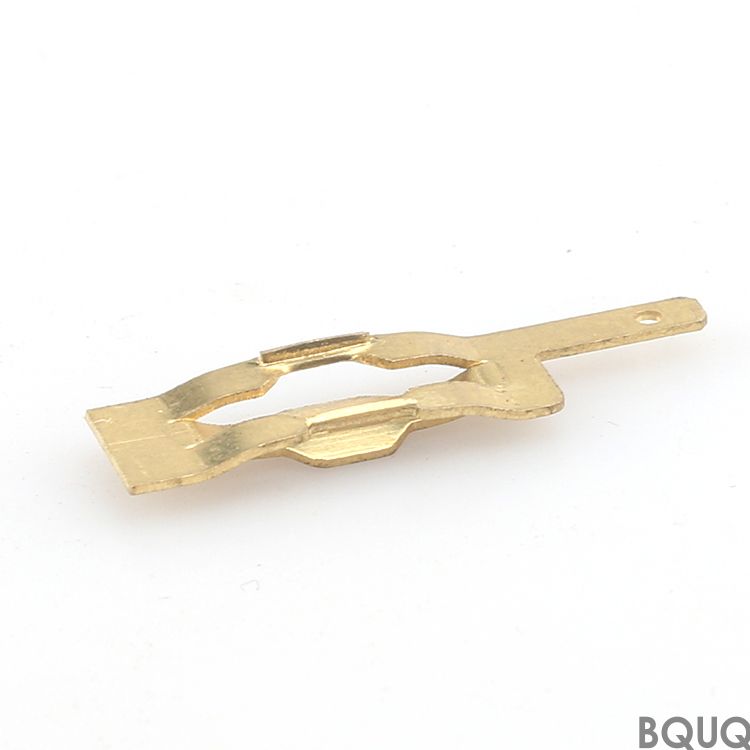
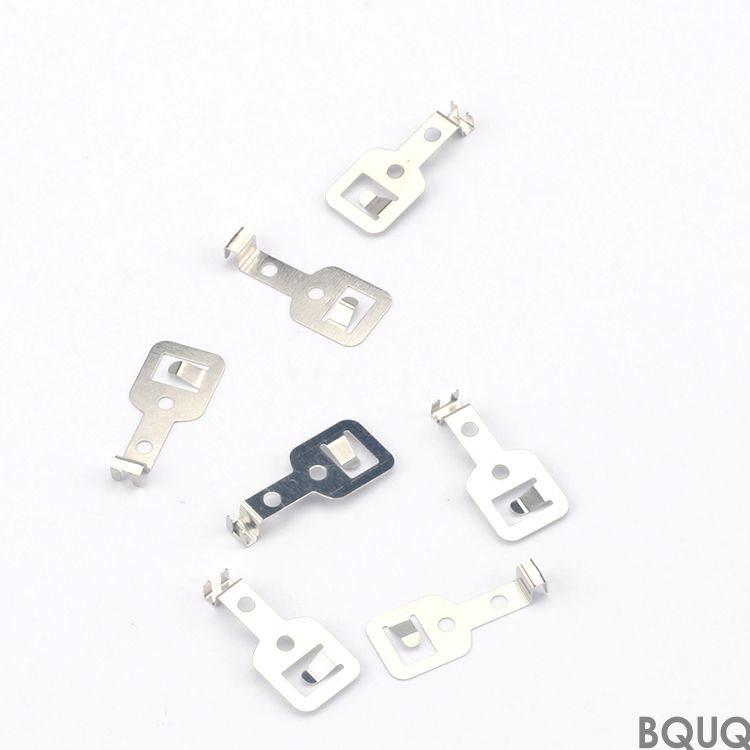
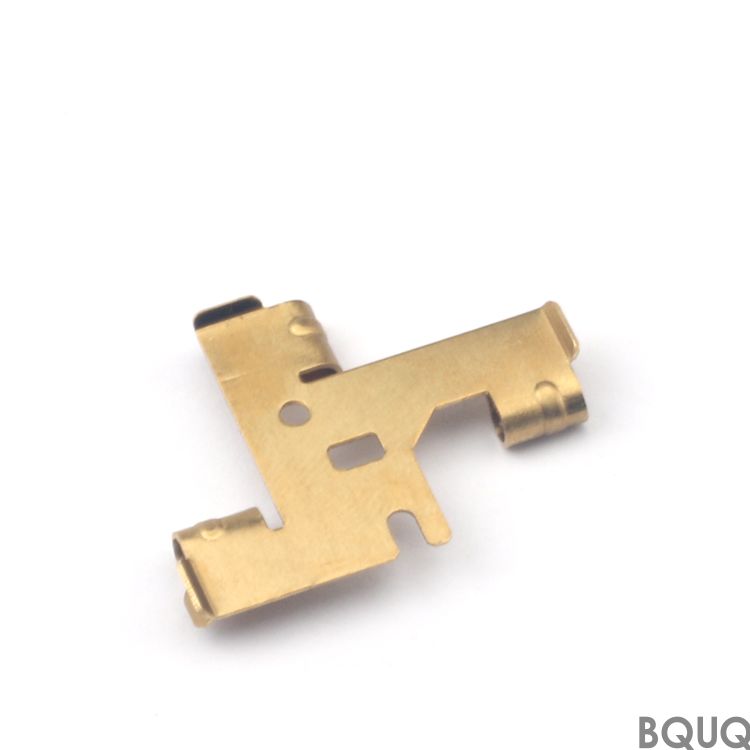
This is a family of stamped contact reeds for electromagnetic relays, automotive flashers, and industrial switching modules. Each reed is produced on high-speed Bruderer presses (25–40 tons) with carbide progressive dies, giving you a repeatable edge profile and zero burr on the contact face. The concrete benefit: consistent contact resistance below 15 mΩ across 100,000 cycles, with a flatness tolerance of ±0.005 mm and a surface finish of Ra 0.2 µm. You get a 7-day lead time from drawing approval to first article, and because we run them in strips or loose form, you can order exactly what your prototype needs — no MOQ.
Die Design That Controls Contact Gap Without Secondary Grinding
Our die stack uses a fixed-stripper design with a nitrogen gas spring system, holding the strip to within 0.003 mm of the die face at 400 strokes per minute. This matters because relay reeds live or die by their gap repeatability. A standard stamped reed can have a 0.05 mm gap shift after bending; ours stays within 0.01 mm. We achieve this by coining the contact bump in the same station as the form, not in a separate operation. The result is a reed you can drop into a relay assembly without manual adjustment — no secondary grinding, no sorting.
Materials and Heat Treatment We Use for Spring Memory
We stock five base materials for this collection: C5191 phosphor bronze (0.2–1.0 mm thick), C7521 nickel silver, 304 stainless steel, BeCu C17200, and 42Ni-6Cr Fe-Ni alloy for high-temperature relays. For silver contact tips, we weld or rivet AgSnO2 or AgCdO buttons before stamping. Heat treatment is done in a vacuum furnace at 320°C for bronze and 480°C for BeCu, giving a final hardness of 48–52 HRC on the spring arm and 85–90 HRB on the contact face. We control grain size to ASTM 6–8 so the reed takes a set without cracking after 10 million actuations.
Surface Finish and Burr Control on the Contact Face
The contact face is the only area that touches the mating terminal, so we keep it burr-free below 0.01 mm. After stamping, we tumble the reeds in a ceramic media for 20 minutes to remove micro-edges, then pass them through a high-pressure air wash. If your drawing calls for a gold flash (0.1–0.3 µm) or nickel underplate (1–3 µm), we apply it by selective plating after tumbling — not before — so the plating does not crack at the bend radius. Surface finish on the contact area is Ra 0.2 µm, and on the spring arm we hold Ra 0.8 µm to reduce stress concentration.
Inspection Before Every Shipment: What We Measure on 100% of Parts
We do not sample — we measure 100% of reeds before packing. Using a Keyence IM-8000 optical comparator, we check the contact gap, overall length, and bend angle on every part. For electrical performance, we use a four-wire micro-ohmmeter to verify contact resistance below 15 mΩ on a random 5% sample. We also run a 50-cycle actuation test on a sample batch to confirm no sticking or bounce beyond 0.5 ms. Every shipment includes a dimensional report with Cpk values — you will see a Cpk of 1.67 or higher on the critical gap dimension before we even put the parts in the box.
Dimensional Specs for the Precision Stamped Relay Contact Reeds Collection
Parameter
Value
Notes
Base materials
C5191, C7521, 304 SS, BeCu C17200, Fe-Ni 42
Strip thickness 0.2–1.0 mm
Contact tip options
AgSnO2, AgCdO, AgNi, gold flash
Weld or rivet before stamping
Hardness (spring arm)
48–52 HRC (BeCu), 85–90 HRB (bronze)
Vacuum heat treated, grain ASTM 6–8
Flatness tolerance
±0.005 mm
On the contact mounting surface
Contact gap repeatability
±0.010 mm
Across a single strip and batch to batch
Surface finish (contact face)
Ra 0.2 µm
Burr < 0.01 mm after tumbling
Runout (bend to tip)
≤ 0.02 mm
Measured at 10 mm from bend
Contact resistance
≤ 15 mΩ
Four-wire test at 100 mA
Lead time (first article)
7 days from drawing approval
Production strips 3–5 days after
MOQ
No minimum
Prototype quantities accepted
Why We Do Not Charge for a Sample Tooling Modification
Most stamping shops in China will tell you that a relay reed die is too small to modify cheaply. We disagree. Because our progressive dies are built in-house with modular inserts, we can change a bend radius or contact tip diameter by swapping only the affected station — not the whole die. This means your first prototype run of 200 pieces costs you just the material and our machine time, not a new die fee. If you later want a different material, we adjust the heat treatment cycle at no extra charge as long as the thickness stays the same.
Packing and Delivery: Strips, Loose Parts, or Tape-and-Reel
You can receive these reeds in three formats. Strips (up to 200 mm long) keep the pitch intact for automated relay assembly; loose parts are tumbled and bagged in anti-static pouches; tape-and-reel is available for surface-mount relay housings. For loose parts, we use a vibratory bowl feeder to orient them into a single row before counting, so you get exactly 1,000 or 10,000 per bag — no short counts. Air shipment from Dongguan to Los Angeles takes 3 days, sea freight 12 days. We pack in moisture-barrier bags with desiccant if the reeds have a silver or gold contact finish.
What is your MOQ for a custom relay contact reed?
No MOQ — we accept prototype orders of 200 pieces and production orders from 1,000 to 5 million, all from the same die set.
Can you change the contact tip material after I send a drawing?
Yes, we can swap between AgSnO2, AgCdO, or gold flash without re-cutting the die, as long as the tip diameter stays within the same station size.
How do you verify gap repeatability on production batches?
We use a Keyence IM-8000 to measure 100% of parts, and we report Cpk ≥ 1.67 on the contact gap dimension in the shipment documentation.
What is the fastest lead time if I approve a drawing today?
First article in 7 days, production strips in 10 days, and air freight to your door in 13 days total from Dongguan.
If You Are Designing a New Relay, Read These First
Before you finalize the reed geometry, check our CNC cutting tool selection guide to understand how the stamping die edges interact with the contact material. Also review our CNC machining tolerances guide to see which tolerances are economical for stamped parts versus machined ones — you might find that a ±0.01 mm gap is enough for your application, which will cut your cost further.
Request a Firm Quote Within 12 Hours
Send your drawing (STEP, DXF, or PDF) to sc@bquq.com. We will reply with a firm quote within 12 hours — not a range, not a “starting from” price. The quote includes tooling cost (if any), piece price at your quantity, and the exact lead time. You can also reach us on WhatsApp at +86 13713157787 for a quick discussion about your relay design. We are a precision manufacturing company made in China, and we have been stamping relay contacts for 20 years — bring us your toughest gap requirement.