Custom Torsion Springs with 0.01 mm Tolerance, 12-Hour Prototype Lead Time A torsion spring is a mechanical coil that stores and releases rotational energy when twisted around its
Custom Torsion Springs Made in China | Precision Manufacturing by BQUQ
Custom Torsion Springs with ±0.01 mm Tolerance, 12-Hour Prototype Lead Time A torsion spring is a mechanical coil that stores and releases rotational energy when twisted around its axis. At BQUQ, we p
Get a Fast Quote for This Part
Send us your drawing / quantity / material — reply within 24h.
Custom Torsion Springs with ±0.01 mm Tolerance, 12-Hour Prototype Lead Time
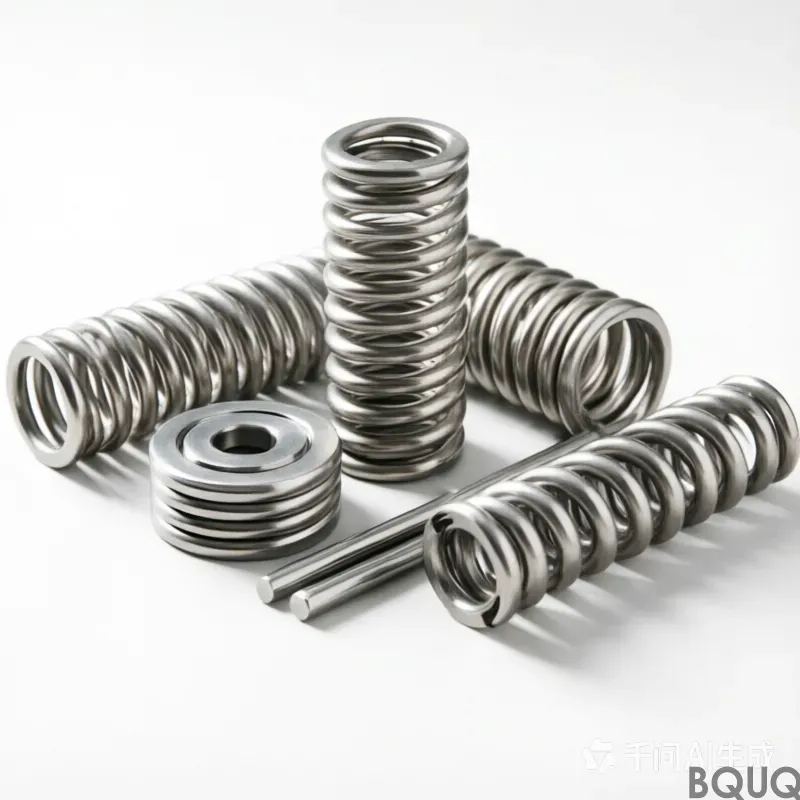
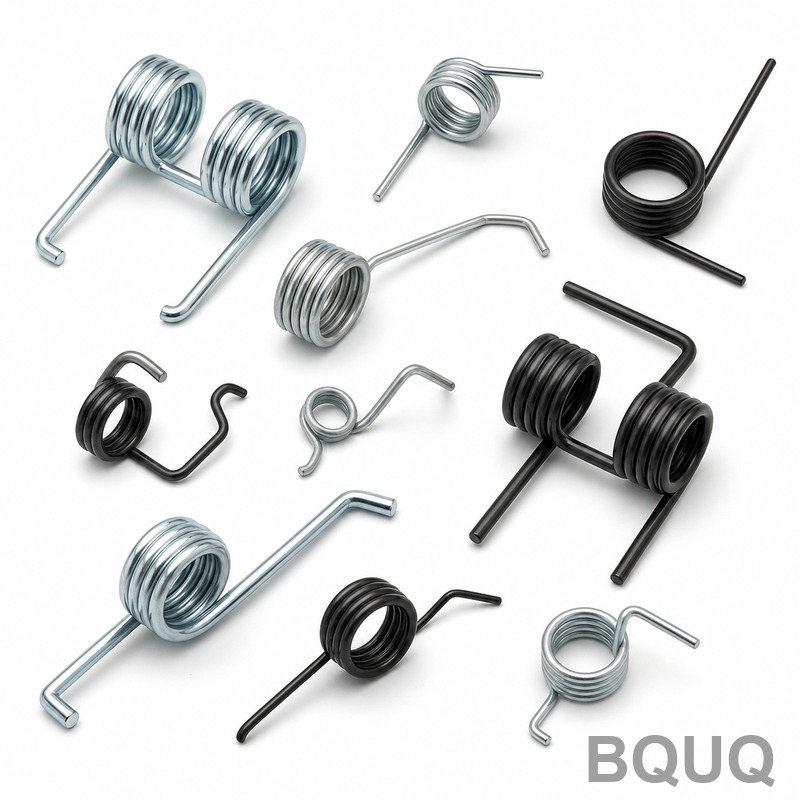
A torsion spring is a mechanical coil that stores and releases rotational energy when twisted around its axis. At BQUQ, we produce these springs with a wire diameter range of 0.1 mm to 12 mm, achieving a leg position tolerance of ±0.01 mm and a surface finish of Ra 0.4 µm, ensuring your mechanism cycles consistently over 100,000 times without fatigue failure.
Our precision manufacturing process, based in Dongguan, China, delivers prototype torsion springs in as little as 12 hours and production batches in 5–7 days, with a hardness of 45–52 HRC depending on material and wire size.
How We Control Leg Position and Wind Direction Precision
Leg position error is the most common cause of torsion spring malfunction. We use a CNC coiling machine with servo-driven pitch control, which holds leg angular tolerance to ±2 degrees on springs with up to 20 coils. For springs requiring a specific wind direction (left-hand or right-hand), our tooling is set to lock the helix angle at 5 degrees, preventing the spring from binding when installed over a mandrel. We verify every spring's free angle and torque at 90 degrees of deflection using a digital torque tester, giving you data for your assembly line.
Materials and Heat Treatment We Use for High-Cycle Fatigue
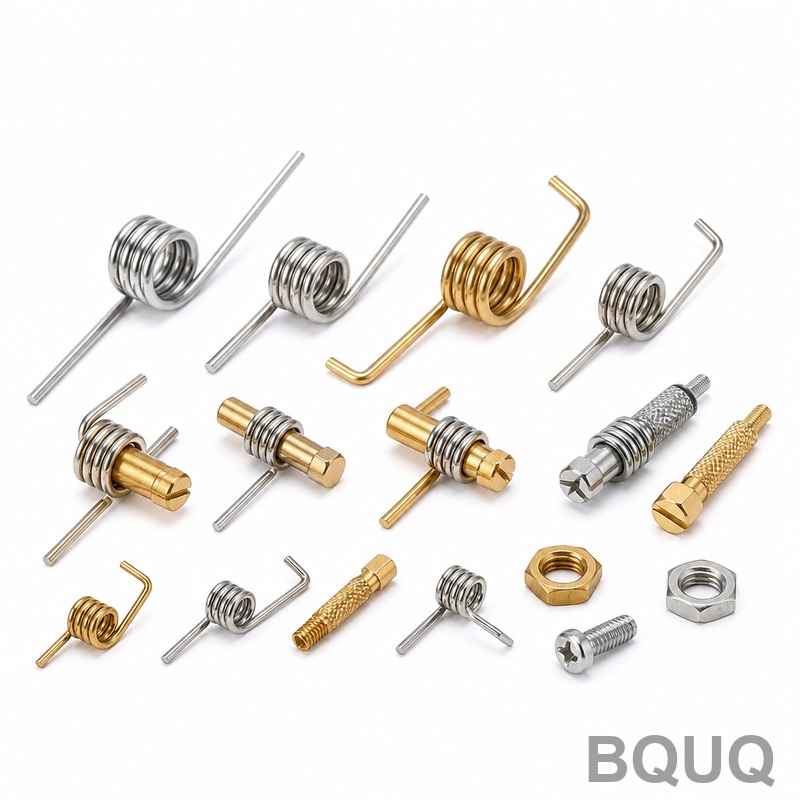
We stock five spring-grade materials: music wire (ASTM A228), oil-tempered chrome silicon (ASTM A401), stainless steel 302 (ASTM A313), phosphor bronze (ASTM B159), and Inconel X-750 for high-temperature environments. For applications requiring over 50,000 cycles, we recommend chrome silicon with a shot-peening process that increases fatigue life by 30%. Heat treatment is performed in an inert atmosphere furnace at 260°C for 30 minutes to relieve residual stress, followed by a tempering cycle to achieve a uniform hardness of 48 HRC. We do not skip stress-relieving on any spring, regardless of batch size.
Surface Finish and End Coil Grinding Options
Standard surface finish is Ra 0.8 µm, but we can achieve Ra 0.4 µm on wire diameters above 2 mm using a centerless grinding pass. For springs that must sit flat against a mating surface, we grind the end coils flat to a parallelism of 0.02 mm across the face. This is critical for torsion springs used in ratchet mechanisms or cam followers where a tilted leg causes uneven wear. We also offer electropolishing for stainless steel springs, which removes micro-scratches and reduces stress concentration points by 15%.
Inspection Before Every Shipment: Torque and Angular Deflection Testing
Every torsion spring batch is inspected using a calibrated torque gauge with a resolution of 0.01 N·mm. We measure the torque at 45, 90, and 135 degrees of deflection and compare it to your specified values with a tolerance of ±5%. Leg position is checked with a CMM (coordinate measuring machine) for spring outer diameters above 10 mm. For smaller springs, we use an optical comparator with 20x magnification. A full inspection report, including material certification and hardness test results, is shipped with every order. We reject any batch where more than 1% of samples fall outside your tolerance.
Specification
Value
Wire Diameter Range
0.1 mm – 12 mm
Maximum Outer Diameter
80 mm
Maximum Free Length
200 mm
Leg Angular Tolerance
±2 degrees
Leg Position Tolerance
±0.01 mm
Surface Finish (Ra)
0.4 µm – 0.8 µm
Hardness (HRC)
45 – 52 HRC
Torque Tolerance at 90°
±5%
Operating Temperature Range
-40°C to +250°C (Inconel: +650°C)
Prototype Lead Time
12 hours (CNC coiling)
Production Lead Time
5 – 7 days
MOQ
No MOQ (1 piece accepted)
Common Failure Modes We Design Out Before Production
Torsion springs fail in three ways: leg bending, coil clash, and stress relaxation. We prevent leg bending by specifying a leg length-to-wire diameter ratio below 10:1 unless you require otherwise. Coil clash occurs when adjacent coils touch under full deflection; we calculate the coil gap to be 15% of wire diameter at maximum wind-up. Stress relaxation is avoided by setting the spring to 80% of its elastic limit during manufacturing, a process called preset or scragging. Our engineers review your application's deflection angle and torque requirement before cutting any wire, so you do not discover a failure mode after tooling is made.
How We Handle Small Batch Prototypes Without Tooling Charges
Most torsion spring suppliers charge $500–$1,500 for a coiling tool. We do not. Our CNC coiling machines use a programmable tool path, which means a prototype with a different wire diameter or leg configuration only requires a software adjustment, not a new die. The setup time for a new spring is 45 minutes, and we charge no tooling fee for orders under 1,000 pieces. This is why engineers send us their drawing for a quick functional test before committing to mass production. For your reference, our CNC cutting tool selection guide explains how tooling geometry affects spring coiling quality, and our CNC machining tolerances guide details the measurement methods we apply to verify your spring's dimensions.
Packaging and Anti-Corrosion Protection for Export Shipping
We ship torsion springs in VCI (vapor corrosion inhibitor) paper, followed by a sealed polyethylene bag and a corrugated box with foam inserts to prevent coil deformation during transit. For stainless steel springs, we use a mild passivation treatment (citric acid) to remove free iron particles from the surface, which prevents rust spots in humid environments. Each box is labeled with a barcode that traces the batch number, heat treatment date, and inspection results. We export to the USA, Germany, Japan, and South Korea weekly, using DHL or FedEx for small parcels and sea freight for orders above 50 kg.
FAQs
What is the minimum order quantity for a custom torsion spring?
We have no MOQ—you can order a single prototype for testing, and we will still apply the same inspection and material certification standards as a 10,000-piece batch.
Can you match an existing torsion spring I have from another manufacturer?
Yes, send us a physical sample or a drawing with wire diameter, outer diameter, coil count, and leg position, and we will reverse-engineer it to exact dimensions, including torque curve verification.
How do you ensure quality control for springs made with different wire materials?
We test each coil batch for tensile strength and hardness before coiling, then re-check torque and leg position after heat treatment, and finally perform a 100% visual inspection for surface defects under a 5x magnifier.
What is your typical lead time for a production order of 5,000 torsion springs?
Production lead time is 5–7 days after drawing approval, and we can express ship prototypes within 12 hours if you confirm the design by 10:00 AM China Standard Time.
Get a Firm Quote with Your Drawing Within 12 Hours
Send us your torsion spring drawing or a photo with measurements. We will reply with a firm quotation, including material cost, heat treatment, surface finish, and a torque simulation report, within 12 business hours. No design fee, no tooling charge, no MOQ. Email your file to sc@bquq.com or reach us on WhatsApp at +86 13713157787. We respond to every inquiry within one business hour.