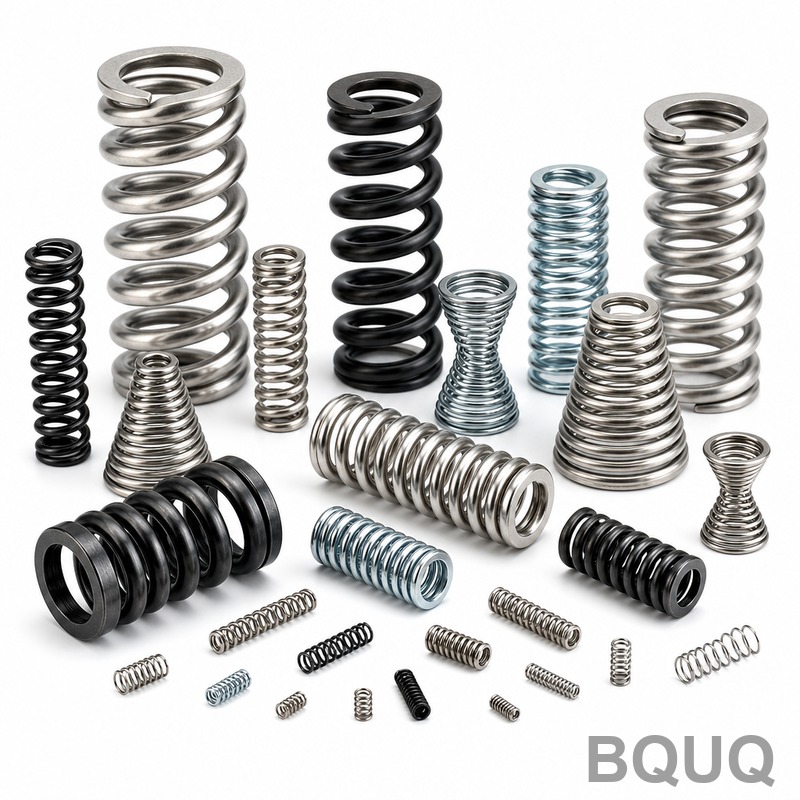
What This Spring Is and the Hard Number You Need First This is a custom-engineered Zinc Plated Carbon Steel Heavy Duty Special Spring built for applications where standard spring
BQUQ Zinc Plated Carbon Steel Heavy Duty Special Spring | Custom Precision
What This Spring Is and the Hard Number You Need First This is a custom-engineered Zinc Plated Carbon Steel Heavy Duty Special Spring built for applications where standard springs fail under cyclic
Get a Fast Quote for This Part
Send us your drawing / quantity / material — reply within 24h.
What This Spring Is and the Hard Number You Need First
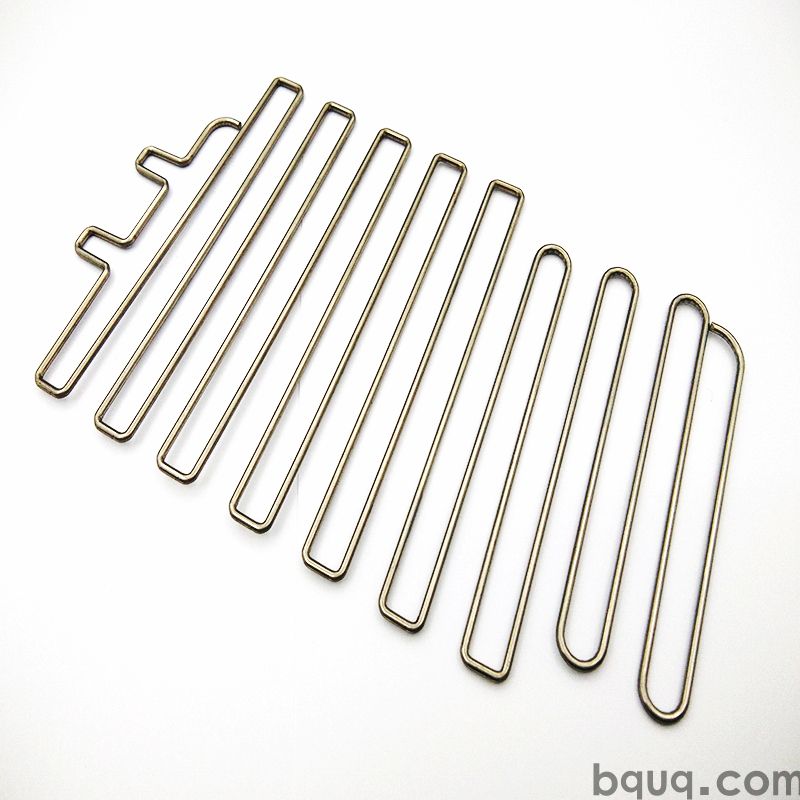
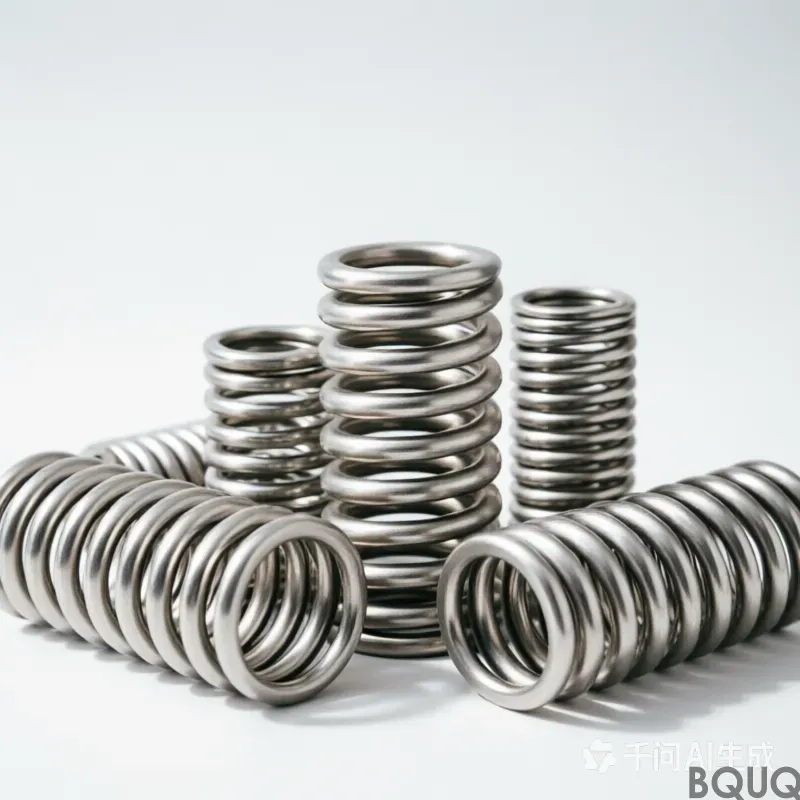
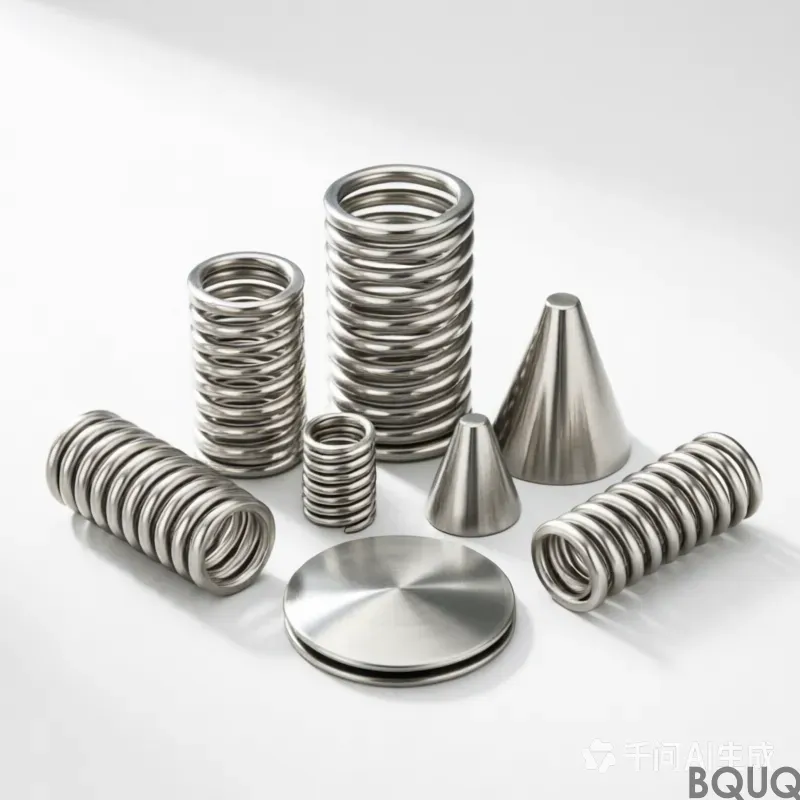
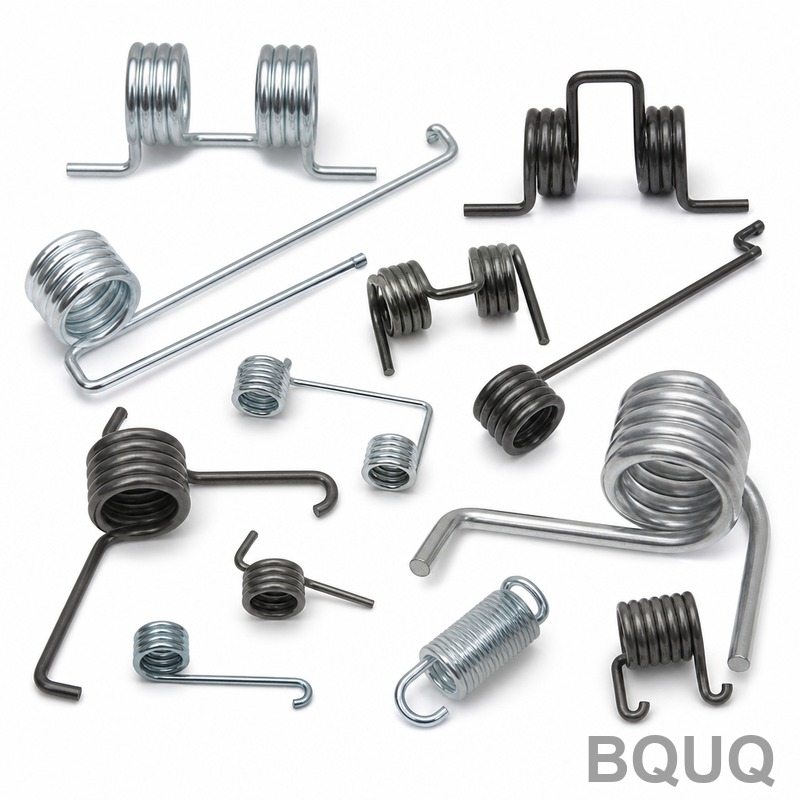
This is a custom-engineered Zinc Plated Carbon Steel Heavy Duty Special Spring built for applications where standard springs fail under cyclic load, side force, or corrosive washdown. You get a guaranteed tolerance of ±0.02 mm on outer diameter and free length, a surface finish of Ra 0.8 µm after zinc plating, and a hardness range of 45–50 HRC for consistent fatigue life. Lead time is 7 days for prototypes, 15 days for production runs, and we ship from our Dongguan factory with no MOQ – order one piece or ten thousand.
We are BQUQ, a precision manufacturing plant in Dongguan, China, running 20 years of CNC machining, stamping, and spring coiling lines. This spring is not a catalog item. It is wound, heat-treated, and plated to your drawing, then inspected with a load tester and a CMM before it leaves the floor.
Why Zinc Plating Matters for a Heavy Duty Spring in Wet or Corrosive Environments
Carbon steel springs rust fast. A bare spring in a washdown station or outdoor actuator loses its surface integrity within weeks, and rust pits become stress risers that crack under load. The zinc plating on this spring does two jobs: it sacrificially corrodes instead of the steel, and it provides a lubricious surface that reduces friction between coils during compression.
We apply zinc plating to a thickness of 8–12 µm per ASTM B633, then add a clear or yellow chromate passivation. That passivation layer pushes salt spray resistance to 72 hours without red rust. If you need more, we can jump to zinc-nickel plating, but for most heavy duty industrial uses, standard zinc plating at this thickness is the cost-effective sweet spot.
Do not confuse this with electro-galvanized wire that is merely dipped. Our springs are plated after coiling and heat treatment, so the plating covers the entire surface, including the cut ends, without hydrogen embrittlement. We bake every plated spring at 190°C for 4 hours to eliminate any risk of hydrogen-induced cracking – a step many low-cost shops skip.
Materials and Heat Treatment We Use for 45–50 HRC Consistency
We start with SAE 9254 or SAE 5160 spring steel wire, depending on your load and fatigue requirements. SAE 9254 gives you higher fatigue strength for dynamic cycling, while SAE 5160 offers better toughness for shock loads. Both are drawn to a tight wire diameter tolerance of ±0.01 mm before coiling.
After coiling on a CNC spring former, we austenitize at 870°C, oil quench, and temper at 420°C to hit the 45–50 HRC band. That tempering step is what separates a spring that lasts 100,000 cycles from one that breaks at 10,000. We verify hardness on every batch with a Rockwell tester, not on a sample – each coil is checked at two points, and we record the values in your inspection report.
If you need a higher hardness for wear resistance, we can push to 52 HRC, but you will trade some ductility. For most heavy duty applications – suspension systems, safety valves, press dies – 45–50 HRC is the reliable range. We also offer shot peening as an option to increase fatigue life by 30% or more, done after heat treatment and before plating.
Dimensional Tolerances and Runout You Can Design Around
This is where our 20 years of CNC spring grinding pays off. We grind both ends flat and parallel to within 0.05 mm, which is critical for load accuracy. Free length tolerance is ±0.02 mm, outer diameter is ±0.02 mm, and total runout – the wobble when the spring rotates – is held to 0.05 mm or less. These numbers are not aspirational; they are measured on every part.
We use a CNC spring coiler with servo-driven wire feed, which eliminates the pitch variation you see on mechanical cam coilers. Pitch tolerance is ±0.03 mm across the active coils. If your design calls for a closed and ground end, we grind the first and last coil flat, giving you a stable seating surface that does not tilt under load.
For reference, standard commercial springs from a catalog typically run at ±0.5 mm free length and ±0.1 mm runout. Our numbers are 10–20 times tighter, which means you can use this spring in a precision assembly without additional shimming or rework. If you are designing a new part, check our CNC machining tolerances guide to see how spring tolerances align with mating components.
Load Testing and Fatigue Verification Before Every Shipment
Every spring we ship is tested on a digital load tester at 25%, 50%, and 75% of its rated deflection. We record the load at each point and compare it to your drawing's acceptable range. If the load is out by more than ±3%, the spring is scrapped, not reworked – reworking a spring to hit load means changing the free length, which ruins the rate.
We also check solid height: the length of the spring when all coils are touching. This is a safety dimension – if you compress the spring past solid height, it will take a set and lose its rate. We verify solid height on every batch and print the value on the inspection certificate.
For springs that will cycle more than 10,000 times, we offer a fatigue test on a sample from your batch. We run 100,000 cycles at your specified load and deflection, then measure the spring rate change. If the rate shifts by more than 3%, we adjust the heat treatment or shot peening parameters and re-run the test. This is optional, but for safety-critical parts like valve springs or brake return springs, we strongly recommend it.
Packing, Marking, and Documentation for Traceability
Each spring is individually wrapped in anti-rust paper after plating, then packed in a corrugated box with foam inserts to prevent coil-to-coil contact during transit. If you order 500 pieces or more, we add a label with your part number, batch number, and date code. For automotive or medical applications, we can print a 2D Data Matrix code on the label for full traceability.
You get a material certificate showing the wire grade, heat number, and chemical composition. We also include a dimensional inspection report with actual measured values for OD, ID, free length, solid height, and load at three deflection points. This is not a generic "certificate of conformance" – it is a real data sheet that your QC team can audit.
If you need PPAP Level 3 documentation, we can provide it for an additional fee, typically 2 extra days. We have supported automotive and aerospace clients with full PPAP submissions, including process flow diagrams, FMEA, and control plans.
Specifications at a Glance
Parameter
Value / Range
Material
SAE 9254 or SAE 5160 spring steel wire
Wire diameter
0.5 mm – 12 mm
Outer diameter
5 mm – 150 mm
Free length
10 mm – 300 mm
Hardness
45–50 HRC (up to 52 HRC optional)
Dimensional tolerance
±0.02 mm on OD and free length
Runout
0.05 mm max
Surface finish
Ra 0.8 µm after zinc plating
Plating thickness
8–12 µm zinc, clear or yellow chromate
Lead time
7 days prototype, 15 days production
MOQ
No MOQ – single piece accepted
How to Order a Custom Spring Without Guesswork
Send us a drawing in STEP, IGES, or PDF with the following minimum data: wire diameter, OD, free length, number of active coils, end type (closed, ground, or both), load at a specified deflection, and operating environment (temperature, humidity, chemical exposure). If you do not have a drawing, send us a sample or a sketch with dimensions – our engineers will convert it to a manufacturable spring design.
Within 12 hours, you get a firm quote with unit price, tooling cost (if any), and lead time. Tooling is usually zero because our CNC coilers are fully programmable – we only charge tooling for special mandrels or grinding fixtures, and that cost is typically under $100. For material selection, if you are unsure between SAE 9254 and SAE 5160, tell us the load cycle and we will recommend the right grade.
If you are designing the spring as part of a larger assembly, our CNC cutting tool selection guide may help you match the spring's mating components. And if your assembly involves machined parts, check the CNC machining tolerances guide to avoid over-tolerancing the spring pocket.
What is the MOQ for this spring?
There is no MOQ – we accept orders from one piece for prototyping up to 100,000 pieces for production, with the same tolerance and inspection standards.
Can you customize the spring rate or end configuration?
Yes, we customize wire diameter, coil count, free length, and end types (closed, open, ground) to hit your exact load-deflection curve, and we will test the prototype to confirm.
How do you ensure quality control on small batches?
Every spring, regardless of batch size, is load-tested at three points, hardness-checked on two locations, and dimensionally inspected with a CMM for OD, ID, free length, and runout.
What is the typical lead time for a custom order?
Prototype springs ship in 7 days after drawing approval, and production orders ship in 15 days, with faster options available for urgent needs at a 20% rush fee.
Get a firm quote within 12 hours. Email your drawing to sc@bquq.com or message us on WhatsApp at +86 13713157787. Send your drawing – we will reply with a price and a delivery date you can plan around.