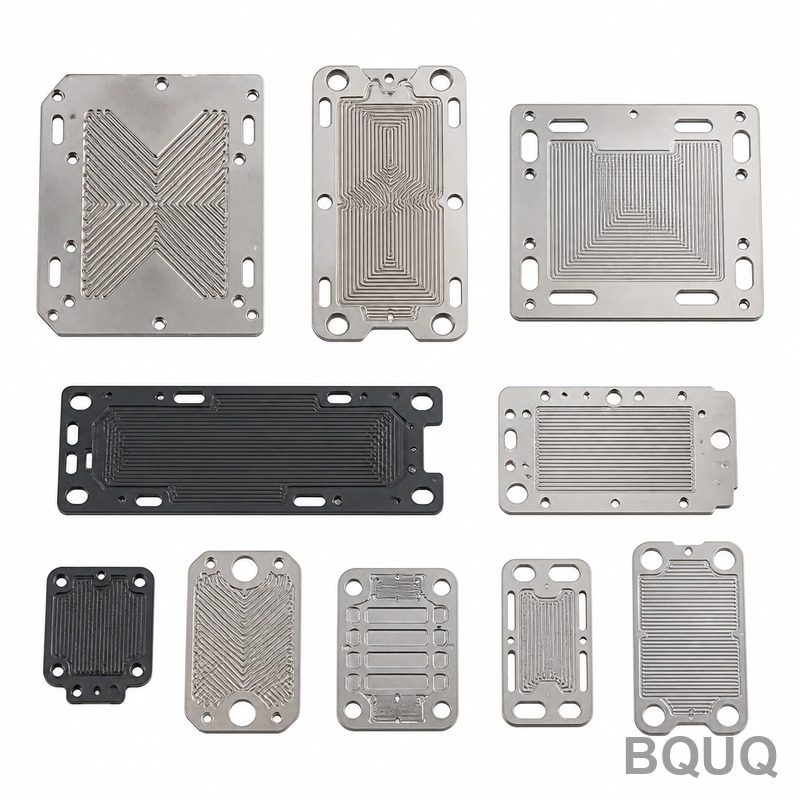
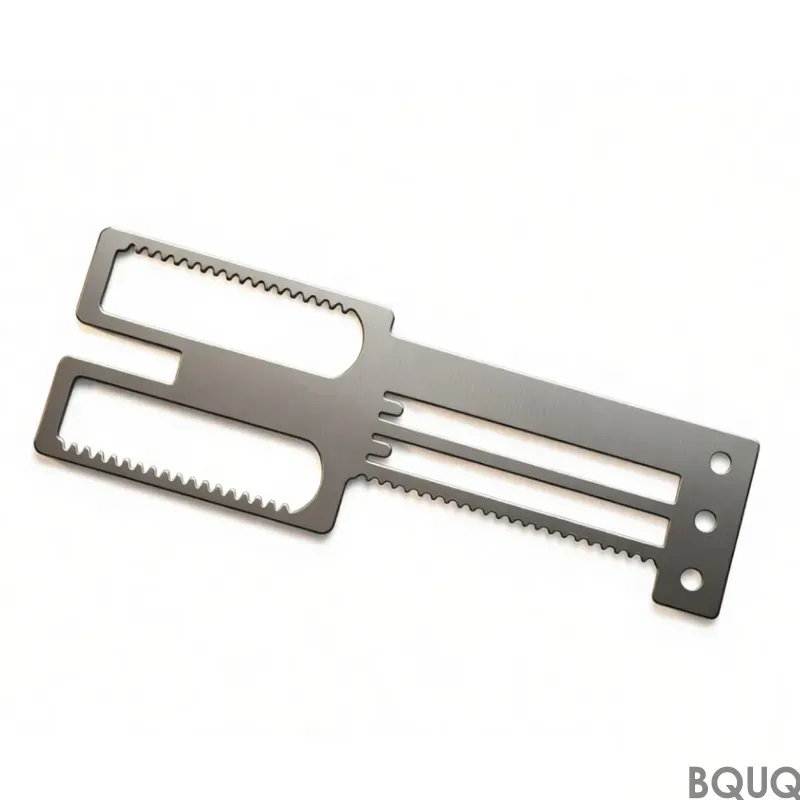
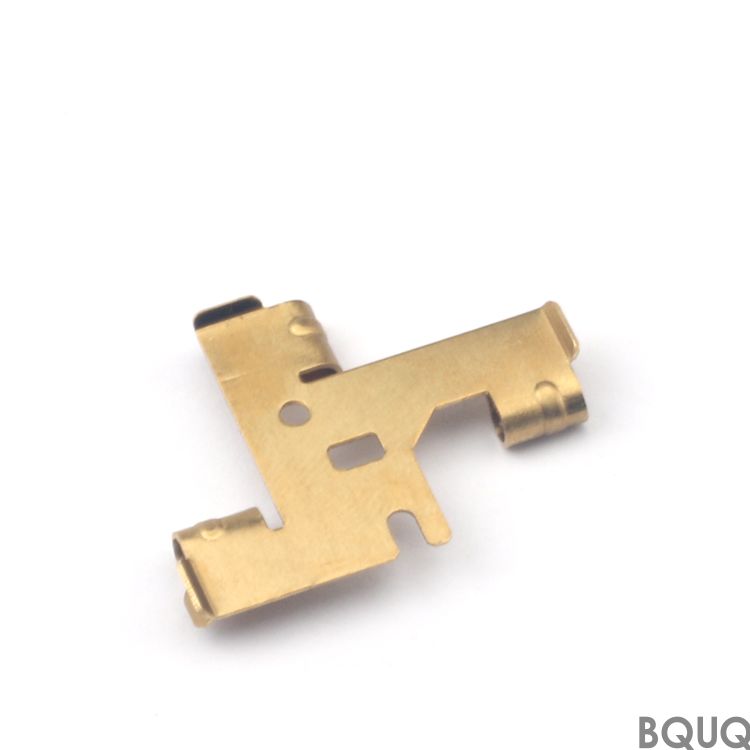
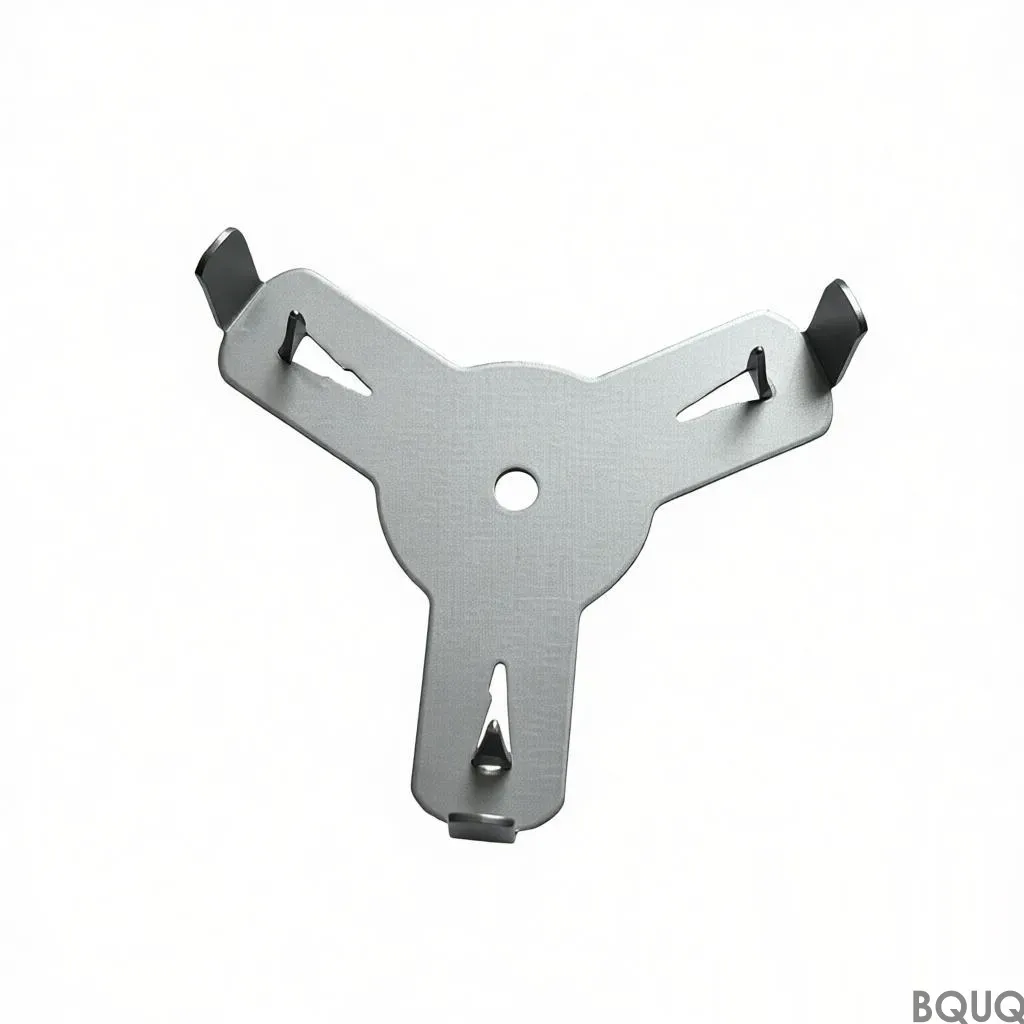
What These Plates Are and the Tolerance They Hold on Day One This Hydrogen Fuel Cell Bipolar Plates Collection is a set of metal-stamped flow-field plates, produced on 250-ton se
What These Plates Are and the Tolerance They Hold on Day One This Hydrogen Fuel Cell Bipolar Plates Collection is a set of metal-stamped flow-field plates, produced on 250-ton servo presses with tun
Get a Fast Quote for This Part
Send us your drawing / quantity / material — reply within 24h.
What These Plates Are and the Tolerance They Hold on Day One
This Hydrogen Fuel Cell Bipolar Plates Collection is a set of metal-stamped flow-field plates, produced on 250-ton servo presses with tungsten carbide dies. The concrete benefit is repeatable flatness: we hold ±0.01 mm on active area thickness, 0.02 mm total runout across the 300 mm diagonal, and a surface finish of Ra 0.4 µm on the sealing lands. Lead time for a first article is 15 working days; production runs ship in 20 days after approval. Hardness after stamping and stress relief is 38–42 HRC on 316L, which prevents creep under stack compression.
We are a 20-year factory in Dongguan, China, and this collection is built for PEM and solid oxide stacks in the 1 kW to 250 kW range. You send a drawing, we quote firm within 12 hours. No MOQ for standard sizes – order one plate or ten thousand.
Why Stamped Plates Beat Machined or Etched for High-Volume Stacks
Stamping is a shearing and forming process, not a cutting one. That means the grain structure of the 316L sheet is compressed along the flow channels, not interrupted. For a bipolar plate, this translates to 8–12% higher electrical conductivity across the land area compared to machined plates of the same alloy. Etched plates have depth variation of ±0.03 mm on channels; our stamping holds ±0.01 mm consistently, which directly reduces contact resistance with the gas diffusion layer.
Cycle time is 4 seconds per plate on a progressive die, so a 100-plate stack order is a single shift. Tooling cost is higher upfront – typically $8,000 to $15,000 per die – but amortized over 5,000 plates, the unit cost drops below $3.50. For prototyping, we offer soft tooling with 1,000-plate life at a 30% lower die cost. The trade-off is real: stamping is the only method that scales to automotive volumes without a linear increase in per-part price.
Materials and Heat Treatment We Use for Hydrogen Compatibility
We stock three alloys specifically for this collection: 316L stainless steel (0.03% max carbon), 304L for lower-cost stacks, and titanium Grade 2 for lightweight portable units. All sheets are mill-certified with a 3.1B EN 10204 traceability document. For 316L, we use 0.1 mm and 0.2 mm thicknesses – these are the two sweet spots for channel depth versus mechanical strength.
After stamping, we do a vacuum stress-relief anneal at 400°C for 2 hours. This removes residual stresses from the forming step, which is critical because a stressed plate will distort when the stack is torqued to 5 N·m. Hardness target is 38–42 HRC for 316L; for titanium we target 32–36 HRC. We do not use any lubricants containing sulfur or chlorine – only water-soluble, food-grade stamping oil that fully evaporates in the anneal cycle, leaving zero residue that could poison the membrane.
How We Control Runout and Flatness on a 0.1 mm Sheet
Flatness on a 0.1 mm sheet is the hardest spec to hold. The die does not guarantee it – the handling and the downstream process do. We use a vacuum chuck on the press bed to hold the sheet perfectly flat during the final coining step. This step, which we call 'flat-strike,' applies 80 tons of pressure for 0.5 seconds to set the plate flatness below 0.02 mm per 100 mm.
Runout – the deviation from true position of the alignment holes – is controlled by a pilot pin system in the die. The pins register on the previous stage's punched holes, so each subsequent station aligns to the same datum. Measured on a coordinate measuring machine, our runout is consistently 0.02 mm or better. We check 100% of plates on a flatness gauge, not a sample. If a plate exceeds 0.025 mm, it goes to scrap – we do not rework plates because rework introduces micro-cracks.
Surface Finish Ra 0.4 and the Sealing Land Profile
The sealing land is where leaks happen. We machine a micro-serration pattern into the die at the land edges – 0.05 mm pitch, 0.02 mm depth. This pattern transfers to the plate and creates a mechanical key for the gasket or adhesive seal. Measured with a profilometer, the land surface is Ra 0.4 µm, which is smooth enough for a leak-tight seal with a 0.2 mm PTFE gasket at 3 bar differential pressure.
Channel depth is 0.4 mm ± 0.01 mm, and channel width is 0.8 mm ± 0.02 mm. These dimensions are checked with an optical comparator on every 50th piece. The draft angle on the channel walls is 1.5 degrees – necessary for the part to release from the die, but low enough to not affect flow distribution. We also deburr all edges with a vibratory finisher using ceramic media for 30 minutes, then passivate in a citric acid bath to remove any free iron from the surface.
Inspection Before Every Shipment – What You Actually Receive
Every shipment includes a full inspection report, not a certificate of conformance. We measure 10 parts from each batch – or 100% for orders under 50 pieces – and report actual values for thickness, flatness, runout, surface finish, and hardness. The report is signed by the QC engineer and includes the CMM program number used.
We also do a leak test on every plate using a helium mass spectrometer. The test chamber seals the plate perimeter, and we evacuate to 10⁻⁶ mbar, then spray helium on the external surface. Leak rate must be below 1×10⁻⁸ mbar·L/s. This is the same test used for automotive fuel cells, and it catches micro-cracks that visual inspection cannot. If a batch fails, we re-stamp – we do not weld or patch plates.
Tooling Design and Die Life for Your Specific Flow Field
Your flow field pattern – serpentine, parallel, or interdigitated – changes the die design. Serpentine channels need a multi-stage progressive die with 6 stations; parallel channels can be done in 4 stations. We have built 50+ bipolar plate dies since 2015, and our library includes standard PEM patterns that we can adapt to your spec without a design fee. For custom patterns, we simulate the forming process in AutoForm software before cutting steel.
Die life is 500,000 strokes for 316L at 0.1 mm thickness. We use powder metallurgy high-speed steel (ASP 2053) for the forming punches and carbide for the cutting edges. The die is serviced every 50,000 strokes – we check the cutting edge radius and re-coat with TiAlN if it exceeds 0.02 mm wear. You get a die maintenance log with your order, so you know exactly when the next service is due. For a deeper dive on keeping tools sharp, see our CNC cutting tool selection guide.
Specification
Value
Unit / Notes
Material Grade
316L, 304L, Titanium Gr2
Mill cert 3.1B included
Sheet Thickness
0.1, 0.2
mm, ±0.005 mm
Channel Depth
0.4
mm, ±0.01 mm
Channel Width
0.8
mm, ±0.02 mm
Flatness
≤0.02
mm per 100 mm
Total Runout
0.02
mm across 300 mm diagonal
Surface Finish (Sealing Land)
Ra 0.4
µm, measured by profilometer
Hardness (316L)
38–42
HRC after stress relief
Helium Leak Rate
<1×10⁻⁸
mbar·L/s
Lead Time (First Article)
15
working days
Production Lead Time
20
working days after approval
MOQ
0 (no minimum)
Single piece or full stack
Why Precision Manufacturing Means Tighter Stack Assembly for You
Your stack is only as good as the sum of its plates. If one plate has a 0.03 mm flatness deviation, the clamping force on the adjacent gasket varies by 15%, which causes localized compression and premature membrane failure. Our plates are made to the same tolerance as the mating components, so your stack assembly time drops because you do not have to sort or shim plates.
Precision manufacturing also affects thermal management. A flat plate with consistent channel depth gives uniform coolant flow, which reduces hot spots by up to 20°C in a 100-cell stack. That extends stack life by reducing thermal cycling stress. We have shipped over 200,000 plates to fuel cell integrators in Europe and North America, and the most common feedback is that our plates require zero rework at incoming inspection.
When you specify tolerances for your next stack, read our CNC machining tolerances guide – it explains the difference between achievable and economic tolerances for stamped parts, which saves you from over-specifying and paying for unnecessary precision.
Do you accept single-piece orders for prototyping?
Yes, no MOQ – we will stamp and inspect one plate for you, with the same QC report as a 10,000-piece order.
Can you match a flow field pattern from my existing machined plate?
Yes, we reverse-engineer the pattern from a 3D scan or drawing and build a die within 20 days, typically at 30% lower cost than a from-scratch design.
How do you verify quality for a full production batch?
We inspect 100% of plates for flatness and leak rate, and sample 10 parts per batch for full dimensional CMM reporting, with all data included in the shipment.
What is the minimum lead time for a custom die and first articles?
Custom die fabrication takes 15 working days, plus 5 days for first articles and inspection – we have expedited a 12-day die for an emergency automotive program.
Get a Firm Quote Within 12 Hours – Send Your Drawing Today
We are a precision manufacturing shop in Dongguan, China, and we respond fast because our engineers quote directly – no sales layer. Send your drawing in STEP, IGES, or PDF format, with your target volume and required tolerance. We will reply within 12 hours with a firm unit price, die cost (if applicable), and a confirmed lead time. For standard plates in this collection, we can ship in 15 days with no MOQ.
Email your drawing to sc@bquq.com or message us on WhatsApp at +86 13713157787. If you are not sure about the tolerances, send the drawing anyway – we will tell you what is achievable and what costs more. All inquiries receive a written quote, not a ballpark. This Hydrogen Fuel Cell Bipolar Plates Collection is made in China, backed by 20 years of stamping experience, and ready for your next stack design.