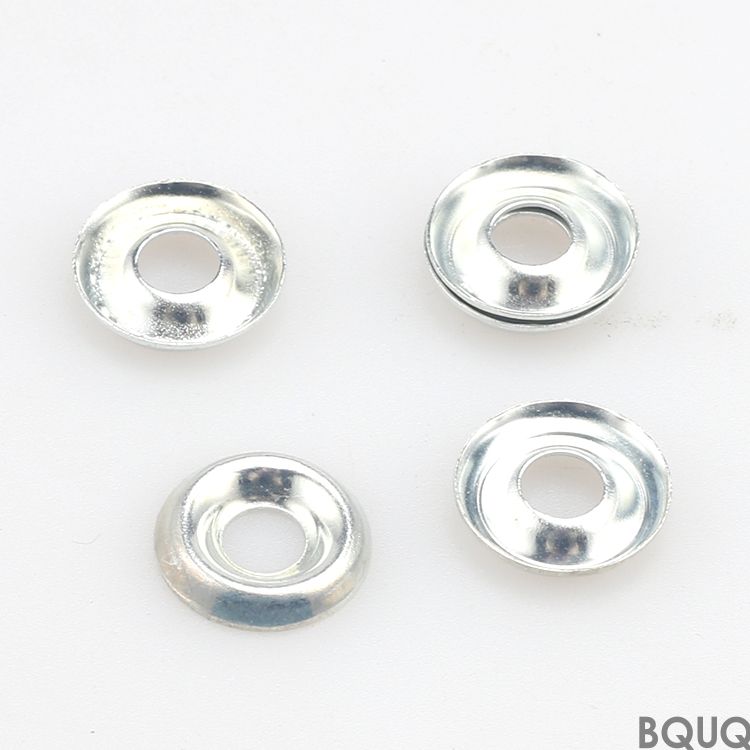
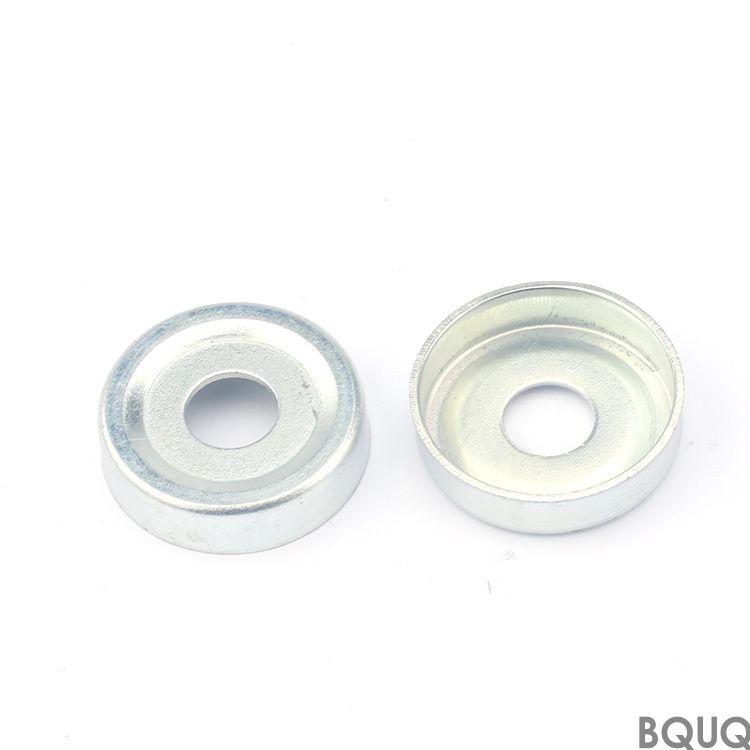
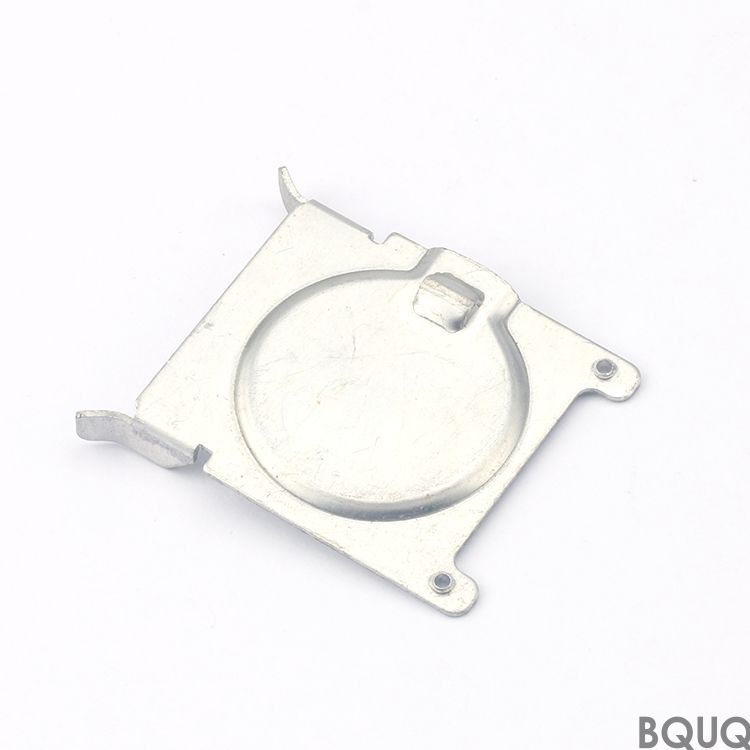
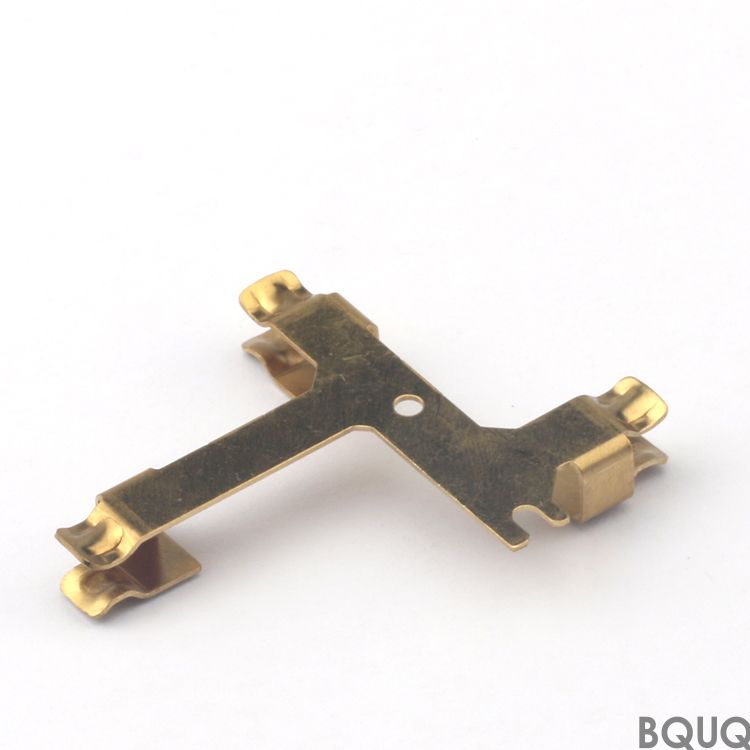
These are nickel plated spring steel stamping parts for switches — contact springs, snap domes, and terminal clips that must return to shape after millions of cycles. We hold stamp
BQUQ Nickel Plated Spring Steel Stamping Parts For Switches | Precision Made in China
These are nickel plated spring steel stamping parts for switches — contact springs, snap domes, and terminal clips that must return to shape after millions of cycles. We hold stamping tolerance at ±0.
Get a Fast Quote for This Part
Send us your drawing / quantity / material — reply within 24h.
These are nickel plated spring steel stamping parts for switches — contact springs, snap domes, and terminal clips that must return to shape after millions of cycles. We hold stamping tolerance at ±0.01 mm, flatness within 0.02 mm, and deliver production orders in 7 days from our Dongguan factory. Hardness is specified at 48-52 HRC after heat treatment, with nickel plating thickness of 3-5 microns to resist oxidation and reduce contact resistance.
How We Prevent Loss of Spring Force After Nickel Plating
Nickel plating on spring steel is tricky. If you plate before heat treatment, hydrogen embrittlement cracks the part. If you plate after, the acid bath can strip the oxide layer and cause delayed fracture. We use a two-step process: stamp and heat treat first, then flash plate with a low-hydrogen nickel bath at 45°C. This keeps the spring's elastic limit above 90% of its pre-plating value. For every batch, we test 5 samples on a compression fatigue rig — 1 million cycles at 80% of rated deflection. No cracks, no load loss.
Stamping Dies We Use for Nickel Plated Switch Parts
Switch parts are small — most are under 25 mm in diameter. We build progressive dies with carbide inserts, not tool steel. Carbide holds a sharp edge for 500,000 strokes before regrinding, which means your part's burr height stays under 0.03 mm across the entire run. For snap domes, we use a coining step to control the actuation force within ±10 grams. Die maintenance is logged daily; every 100,000 strokes we check clearance and adjust the stripper pressure. This is the same discipline we apply to all our precision stamping work.
Material and Heat Treatment for Nickel Plated Spring Steel
We use C75S (1.1248) or SK5 high-carbon spring steel, cold-rolled to a thickness between 0.08 mm and 2.0 mm. After stamping, parts are austenitized at 820°C, oil quenched, then tempered at 320°C to reach 48-52 HRC. This gives a yield strength of 1,450 MPa. Nickel plating is applied with a matte finish — bright nickel looks nice but adds internal stress. The plating thickness is 3-5 microns, measured by X-ray fluorescence on each batch. For critical switch contacts, we can add a gold flash over nickel to bring contact resistance below 10 milliohms.
Dimensional Inspection Before Every Shipment
Every lot gets a full dimension report. We use a CMM for critical dimensions, a profile projector for bend angles, and a digital force gauge for actuation force. Flatness is checked on a granite surface plate with a feeler gauge. Runout — the variation in concentricity for round parts — is held to 0.02 mm. We photograph 10 parts from each cavity of a multi-cavity die and keep the images for 2 years. If your switch has an odd failure later, we can trace it back to the exact die stroke and material coil.
Why Nickel Plated Spring Steel Beats Stainless for Switch Contacts
Stainless steel springs (like 301 or 17-7PH) have lower conductivity and cost more per kilo. Nickel plated spring steel gives you similar corrosion resistance at 40% lower material cost. The nickel layer also acts as a solid lubricant during sliding contact, reducing wear on the mating terminal. For low-current signal switches (below 100 mA), nickel plating prevents the formation of insulating oxides on the contact surface. If your switch carries higher current, we can spec a thicker nickel layer or add a silver overlay.
Packaging, Lead Time, and Shipping for Stamping Parts
Parts are shipped in anti-static trays with cavity separators to prevent scratching. For tape-and-reel packaging (for automated assembly), we use conductive tape with a peel strength of 0.5 N. Standard lead time is 7 days for quantities under 100,000 pieces, 12 days for larger runs. We ship from Dongguan via DHL or FedEx, typically 3-5 days to the US or Europe. Tooling — the progressive die — takes 15 days to build if you need a custom shape. We keep 50+ standard die sets for common switch dome shapes, so you might not need new tooling at all.
How to Send Your Drawing for a Fast Quote
Send a PDF or STEP file to sc@bquq.com. Include material thickness, required hardness, plating spec, and annual volume. We reply with a firm quote within 12 hours — not a range, a real number. If your drawing has a tolerance tighter than ±0.01 mm, we will tell you immediately if it is possible and at what cost. We can also suggest a looser tolerance that saves you 20% on the piece price. For more context on how we maintain die quality, read our CNC cutting tool selection guide — it covers the same precision mindset applied to stamping dies. And for a deeper dive into what tolerances are achievable, see our CNC machining tolerances guide.
Parameter
Value
Materials
C75S, SK5, 65Mn, 301 stainless (on request)
Thickness range
0.08 mm – 2.0 mm
Hardness after heat treat
48-52 HRC (standard), up to 55 HRC on request
Stamping tolerance
±0.01 mm on critical features
Flatness
0.02 mm max over 25 mm length
Runout (circular parts)
0.02 mm TIR
Surface finish
Ra 0.4 µm on stamped edges, Ra 0.8 µm on plated surface
Nickel plating thickness
3-5 microns (matte), optional gold flash
Contact resistance (optional gold flash)
< 10 milliohms
Lead time (production)
7 days for <100k pcs, 12 days for larger
MOQ
No MOQ — we accept 1-piece prototypes
Do you require a minimum order quantity?
No MOQ. We will stamp a single prototype for your test, then scale up to millions per month once you approve the samples.
Can you customize the nickel plating thickness or add a top coat?
Yes — we adjust plating thickness from 1 to 10 microns, and we can add a gold or silver flash for lower contact resistance.
How do you guarantee quality for high-volume runs?
We perform in-process inspection every 2 hours using SPC charts, plus a full dimensional report on every batch before shipping.
What is your lead time for a custom stamped part?
Tooling takes 15 days, then production samples in 3 days, and mass production begins within 7 days after your approval.
Get a firm quote within 12 hours. Send your drawing to sc@bquq.com or message us on WhatsApp: +86 13713157787. We are a precision manufacturing factory in Dongguan, China, with 20 years of stamping experience. No MOQ, no pressure — just a clear price and a delivery date you can trust.