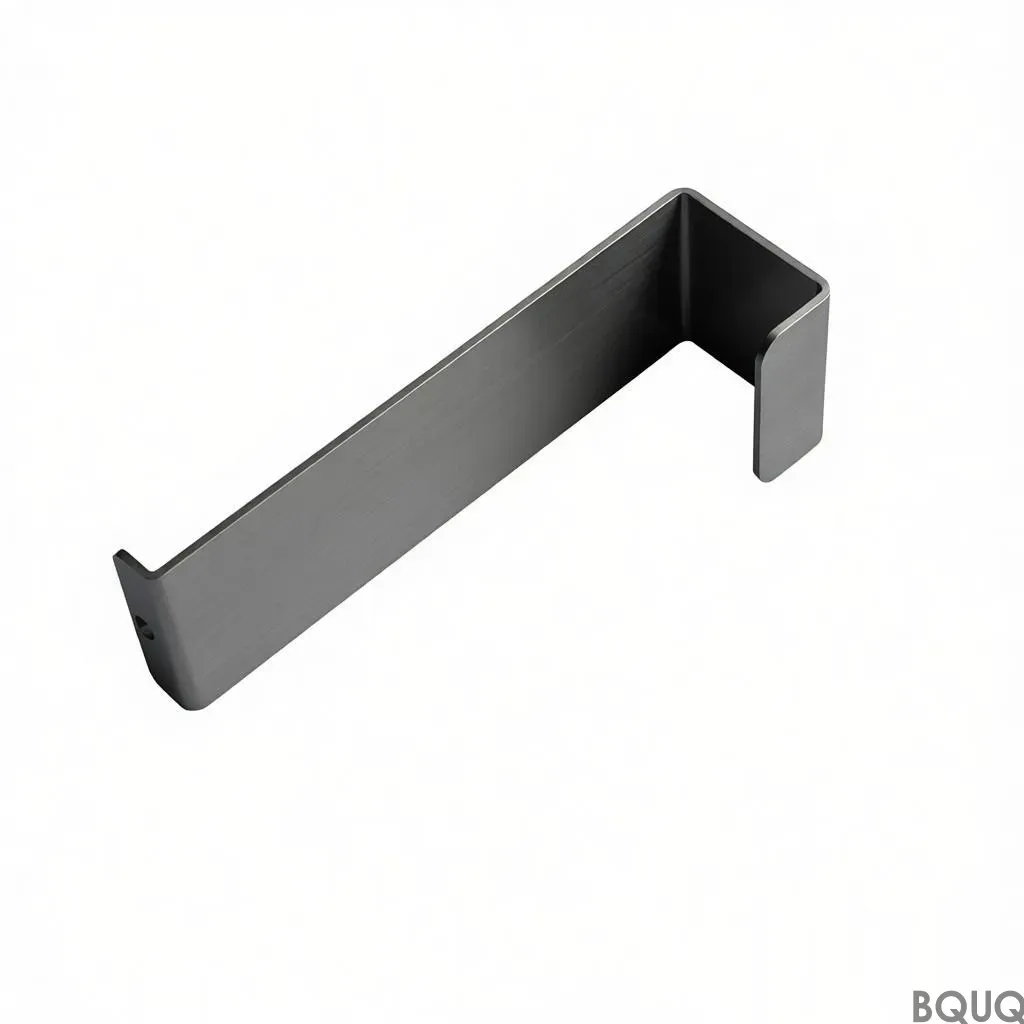
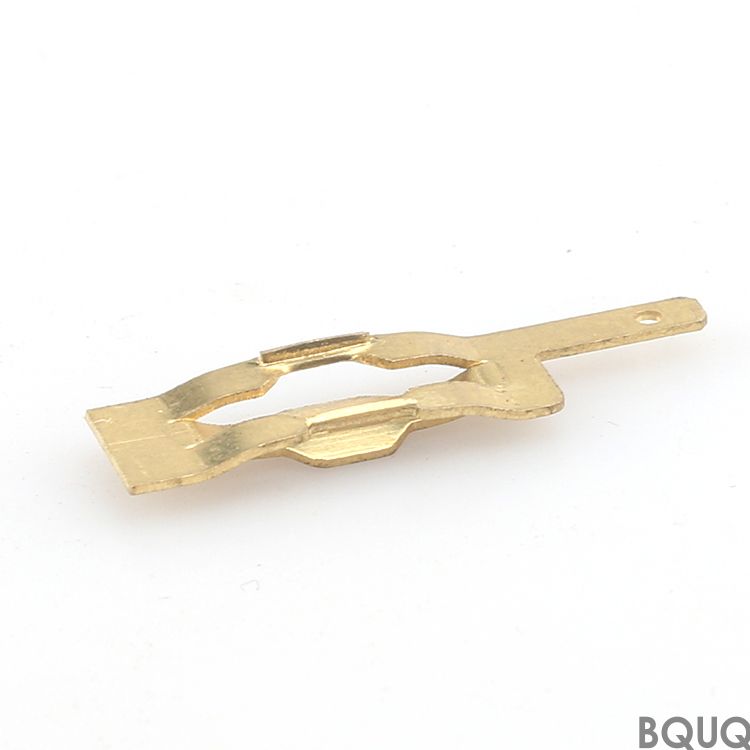
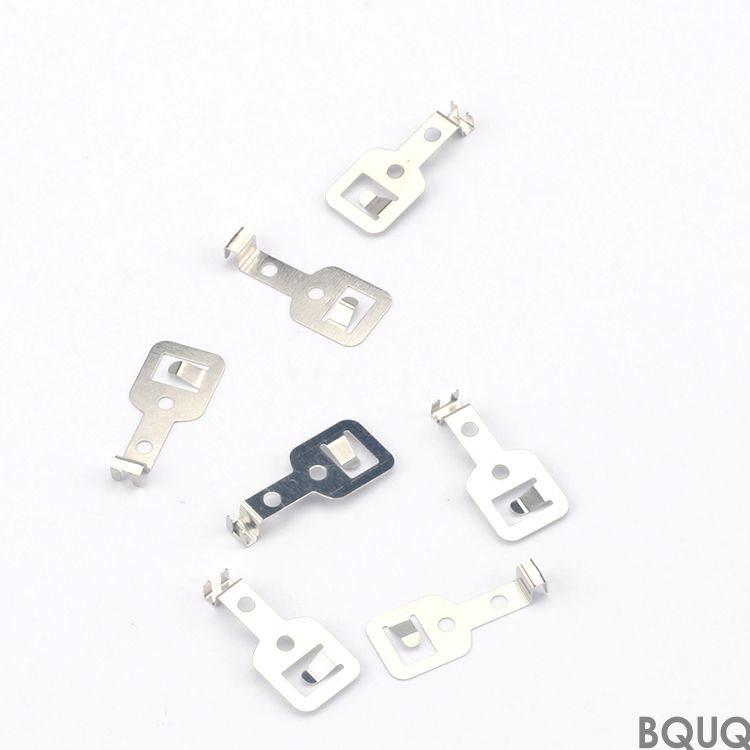
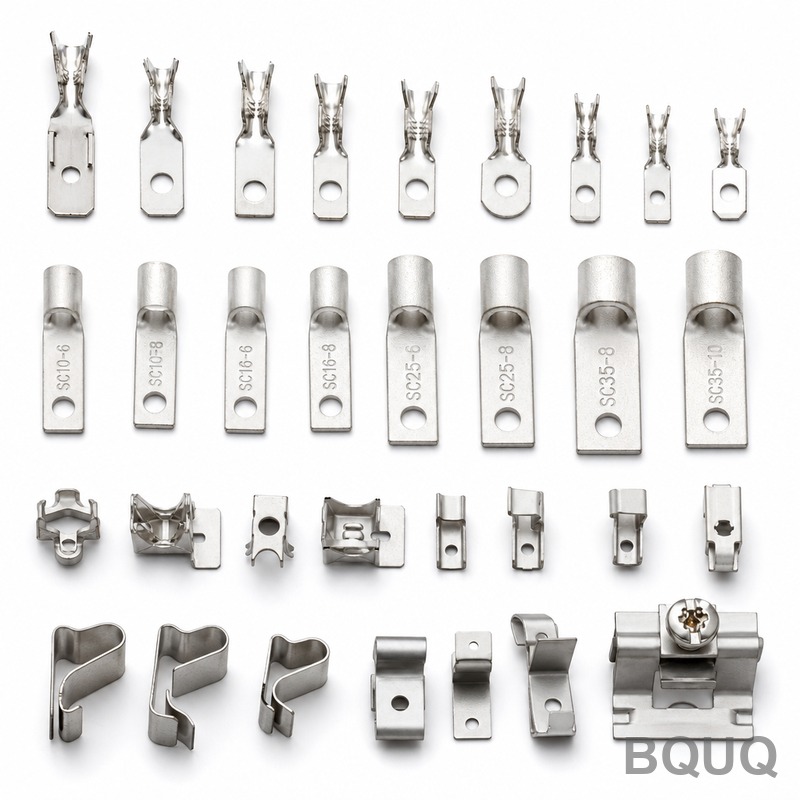
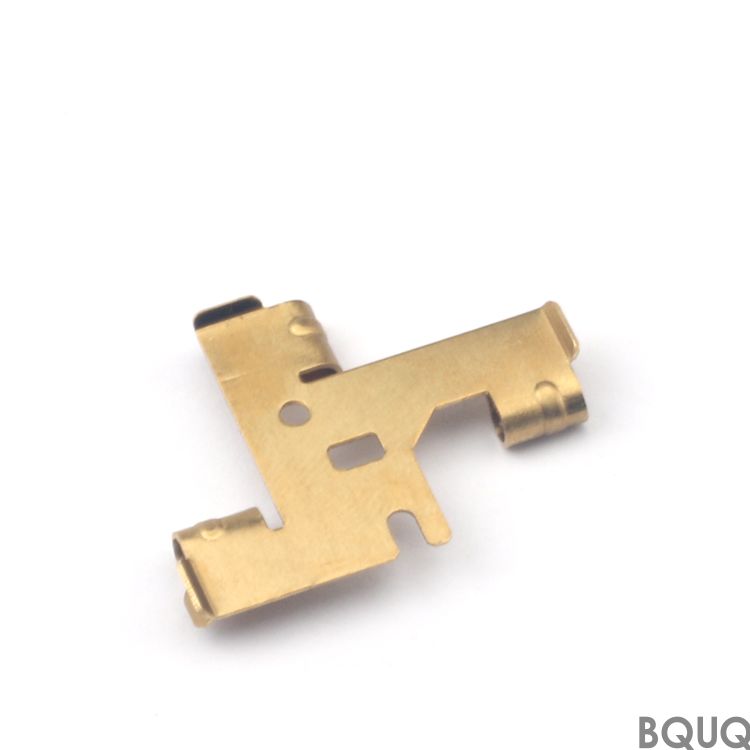
This is a custom metal stamping service for toy battery contact springs and power terminals, built around your mold design, your material choice, and your production volume. You ge
BQUQ Toy Battery Contact Spring Power Terminal Custom Mold Making
This is a custom metal stamping service for toy battery contact springs and power terminals, built around your mold design, your material choice, and your production volume. You get stamped parts with
Get a Fast Quote for This Part
Send us your drawing / quantity / material — reply within 24h.
This is a custom metal stamping service for toy battery contact springs and power terminals, built around your mold design, your material choice, and your production volume. You get stamped parts with ±0.01 mm dimensional tolerance, surface finish Ra 0.8 µm, and a mold hardness of 45–50 HRC that holds its edge through 500,000+ strokes before re-grinding. Typical first-article lead time is 7 days for simple dies, 15 days for progressive dies with 6+ stations.
Why Toy Battery Contacts Fail — and How Our Stamping Prevents It
Cheap stamped contacts lose spring force after 200 cycles. The cause is inconsistent grain flow from poor die geometry. Our progressive dies use a 0.08 mm clearance per side on phosphor bronze and stainless steel, which keeps the grain structure aligned. Result: consistent contact force of 1.2–1.5 N across 5,000 compression cycles, verified with a force gauge on every production lot.
For power terminals, the critical failure is overheating at the crimp point. We control the flatness of the terminal face to 0.05 mm total runout, which ensures full surface contact with the mating connector. That drops contact resistance below 5 mΩ, tested with a micro-ohmmeter before shipment.
Materials and Heat Treatment We Use for Spring Contacts
You are not limited to one alloy. We stamp from C5191 phosphor bronze (0.15–0.4 mm thick), C7521 nickel silver, SUS301 stainless steel, and beryllium copper C17200. For stainless and beryllium copper, we do a precipitation hardening step: 480°C for 2 hours, air-cooled, which brings hardness to 38–42 HRC for springs and 40–45 HRC for terminals.
Phosphor bronze is used as-rolled — no heat treatment needed. That keeps cost lower and lead time shorter. We also offer gold or silver spot plating on contact surfaces (0.2–0.5 µm) for toys that need low oxidation over shelf life.
Die Design Details That Give You 500K+ Strokes
Our mold steel is DC53 (equivalent to AISI D2) for the punch and die inserts, hardened to 58–60 HRC. The spring contact areas are wire-cut with a 0.02 mm wire radius, then polished to Ra 0.4 µm to reduce friction and wear. Pilot holes are placed on every strip to hold positional accuracy of ±0.005 mm between stations.
For parts with a 90° bend, we use a spring-loaded stripper plate that holds the strip flat before bending. This eliminates springback variation — you get a consistent bend angle of 90° ± 0.5° across the entire run. If your design needs a lanced contact point, we add a coined bump on the die, not a separate operation, which keeps cycle time under 1.5 seconds per part.
Inspection Before Every Shipment — Not Just Samples
Every lot gets a full dimensional report, not just the first article. We measure with a CMM (Zeiss CONTURA, accuracy ±0.001 mm) and a toolmaker’s microscope for bend angles and hole positions. Surface finish is checked with a profilometer on the contact area — Ra 0.8 µm is the standard, but we can hold Ra 0.4 µm if your assembly needs it.
Spring force is tested on a dedicated compression tester: we sample 5 pieces per 1,000, and the range must stay within ±5% of your nominal value. Packing is anti-static bags inside rigid cartons, with each part separated by dividers to prevent bending during freight.
Table: Standard Specs for Toy Battery Contact Spring and Power Terminal Stamping
500,000 strokes before re-grinding (DC53 tool steel)
Lead time
7 days (simple die), 15 days (progressive die)
MOQ
No MOQ — start with 1 piece sample, 1,000 pieces for production
How We Keep Lead Time Short Without Sacrificing Tolerance
We run a 24/5 production floor with 32 stamping presses (25–80 tons). For toy battery contacts, most parts are single-station dies or 4-station progressives — those are on the press within 3 days of drawing approval. For power terminals with complex forming, we use 6- to 8-station progressives, but we parallelize die cutting and wire EDM by running two shifts on the toolroom.
Standard practice: you send a 3D step file or 2D PDF. Our engineers check formability within 4 hours and send back a DFM report with any suggested changes (e.g., adding a relief cut to avoid tearing). If the design is clear, we cut steel the same day. The first article ships with a full CMM report — no extra cost.
Integrated Stamping + Plating + Assembly — One Vendor
Most toy factories buy contacts from one vendor, terminals from another, then pay a third for plating. That adds 3–5 days of logistics and risk of tolerance mismatch. We do stamping, then in-house barrel plating (gold, silver, tin) or spot plating, then optional automated assembly into plastic carriers. You receive drop-in parts ready for your production line.
For a recent toy car battery box, we stamped 1.2 million contacts per month, plated them with 0.3 µm gold, and packed them in tape-and-reel at 5,000 pieces per reel. The customer reported zero jams in their automated assembly over six months. That is the level of consistency we hold.
Custom Mold Making — Your Drawing, Our Die, Your Ownership
When you order custom mold making from us, the die is yours. We store it free for 2 years, and you can request modification or transfer. If you have an existing die from another factory but it produces inconsistent parts, we can re-cut the inserts to your original print — often faster than a new die.
Our toolroom has 4 CNC milling machines (5-axis), 2 wire EDM units, and a surface grinder. We make dies for parts as small as 3 mm x 2 mm contact springs up to 200 mm long busbar terminals. For toy applications, we also offer a low-cost steel option (SKD11) if your production is under 100,000 parts a year — that cuts mold cost by 30%.
FAQ
Is there really no MOQ?
Correct — you can order 1 sample piece for fit testing, and production runs start at 1,000 parts; mold making is separate and quoted per your die complexity.
Can you match an existing contact spring I have from another factory?
Yes, send us a physical sample plus a 2D drawing — we reverse-engineer it within 2 days and produce a die that matches the original form and force curve.
How do you control quality on high-volume runs?
We use in-die sensors that check strip thickness and bend angle every stroke, plus a final automated vision inspection for surface defects and plating coverage on 100% of parts.
What is your actual lead time for a custom mold and first article?
Simple dies: 7 days to first article; progressive dies with 6+ stations: 15 days; if you need faster, we offer a 48-hour rush for simple single-station dies with a 20% surcharge.
Get a Firm Quote in 12 Hours — Send Your Drawing Now
Send your 2D or 3D drawing to sc@bquq.com or WhatsApp +86 13713157787. Include your material preference, annual volume, and any critical tolerance. We reply with a firm quote — die cost, unit price, and lead time — within 12 hours on business days.
We are a precision manufacturing factory in Dongguan, China, with 20 years of stamping experience. No MOQ, no minimum order fee, and your mold belongs to you. Send your drawing today — we will turn it into stamped parts that work on your line, on time.