

automotive electronic power contact spring battery terminal custom
Jun 15,2026

automotive electronic power contact spring battery terminal custom

Introduction to Custom Automotive Electronic Power Contact Springs and Battery Terminals

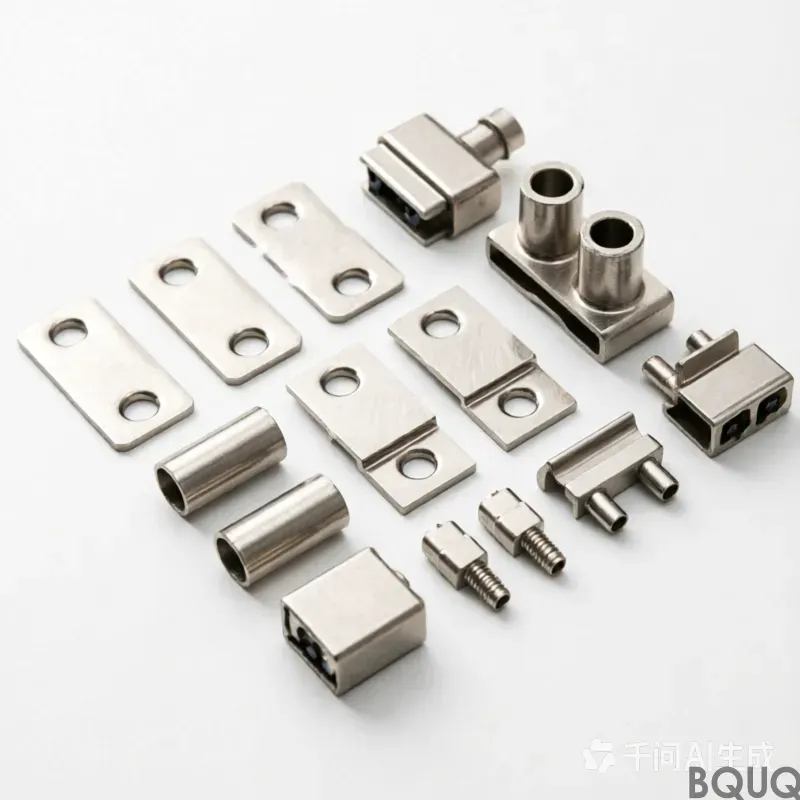
In modern vehicles, electronic power contact springs and battery terminals play a critical role in ensuring reliable electrical connections. These components are essential for transmitting power from the battery to various electronic systems, including infotainment, lighting, and control units. Custom manufacturing of these parts allows automakers to achieve optimal performance, durability, and cost-efficiency. This guide explores every aspect of designing and producing custom automotive electronic power contact springs and battery terminals, from material selection to quality assurance.

Key Design Considerations for Power Contact Springs

Power contact springs must withstand repeated compression, vibration, and temperature fluctuations. Key design factors include:

  • Spring Rate and Load Deflection: The spring must provide consistent force over its operating range to maintain electrical contact.

  • Contact Resistance: Low resistance is critical to minimize power loss and heat generation. Materials and surface finish play a major role.

  • Fatigue Life: Automotive environments demand springs that can endure millions of cycles without failure.

  • Corrosion Resistance: Exposure to moisture, salt, and chemicals requires robust corrosion protection.

Materials for High-Performance Springs

Common materials include:

MaterialPropertiesApplications
Beryllium CopperHigh strength, excellent conductivity, good fatigue resistanceHigh-reliability contacts
Phosphor BronzeGood conductivity, moderate strength, low costGeneral-purpose springs
Stainless Steel (301, 304)High strength, corrosion resistant, non-magneticHarsh environments
Copper Alloys (e.g., C7025)High conductivity, good spring propertiesHigh-current terminals

Custom Battery Terminal Design: Geometry and Functionality

Battery terminals must secure the cable while allowing easy disconnect and reconnect. Custom designs often feature:

  • Clamping Mechanisms: Bolted, spring-loaded, or quick-release designs to ensure a tight connection.

  • Contact Surface Area: Larger area reduces resistance and heat buildup.

  • Vibration Resistance: Locking features or integrated springs prevent loosening.

  • Polarization: Keyed shapes to avoid incorrect attachment.

Material Selection for Battery Terminals

Electrical conductivity and corrosion resistance are paramount:

  • Pure copper or brass for high conductivity, often plated with tin, nickel, or silver.

  • Brass offers a balance of strength and conductivity at lower cost.

  • Steel with copper plating is used for heavy-duty applications where strength matters more than conductivity.

Precision CNC Machining and Stamping Processes

Custom springs and terminals are typically produced via:

  • Progressive Die Stamping: High-volume, consistent parts from coil stock.

  • CNC Precision Lathe Machining: For complex geometries or small batches requiring tight tolerances.

  • Heat Treatment: Relieves stress and sets spring properties.

  • Plating/Painting: Corrosion protection and conductivity enhancement.

Practical Tips for Designing Custom Components

To ensure manufacturability and performance:

  1. Minimize sharp internal corners to prevent stress concentration.

  2. Specify tolerances that are achievable with the chosen process (e.g., +/-0.05mm for stamping).

  3. Include features for automated assembly, such as lead-in chamfers.

  4. Consider the entire assembly: contact force, mating cycle, and thermal expansion.

Quality Control and Testing

Reliability is ensured through rigorous testing:

  • Contact Resistance Measurement: Four-wire Kelvin method to verify low resistance.

  • Spring Force Testing: Load-deflection curves to confirm spring rate.

  • Cyclic Fatigue Testing: Simulate repeated connection/disconnection.

  • Environmental Testing: Salt spray, thermal shock, and humidity exposure.

Applications in Automotive Electronics

Custom power contact springs and battery terminals are used in:

  • Main battery connections and fuse boxes.

  • Distribution modules for electric vehicles (EVs) and hybrid systems.

  • Start-stop systems requiring high cycle life.

  • Infotainment and lighting control modules.

Conclusion

Custom automotive electronic power contact springs and battery terminals are essential for reliable vehicle electrical systems. By carefully selecting materials, optimizing design for manufacturability, and implementing stringent quality controls, manufacturers can deliver components that meet the demanding requirements of modern automobiles. Partnering with an experienced precision stamping and CNC machining supplier ensures your custom parts are produced efficiently and to the highest standards.

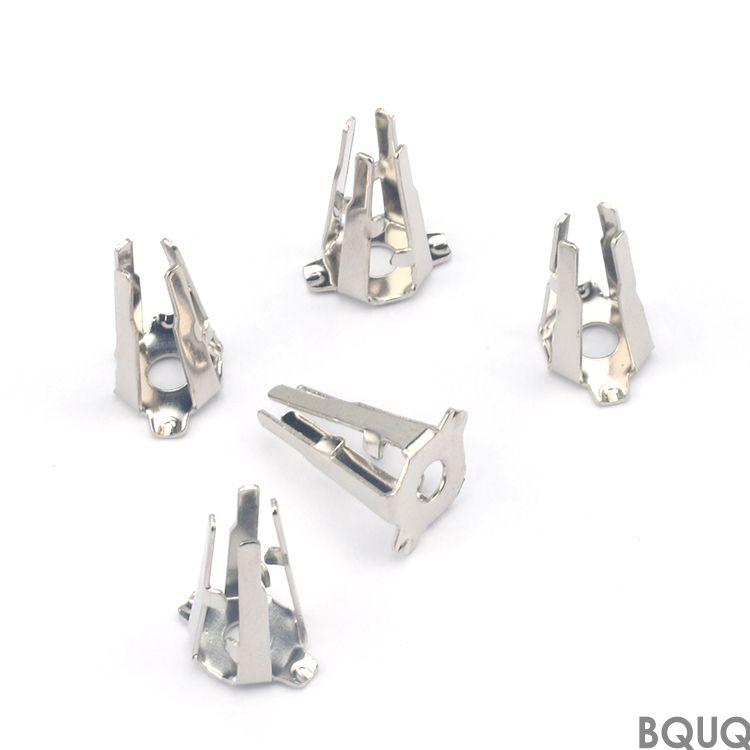
battery terminal spring

Frequently Asked Questions

What materials are commonly used for custom automotive power contact springs?

Common materials include beryllium copper for high-reliability contacts, phosphor bronze for general-purpose springs, stainless steel (301, 304) for harsh environments, and copper alloys like C7025 for high-current terminals. Each offers different balances of conductivity, strength, and corrosion resistance.

What design factors are critical for power contact springs in automotive applications?

Key factors include spring rate and load deflection for consistent force, low contact resistance to minimize power loss, fatigue life to endure millions of cycles, and corrosion resistance against moisture, salt, and chemicals. These ensure reliable electrical contact under vibration and temperature fluctuations.

How are custom battery terminals designed to ensure reliable connections?

Custom battery terminals feature clamping mechanisms like bolted, spring-loaded, or quick-release designs, larger contact surface area to reduce resistance and heat, vibration-resistant locking features, and keyed polarization shapes to prevent incorrect attachment. These elements ensure secure and easy connections.

What materials are recommended for battery terminals and why?

Pure copper or brass are recommended for battery terminals due to their high electrical conductivity and corrosion resistance. These materials help minimize resistance and heat buildup while withstanding harsh automotive environments, ensuring long-term reliable power transmission.

Contact Us Quote
Get A Quote
We use cookie to improve your online experience. By continuing to browse this website, you agree to our use of cookie.

Cookies

Please read our Terms and Conditions and this Policy before accessing or using our Services. If you cannot agree with this Policy or the Terms and Conditions, please do not access or use our Services. If you are located in a jurisdiction outside the European Economic Area, by using our Services, you accept the Terms and Conditions and accept our privacy practices described in this Policy.
We may modify this Policy at any time, without prior notice, and changes may apply to any Personal Information we already hold about you, as well as any new Personal Information collected after the Policy is modified. If we make changes, we will notify you by revising the date at the top of this Policy. We will provide you with advanced notice if we make any material changes to how we collect, use or disclose your Personal Information that impact your rights under this Policy. If you are located in a jurisdiction other than the European Economic Area, the United Kingdom or Switzerland (collectively “European Countries”), your continued access or use of our Services after receiving the notice of changes, constitutes your acknowledgement that you accept the updated Policy. In addition, we may provide you with real time disclosures or additional information about the Personal Information handling practices of specific parts of our Services. Such notices may supplement this Policy or provide you with additional choices about how we process your Personal Information.


Cookies

Cookies are small text files stored on your device when you access most Websites on the internet or open certain emails. Among other things, Cookies allow a Website to recognize your device and remember if you've been to the Website before. Examples of information collected by Cookies include your browser type and the address of the Website from which you arrived at our Website as well as IP address and clickstream behavior (that is the pages you view and the links you click).We use the term cookie to refer to Cookies and technologies that perform a similar function to Cookies (e.g., tags, pixels, web beacons, etc.). Cookies can be read by the originating Website on each subsequent visit and by any other Website that recognizes the cookie. The Website uses Cookies in order to make the Website easier to use, to support a better user experience, including the provision of information and functionality to you, as well as to provide us with information about how the Website is used so that we can make sure it is as up to date, relevant, and error free as we can. Cookies on the Website We use Cookies to personalize your experience when you visit the Site, uniquely identify your computer for security purposes, and enable us and our third-party service providers to serve ads on our behalf across the internet.

We classify Cookies in the following categories:
 ●  Strictly Necessary Cookies
 ●  Performance Cookies
 ●  Functional Cookies
 ●  Targeting Cookies


Cookie List
A cookie is a small piece of data (text file) that a website – when visited by a user – asks your browser to store on your device in order to remember information about you, such as your language preference or login information. Those cookies are set by us and called first-party cookies. We also use third-party cookies – which are cookies from a domain different than the domain of the website you are visiting – for our advertising and marketing efforts. More specifically, we use cookies and other tracking technologies for the following purposes:

Strictly Necessary Cookies
These cookies are necessary for the website to function and cannot be switched off in our systems. They are usually only set in response to actions made by you which amount to a request for services, such as setting your privacy preferences, logging in or filling in forms. You can set your browser to block or alert you about these cookies, but some parts of the site will not then work. These cookies do not store any personally identifiable information.

Functional Cookies
These cookies enable the website to provide enhanced functionality and personalisation. They may be set by us or by third party providers whose services we have added to our pages. If you do not allow these cookies then some or all of these services may not function properly.

Performance Cookies
These cookies allow us to count visits and traffic sources so we can measure and improve the performance of our site. They help us to know which pages are the most and least popular and see how visitors move around the site. All information these cookies collect is aggregated and therefore anonymous. If you do not allow these cookies we will not know when you have visited our site, and will not be able to monitor its performance.

Targeting Cookies
These cookies may be set through our site by our advertising partners. They may be used by those companies to build a profile of your interests and show you relevant adverts on other sites. They do not store directly personal information, but are based on uniquely identifying your browser and internet device. If you do not allow these cookies, you will experience less targeted advertising.

How To Turn Off Cookies
You can choose to restrict or block Cookies through your browser settings at any time. Please note that certain Cookies may be set as soon as you visit the Website, but you can remove them using your browser settings. However, please be aware that restricting or blocking Cookies set on the Website may impact the functionality or performance of the Website or prevent you from using certain services provided through the Website. It will also affect our ability to update the Website to cater for user preferences and improve performance. Cookies within Mobile Applications

We only use Strictly Necessary Cookies on our mobile applications. These Cookies are critical to the functionality of our applications, so if you block or delete these Cookies you may not be able to use the application. These Cookies are not shared with any other application on your mobile device. We never use the Cookies from the mobile application to store personal information about you.

If you have questions or concerns regarding any information in this Privacy Policy, please contact us by email at . You can also contact us via our customer service at our Site.