Cheapest CNC Machining Materials: Lowest Cost Options for 2024
When evaluating the total cost of a CNC machining project, the cheapest material is not always the one with the lowest price per kilogram. For most production runs, **aluminum 6061-T6** offers the lowest cost-per-part when balancing raw material price, machinability, tool wear, and cycle time. However, for non-structural prototypes or high-volume plastic components, **ABS** or **Nylon 6** can be significantly cheaper on a per-unit basis, with material costs as low as $2.50 per kilogram in bulk. This article provides a comparative analysis of material costs, machining parameters, and real-world pricing data to help you select the most economical option for your specific application.
Material Cost vs. Total Machining Cost
The raw material cost typically represents only 10-20% of the total CNC machining cost. A material that costs $5 per kilogram but requires 40% longer machining time will ultimately be more expensive than a $10 per kilogram material that machines quickly. The dominant cost drivers are machine hourly rates (typically $60-$120 per hour for 3-axis CNC), tooling wear, and setup time.
For example, machining aluminum 6061 at a spindle speed of 8,000 RPM with a feed rate of 500 mm/min allows for a material removal rate of 40-60 cubic centimeters per minute. In contrast, machining stainless steel 304 at the same parameters yields only 15-25 cubic centimeters per minute due to required slower speeds (3,500 RPM) and lower feed rates (200 mm/min). This difference directly impacts cycle time and final cost.
Aluminum 6061: The Default Economical Choice
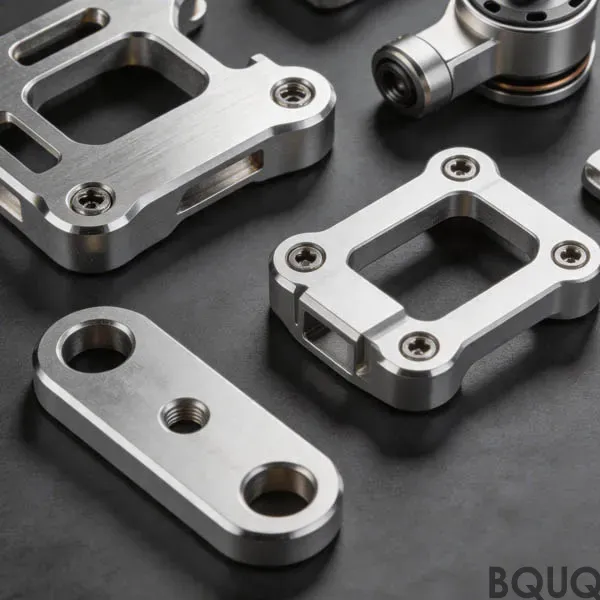
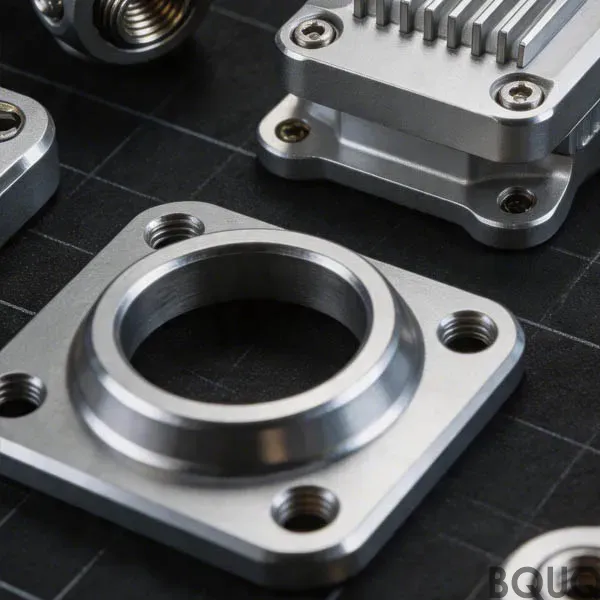
Aluminum 6061-T6 remains the most cost-effective metal for CNC machining due to its excellent machinability rating of 50% (compared to free-machining brass at 100%). The material costs $3.50-$5.00 per kilogram in standard 25mm plate stock, but its true value lies in processing efficiency.
Key specifications for aluminum 6061-T6: - Tensile strength: 310 MPa (45,000 psi) - Yield strength: 276 MPa (40,000 psi) - Maximum service temperature: 130°C (266°F) - Surface finish achievable: 0.8 μm Ra (32 μin) without secondary operations - Dimensional tolerance: ±0.025 mm (0.001 in) for standard machining
For a typical bracket part measuring 100mm x 50mm x 10mm, the raw material cost is approximately $0.85, while the machining cost at $75/hour for a 12-minute cycle comes to $15.00. This makes the total unit cost $15.85 for quantities of 100 pieces. Tool wear is minimal, with a standard carbide end mill lasting for 200-400 parts before needing replacement.
Plastic Materials: ABS and Nylon 6
For applications requiring lower weight, electrical insulation, or chemical resistance, engineering plastics offer the lowest raw material costs. ABS (acrylonitrile butadiene styrene) costs $2.50-$4.00 per kilogram and machines at feed rates of 1,500-2,500 mm/min, which is 3-5 times faster than aluminum. However, plastics require careful chip evacuation and may need coolant to prevent melting.
Nylon 6 (polyamide) costs $4.00-$6.00 per kilogram and offers better mechanical properties than ABS: - Tensile strength: 75 MPa (10,900 psi) for unreinforced Nylon 6 - Maximum continuous service temperature: 80-100°C (176-212°F) - Moisture absorption: 1.5-3.0% by weight (must be dried before machining)
A critical consideration for plastic machining is thermal expansion. Nylon 6 has a coefficient of thermal expansion of 80 x 10⁻⁶ per °C, which is 5 times higher than aluminum's 23 x 10⁻⁶ per °C. For parts requiring tolerances tighter than ±0.1 mm, this must be accounted for in the machining strategy and environmental controls.
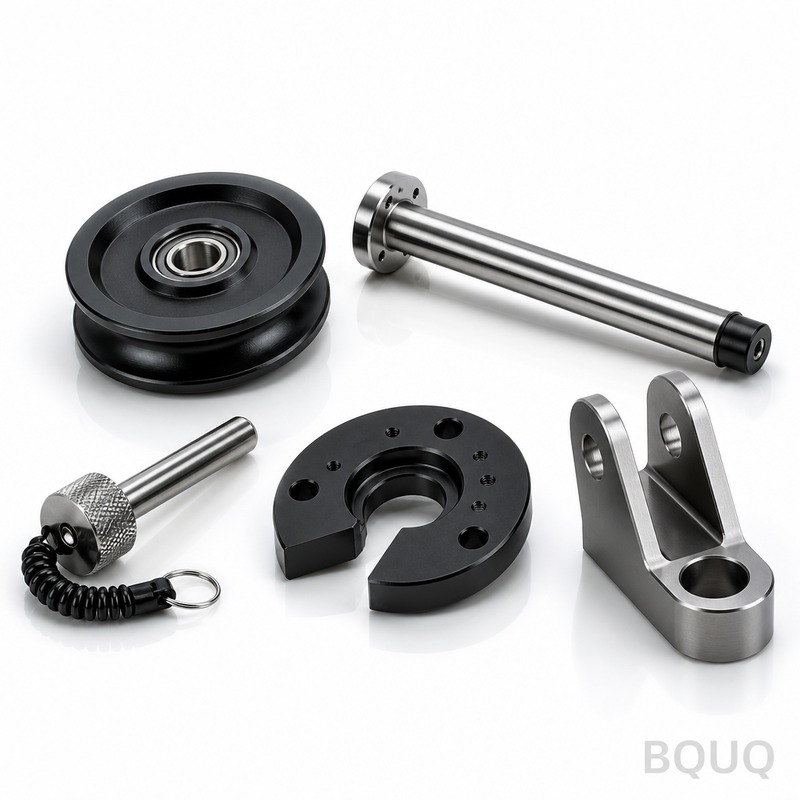
Cost Comparison Data Table
The following table compares the cheapest materials for CNC machining based on 2024 market prices in China, assuming a standard 3-axis milling operation with a machine rate of $75 per hour.
| Material | Raw Material Cost (USD/kg) | Machining Speed (mm/min) | Typical Tolerance (mm) | Surface Finish (Ra μm) | Relative Tool Wear | Total Cost per 100x50x10mm Part (USD) |
| Aluminum 6061-T6 | $3.50 - $5.00 | 500 - 800 | ±0.025 | 0.8 | Low | $15.85 |
| Aluminum 5052 | $3.80 - $5.50 | 450 - 700 | ±0.050 | 1.2 | Low | $16.50 |
| Brass C36000 | $8.00 - $12.00 | 900 - 1,200 | ±0.013 | 0.4 | Very Low | $22.30 |
| ABS | $2.50 - $4.00 | 1,500 - 2,500 | ±0.100 | 1.6 | Very Low | $11.20 |
| Nylon 6 | $4.00 - $6.00 | 1,000 - 1,800 | ±0.080 | 1.6 | Low | $12.75 |
| Delrin (POM) | $5.00 - $7.00 | 1,200 - 2,000 | ±0.050 | 0.8 | Very Low | $12.10 |
| Mild Steel 1018 | $1.20 - $2.00 | 300 - 450 | ±0.050 | 1.6 | High | $19.40 |
| Stainless Steel 304 | $4.50 - $6.50 | 200 - 350 | ±0.050 | 1.6 | High | $28.70 |
When Steel Becomes the Cheapest Option
Mild steel (AISI 1018) has the lowest raw material price at $1.20-$2.00 per kilogram, but its machining cost is 30-40% higher than aluminum due to slower cutting speeds and increased tool wear. For very large parts where material cost dominates the total price, steel can become the most economical choice.
Consider a large base plate of 500mm x 500mm x 25mm. The aluminum raw material cost is $128.00, while the same steel plate costs only $48.00. If machining time is similar (approximately 45 minutes for both), the total cost favors steel: - Aluminum total: $128.00 (material) + $56.25 (machining) = $184.25 - Steel total: $48.00 (material) + $56.25 (machining) = $104.25
Steel becomes cost-effective when the material thickness exceeds 20mm or when the part weight exceeds 5 kilograms. For high-volume production (1,000+ pieces), the tool wear difference becomes significant, with steel requiring tool changes every 50-80 parts versus every 300-400 parts for aluminum.
Hidden Costs: Finishing and Secondary Operations
The cheapest raw material may incur higher finishing costs. Aluminum 6061 can achieve a good surface finish directly from machining, requiring only a mild deburring operation. Steel parts typically require protective coating (zinc plating at $0.50-$1.00 per kg, or black oxide at $0.30-$0.60 per kg) to prevent rust.
Plastics often require annealing to relieve internal stresses, particularly for Nylon 6, which can cost an additional $5-$10 per batch. Additionally, plastics have lower stiffness (modulus of elasticity of 2-3 GPa versus 68 GPa for aluminum), which may require thicker wall sections and more material to achieve the same structural performance.
For parts requiring tight tolerances below ±0.05 mm, aluminum is the most reliable and cost-effective choice. Plastics are prone to dimensional drift with temperature and humidity changes, potentially causing rejection rates of 5-10% in precision applications.
Practical Recommendations for Cost Reduction
For minimum cost per part, select aluminum 6061-T6 for metal parts under 2 kg and ABS for plastic parts under 500 grams. For larger parts over 5 kg, evaluate mild steel. Request a Design for Manufacturability (DFM) review to identify cost-saving features: increasing internal radii from 0.5mm to 1.5mm can reduce tool changes by 20%, and specifying a surface finish of 1.6 μm Ra instead of 0.8 μm Ra can reduce machining time by 15%.
Consider batch consolidation: ordering 100 pieces instead of 50 pieces reduces setup cost per part by 40-50%. For prototype validation, consider using ABS with a tolerance of ±0.2 mm to reduce cycle time, then transition to aluminum for production. Always specify the material grade and temper clearly (e.g., "Aluminum 6061-T6 per ASTM B209") to avoid substitution with cheaper, lower-strength alloys.
Conclusion and Next Steps
The cheapest CNC machining material depends on part geometry, quantity, and performance requirements. Aluminum 6061-T6 offers the best balance of low cost, machinability, and mechanical properties for most applications, with a total unit cost typically 15-25% lower than steel and 25-40% lower than stainless steel for small to medium parts. For non-structural plastic parts, ABS provides the lowest absolute cost at approximately $11 per unit for standard-sized components.
To obtain an accurate cost estimate for your specific part, send your CAD file and specifications for a free quotation. Our engineering team provides a DFM analysis with every quote, identifying cost-reduction opportunities before production begins. We respond to all inquiries within 12 hours with a detailed breakdown of material, machining, and finishing costs.
| Email: sc@bquq.com | WhatsApp: +86 13713157787 | www.bquq.com |
BQUQ Precision Manufacturing, Dongguan, China - CNC machining, metal stamping, springs, and heat sinks with 20 years of export experience.