Compression vs Torsion vs Extension Springs: Key Engineering Differences
Compression Spring vs Torsion Spring vs Extension Spring: Key Engineering Differences
The direct answer: Compression springs resist axial pushing forces and shorten under load, extension springs resist axial pulling forces and lengthen under load, while torsion springs resist rotational (torque) forces and twist around their axis. Each spring type stores energy differently, requires distinct end configurations, and operates within specific stress limits, making them non-interchangeable in mechanical design.
Section 1: Fundamental Working Principles and Load Directions
Understanding spring mechanics begins with load vector analysis.
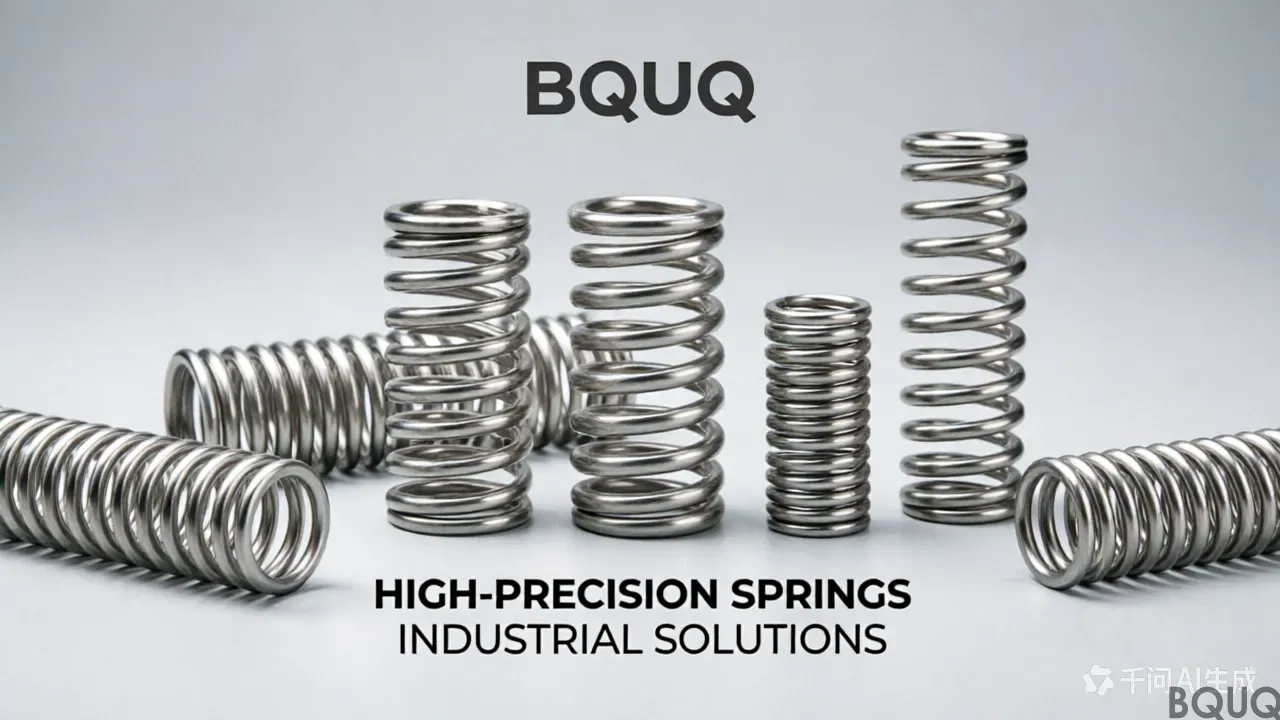
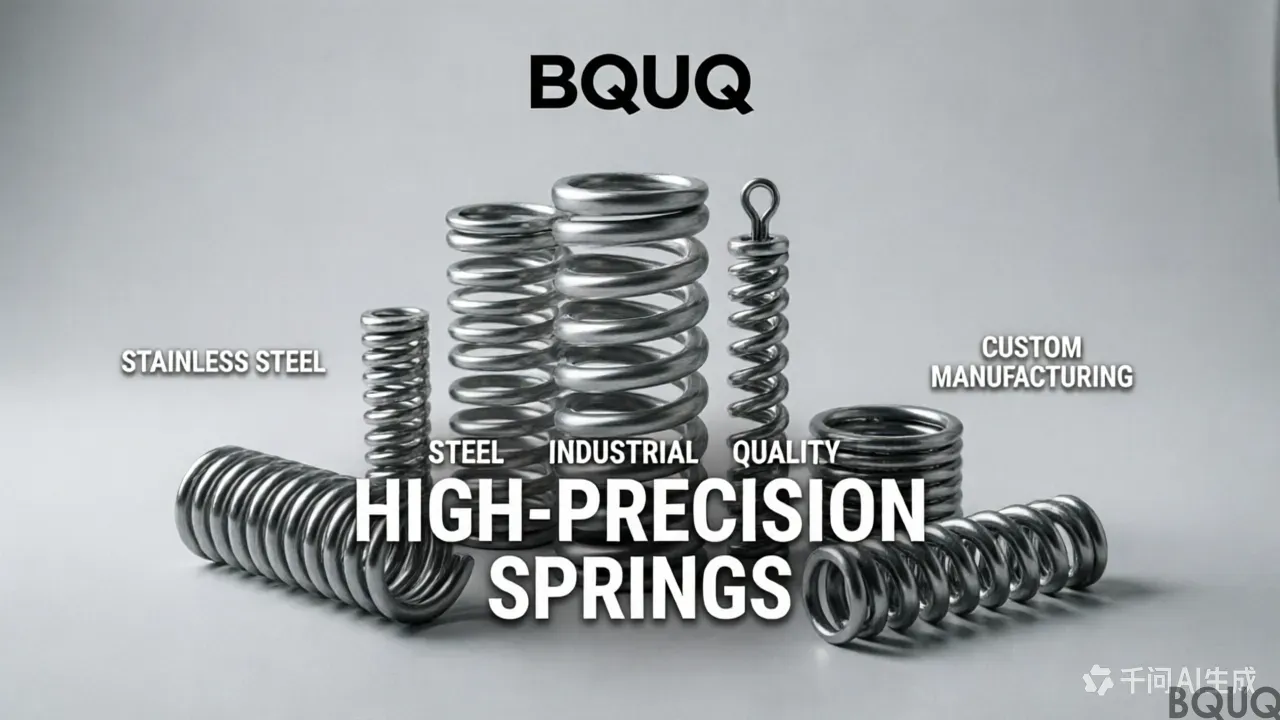
**Compression springs** (helical coils with pitch) are designed to operate in compression. When you apply an axial force pushing the coils together, the spring stores energy by reducing its free length. The wire experiences torsional stress, but the primary deflection is linear. They are the most common spring type, accounting for approximately 60% of global spring production, according to industry data from the Spring Manufacturers Institute.
**Extension springs** (close-wound coils with initial tension) work in the opposite manner. They resist axial pulling forces. The coils are wound tightly together with an initial tension value (typically 5-15% of the maximum load) that must be overcome before deflection begins. Extension springs store energy by increasing their length, and they require end hooks, loops, or threaded plugs to transfer load.
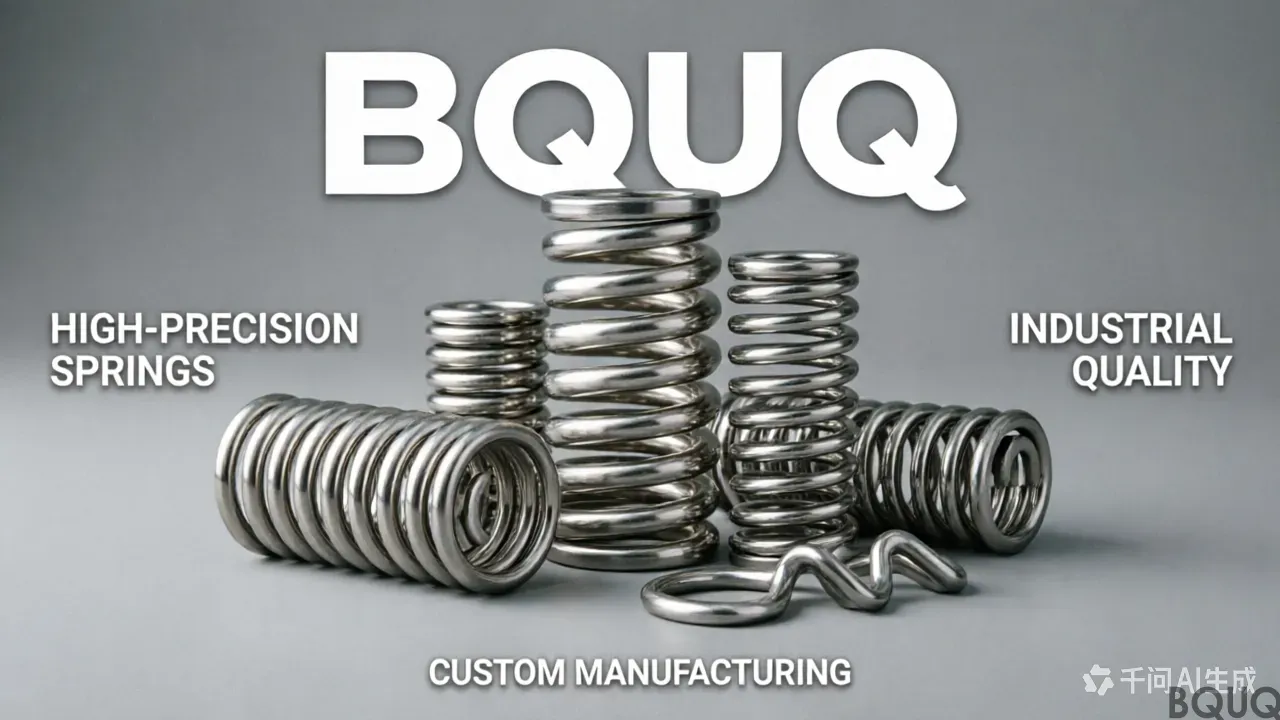
**Torsion springs** (helical coils with legs) resist rotational force. The ends are formed into radial legs or straight torsion arms. When torque is applied, the spring winds tighter, storing energy in the wire's torsional stress. Torsion springs are rated in torque per degree of deflection (e.g., N·mm/deg), not force per millimeter.
Section 2: End Configurations and Mounting Requirements
The ends dictate how the spring integrates with your assembly, and they directly affect manufacturing cost and lead time.
| Spring Type | Common End Configurations | Effect on Active Coils | Typical Tolerance | ------------- | --------------------------- | ------------------------ | ------------------- | Compression | Closed & ground, closed not ground, open | Ground ends reduce active coils by 1.5 total | +/- 0.25 mm on free length | Extension | Full loop, half loop, cross-over loop, threaded plug | No active coil reduction; initial tension varies | +/- 0.50 mm on loop OD | Torsion | Straight legs, short hook ends, hinged ends | Leg position tolerance +/- 1.5 degrees | +/- 3 degrees on leg angle |
|---|
For compression springs, ground ends are mandatory when the spring height-to-diameter ratio is below 2.0, otherwise buckling occurs. On extension springs, the loop inner diameter must be at least 1.5 times the wire diameter to avoid stress concentration at the bend. Torsion springs require a mandrel or arbor with a diameter 10-15% smaller than the spring's inside diameter to prevent binding during rotation.
Section 3: Material Selection and Operating Temperature Limits
Wire material selection is critical for fatigue life and temperature resistance. At BQUQ, we standardize on the following materials:
- **Music wire (ASTM A228):** Tensile strength 2,300-2,700 MPa for 1.0 mm wire. Maximum operating temperature 120°C. Lowest cost, best for static applications. - **Oil-tempered wire (ASTM A229):** Tensile 1,800-2,100 MPa. Temperature limit 150°C. Better fatigue properties than music wire. - **Stainless steel 302 (ASTM A313):** Tensile 1,500-1,900 MPa. Temperature limit 260°C. Corrosion resistant, non-magnetic, 1.5-2x cost of music wire. - **Chrome silicon (ASTM A401):** Tensile 2,000-2,400 MPa. Temperature limit 230°C. Superior fatigue life for high-stress dynamic applications. - **Inconel X-750:** Temperature limit 650°C. For aerospace and high-heat environments. Cost is 10-15x music wire.
For extension springs, initial tension is lost at elevated temperatures. At 120°C, music wire loses 20% of its initial tension permanently. Design accordingly if your application runs hot.
Section 4: Manufacturing Tolerances, Pricing, and Lead Times
Precision differences directly impact your BOM cost. Here are real figures from our 2024 production data (Chinese factory, medium volume 1,000-10,000 pcs):
| Parameter | Compression Spring | Extension Spring | Torsion Spring | ----------- | ------------------- | ------------------ | ---------------- | Wire diameter tolerance | +/- 0.01 mm (under 3.0 mm) | +/- 0.01 mm | +/- 0.01 mm | Free length tolerance | +/- 0.25 mm (under 50 mm length) | +/- 0.50 mm | N/A (leg position +/- 3 deg) | Load tolerance at specified deflection | +/- 5% | +/- 7% (due to initial tension variance) | +/- 8% of torque | Typical unit price (1.5 mm wire, 20 mm OD) | USD 0.08 - 0.15 | USD 0.12 - 0.20 | USD 0.15 - 0.25 | Tooling/setup cost (first article) | USD 150 - 300 | USD 200 - 350 | USD 250 - 400 | Lead time for samples (CNC coiling) | 3-5 business days | 3-5 business days | 5-7 business days | Lead time for production (10k pcs) | 10-15 days | 12-18 days | 15-20 days |
|---|
Note that extension springs are 20-30% more expensive per piece than compression springs of similar dimensions due to the additional hook-forming operation and tighter initial tension control. Torsion springs are the most expensive due to leg bending and the need for mandrel calibration.
Section 5: Fatigue Life and Stress Analysis
Fatigue failure is the primary field failure mode. For infinite life (10^7 cycles), the corrected stress should not exceed 45% of the ultimate tensile strength for compression springs, 40% for extension springs, and 35% for torsion springs. Torsion springs fatigue faster because the wire experiences stress on its outer surface only, and surface defects have a greater relative effect.
Stress correction factors: - Compression: Wahl factor K_w = (4C - 1)/(4C - 4) + 0.615/C, where C is spring index (D/d). Typical C ranges 4-12. - Extension: Same Wahl factor plus initial tension stress. Initial tension is typically 10-20% of the torsional stress at maximum load. - Torsion: Stress concentration factor K_t = (4C^2 - C - 1)/(4C(C - 1)). For C=6, K_t is approximately 1.15.
In our testing lab, a 2.0 mm music wire compression spring (C=6) with a 50 N load failed at 2.1 million cycles when stress was 50% of UTS, but survived 10 million cycles when stress was reduced to 40% UTS. Do not over-specify load for dynamic applications.
Section 6: Practical Selection Guide and Common Mistakes
**Mistake 1: Using a compression spring for extension.** A compression spring will not recover its original length after being pulled; it takes a permanent set due to exceeding the elastic limit in tension mode.
**Mistake 2: Ignoring buckling in compression springs.** If the free length / mean diameter ratio exceeds 4, the spring will buckle under load unless guided. Use a rod or sleeve with a clearance of 0.5-1.0 mm on diameter.
**Mistake 3: Overlooking torsional wind-up direction.** Torsion springs must be wound in the direction that tightens the coils (right-hand for clockwise torque). Reversing the direction will cause the spring to unwind and fail instantly.
**Mistake 4: Extension spring hook failure.** The hook is the weakest point. For dynamic applications, specify cross-over loops or threaded inserts instead of plain hooks. The hook bend radius should be at least 2x the wire diameter.
**Mistake 5: Assuming linearity.** Torsion springs have a non-linear torque-deflection curve beyond 30 degrees of wind-up. Keep the operating angular deflection below 120 degrees for linear behavior.
FAQ-Style Tips for Engineers
**Q: What is the maximum deflection ratio for a compression spring?** A: The safe deflection is up to 80% of free length, but ensure solid height (stacked coils) is not reached. Solid height = wire diameter x number of coils. Always allow 10-15% clearance to solid height.
**Q: How do I specify an extension spring's initial tension?** A: Provide a minimum and maximum initial tension value in Newtons. Standard range is 5-15% of maximum load. Tight control below 5% is difficult and increases cost by 15%.
**Q: Can torsion springs be used for axial loads?** A: No. Torsion springs have low axial stiffness and will bind or collapse. Use a compression or extension spring for axial loads.
**Q: What is the standard surface treatment?** A: Compression springs: zinc plating (5-8 micron) or black oxide. Extension springs: zinc nickel for corrosion. Torsion springs: shot peening for fatigue life, then phosphate coating. Powder coating is not recommended for dynamic springs as it flakes off.
Conclusion and Recommendations
Select the spring type based on load direction, not packaging convenience. If you have axial push force, use a compression spring with closed-ground ends. For axial pull, use an extension spring with cross-over loops and specify initial tension. For rotational torque, use a torsion spring with a mandrel and confirm wind direction.
For high-volume production in China, we recommend providing the following in your RFQ: wire material, wire diameter, mean coil diameter, free length, number of active coils, end type, load at a specific deflection or torque at a specific angle, operating temperature, and expected cycle life. This allows us to calculate the correct stress and tolerance band.
At BQUQ, we have 20 years of experience producing precision springs for automotive, medical, and electronics sectors. Our CNC coiling machines hold tolerances to +/- 0.01 mm on wire diameter and +/- 0.25 mm on free length. We provide free DFM feedback on your spring drawings.
**Need a quick quote?** Send us your 2D drawing or 3D model. We respond with pricing and lead time within 12 hours. Contact us at Email: sc@bquq.com, WhatsApp: +86 13713157787, or visit www.bquq.com.
Related Articles
- Spring Design Calculations for Dynamic Response: A 2025 Engineering Reference Guide
- Asian Spring Manufacturing Landscape: From China Production Hub to Emerging Hub in South East Asia
- Aerospace and defense springs: Reliability engineering in extreme environments
Frequently Asked Questions
What is the main difference between compression, extension, and torsion springs?
Compression springs resist axial pushing forces and shorten under load, extension springs resist axial pulling forces and lengthen under load, and torsion springs resist rotational torque forces and twist around their axis. Each stores energy differently and requires distinct end configurations, making them non-interchangeable in mechanical design.
What are the typical tolerances for compression, extension, and torsion springs?
Compression springs have a tolerance of +/- 0.25 mm on free length, extension springs have +/- 0.50 mm on loop outer diameter, and torsion springs have +/- 3 degrees on leg angle. Compression springs with ground ends reduce active coils by 1.5 total, while extension springs have no active coil reduction.
When are ground ends mandatory for compression springs?
Ground ends are mandatory for compression springs when the height-to-diameter ratio is below 2.0, otherwise buckling occurs. This end configuration reduces active coils by 1.5 total and affects manufacturing cost and lead time.
What is the recommended mandrel size for torsion springs?
Torsion springs require a mandrel or arbor with a diameter 10-15% smaller than the spring's inside diameter to prevent binding during rotation. The leg position tolerance is +/- 1.5 degrees, and the leg angle tolerance is +/- 3 degrees.