How Do EV Battery Contact Springs Ensure Reliable High-Current Connections?
The direct answer is that EV battery contact springs ensure reliable high-current connections through a combination of precision-engineered geometry, high-conductivity copper alloys, and controlled contact force ranging from 5 to 20 Newtons, which maintains a stable electrical interface despite vibration and thermal cycling. These springs, typically manufactured via stamping or CNC machining, are designed to handle continuous currents of 100 to 300 Amperes with a maximum contact resistance of 0.2 milliohms. By delivering consistent normal force and accommodating mechanical tolerances of ±0.05 mm, these components directly prevent arcing, overheating, and intermittent power loss in battery packs.
What Are the Core Design Specifications for EV Battery Contact Springs?
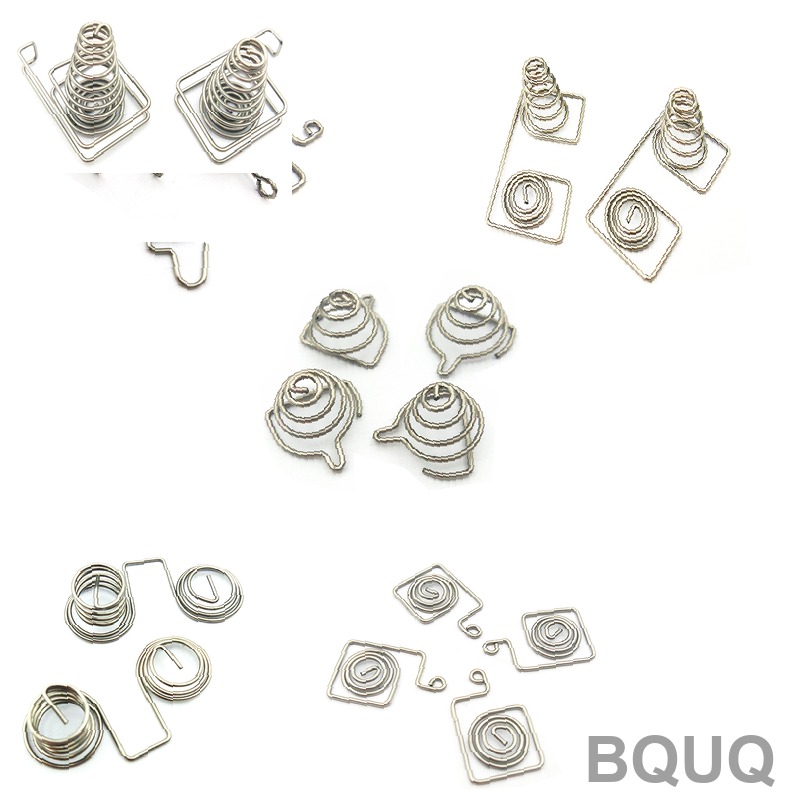
The engineering of EV battery contact springs revolves around three critical parameters: contact resistance, thermal capacity, and cycle life. For a typical 400V battery system, a single contact spring must sustain a continuous current rating of 150A to 250A, with a peak surge capability of 500A for 10 seconds. The spring's working deflection range is usually 0.3 mm to 1.5 mm, ensuring that the contact remains engaged even when battery cells expand due to thermal cycling between -40°C and +85°C. Material thickness for stamped springs ranges from 0.15 mm for signal contacts to 0.6 mm for power contacts, with the latter requiring a minimum tensile strength of 600 MPa to prevent yield under repeated insertion cycles. The target service life is 10,000 to 50,000 mating cycles, depending on whether the application is a fixed busbar connection or a replaceable battery module.
How Does Contact Force Affect Electrical Performance and Heat Generation?
Contact force is the single most influential factor in determining the electrical performance of an EV battery contact spring. A minimum normal force of 5 Newtons per contact point is required to break through surface oxide films, while forces above 20 Newtons can cause excessive wear and permanent set in the spring material. The relationship between force and resistance follows a logarithmic curve: increasing force from 3N to 10N can reduce contact resistance by up to 60%, from 0.5 milliohms to 0.2 milliohms. This reduction is critical because heat generation follows the formula P = I²R; at 200A, a drop from 0.5 mΩ to 0.2 mΩ reduces power loss from 20 Watts to 8 Watts per contact. For a battery pack with 100 series connections, this represents a total energy savings of 1.2 kW under full load, significantly improving the vehicle's overall efficiency and reducing thermal management requirements.
What Materials Are Best Suited for EV Battery Contact Springs?
The optimal materials for EV battery contact springs are beryllium copper (C17200) and high-performance copper-nickel-tin alloys, with silver-nickel or gold plating on the contact surface. Beryllium copper offers the best combination of electrical conductivity (22% IACS) and elastic modulus (128 GPa), allowing for high force retention over 50,000 cycles. For higher temperature applications, such as near the battery cells where ambient temperatures reach 125°C, copper-nickel-tin (C72900) provides superior stress relaxation resistance, maintaining 90% of initial force after 1,000 hours at 125°C compared to only 60% for standard phosphor bronze. The contact surface is typically plated with 1-3 microns of silver for power contacts or 0.5-1 micron of gold for signal circuits, ensuring low and stable contact resistance over the vehicle's 15-year lifespan. Alternative materials like stainless steel are rarely used due to their low conductivity (2.5% IACS), which would require significantly larger cross-sections to handle the same current.
How Does the Spring Design Manage Thermal Expansion and Vibration?
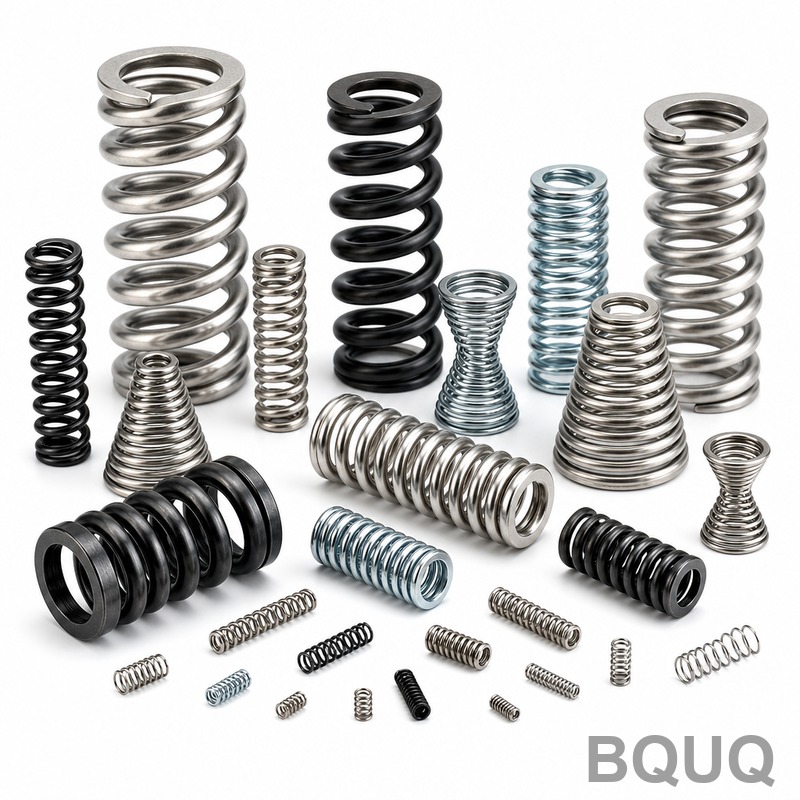
Managing thermal expansion and vibration requires a spring design that accommodates a total mechanical displacement of 0.2 mm to 0.5 mm due to temperature changes while maintaining contact force within a 20% tolerance band. The spring's geometry, typically a cantilever or spiral form, is designed with a stress ratio below 50% of the material's yield strength to prevent fatigue failure under sinusoidal vibration profiles of 10 to 500 Hz at 4.4 g RMS. To handle thermal expansion, the spring's working range is calculated to include the expansion of the aluminum busbar (23 ppm/°C) and the battery cell terminal (17 ppm/°C); for a 300 mm long busbar, this equates to a 0.7 mm dimensional change across a 100°C temperature swing. The spring is therefore designed with a pre-loaded deflection of 0.5 mm to 0.8 mm, ensuring that the contact point never separates from the mating surface even at the maximum thermal excursion. Additionally, the design incorporates multiple redundant contact points, typically three to five, so that a vibration-induced micro-displacement at one point does not cause a full electrical disconnect.
What Are the Typical Manufacturing Tolerances and Quality Control Parameters?
| Parameter | Stamped Spring | CNC Machined Spring | Acceptable Range |
| Contact force at working height | 10 N ± 1.5 N | 12 N ± 1.0 N | 8 N to 15 N |
| Contact resistance (initial) | ≤ 0.25 mΩ | ≤ 0.15 mΩ | ≤ 0.30 mΩ |
| Dimensional tolerance (critical) | ± 0.05 mm | ± 0.02 mm | ± 0.10 mm |
| Surface roughness (Ra) | ≤ 0.8 µm | ≤ 0.4 µm | ≤ 1.6 µm |
| Operating temperature range | -40°C to +150°C | -40°C to +200°C | -40°C to +150°C |
| Cycle life (mechanical) | 20,000 cycles | 50,000 cycles | 10,000 min |
| Material thickness | 0.30 mm | 0.50 mm | 0.15-0.60 mm |
The manufacturing process for stamped springs uses progressive dies with a tolerance of ±0.01 mm on the die itself, achieving final part tolerances of ±0.05 mm on critical contact surfaces. CNC machined springs, used for low-volume or high-precision applications, offer tighter tolerances of ±0.02 mm and a superior surface finish, which reduces the risk of localized heating at microscopic asperities. Quality control involves 100% optical inspection for dimensional verification and a sampling-based contact force test using a load cell with an accuracy of ±0.1 N. Additionally, each production batch undergoes a thermal shock test (100 cycles from -40°C to +125°C) and a vibration test to ensure the spring's force retention remains above 90% of its initial specification.
Why Is Plating Selection Critical for Long-Term Reliability?
Plating selection is critical because the base copper alloy oxidizes rapidly at operating temperatures, forming a non-conductive layer that increases contact resistance by up to 10 times within 500 hours without protection. Silver plating, at 2-4 microns thickness, provides excellent conductivity but tarnishes in sulfur-rich environments; this is mitigated by a final nickel underplate of 1-2 microns that acts as a diffusion barrier. For EV applications, the industry standard is a nickel underplate followed by silver or gold topcoat, with porosity testing to ensure less than 5 pores per square centimeter. In high-vibration environments, harder platings like palladium-nickel (20% by weight) are used, offering a hardness of 500 HV compared to 90 HV for pure silver, extending wear life by 5 times. The plating process must also ensure edge coverage, as the spring's stamped edges are prone to micro-cracking; a minimum edge thickness of 60% of the flat surface thickness is required to prevent premature corrosion at these stress points.
Can Contact Springs Be Customized for Different Battery Form Factors?
Yes, contact springs can be fully customized for cylindrical, prismatic, and pouch cell formats, with design lead times of 2-4 weeks for prototyping and 4-6 weeks for production tooling. For cylindrical cells (18650, 21700, 4680), the spring is typically a compression coil or a stamped crown shape that fits over the cell's positive terminal, with a diameter tolerance of ±0.1 mm. For prismatic cells, the spring is usually a flat stamped clip that slides onto the cell terminal, requiring an insertion force of 15-25 N and a pull-out force above 50 N to secure the connection. Pouch cell applications use a spring-loaded contact plate that compresses against the foil tab, requiring a lower contact force of 5-8 N to avoid damaging the thin aluminum or copper foil. Customization also extends to current rating: a low-power signal spring might only need 1A capacity, while a main power contact for a heavy-duty truck battery could require 600A, which changes the material thickness and contact surface area significantly.
What Are the Main Failure Modes and How Can They Be Prevented?
The primary failure modes for EV battery contact springs are stress relaxation, fretting corrosion, and arc erosion. Stress relaxation occurs when the spring is held at a constant deflection at elevated temperatures; for a beryllium copper spring at 125°C, initial force can drop by 15-20% after 1,000 hours, which is mitigated by using cold-worked materials and a design with a higher initial force margin. Fretting corrosion is caused by micro-movements between the contact surfaces due to vibration, producing oxide debris that increases resistance; prevention includes applying a lubricant with a low coefficient of friction (0.1-0.2) and using a higher normal force to break through the debris layer. Arc erosion happens during hot disconnection under load, vaporizing a small amount of the plating material; this is prevented by specifying a minimum plating thickness of 3 microns and designing the spring to break contact quickly, with a separation speed greater than 10 mm/s. Regular validation testing, including thermal cycling and vibration endurance, is essential to verify that the spring's performance degrades by less than 10% over its intended service life.
How Should Engineers Specify and Validate EV Battery Contact Springs?
Engineers should specify EV battery contact springs by first defining the electrical requirements (current, voltage drop, and resistance limits), then the mechanical constraints (available space, mating force, and cycle life), and finally the environmental conditions (temperature range, vibration profile, and chemical exposure). The specification should include a clear force-deflection curve, a minimum contact force at the lowest operating temperature, and a maximum contact resistance at the highest current. Validation should involve at least three batches of samples, with testing for contact resistance at 10 mV open-circuit voltage to avoid oxide breakdown, thermal rise testing at full current for 2 hours, and a mechanical endurance test of 10,000 cycles minimum. For high-volume production, incoming quality checks must include a statistical process control on the contact force, with a CpK index greater than 1.33 to ensure process stability. It is also recommended to request a failure mode and effects analysis (FMEA) from the manufacturer to understand the critical process parameters and their impact on performance.
FAQ
How Much Does EV Battery Contact Spring Tooling Cost?
The tooling cost for a stamped EV battery contact spring ranges from $3,000 to $15,000, depending on complexity and the number of forming stations. For a simple two-station progressive die, expect $3,000 to $5,000, while a complex spring with multiple bends and a coined contact surface will cost $10,000 to $15,000. CNC machined prototypes are significantly cheaper at $50 to $200 per piece, but the per-unit cost is much higher for production volumes above 10,000 pieces.
What Is the Typical Lead Time for a Custom Spring Design?
The typical lead time for a custom EV battery contact spring is 2-3 weeks for engineering samples using CNC machining or wire EDM, and 4-6 weeks for production tooling. Once the tool is approved, initial production runs of 5,000 to 50,000 pieces can be completed in 1-2 weeks. For urgent requirements, expedited sample delivery within 5-7 working days is available at BQUQ.
Can These Springs Handle Fast Charging Currents Above 350A?
Yes, springs can be designed to handle currents above 350A, but this requires a larger cross-sectional area and a multi-contact design to distribute the current load. A spring rated for 500A will typically have a width of 8-12 mm and a thickness of 0.6 mm, with three parallel contact fingers. Increasing the current rating also requires a more aggressive thermal management solution, such as a liquid-cooled busbar, to keep the spring temperature below its maximum rating.
What Is the Difference Between a Contact Spring and a Contact Pin?
A contact spring is a flexible metallic component that provides its own normal force through elastic deflection, while a contact pin is a rigid component that relies on an external spring or latch for force generation. Contact springs are more compact and have fewer parts, making them ideal for space-constrained battery modules. Contact pins offer more precise alignment and higher force stability but require additional machining and assembly steps.
How Do I Choose Between a Stamped and CNC Machined Spring?
Choose a stamped spring for high-volume production (above 100,000 pieces per year) where cost per unit is critical, as stamping can reduce unit cost by 60-80% compared to machining. Choose a CNC machined spring for low volumes, prototype validation, or when the design requires complex three-dimensional features that cannot be achieved with a progressive die. For very high precision applications, such as a current sensor contact, CNC machining offers the tightest tolerances of ±0.02 mm.
What Is the Maximum Operating Temperature for These Springs?
The maximum continuous operating temperature for standard beryllium copper springs is 150°C, with a short-term peak of 200°C for less than 1 hour. For applications requiring sustained operation above 150°C, a nickel-based superalloy such as Inconel 718 is recommended, which can operate up to 350°C but has a much lower conductivity of 1.4% IACS. In practice, the spring temperature is usually kept below 125°C to preserve plating integrity and prevent accelerated oxidation.
Which Standards Apply to EV Battery Contact Springs?
The most relevant standards are UL 4128 for interconnecting connectors in energy storage systems, and IEC 62899 for electrical contacts. Additionally, automotive-grade springs should comply with USCAR-2 for connector performance and IATF 16949 for manufacturing quality systems. These standards specify testing procedures for temperature rise, current cycling, vibration, and thermal shock that must be passed for automotive qualification.
In the rapidly expanding EV market, the reliability of every battery connection is non-negotiable, and properly engineered contact springs form the critical link that ensures safe and efficient power transfer. By specifying the correct material, geometry, plating, and manufacturing process, you can achieve a connection that performs consistently over the vehicle's entire lifespan, avoiding costly field failures and warranty claims. For a custom solution tailored to your exact current and mechanical requirements, contact BQUQ for a no-obligation engineering review and a quotation within 12 hours. Email us at sc@bquq.com, message us on WhatsApp at +86 13713157787, or visit our website at www.bquq.com to start your project today.