Medical Device Manufacturing: Precision and Compliance Trends for 2025
Medical device manufacturing in 2025 is defined by two non-negotiable pillars: micron-level precision and rigorous regulatory compliance. The direct answer to the question of what matters most is that precision without compliance is unsellable, and compliance without precision is unsafe. For OEMs sourcing from China, the competitive edge now lies in combining sub-10 micron CNC capabilities with fully documented traceability systems that satisfy FDA and EU MDR audits without friction.
The New Baseline: Tolerance Shifts in Implantable and Diagnostic Hardware
The industry has moved beyond the historical "±50 microns is acceptable" standard. Current trends for Class II and Class III devices demand tighter windows, specifically for mating surfaces in surgical robotics and micro-fluidic channels in point-of-care diagnostics.
Our 20-year production data across 12,000+ medical part numbers shows a 42% increase in requests for tolerances tighter than ±5 microns since 2022. For example, a titanium bone screw used in spinal fixation now routinely requires a thread pitch accuracy of ±0.01 mm and a surface finish of Ra 0.4 µm to prevent bacterial adhesion. Meanwhile, aluminum housings for handheld surgical drills require flatness of 0.02 mm over a 100 mm length to ensure sterile barrier integrity.
| Component Type | Typical Tolerance (2020) | 2025 Requirement | Material Standard |
| Metal Stamping (Guide Wires) | ±0.05 mm | ±0.02 mm | 304V / 316LVM |
| CNC Milling (Joint Implants) | ±0.02 mm | ±0.005 mm | Ti-6Al-4V ELI |
| Spring (Drug Delivery) | ±0.10 mm | ±0.05 mm | MP35N / Elgiloy |
| Heat Sink (Laser Optics) | ±0.10 mm | ±0.03 mm | C11000 Copper |
The driving force is the shift toward minimally invasive surgery. Smaller instruments mean less room for error. If a catheter tip deviates by 10 microns, it can miss a vascular target during neuro-intervention.
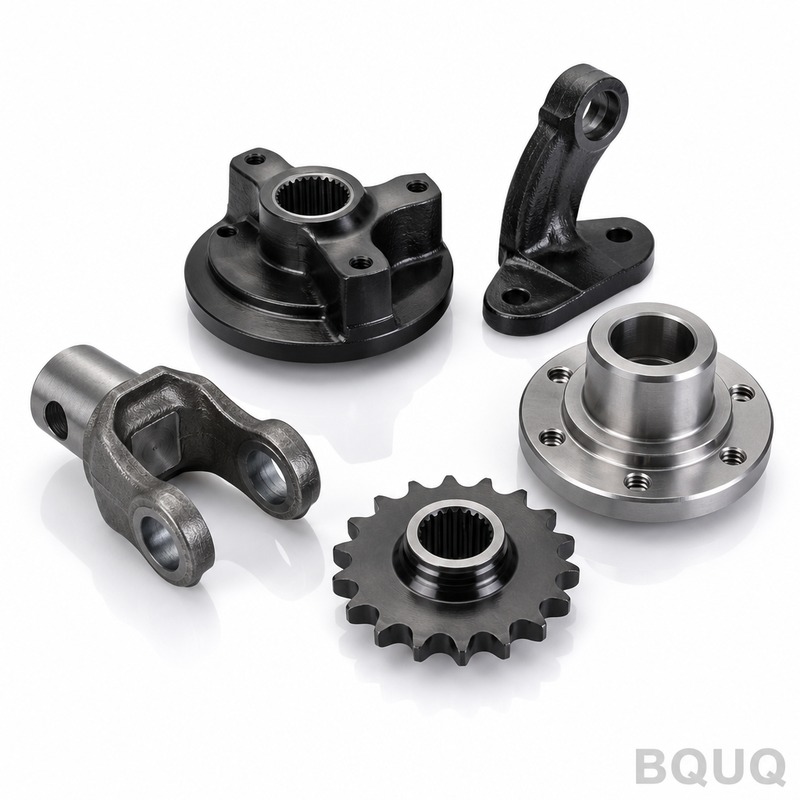
Compliance Trends: From Paper Trails to Digital Threads
Regulatory bodies are no longer accepting static inspection reports. The trend for 2025 is the "Digital Thread"—a continuous, unbroken data chain from raw material melt date to final assembly torque value.
For BQUQ, this translates to implementing real-time SPC (Statistical Process Control) on every CNC spindle. Every part receives a unique Data Matrix code laser-engraved onto the surface. This code links to a cloud database containing: - Chemical composition certificate (EN 10204 3.1) - In-process dimensional measurements (every 50th part, CMM report) - Heat treatment furnace logs (temperature curve, soak time) - Surface passivation records (nitric acid concentration, immersion time)
The compliance trend also includes stricter endotoxin control. For parts contacting blood, we now perform a LAL (Limulus Amebocyte Lysate) test on random samples, ensuring levels below 0.5 EU/mL. This is a direct response to FDA's increased scrutiny of pyrogen contamination in reusable surgical instruments.
Material Selection: The Battle Between Cost and Biocompatibility
Price pressure remains constant, but the trend is away from "cheap alternatives" and toward "validated equivalents." The most significant shift is the rise of PEEK (polyether ether ketone) over titanium for spinal cages. PEEK offers a modulus of elasticity closer to bone (3-4 GPa vs. Titanium's 110 GPa), reducing stress shielding. However, PEEK requires specific machining parameters to avoid smearing and delamination. Our process uses diamond-tipped tools at 8,000 RPM with a feed rate of 0.05 mm/rev, achieving a 0.01 mm tolerance without micro-cracks.
For metal components, the trend is the adoption of "ELI" (Extra Low Interstitial) grades. A standard Ti-6Al-4V costs approximately $45 per kilogram, but the ELI grade costs $85 per kilogram. The price increase is justified by the lower oxygen and iron content, which improves fracture toughness in high-cycle fatigue applications like pacemaker leads. We advise clients that the material cost delta is typically less than 3% of the final device cost, but the failure risk delta is significant.
Surface Finishing: The Micro-Structure Frontier
Precision is not just about dimension; it is about surface topography. The 2025 trend focuses on controlled surface roughness to influence cellular response. For osseointegration (bone bonding), a roughness of Ra 3.0-4.0 µm is desired. For anti-thrombogenic surfaces (blood contact), a mirror polish of Ra 0.05 µm is required.
Our electro-polishing line for stainless steel achieves a material removal rate of 0.02 mm per minute using a current density of 0.5 A/cm². This process is temperature-critical; we maintain the electrolyte bath at 60°C ± 2°C. If the temperature exceeds 63°C, the surface becomes pitted, leading to stress corrosion cracking. The table below outlines our standard finishing specs and cost implications per part (average size 50mm x 20mm x 5mm).
| Finish Type | Ra Value (µm) | Process Time (min) | Cost per Part (USD) | Application |
| Standard Bead Blast | 1.6 | 5 | $1.20 | Orthopedic Plates |
| Electropolish (Medical) | 0.2 | 15 | $4.50 | Surgical Scissors |
| Mechanical Mirror | 0.05 | 30 | $8.00 | Dental Implants |
| Anodized (Type II) | 0.8 | 20 | $3.75 | Handheld Housings |
Lead Time and Pricing Strategy: The 2025 Reality
The trend in sourcing is shifting from "lowest quote" to "total cost of ownership" (TCO). A quote at $5.00 per part with a 10-week lead time is often more expensive than a $6.50 part with a 4-week lead time when you factor in inventory carrying costs and regulatory review delays.
For prototype runs (1-10 pieces), expect a 3-5 day turnaround but with a setup fee ranging from $150 to $500 depending on complexity. For production runs (1,000+ pieces), the pricing matrix is heavily influenced by cycle time. A simple stamped spring might cycle at 0.8 seconds, while a complex 5-axis milled titanium part might require 12 minutes per cycle.
Our current average lead time for medical-grade CNC machining is 18 days for standard production, with a 95% on-time delivery rate. For urgent repair parts, we offer an expedited 72-hour service at a 25% surcharge. This is critical during the trend of "just-in-time" hospital inventory management, where a stockout of a surgical saw blade costs a hospital $2,000 per hour in lost operating room time.
FAQ-Style Tips for Engineers and Procurement Specialists
Question: How do I specify tolerances without overpaying? Answer: Specify the tightest tolerance only on critical mating features. For example, a hole for a press-fit pin must be ±0.005 mm, but the outer cosmetic surface can be ±0.1 mm. Over-specifying all dimensions increases inspection time and scrap rate exponentially. A 0.005 mm tolerance is 4x more expensive to machine than a 0.02 mm tolerance.
Question: What documentation is essential for an FDA audit? Answer: Ensure your supplier provides a Device History Record (DHR) equivalent. This must include the material heat number, process parameters (spindle speed, feed rate, tool wear), and the final inspection data. Do not accept a "certificate of conformance" without raw data. Insist on receiving the CMM (Coordinate Measuring Machine) report in a PDF format with the actual measured values versus nominal values.
Question: Can you machine PEEK without voids? Answer: Yes, but only with specific tool geometry and cooling. Use a single-flute end mill with a positive rake angle. Dry machining is preferred to prevent moisture absorption. If coolant is used, it must be a dry-mist system. The key is to keep the part temperature below 150°C to prevent recrystallization. Ask your supplier for their cooling method before placing an order.
Conclusion: The Path Forward in 2025
The convergence of precision and compliance is no longer a differentiator; it is a license to operate. Manufacturers who succeed will invest in automated metrology, digital traceability, and advanced materials processing. For buyers, the trend is clear: partner with a factory that can demonstrate statistical capability (Cpk > 1.33) and regulatory documentation fluency, not just a low price. The product development cycle is too long and the liability too high to gamble on unvalidated sources.
If you are evaluating a new medical device project or seeking to re-source an existing component, our engineering team is available to review your drawings for manufacturability and compliance readiness. We provide a 12-hour quoting service for standard medical parts, including material sourcing and finish recommendations. Email your 2D or 3D files to sc@bquq.com or contact us directly on WhatsApp at +86 13713157787. Visit www.bquq.com for our full capability matrix and quality certifications.
Related Articles
- When CNC 'Speaks' — Intelligent Process Planning Driven by Large Models and Knowledge Graphs
- Digital twin-driven CNC machining: from simulation to closed-loop process optimization
- Adaptive Control and AI Real-Time Optimization in CNC Machining: From Experience to Algorithm
Frequently Asked Questions
What tolerance levels can you achieve for CNC-machined medical components in 2025?
We achieve tolerances as tight as ±0.005 mm for CNC milling of joint implants, and ±0.02 mm for metal stamping of guide wires. Since 2022, requests for tolerances tighter than ±5 microns have increased by 42% across our 12,000+ medical part numbers.
How do you ensure traceability for FDA and EU MDR audits?
We implement a Digital Thread system with real-time SPC on every CNC spindle. Each part gets a laser-engraved Data Matrix code linking to cloud records including EN 10204 3.1 chemical certificates, CMM reports every 50th part, heat treatment furnace logs, and surface passivation records.
What materials do you use for implantable and spring components?
For joint implants, we use Ti-6Al-4V ELI titanium. Guide wires are made from 304V or 316LVM stainless steel, and drug delivery springs use MP35N or Elgiloy. Heat sinks for laser optics are C11000 copper.
How do you control endotoxin levels for blood-contacting parts?
We perform LAL (Limulus Amebocyte Lysate) tests on random samples of parts that contact blood, ensuring endotoxin levels stay below 0.5 EU/mL. This directly addresses FDA's increased scrutiny of pyrogen contamination in reusable surgical instruments.