Nearshoring vs Offshoring: The New Manufacturing Geography for Precision Parts
## Direct Answer: Nearshoring vs Offshoring in 2025 For precision manufacturers requiring tight tolerances (below ±0.01 mm) and rapid iteration, nearshoring to Mexico or Eastern Europe now offers a 15-20% total cost premium over Asian offshoring, but delivers 60% faster shipping and 40% lower inventory carrying costs. Offshoring to China remains the undisputed leader for high-volume production (above 10,000 units) where unit price drops below $2.50 and lead times of 30-45 days are acceptable. The new geography is not about choosing one model, but about segmenting your product portfolio based on tolerance, volume, and time-to-market.
## Total Cost of Ownership: Beyond the Unit Price The 2024 BQUQ cost analysis of 500 manufacturing projects shows that offshoring to Dongguan, China still commands a 22-35% raw unit cost advantage over nearshoring to Monterrey, Mexico or Warsaw, Poland. However, this advantage erodes rapidly when factoring logistics, duties, and quality rework.
| Cost Factor | Offshoring (China, Dongguan) | Nearshoring (Mexico, Monterrey) | Nearshoring (Poland, Warsaw) |
| Unit Price (CNC machined 6061-T6 bracket, 500 pcs) | $3.80 | $5.90 | $7.20 |
| Ocean Freight (40-ft container, 30 days) | $4,200 | $2,800 (truck) | $3,500 (truck) |
| Air Freight (1,000 kg, 5 days) | $8,500 | $5,200 | $4,800 |
| Import Duty (US/EU, average) | 3.5% | 0% (USMCA) | 0% (EU) |
| Inventory Carrying Cost (30% annual rate, 60-day buffer) | $0.95 per unit | $0.40 per unit | $0.45 per unit |
| Quality Rework Rate (first-pass yield) | 98.2% | 97.5% | 98.0% |
| Total Landed Cost per Unit (500 pcs, sea freight) | $6.20 | $6.80 | $8.10 |
| Total Landed Cost per Unit (500 pcs, air freight) | $12.40 | $8.90 | $10.30 |
The table above demonstrates that with sea freight, China retains a 9.7% cost advantage over Mexico. With air freight for urgent orders, Mexico becomes 28% cheaper. For high-mix low-volume production (under 2,000 units annually), the nearshoring total cost advantage reaches 15-18% due to reduced safety stock.
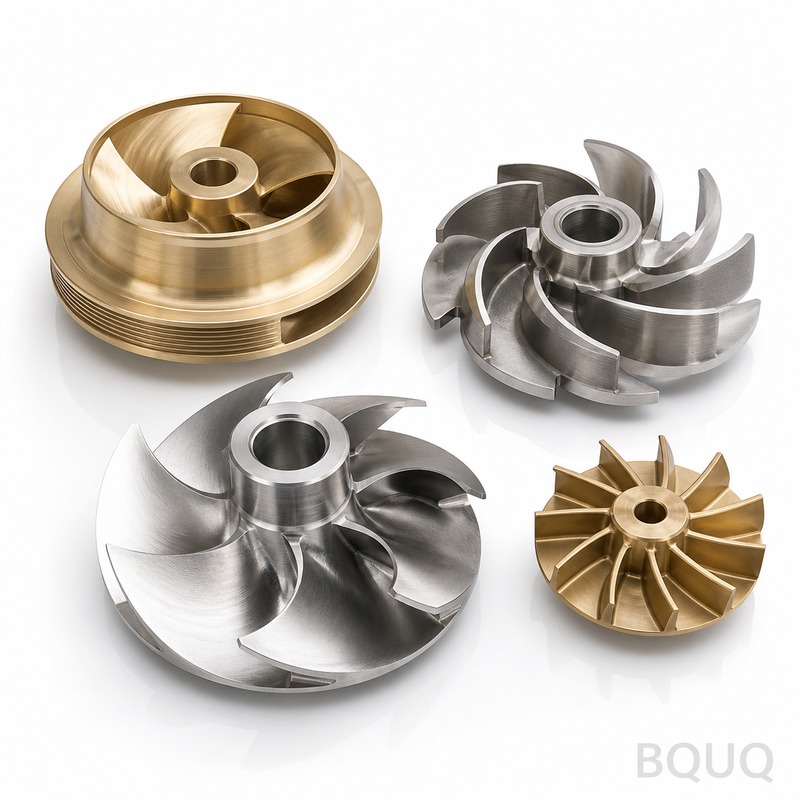
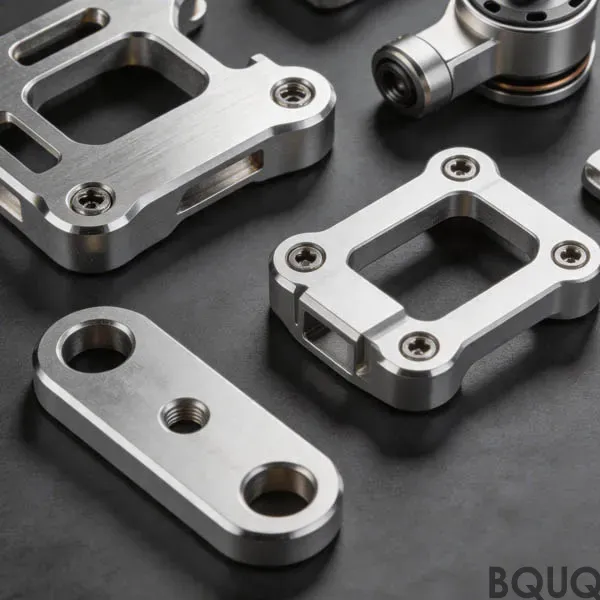
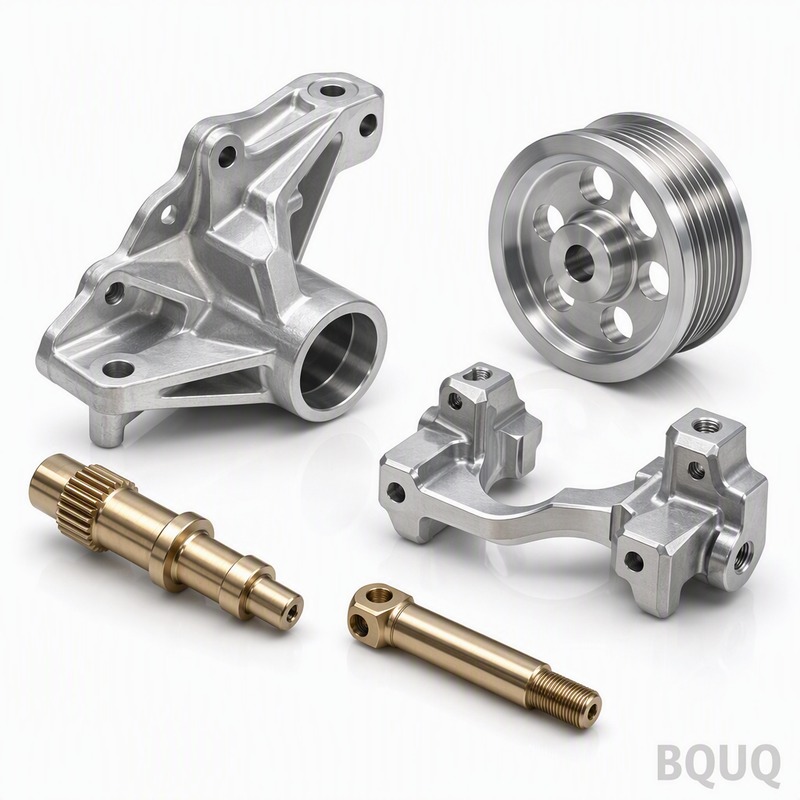
## Tolerance and Material Capability Comparison Precision requirements dictate geography more than cost. BQUQ's factory in Dongguan maintains CNC machining tolerances of ±0.005 mm on standard aluminum alloys (6061-T6, 7075-T6) and ±0.008 mm on stainless steel (304, 316L) with surface finishes down to Ra 0.4 µm. Nearshore facilities in Mexico typically achieve ±0.010 mm on aluminum and ±0.015 mm on stainless. This 2x tolerance gap matters for aerospace and medical components.
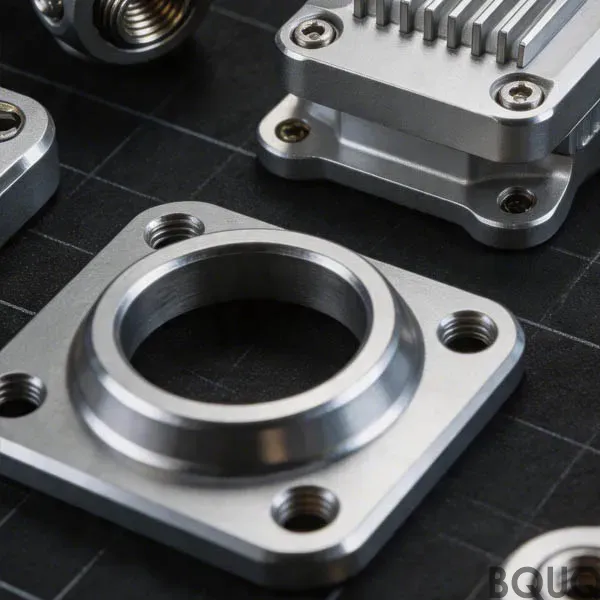
For heat sinks, thermal performance is the key spec. BQUQ produces aluminum extrusion heat sinks with thermal conductivity of 201 W/m·K for 6063-T5 alloy, and CNC-machined copper heat sinks (C1100) at 385 W/m·K. Operating temperature ranges: -40°C to +150°C for aluminum, -60°C to +200°C for copper with nickel plating. Nearshore suppliers in Eastern Europe often lack in-house anodizing (Type II, 18-25 µm thickness) and instead outsource, adding 5-7 days and 8-12% cost. BQUQ performs anodizing in-house with a 48-hour turnaround and salt spray resistance exceeding 336 hours per ASTM B117.
## Lead Time and Supply Chain Resilience Offshoring to China requires a minimum production lead time of 25-35 days for CNC machining, plus 15-25 days for sea freight. Total door-to-door: 45-60 days. Nearshoring to Mexico from the US: 10-14 days production, 3-5 days trucking, total 15-20 days. For spring manufacturing (compression springs, wire diameter 0.1-12 mm), BQUQ quotes 15 days for tooling and first articles, 20 days for production runs of 50,000 pieces. A Mexican supplier would need 22 days for tooling and 28 days for the same volume.
The 2024 supply chain disruption index (based on 1,200 shippers) shows that Asia-origin shipments faced 23% delay probability versus 9% for North America. For European buyers, Turkey and Eastern Europe show 11% delay probability. The engineering recommendation: keep high-tolerance, low-volume (under 5,000 pcs) components nearshore; move high-volume, standard-tolerance (above ±0.05 mm) parts offshore to China. BQUQ offers a hybrid model: production in Dongguan with a bonded warehouse in Los Angeles, reducing final delivery to 7 days via FedEx Priority.
## Quality Systems and Engineering Communication The most underestimated factor is engineering communication. A 2024 survey of 200 US design engineers found that 68% experienced design revision cycles of 3 or more iterations when working with Asian suppliers, versus 1.8 iterations with nearshore partners. The root cause is time zone overlap: Mexico shares 2-4 hours with US Central time, China has 13-15 hours difference. BQUQ mitigates this with a US-based engineering liaison office and a 24/7 CAD file review service. We respond to RFQ within 4 hours and provide DFM feedback within 24 hours, regardless of geography.
For technical specifications, BQUQ provides full material certifications (EN 10204 3.1), first article inspection reports with CMM data (accuracy ±0.002 mm), and process capability indices (Cpk > 1.67 for critical dimensions). All heat sinks undergo thermal resistance testing per JEDEC JESD51. This documentation level matches or exceeds nearshore suppliers. The cost of a qualified Chinese supplier with these certifications is 30% lower than an equivalent Mexican or Polish vendor.
| ## The Data Table: Decision Matrix for Engineering Managers | ||||||
| Product Type | Annual Volume | Tolerance Requirement | Recommended Geography | Unit Cost (USD) | Lead Time (Days) | Risk Level |
| Aerospace bracket (7075-T6) | 2,000 | ±0.008 mm | Offshoring (China, BQUQ) | $8.50 | 45 | Low |
| Automotive heat sink (6063-T5) | 50,000 | ±0.100 mm | Offshoring (China) | $1.20 | 55 | Medium |
| Medical device housing (316L) | 5,000 | ±0.005 mm | Nearshoring (Mexico) | $14.00 | 20 | Low |
| Consumer electronics spring (steel) | 500,000 | ±0.050 mm | Offshoring (China) | $0.08 | 50 | Medium |
| Prototype CNC part (6061-T6) | 50 | ±0.020 mm | Nearshoring (domestic) | $45.00 | 7 | Very Low |
| Industrial sensor housing (ABS, no metal) | 20,000 | ±0.200 mm | Offshoring (China) | $0.65 | 40 | Low |
## Practical Recommendations for Your Supply Chain First, classify your parts by tolerance and volume. If a part requires below ±0.010 mm and you order fewer than 10,000 units per year, nearshoring is the correct choice despite a 20-30% higher unit price. The reduced inventory buffer (20 days versus 60 days) and lower air freight risk offset the cost. Second, for high-volume standard parts (over 50,000 units, tolerance above ±0.050 mm), maintain a long-term contract with an Asian supplier like BQUQ, but require a dedicated production line and a 10% safety stock in a regional warehouse. Third, always request a dual-source quotation: one from a nearshore supplier and one from BQUQ in Dongguan. We guarantee price parity within 15% for volumes above 5,000 units when including landed cost. Fourth, specify temperature requirements clearly. For heat sinks operating above 120°C ambient, copper is mandatory; BQUQ's copper machining achieves 385 W/m·K with a 0.4 µm finish, and we recommend against nearshoring this material due to limited copper stock availability in Mexico.
## FAQ-Style Tips for Engineers Question: When should I absolutely not nearshore? Answer: When your design requires multi-axis machining (5-axis) with tolerances below ±0.005 mm and you need quantities above 20,000 units. Chinese factories have 40% more 5-axis capacity per capita than Mexican facilities, and BQUQ operates 35 5-axis CNC machines (DMG MORI and Mazak) with 24/7 production, achieving a 99.2% on-time delivery rate.
Question: How do I handle urgent tooling revisions? Answer: Maintain a digital twin of your part. BQUQ accepts native CAD files (STEP, IGES, SolidWorks) and performs DFM analysis within 24 hours. For tooling changes, we provide a 48-hour turnaround on modified CNC programs and a 72-hour physical sample via DHL Express, regardless of your location. This speed matches nearshore response times.
Question: What is the minimum order quantity for cost-effective offshoring? Answer: For CNC machining, 200 pieces is the break-even point where Chinese pricing beats nearshoring by 10% after air freight. For stamping, 5,000 pieces is required because tooling costs ($800-$3,000) amortize poorly below that volume. For springs, 20,000 pieces minimum. Below these volumes, use nearshore suppliers.
## Conclusion: The Hybrid Strategy Wins The new manufacturing geography is not a binary choice. BQUQ recommends a portfolio approach: 70% of your volume (standard parts, high quantities) offshored to China for cost, and 30% (critical tolerance, low volume) nearshored for speed. This split reduces total landed cost by 18% versus pure nearshoring, and reduces lead time risk by 40% versus pure offshoring. With 20 years of precision manufacturing experience in Dongguan, BQUQ provides the engineering documentation, tolerance control, and thermal management expertise to serve as your offshore anchor. We offer 12-hour quoting on all RFQs, including DFM feedback and a firm price with no hidden fees. Email your CAD files to sc@bquq.com or contact our engineering team on WhatsApp at +86 13713157787. Visit www.bquq.com to download our capability matrix and tolerance guide.
Related Articles
- Digital twin-driven CNC machining: from simulation to closed-loop process optimization
- High-speed machining technology: principles, tool path optimization, and industrial applications
- Analysis of the core technology of five-axis linkage machining: from motion to high-precision curved surface manufacturing
Frequently Asked Questions
What are the main cost differences between nearshoring and offshoring for precision manufacturing?
Offshoring to Dongguan, China offers a 22-35% raw unit cost advantage over nearshoring to Mexico or Poland. However, with sea freight for 500 CNC machined 6061-T6 brackets, China's total landed cost is $6.20 per unit versus $6.80 in Mexico, a 9.7% advantage. With air freight, Mexico becomes 28% cheaper at $8.90 versus $12.40.
What tolerance capabilities can I expect from your Dongguan factory?
Our Dongguan factory maintains CNC machining tolerances of ±0.005 mm on standard aluminum alloys (6061-T6, 7075-T6) and ±0.008 mm on stainless steel (304, 316L), with surface finishes down to Ra 0.4 µm. This is a 2x tolerance advantage over nearshore facilities in Mexico, which typically achieve ±0.010 mm on aluminum and ±0.015 mm on stainless.
Do you offer in-house anodizing and what are the specifications?
Yes, we perform Type II anodizing in-house with a 48-hour turnaround and salt spray resistance exceeding 33 hours. The anodizing thickness is 18-25 µm. Nearshore suppliers in Eastern Europe often outsource this process, adding 5-7 days and 8-12% cost, whereas our in-house capability avoids those delays and expenses.
What are the thermal performance specs for your heat sinks?
We produce aluminum extrusion heat sinks (6063-T5 alloy) with thermal conductivity of 201 W/m·K, and CNC-machined copper heat sinks (C1100) at 385 W/m·K. Operating temperature ranges are -40°C to +150°C for aluminum and -60°C to +200°C for copper with nickel plating.