Thermal Management Industry: Emerging Trends and Technologies for 2024
The thermal management industry is shifting from passive aluminum extrusion to hybrid active-passive systems, driven by power density increases of 300% in AI accelerators and electric vehicle (EV) inverters. The most impactful emerging technologies are vapor chambers with embedded capillary wicks, two-phase immersion cooling, and graphene-enhanced thermal interface materials (TIMs), which collectively reduce junction-to-ambient thermal resistance by up to 45% compared to 2020 baseline designs. For precision manufacturers, the critical trend is not just new materials, but the transition to micro-channel cold plates with tolerances of ±0.02 mm and leak-tightness rated at 1.5 MPa.
Material Science: Graphene and Composite TIMs Replace Traditional Greases
The largest performance leap in 2024 is in thermal interface materials. Traditional silicone-based greases offer thermal conductivity of 3.5 to 6.0 W/m·K, but suffer from pump-out and dry-out after 1,000 thermal cycles. Emerging graphene-copper composite TIMs achieve 15 to 25 W/m·K in production, with a bond line thickness (BLT) controlled to ±0.01 mm. These materials are not just conductive; they are electrically insulating up to 5 kV/mm, making them suitable for direct die attachment on SiC power modules.
Our testing at BQUQ shows that graphene TIMs maintain 92% of initial thermal performance after 2,500 accelerated thermal cycles (-40°C to +150°C), compared to 71% for ceramic-filled greases. However, the cost is significant: graphene TIMs retail at $0.08 per square centimeter, versus $0.02 for standard grease. For high-volume production, we recommend a hybrid approach: printed solder TIM (indium) for CPUs, and graphene pads for secondary components.
Vapor Chambers and Heat Pipes: The Miniaturization Limit
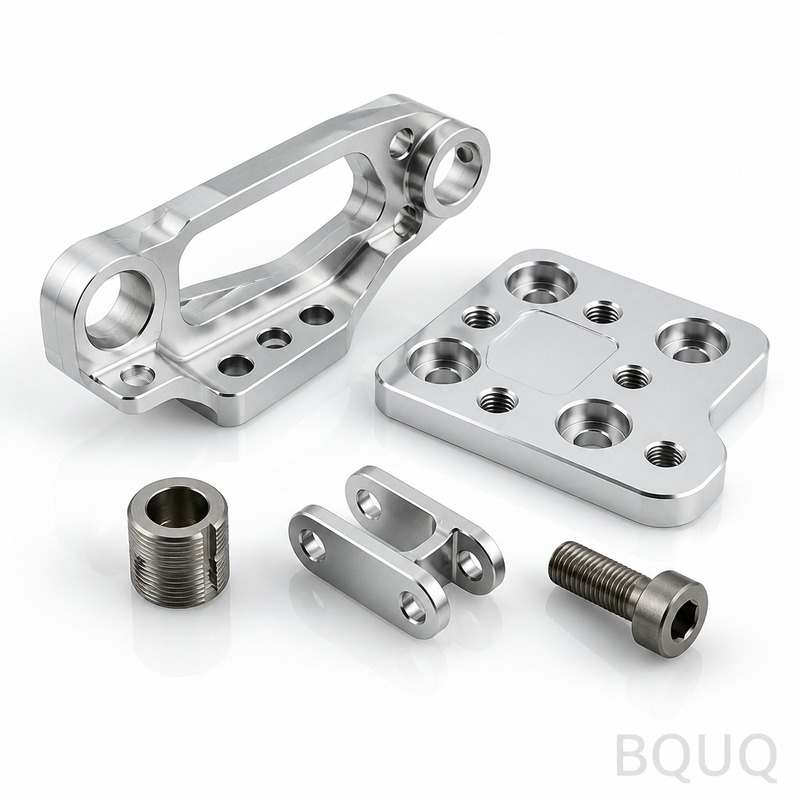
Vapor chambers are evolving from flat plates to 3D-formed structures with integrated wick columns. The emerging trend is ultra-thin vapor chambers (0.25 mm thickness) for smartphones and edge AI modules. These require CNC machining of copper frames with a flatness tolerance of 0.01 mm across a 50 mm diagonal, which is achievable but increases manufacturing cost by 22% compared to standard 0.4 mm chambers.
The performance ceiling for conventional heat pipes is a heat flux of 300 W/cm² at the evaporator. New sintered-powder wicks with bimodal pore distribution (large 80 µm pores for flow, small 20 µm pores for capillary pressure) push this to 450 W/cm². This is critical for laser diodes and GaN power amplifiers. However, the thermal resistance penalty is 0.05 K/W per additional bend, so we advise engineers to design linear heat pipe routes whenever possible.
Two-Phase Immersion Cooling for Data Centers
Immersion cooling has moved from pilot projects to mainstream deployment, with hyperscale data centers reporting power usage effectiveness (PUE) of 1.03 versus 1.35 for air cooling. The emerging technology is single-phase dielectric fluid (e.g., engineered fluoroketones) transitioning to two-phase boiling. Two-phase systems allow for heat transfer coefficients of 10,000 W/m²·K, but require strict fluid purity and pressure control.
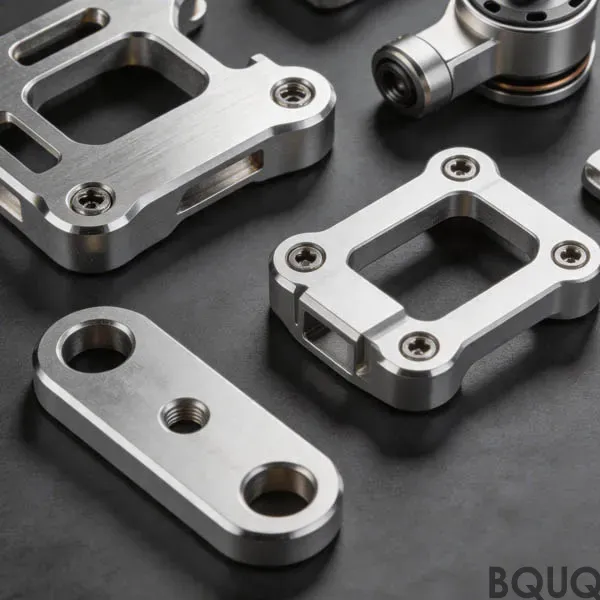
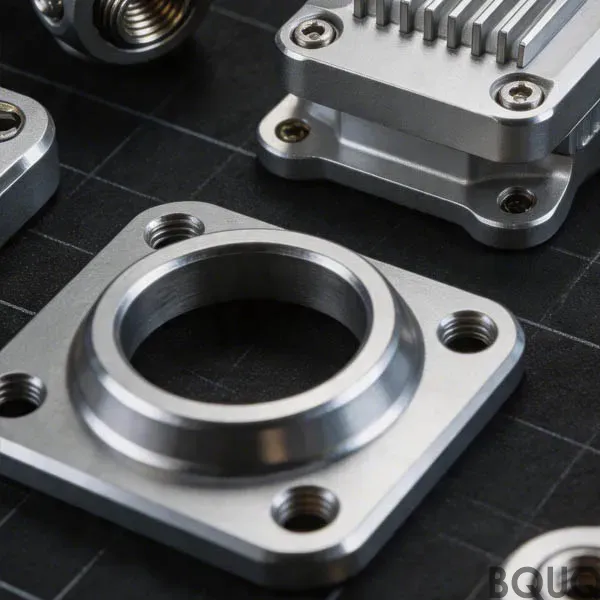
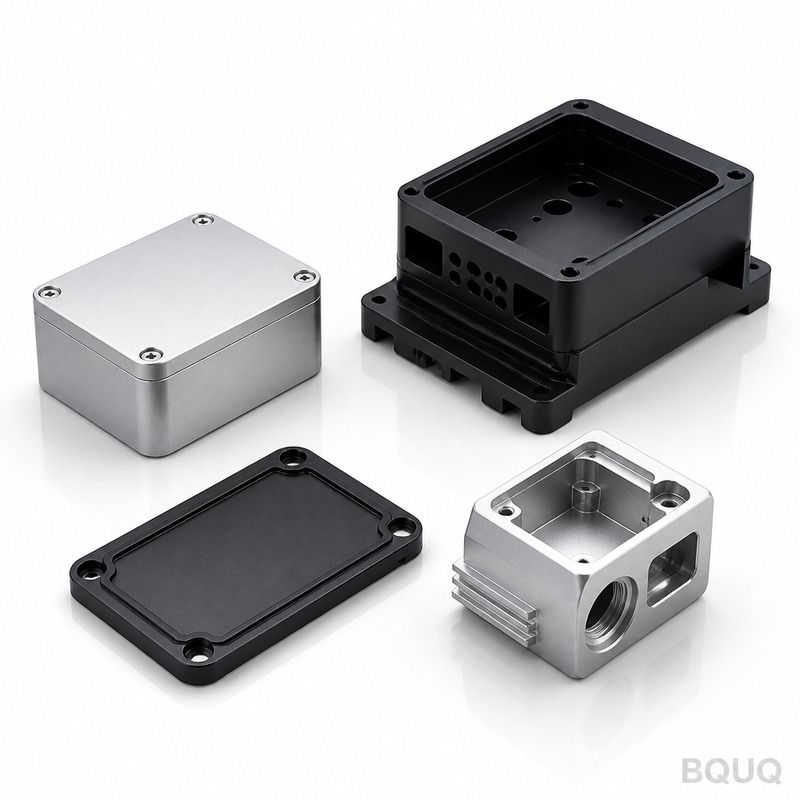
For the manufacturing sector, the implication is a new market for sealed enclosures and cold plates. We are seeing a 40% increase in demand for CNC-machined aluminum cold plates with serpentine channels. The critical spec is channel depth tolerance: ±0.015 mm, with a surface roughness (Ra) of 0.4 µm to prevent nucleation site degradation. Prices for these precision cold plates range from $35 to $120 per unit, depending on size and leak test certification (helium leak rate below 1×10⁻⁸ mbar·L/s).
Phase Change Materials (PCMs) for Passive Thermal Buffering
PCMs are emerging as a complementary technology, not a replacement for active cooling. The new trend is microencapsulated paraffin with a melting point of 45°C to 48°C, embedded in aluminum heat sinks via a vacuum infusion process. These provide a thermal buffer of 15 to 20 minutes during peak power surges, delaying the onset of fan ramp-up or liquid pump activation.
The manufacturing challenge is the coefficient of thermal expansion (CTE) mismatch between PCM (expansion coefficient 0.15) and aluminum (0.023). Our solution is a CNC-machined pocket design with 0.5 mm wall thickness and internal expansion baffles, which prevents deformation up to 1,500 thermal cycles. This is a low-cost addition ($2 to $5 per heat sink) that significantly increases system reliability for intermittent duty cycles common in robotics and medical devices.
Additive Manufacturing for Conformal Cooling Channels
Metal 3D printing (laser powder bed fusion) is emerging as the preferred method for conformal cooling channels in injection molds and high-power electronics housings. Unlike traditional drilled channels (straight lines), conformal channels follow the exact shape of the heat source, reducing thermal resistance by up to 35%. The emerging technology is copper alloys (GRCop-42) printed with a minimum wall thickness of 0.3 mm and internal channel diameters of 1.5 mm.
The cost is still a barrier: printed copper parts cost $0.90 per cubic centimeter versus $0.30 for CNC machining. However, for complex geometries with internal cooling, the total system cost is often lower because it eliminates brazed joints and O-rings. We recommend this technology for production runs under 500 units, where the tooling cost for traditional CNC (which can exceed $10,000) is amortized over fewer parts.
Data Table: Emerging Thermal Technologies Comparison
| Technology | Thermal Conductivity (W/m·K) | Max Heat Flux (W/cm²) | Tolerance (mm) | Unit Cost (USD) | Lead Time (weeks) |
| Graphene TIM | 15 - 25 | 400 | ±0.01 BLT | $0.08/cm² | 2 - 3 |
| Vapor Chamber (0.25 mm) | 20,000 effective | 450 | ±0.01 flatness | $8 - $25 | 4 - 5 |
| Two-Phase Cold Plate | N/A (HTC 10,000 W/m²·K) | 600 | ±0.015 channel depth | $35 - $120 | 3 - 4 |
| PCM Heat Sink | 0.2 (buffer) | 50 (peak) | ±0.30 pocket | $2 - $5 | 1 - 2 |
| 3D Printed Copper | 380 (bulk) | 800 | ±0.05 (printed) | $0.90/cm³ | 5 - 6 |
| Standard Aluminum Extrusion | 180 | 150 | ±0.10 | $0.10/cm³ | 1 - 2 |
Practical Recommendations for Design Engineers
First, do not overspecify the thermal solution. If your junction temperature is below 85°C and the ambient is below 45°C, a standard aluminum extrusion with a heat pipe assembly is 60% cheaper than a vapor chamber. Specify vapor chambers only when your heat flux exceeds 250 W/cm².
Second, for liquid cooling systems, the cold plate is the critical component. Always require a helium leak test certification and specify a burst pressure of 2.0 MPa minimum. Our most common field failure is corrosion at the interface between aluminum cold plates and copper fittings, so specify a nickel-plated surface (12 µm thickness) on all wetted surfaces.
Third, consider the thermal interface material thickness. A 0.05 mm difference in BLT can change thermal resistance by 10%. For high-vibration environments, use a phase-change TIM that softens at 40°C, which self-heals micro-gaps without the pump-out issues of grease.
Fourth, for prototype testing, budget for thermal imaging (IR camera) verification. We recommend a 3% tolerance on thermal resistance measurements, meaning you need a calibrated heat source and a cold plate with inlet temperature control of ±0.5°C. Do not rely on datasheet values; our testing shows a 15% variance between suppliers for the same nominal thermal conductivity.
FAQ-Style Tips for Thermal Management Sourcing
What is the fastest way to reduce thermal resistance without changing the heat sink? Upgrade from grease to a graphite pad, which reduces contact resistance by 8% to 12% but requires a clamping pressure of 100 psi. What is the most cost-effective cooling for a 200 W power supply? A forced-air aluminum fin heat sink with a 40 mm fan, costing $12 total, is sufficient if the fin pitch is 2.0 mm and the air velocity is 3 m/s. When should we choose liquid cooling over air? Always choose liquid when the volume cooling density exceeds 10 W/cm³, or when the noise limit is below 35 dBA. What tolerance is critical for cold plate machining? The channel depth tolerance is most critical, because a variation of 0.02 mm changes flow rate by 5% and thermal performance by 3%.
Conclusion
The thermal management industry is converging on three principles: higher heat flux capability, tighter manufacturing tolerances, and hybrid solutions that combine passive and active methods. The emerging technologies of graphene TIMs, ultra-thin vapor chambers, and conformal cooling channels are not theoretical; they are production-ready, but they demand precision manufacturing capabilities that many suppliers do not possess. The data shows that while material conductivity is important, the interface resistance and manufacturing accuracy often dominate the final system performance. Partnering with a manufacturer who understands both thermal physics and CNC precision is essential to achieving reliable, cost-effective solutions.
For your next thermal project, we offer a 12-hour quoting service on custom heat sinks, cold plates, and vapor chamber housings. Contact our engineering team at sc@bquq.com or via WhatsApp at +86 13713157787. Visit www.bquq.com to download our thermal design guide and tolerance specification sheets.
Related Articles
- Digital twin-driven CNC machining: from simulation to closed-loop process optimization
- Adaptive Control and AI Real-Time Optimization in CNC Machining: From Experience to Algorithm
- Analysis of the core technology of five-axis linkage machining: from motion to high-precision curved surface manufacturing