
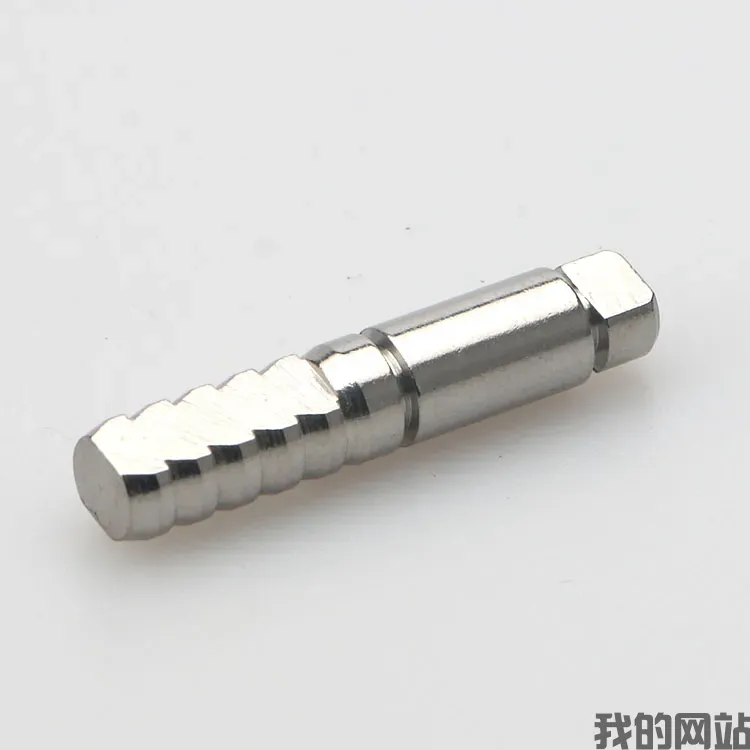
Titanium CNC Machining for Medical Implants: Best Practices
Jul 06,2026

Titanium CNC Machining for Medical Implants: Best Practices

In the medical device industry, titanium has become the gold standard for implants due to its exceptional biocompatibility, high strength-to-weight ratio, and corrosion resistance. However, machining titanium for medical implants presents unique challenges that require specialized CNC techniques. This guide covers the best practices for titanium CNC machining, ensuring your parts meet the stringent requirements of medical applications.

Why Titanium is Ideal for Medical Implants

Titanium and its alloys (e.g., Ti-6Al-4V) are widely used in orthopedic, dental, and cardiovascular implants. Key properties include:

  • Biocompatibility: Titanium is non-toxic and osseointegrates with bone, reducing rejection risk.

  • Strength-to-Weight Ratio: Excellent mechanical strength with low density, ideal for load-bearing implants.

  • Corrosion Resistance: A passive oxide layer protects against bodily fluids, preventing ion release.

Challenges in CNC Machining Titanium

Despite its benefits, titanium is notoriously difficult to machine. Common challenges include:

  • Low Thermal Conductivity: Heat accumulates at the cutting edge, accelerating tool wear.

  • Work Hardening: The material hardens quickly under cutting stresses, making subsequent passes difficult.

  • Chip Formation: Long, stringy chips can entangle and damage the workpiece or tool.

  • High Chemical Reactivity: At elevated temperatures, titanium can react with tool materials, causing crater wear.

Best Practices for Titanium CNC Machining

1. Tool Selection

Use carbide or polycrystalline diamond (PCD) tools with sharp edges and positive rake angles. Coatings like TiAlN or AlTiN reduce heat and improve wear resistance. For finishing, use micro-grain carbide tools.

Tool TypeRecommendation
End mills4+ flutes, variable helix, corner radius
DrillsCoolant-through, 140° point angle
InsertsWiper geometry for surface finish

2. Cutting Parameters

Conservative speeds and feeds prevent heat buildup. For roughing, use low cutting speed (30–60 m/min) and moderate feed (0.1–0.2 mm/rev). For finishing, increase speed slightly (50–80 m/min) with light cuts (0.2–0.5 mm depth). Always use climb milling to reduce work hardening.

3. Coolant and Lubrication

High-pressure coolant (50–80 bar) through the spindle or tool is essential to flush chips and dissipate heat. Use a water-soluble coolant with extreme pressure (EP) additives. For tapping, consider oil-based lubricants.

4. Chip Management

Employ chip breakers or pecking cycles to prevent long chips. Use a high-pressure coolant system to clear chips from the cutting zone. Regularly inspect and remove chips from the machine table.

5. Machine Rigidity

Use a rigid machine with minimal spindle runout. Secure the workpiece with strong fixturing (e.g., 5-axis vice or custom jaws). Avoid vibrations by balancing tool holders and using short, stiff tool setups.

Surface Finish and Post-Processing

Medical implants require smooth surfaces (Ra < 0.5 µm) to promote osseointegration and reduce bacterial adhesion. Achieve this through:

  • Finishing Passes: Use light radial cuts (< 10% of tool diameter) with sharp inserts.

  • Polishing: Mechanical or electrochemical polishing removes micro-burrs.

  • Passivation: A nitric acid treatment enhances the oxide layer for corrosion resistance.

Quality Control and Inspection

Stringent QC is mandatory for medical implants. Key inspections include:

  • Dimensional Accuracy: CMM or optical measurement to tolerances ±0.005 mm.

  • Surface Roughness: Profilometer checks per ISO 4287.

  • Non-Destructive Testing: X-ray or CT scanning for internal defects.

  • Material Certification: Verify grade and mechanical properties via mill certificates.

Regulatory Compliance

Manufacturers must adhere to:

  • ISO 13485: Quality management for medical devices.

  • FDA 21 CFR Part 820: U.S. regulations for device manufacturing.

  • ASTM F67 / F136: Standards for unalloyed and alloyed titanium for implants.

Maintain traceability for every batch, including raw material lot numbers, machining parameters, and inspection records.

Conclusion

Successful titanium CNC machining for medical implants demands a combination of the right tools, parameters, and rigorous quality control. By implementing these best practices, you can produce implants that are both reliable and biocompatible. As a specialist in metal stamping and CNC precision parts, we offer end-to-end medical device manufacturing with strict adherence to industry standards. Contact us today to discuss your project.

Frequently Asked Questions

Why is titanium considered the best material for medical implants?

Titanium is ideal for medical implants due to its biocompatibility, high strength-to-weight ratio, and corrosion resistance. It is non-toxic and osseointegrates with bone, reducing rejection risk. Its excellent mechanical strength with low density suits load-bearing implants, and a passive oxide layer prevents ion release in bodily fluids.

What are the main challenges when CNC machining titanium for medical parts?

Key challenges include low thermal conductivity causing heat buildup at the cutting edge, work hardening under cutting stresses, long stringy chips that can entangle, and high chemical reactivity at elevated temperatures leading to crater wear. These factors accelerate tool wear and complicate machining, requiring specialized techniques.

What cutting parameters should be used for roughing and finishing titanium?

For roughing, use a low cutting speed of 30–60 m/min with a moderate feed of 0.1–0.2 mm/rev. For finishing, increase speed to 50–80 m/min with light cuts of 0.2–0.5 mm depth. Always use climb milling to reduce work hardening and prevent heat buildup.

What coolant and tooling recommendations are provided for titanium machining?

Use high-pressure coolant at 50–80 bar through the spindle or tool to flush chips and dissipate heat, with a water-soluble coolant containing EP additives. For tools, use carbide or PCD with sharp edges and positive rake angles, plus TiAlN or AlTiN coatings. End mills should have 4+ flutes with variable helix and corner radius.
Contact Us Quote
Get A Quote
We use cookie to improve your online experience. By continuing to browse this website, you agree to our use of cookie.

Cookies

Please read our Terms and Conditions and this Policy before accessing or using our Services. If you cannot agree with this Policy or the Terms and Conditions, please do not access or use our Services. If you are located in a jurisdiction outside the European Economic Area, by using our Services, you accept the Terms and Conditions and accept our privacy practices described in this Policy.
We may modify this Policy at any time, without prior notice, and changes may apply to any Personal Information we already hold about you, as well as any new Personal Information collected after the Policy is modified. If we make changes, we will notify you by revising the date at the top of this Policy. We will provide you with advanced notice if we make any material changes to how we collect, use or disclose your Personal Information that impact your rights under this Policy. If you are located in a jurisdiction other than the European Economic Area, the United Kingdom or Switzerland (collectively “European Countries”), your continued access or use of our Services after receiving the notice of changes, constitutes your acknowledgement that you accept the updated Policy. In addition, we may provide you with real time disclosures or additional information about the Personal Information handling practices of specific parts of our Services. Such notices may supplement this Policy or provide you with additional choices about how we process your Personal Information.


Cookies

Cookies are small text files stored on your device when you access most Websites on the internet or open certain emails. Among other things, Cookies allow a Website to recognize your device and remember if you've been to the Website before. Examples of information collected by Cookies include your browser type and the address of the Website from which you arrived at our Website as well as IP address and clickstream behavior (that is the pages you view and the links you click).We use the term cookie to refer to Cookies and technologies that perform a similar function to Cookies (e.g., tags, pixels, web beacons, etc.). Cookies can be read by the originating Website on each subsequent visit and by any other Website that recognizes the cookie. The Website uses Cookies in order to make the Website easier to use, to support a better user experience, including the provision of information and functionality to you, as well as to provide us with information about how the Website is used so that we can make sure it is as up to date, relevant, and error free as we can. Cookies on the Website We use Cookies to personalize your experience when you visit the Site, uniquely identify your computer for security purposes, and enable us and our third-party service providers to serve ads on our behalf across the internet.

We classify Cookies in the following categories:
 ●  Strictly Necessary Cookies
 ●  Performance Cookies
 ●  Functional Cookies
 ●  Targeting Cookies


Cookie List
A cookie is a small piece of data (text file) that a website – when visited by a user – asks your browser to store on your device in order to remember information about you, such as your language preference or login information. Those cookies are set by us and called first-party cookies. We also use third-party cookies – which are cookies from a domain different than the domain of the website you are visiting – for our advertising and marketing efforts. More specifically, we use cookies and other tracking technologies for the following purposes:

Strictly Necessary Cookies
These cookies are necessary for the website to function and cannot be switched off in our systems. They are usually only set in response to actions made by you which amount to a request for services, such as setting your privacy preferences, logging in or filling in forms. You can set your browser to block or alert you about these cookies, but some parts of the site will not then work. These cookies do not store any personally identifiable information.

Functional Cookies
These cookies enable the website to provide enhanced functionality and personalisation. They may be set by us or by third party providers whose services we have added to our pages. If you do not allow these cookies then some or all of these services may not function properly.

Performance Cookies
These cookies allow us to count visits and traffic sources so we can measure and improve the performance of our site. They help us to know which pages are the most and least popular and see how visitors move around the site. All information these cookies collect is aggregated and therefore anonymous. If you do not allow these cookies we will not know when you have visited our site, and will not be able to monitor its performance.

Targeting Cookies
These cookies may be set through our site by our advertising partners. They may be used by those companies to build a profile of your interests and show you relevant adverts on other sites. They do not store directly personal information, but are based on uniquely identifying your browser and internet device. If you do not allow these cookies, you will experience less targeted advertising.

How To Turn Off Cookies
You can choose to restrict or block Cookies through your browser settings at any time. Please note that certain Cookies may be set as soon as you visit the Website, but you can remove them using your browser settings. However, please be aware that restricting or blocking Cookies set on the Website may impact the functionality or performance of the Website or prevent you from using certain services provided through the Website. It will also affect our ability to update the Website to cater for user preferences and improve performance. Cookies within Mobile Applications

We only use Strictly Necessary Cookies on our mobile applications. These Cookies are critical to the functionality of our applications, so if you block or delete these Cookies you may not be able to use the application. These Cookies are not shared with any other application on your mobile device. We never use the Cookies from the mobile application to store personal information about you.

If you have questions or concerns regarding any information in this Privacy Policy, please contact us by email at . You can also contact us via our customer service at our Site.