What Are the Latest Trends in 5G Base Station Thermal Management?
The most direct answer is that 5G base station thermal management is shifting from passive aluminum extrusion heat sinks to hybrid active-passive systems, liquid cooling, and phase-change materials, driven by a 3x increase in power density compared to 4G. Modern 5G remote radio units (RRUs) generate between 300W and 1000W of heat per unit, requiring junction temperatures to stay below 85°C to ensure a 15-year service life. The industry is standardizing on die-cast aluminum or copper heat pipes combined with forced-air cooling, while exploring cold plates for massive MIMO arrays.
Why Is 5G Thermal Management More Demanding Than 4G?
A 4G base station typically dissipates 100W to 200W per RRU, whereas a 5G massive MIMO (64T64R) unit consumes up to 1200W of input power with over 90% converted to heat. Higher operating frequencies (3.5 GHz to 39 GHz) lead to smaller, denser power amplifiers that suffer from increased resistive losses. The physical size of the 5G antenna array limits the available heat sink footprint to roughly 400mm x 400mm, creating a heat flux of 0.6 W/cm² to 1.5 W/cm², which is two to three times higher than 4G equipment. This increased thermal load directly accelerates semiconductor degradation, where every 10°C rise above the 85°C junction limit cuts component lifespan by half.
What Are the Primary Thermal Management Methods Used Today?
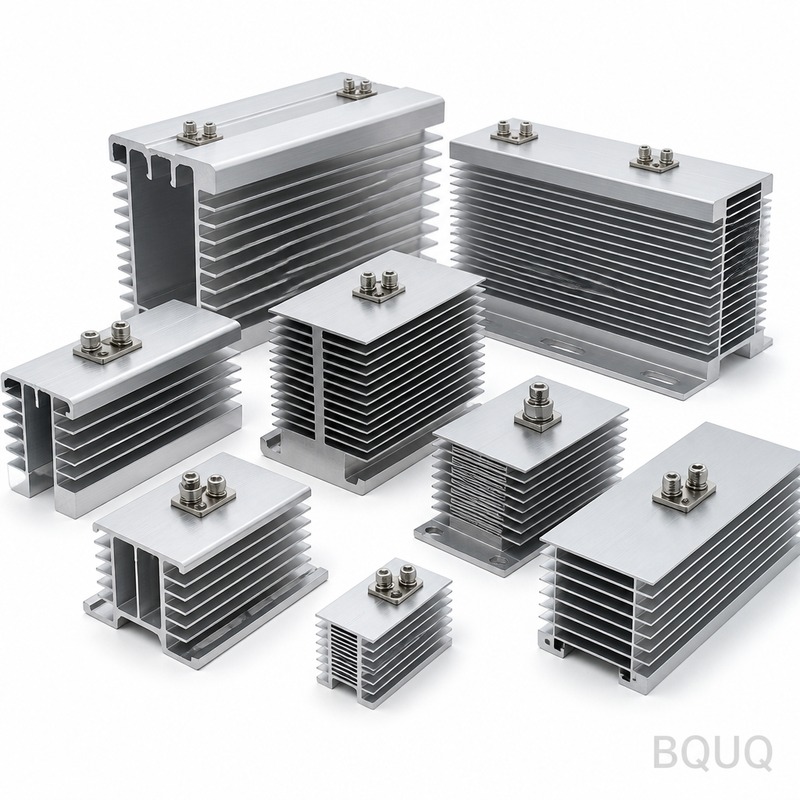
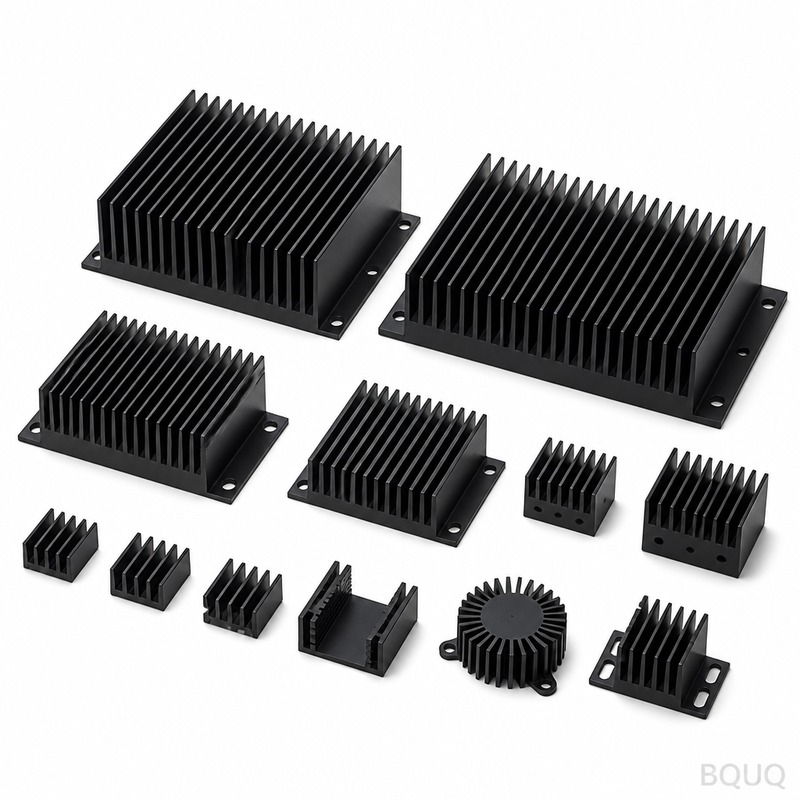
The current industry baseline is a passive aluminum heat sink with 10 to 15 fins per inch, achieving a thermal resistance of 0.2°C/W to 0.4°C/W at natural convection. For 5G, manufacturers add forced-air cooling using dual 40mm or 60mm fans, which reduces thermal resistance to 0.05°C/W to 0.1°C/W but introduces reliability concerns due to moving parts. Liquid cooling is emerging for high-density urban sites, using a cold plate with micro-channels (0.5mm to 1.0mm width) that achieves a thermal resistance of 0.02°C/W to 0.05°C/W, though it requires a closed-loop pump and external heat exchanger. Phase-change materials (PCMs) with melting points between 40°C and 55°C are used as thermal buffers for transient loads, absorbing 150 J/g to 250 J/g of latent heat during peak traffic.
How Does Heat Sink Material Selection Affect Performance?
Aluminum 6063-T5 remains the standard because it offers a thermal conductivity of 180 W/m·K at a cost of $4 to $6 per kilogram, making it the most economical choice for large fin arrays. Copper, with a conductivity of 401 W/m·K, is used for heat pipes and base plates when space is constrained, but it weighs 3.3 times more than aluminum and costs $15 to $20 per kilogram. A hybrid solution, such as a copper vapor chamber embedded in an aluminum fin stack, reduces spreading resistance by 40% compared to solid aluminum. For extreme high-power units above 800W, graphite sheets with in-plane conductivity of 1000 W/m·K are applied to spread heat laterally across the PCB before it reaches the heat sink.
| Thermal Solution | Typical Heat Dissipation (W) | Thermal Resistance (°C/W) | System Cost (USD) | Lead Time (Weeks) |
| Aluminum extrusion heat sink (passive) | 100 - 300 | 0.20 - 0.40 | 15 - 40 | 2 - 3 |
| Aluminum heat sink with dual fans | 300 - 600 | 0.05 - 0.10 | 35 - 70 | 3 - 4 |
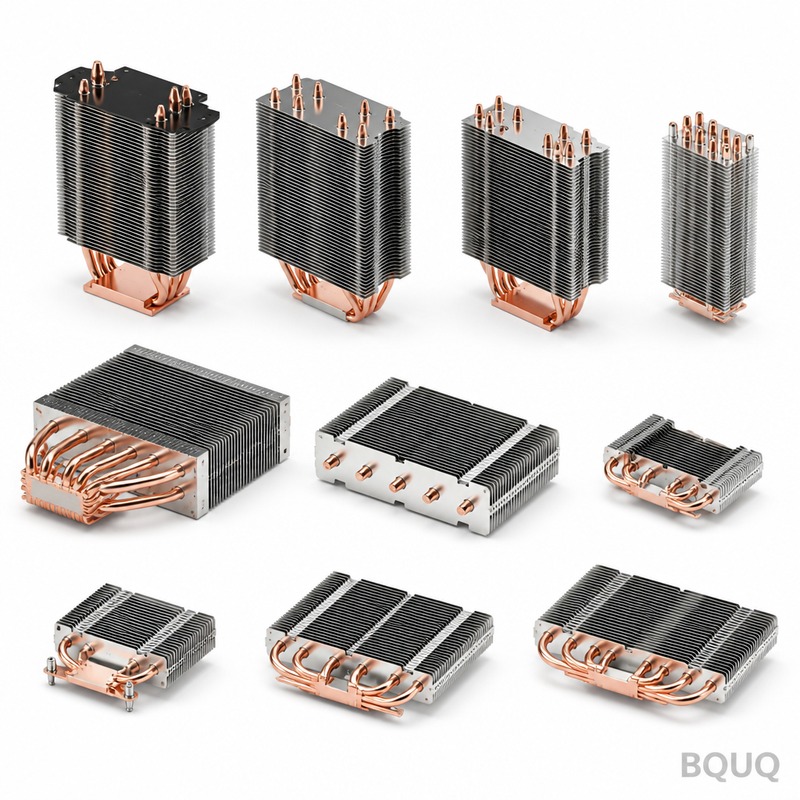
| Copper heat pipe + aluminum fins | 400 - 800 | 0.03 - 0.08 | 50 - 120 | 4 - 6 |
| Liquid cold plate (copper micro-channel) | 600 - 1200 | 0.02 - 0.05 | 150 - 300 | 6 - 8 |
| Vapor chamber + forced air | 500 - 1000 | 0.02 - 0.06 | 80 - 180 | 5 - 7 |
Which Cooling Strategy Should You Choose for a 5G RRU?
For outdoor macro cells with an ambient temperature range of -40°C to +55°C, an IP65-rated aluminum heat sink with sealed fans (rated at 70,000 hours MTBF) is the most common choice, as it handles up to 600W without external plumbing. For small cells installed in street cabinets or on poles, where noise is a concern, a passive heat sink with a larger surface area (0.8 m² to 1.2 m²) is used, combined with a PCM buffer to ride through peak 10-minute traffic bursts. For centralized radio access network (C-RAN) deployments with power above 800W, liquid cooling becomes mandatory, as air cooling would require impractically large fin volumes. A practical rule is to select passive cooling if the heat flux is below 0.5 W/cm², forced air if below 1.0 W/cm², and liquid or vapor chamber if above 1.0 W/cm².
How Do You Calculate the Required Heat Sink Size for a 5G Unit?
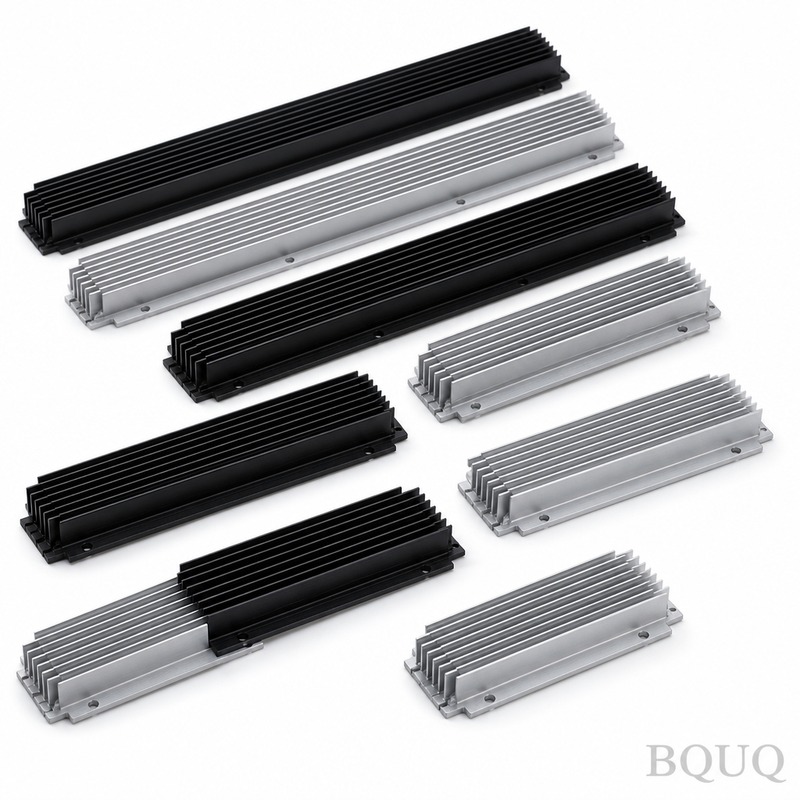
To size a heat sink, first calculate the total thermal resistance required using the equation R_total = (T_junction_max - T_ambient_max) / P_heat. For a 500W RRU with a maximum junction temperature of 85°C and an ambient of 45°C, the required resistance is 0.08°C/W. The heat sink must then achieve a convection resistance of 0.05°C/W, which for an extruded aluminum profile with 2.5mm fins and 4mm spacing requires approximately 0.6 m² of exposed surface area. This translates to a fin block of 300mm (length) x 300mm (width) x 80mm (height), weighing about 2.5 kg. Adding a forced-air flow of 50 CFM reduces the required fin height to 40mm, cutting material cost by roughly 30%.
What Are the Latest Trends in Thermal Interface Materials for 5G?
Thermal interface materials (TIMs) for 5G must withstand high clamping pressures up to 50 psi and temperatures cycling from -40°C to 125°C without pump-out. Silicone-based gap pads with thermal conductivity of 3 W/m·K to 8 W/m·K are widely used between the PCB and heat sink, with a typical bond line thickness of 0.5mm to 1.0mm. Phase-change TIMs, which liquefy above 50°C, achieve a thermal impedance of 0.05°C·cm²/W and are preferred for their lower thermal resistance at thin bond lines. The newest trend is graphite-based TIMs with a thermal conductivity of 15 W/m·K, which are used in high-vibration environments because they do not creep or dry out over a 15-year lifespan.
When Should You Consider Liquid Cooling Over Air Cooling in 5G?
Liquid cooling becomes economically justified when the required air volume flow exceeds 200 CFM, because the fan power consumption would exceed 100W and reduce the power amplifier efficiency by more than 5%. The break-even point is typically at a heat dissipation of 700W per unit when the ambient temperature exceeds 40°C. Liquid cooling also enables waste heat recovery, where the coolant at 45°C can be reused for building heating, reducing overall site energy costs by 15% to 20%. However, liquid cooling adds a 10% to 15% premium to the base station cost and requires a maintenance interval of 5 years for pump and coolant replacement, which must be factored into total lifecycle cost.
FAQ
What Is the Maximum Junction Temperature for 5G Power Amplifiers?
The maximum recommended junction temperature for GaN-on-SiC power amplifiers used in 5G is 85°C, with some high-reliability military-grade components rated to 105°C. Exceeding this temperature reduces the mean time to failure from 1 million hours at 85°C to 100,000 hours at 95°C. Thermal management systems must be designed to maintain this limit at the highest ambient site temperature plus a 10°C safety margin.
How Often Do Cooling Fans Need Replacement in 5G Base Stations?
Dual ball-bearing fans rated at 70,000 hours MTBF at 45°C will statistically require replacement every 8 years for a 24/7 operation. However, for outdoor sites with high dust or salt fog exposure, the interval drops to 3 to 5 years. Many operators now use fans with tachometer feedback to monitor speed and schedule predictive maintenance before failure.
Can Passive Cooling Alone Handle a 5G Massive MIMO Unit?
Passive cooling can handle up to 300W of dissipation in a 45°C ambient with a heat sink of 1.2 m² surface area, which is insufficient for most 64T64R massive MIMO units that dissipate 600W to 1000W. Passive cooling is only viable for low-power 5G small cells (20W to 50W) or for units with reduced output power in cold climates. For full-power outdoor macro cells, at least some form of forced air is required.
What Is the Typical Cost Increase for Liquid-Cooled 5G Systems?
A liquid-cooled 5G RRU with a cold plate, pump, and radiator costs $150 to $300 more than an equivalent air-cooled unit, representing a 20% to 30% premium on the cooling subsystem. The total cost of ownership may be lower if the site avoids additional air conditioning loads, saving 1.5 kW to 2 kW of cooling power per site. The payback period is typically 3 to 4 years in regions with high electricity prices above $0.15 per kWh.
Which Thermal Management Standard Applies to 5G Base Stations?
The primary standard is ETSI EN 300 019-1-4, which classifies outdoor base station equipment for temperature ranges from -40°C to +55°C and humidity up to 100%. Additionally, Telcordia GR-487 requires thermal cycling tests from -40°C to +65°C with 500 cycles to validate solder joint reliability. Manufacturers also follow IEC 60529 for IP65 dust and water ingress protection, which seals the heat sink and cooling components.
How Does Dust Affect Heat Sink Performance in 5G Base Stations?
Dust accumulation of 0.5 mm on fin surfaces can increase thermal resistance by 20% to 30% because it blocks airflow and acts as an insulating layer. Forced-air systems require filters with a 95% efficiency at 10 microns, which must be cleaned every 6 months in urban environments and every 3 months in industrial areas. Passive heat sinks are less affected but still require annual cleaning to maintain the fin-to-ambient heat transfer coefficient.
What Is the Role of Computational Fluid Dynamics in 5G Thermal Design?
Computational fluid dynamics (CFD) simulation is used to optimize fin spacing and fan placement, reducing thermal resistance by up to 15% compared to empirical design rules. CFD models can predict airflow recirculation zones that cause hot spots, which often appear at the PCB corners where the power amplifiers are clustered. Modern 5G designs use CFD to simulate worst-case solar radiation loading, which adds 10°C to 15°C to the ambient temperature for outdoor units.
The transition to 5G has fundamentally changed thermal engineering from a secondary consideration to a primary design constraint, with power densities that no longer permit simple oversized aluminum extrusions. Engineers must evaluate heat flux, ambient conditions, reliability, and total cost of ownership when selecting between passive, forced-air, and liquid-cooled solutions. As 5G networks densify and power levels rise toward 1500W per site, expect further adoption of embedded micro-channel cooling and smart fans with variable speed control based on real-time traffic load.
For your 5G thermal management components, BQUQ provides precision CNC machining, metal stamping, and custom heat sink fabrication with 20 years of manufacturing experience in Dongguan, China. We offer thermal simulation support and rapid prototyping for aluminum and copper heat sinks with tolerances down to ±0.02 mm. Send your design files for a free thermal analysis and quotation within 12 hours.
| Email: sc@bquq.com | WhatsApp: +86 13713157787 | www.bquq.com |
Related Articles
- Regional Market Competition: Differences and Opportunities in Asia Pacific, North America, and Europe's Heat Sink Ecology
- Patent Wars: Intellectual Property Pattern and Risks of Global Hardware Heat Sink Technology
- Automotive Thermal Management Track: How Hardware Heat Sinks Conquered 800V with Smart Cockpit