What Are the Latest Trends in Two-Phase Cooling for Data Centers?
Direct answer: Two-phase cooling technologies, specifically immersion cooling and direct-to-chip (cold plate) cooling, are transitioning from niche research concepts to mainstream deployment due to their ability to handle heat densities exceeding 1,000 W/cm², which is impossible for traditional air cooling. Immersion cooling is preferred for total facility heat reuse and extreme density, while direct-to-chip is currently the favored retrofit solution for existing AI clusters due to lower fluid costs and simpler serviceability. By 2027, over 20% of new data center capacity is expected to utilize some form of two-phase liquid cooling, up from less than 5% in 2023.
How Do Two-Phase Immersion and Direct-to-Chip Systems Differ in Operation?
Immersion cooling submerges entire servers (motherboards, CPUs, GPUs, power supplies) into a dielectric dielectric fluid bath. The fluid boils at a low temperature (typically 50-60°C for engineered fluids), absorbing heat directly as it changes from liquid to vapor. The vapor rises, hits a condenser coil in the tank lid, and returns to liquid form. This is a passive, thermosiphon-driven process with no pumps required within the tank.
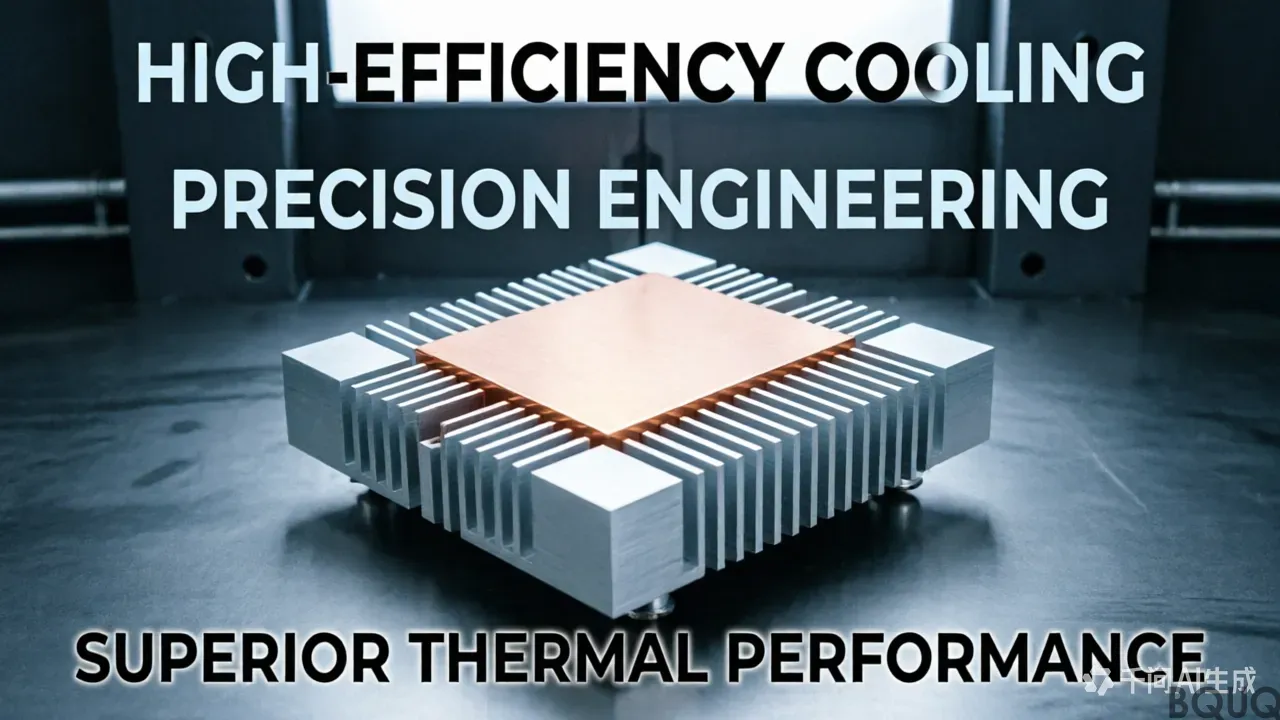
Direct-to-chip cooling, in contrast, uses a sealed cold plate mounted directly on the CPU or GPU die. A dielectric working fluid (often a fluoroketone or a specialized refrigerant) flows through microchannels inside the plate. Heat conducts through the thermal interface material (TIM), into the plate, and vaporizes the fluid. The vapor is then transported to a remote condenser unit, which is a separate rack-mounted heat exchanger that rejects heat to facility water.
The critical operational difference is the thermal path. Immersion has a shorter thermal path (fluid touches the board) but requires a large tank volume (500-1,000 liters per rack). Direct-to-chip has a longer path through the TIM and plate but uses far less fluid (10-20 liters per rack) and allows for individual server extraction without draining a tank.
What Are the Real Thermal Performance Limits and Temperatures?
The thermal performance of two-phase systems is defined by the boiling heat transfer coefficient and the thermal resistance of the system. For direct-to-chip, the cold plate can achieve a thermal resistance of 0.01°C·cm²/W or lower. This means a 500W GPU can be held at a junction temperature of 75°C with a fluid saturation temperature of 60°C.
Immersion cooling has a slightly higher thermal resistance due to the fluid pool convection, typically 0.02-0.04°C·cm²/W. However, because the entire board is submerged, the system removes heat from voltage regulators, memory, and network switches simultaneously, which is a significant advantage. In practice, immersion systems can handle server heat loads of 2,000-4,000W per 1U-equivalent chassis, while direct-to-chip is limited to the die area, handling 1,000-2,000W per socket.
The fluid saturation temperature is the primary control variable. For a typical single-phase dielectric fluid, the boiling point is fixed by the fluid chemistry. For example, 3M Novec 649 has a boiling point of 49°C, while a specialized refrigerant like R1233zd(E) boils at 18°C. The operating temperature must be matched to the server component limits; most modern CPUs can operate at a case temperature of 85°C, which gives a 25-30°C margin above the fluid boiling point. This margin is essential for the fluid to vaporize without the die overheating.
Which Industries Are Adopting Two-Phase Cooling First?
The primary adopters are hyperscale cloud providers, AI training facilities, and high-frequency trading (HFT) firms. The reason is simple: power density. A standard 42U rack with air cooling can dissipate 10-15kW. An AI training rack with 8x H100 GPUs can draw 70-100kW. Air cooling cannot physically move that much heat without massive airflow velocities that cause acoustic noise and vibration.
The HFT industry was the first to adopt immersion cooling in the early 2010s because they needed to overclock CPUs for ultra-low latency (microseconds) and the cooling margin allowed for higher clock speeds. Today, the oil and gas supercomputing sector uses immersion for seismic processing. The most rapid growth is in the AI sector, where companies like NVIDIA have certified their A100 and H100 GPUs for both direct-to-chip and immersion cooling. Government labs and national supercomputing centers (e.g., the EuroHPC JU) are also specifying two-phase systems for their exascale machines, which require 30-60MW of cooling capacity.
Why Choose Immersion Cooling Over Direct-to-Chip?
Choose immersion cooling when your facility is new construction or a major brownfield renovation, and your primary goal is maximum heat reuse or maximum rack density. Immersion allows for rack densities of 100-150kW per tank. It also eliminates 100% of server fans, which saves 15-20% of server power consumption. The dielectric fluid also protects against corrosion and dust, extending server lifespan by 2-3 years.
The operational advantage is in the condenser loop. The vaporized fluid is condensed at a temperature of 50-60°C, which means the facility water return can be at 45-50°C. This high-grade heat can be used directly for building heating, absorption chillers, or district heating networks, achieving a Power Usage Effectiveness (PUE) of 1.02-1.05.
The disadvantages are fluid cost and weight. A single 42U immersion tank requires 800-1,200 liters of dielectric fluid. At a cost of $15-25 per liter, the fluid alone costs $12,000-30,000 per rack. The tank itself adds 500-800 kg of weight, requiring reinforced flooring.
Why Choose Direct-to-Chip Cooling Over Immersion?
Choose direct-to-chip when you have an existing air-cooled data center and you want to retrofit AI servers without replacing the entire facility architecture. Direct-to-chip requires minimal changes to the server chassis, only a new cold plate and fluid connections. The fluid volume is small (10-20 liters per rack), so the capital expenditure is significantly lower.
The serviceability is superior. If a GPU fails, you can shut down the rack, disconnect the fluid lines, extract the single server, and replace it in under 15 minutes. In immersion, you must lift the entire server out of the fluid, let it drain (which takes 20-30 minutes), and then service it. Direct-to-chip also allows for hybrid operation: you can keep air cooling for memory and storage, and only use two-phase cooling for the high-power CPUs and GPUs.
The main drawback is that you still need an air-cooled environment for the rest of the board components. This means you still need CRAC units, but they can be downsized by 60-70%. The system PUE is typically 1.10-1.15, higher than immersion but much better than the 1.3-1.5 of traditional air cooling.
What Are the Cost Differences for System Components and Fluids?
The cost structure is dominated by the dielectric fluid and the heat exchanger. The table below provides real cost estimates for a 200kW IT load with a 10-rack deployment.
| Component | Immersion Cooling (per rack) | Direct-to-Chip (per rack) | Notes |
| Dielectric fluid (engineered fluoroketone) | $15,000 - $25,000 (800-1,200L at $15-25/L) | $2,000 - $4,000 (20-40L at $80-100/L) | Direct-to-chip uses higher purity fluid |
| Tank/chassis | $8,000 - $12,000 | $0 (server chassis modified) | Immersion tank is custom welded aluminum |
| Cold plates and connectors | $0 (no plates needed for immersion) | $3,000 - $5,000 (per 8-GPU server) | Direct-to-chip plates are copper with nickel plating |
| Condenser unit (rack-mounted) | $5,000 - $7,000 | $3,000 - $4,000 | Immersion condenser is larger (top-mounted) |
| Facility water loop integration | $10,000 - $15,000 | $8,000 - $10,000 | Includes pumps, valves, and dry coolers |
| Total initial cost per kW | $190 - $295 per kW | $80 - $115 per kW | Based on 20kW per rack average |
| Annual fluid loss (evaporation/leakage) | 3-5% of volume | 1-2% of volume | Direct-to-chip has sealed loop |
The data shows that immersion is 2-3 times more expensive upfront due to fluid volume. However, immersion saves $0.01-0.02 per kWh in cooling energy and eliminates fan power, which can offset the higher capital cost over 3-5 years.
How Does Fluid Management and Maintenance Affect Ops?
Fluid management is the most overlooked operational challenge. In immersion, the fluid degrades over time due to metal ion leaching and thermal breakdown. You must test the fluid's acidity (pH), dielectric strength (must be >40 kV/mm), and moisture content quarterly. If the dielectric strength drops below 30 kV/mm, you must replace the fluid or use a filtration system with activated carbon.
For direct-to-chip, the fluid is in a sealed loop, but it is under pressure. You must check for refrigerant leaks (using an electronic leak detector) every 6 months. The thermal interface material (TIM) between the die and cold plate also degrades with thermal cycling; you should replace the TIM every 2-3 years to maintain the 0.01°C·cm²/W resistance.
The maintenance cost is roughly 5-8% of the initial system cost per year. This is higher than air cooling (which is 3-4%) but lower than the downtime cost of an overheated GPU, which can be $500-1,000 per hour of lost compute time.
Can Two-Phase Cooling Work with Existing Air-Cooled Facilities?
Yes, but with specific constraints. Direct-to-chip is a drop-in retrofit for existing racks, provided your facility has a chilled water loop (7-12°C) or a condenser water loop (30-35°C). The remote condenser can reject heat to facility water at 40-50°C. You will need to install a secondary pump skid and a dry cooler if your facility water is above 35°C.
Immersion is more difficult to retrofit because the tanks are heavy and require a raised floor with reinforced load capacity (at least 1,500 kg/m²). You also need a containment dike around the tanks to catch spills. Most existing data centers have a floor load rating of 600-800 kg/m², so you would need to place the tanks on a load-spreading steel frame.
The most practical retrofit path is to deploy direct-to-chip on the AI racks (20-30% of your racks) and keep air cooling for the rest. This allows you to add 50-100kW of AI compute capacity without building a new facility.
FAQ
What Is the Maximum Heat Flux That Two-Phase Cooling Can Handle?
Direct-to-chip cold plates can handle up to 1,000 W/cm² for a single die. Immersion cooling handles lower flux (up to 100 W/cm²) but removes heat from a larger surface area. For a 700W GPU, direct-to-chip is required; immersion is more suited for 300-500W CPUs and high-density memory.
Is the Dielectric Fluid Safe for Electronic Components?
Yes, engineered fluids like fluoroketones and specialized hydrofluoroethers are non-conductive (dielectric strength >40 kV/mm) and chemically inert to solder, PCB laminates, and capacitors. They are also non-flammable (ASDRA Class 1). They can dissolve certain adhesives and plastics, so all server components must be validated for material compatibility.
How Long Does a Two-Phase Cooling System Last?
The hardware (tanks, cold plates, condensers) is designed for a 10-15 year lifespan. The fluid, however, needs replacement every 5-7 years for immersion (due to contamination) and every 8-10 years for direct-to-chip (sealed loop). The pumps and valves have a 50,000-hour mean time between failures (MTBF).
What Is the PUE Improvement Compared to Air Cooling?
A typical air-cooled facility has a PUE of 1.35-1.50. Direct-to-chip two-phase cooling achieves a PUE of 1.08-1.12. Immersion cooling can reach a PUE of 1.02-1.05, provided the waste heat is reused. The lower PUE directly translates to lower operating costs and a smaller carbon footprint.
Can Two-Phase Cooling Be Used for Battery Energy Storage Systems?
Yes, immersion cooling is being tested for lithium-ion battery packs in grid storage. The fluid absorbs heat during fast charging, preventing thermal runaway. The battery cell temperature is maintained at 25-35°C with a uniformity of ±2°C, which increases cycle life by 20-30% compared to air cooling.
At BQUQ, we manufacture precision CNC-machined cold plates, immersion tank frames, and custom heat sinks for two-phase cooling systems. With 20 years of experience in Dongguan, we can produce prototypes with tolerances of ±0.01mm and deliver in 12 hours for urgent qualification builds. Contact us for a free engineering review of your cooling loop design. Email: sc@bquq.com, WhatsApp: +86 13713157787, www.bquq.com.
Related Articles
- Heat Sink Fin Spacing: Calculate Optimal Fin Pitch for Natural and Forced Air Cooling in 2025
- Regional Market Competition: Differences and Opportunities in Asia Pacific, North America, and Europe's Heat Sink Ecology
- Smaller Is Harder: The Technical Limits and Innovations of Ultra-Thin Heat Sinks in Consumer Electronics