What Is a CNC Swiss Lathe? Precision Machining for Small Complex Parts
A CNC Swiss lathe is a specialized computer numerical control turning machine that feeds bar stock through a guide bushing while the cutting tools work in close proximity to that bushing, enabling exceptional precision on small, slender, and complex parts. Unlike conventional lathes that move the workpiece past a fixed tool, Swiss lathes move the material axially while tools cut radially, allowing for tolerances as tight as ±0.005 mm (±0.0002 inches) on diameters under 20 mm. This design virtually eliminates deflection and vibration, making it the benchmark technology for medical, aerospace, electronics, and automotive components that require high aspect ratios and intricate geometries in a single setup.
What Defines a CNC Swiss Lathe Compared to a Standard CNC Lathe?
The core differentiator is the guide bushing, a hardened steel sleeve that supports the rotating bar stock immediately behind the cutting zone. On a standard CNC lathe, the workpiece is held in a chuck and the entire length extends unsupported, which causes deflection when machining long, thin parts. A Swiss lathe, by contrast, pushes the bar through the guide bushing, so the cutting tool always engages material that is fully supported. This design allows machining of parts with length-to-diameter ratios up to 20:1 or higher without chatter, while a conventional lathe typically struggles beyond 3:1. Additionally, Swiss lathes can perform simultaneous operations—turning, milling, drilling, and threading—using multiple live tools on separate spindles, often completing a part in one operation cycle.
How Does the Guide Bushing System Improve Precision and Tolerance?
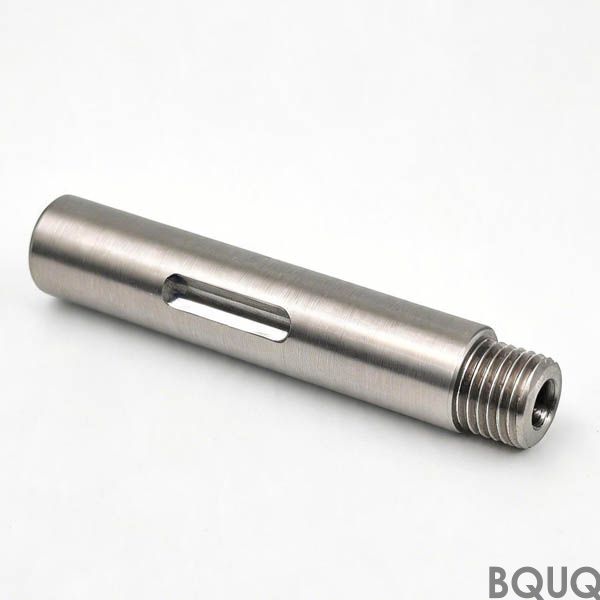
The guide bushing holds the bar stock with a clearance of only 0.003 to 0.010 mm, depending on material and diameter, which eliminates radial deflection during cutting. Because the cutting tool is positioned within 1 to 3 mm of the bushing face, the effective unsupported length of the workpiece is minimized, allowing for consistent tolerances of ±0.005 mm on turned diameters and ±0.013 mm on threaded features. For example, a 6 mm diameter stainless steel pin with a 40 mm length can be machined with a cylindrical tolerance of 0.008 mm total indicated reading (TIR) on a Swiss lathe, whereas a standard lathe would produce 0.05 mm TIR or worse. The system also reduces surface roughness to Ra 0.2 to 0.4 µm, which is critical for sealing surfaces and bearing journals.
What Materials Are Commonly Machined on a CNC Swiss Lathe?
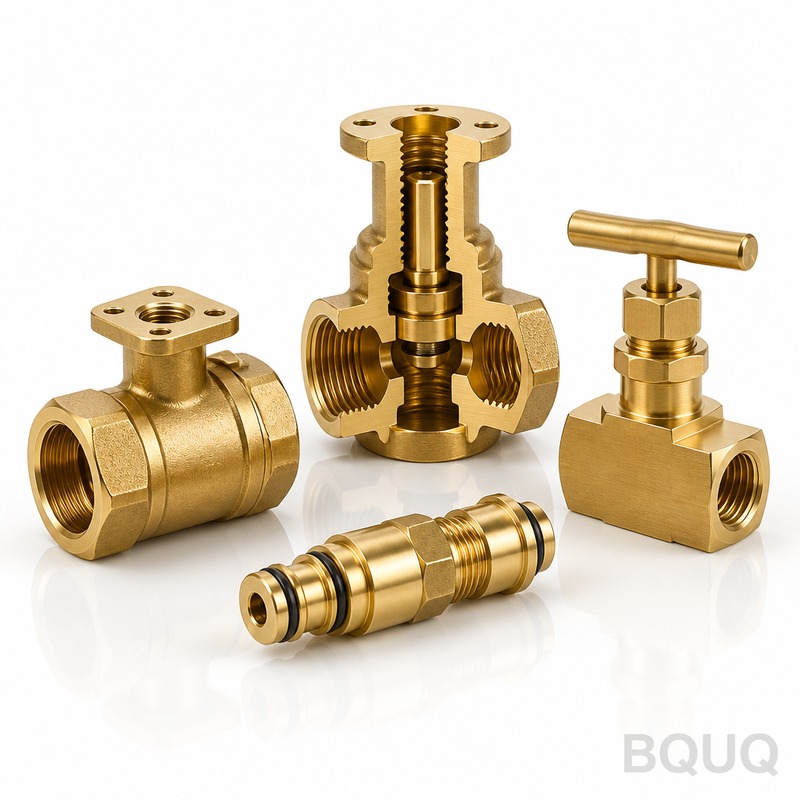
Swiss lathes can process virtually all machinable metals and some engineering plastics, but the most common materials are those requiring high precision and biocompatibility. Stainless steels (303, 304, 316L) account for roughly 40% of Swiss lathe work in medical and food-grade applications, while titanium alloys (Grade 5, Grade 23) are used for implants and aerospace fasteners, despite their low thermal conductivity of 6.7 W/m·K that requires slower spindle speeds. Brass (C36000) and copper alloys are popular for electrical connectors and valves, offering excellent machinability at speeds up to 8,000 RPM. Aluminum (6061-T6, 7075-T6) is used for lightweight housings and fittings. For high-temperature environments, Inconel 718 and Hastelloy C-276 are machined with ceramic inserts at reduced speeds of 30 to 60 m/min. Plastics such as PEEK, PTFE, and acetal (POM) are also processed, but require sharp tooling and coolant to prevent melting.
How Much Does CNC Swiss Lathe Machining Cost per Part?
The cost per part depends on complexity, material, quantity, and tolerance requirements, but typical pricing ranges from $0.50 to $15.00 per piece for small components. A simple brass bushing with a 6 mm diameter and 10 mm length, in a quantity of 10,000 pieces, will cost approximately $0.80 to $1.20 per unit, including setup amortization. A complex titanium implant screw with milling features, threads, and a tolerance of ±0.005 mm will cost $8.00 to $15.00 per piece for a 5,000-piece order. Setup and programming costs range from $150 to $500 per job, depending on the number of tools and complexity of the program. Hourly machine rates for a Swiss lathe are typically $75 to $120 per hour, compared to $50 to $80 for a standard CNC lathe, reflecting the higher capital cost and tooling complexity.
Which Industries Rely Most Heavily on Swiss Lathe Parts?
Medical device manufacturing is the largest consumer, using Swiss lathes for bone screws, dental implants, surgical instruments, and minimally invasive catheter components that demand tolerances of ±0.005 mm and surface finishes below Ra 0.4 µm. The aerospace industry uses Swiss lathes for hydraulic fittings, fuel nozzles, and sensor housings made from titanium and Inconel, where failure is not an option. Electronics and telecommunications rely on Swiss lathes for precision pins, connectors, and RF components with diameters as small as 0.5 mm. Automotive applications include fuel injector nozzles, ABS sensor bodies, and turbocharger shafts. The watchmaking industry, particularly in Switzerland, uses Swiss lathes for balance staffs, pinions, and jewel settings with tolerances of ±0.002 mm.
What Is the Maximum Part Size and Minimum Diameter a Swiss Lathe Can Handle?
The maximum bar capacity of most CNC Swiss lathes ranges from 12 mm to 32 mm (0.5 to 1.25 inches), with some large-format machines accepting up to 38 mm. The minimum machinable diameter is around 0.3 mm (0.012 inches) for hardened steels, using specialized micro-tooling and high spindle speeds up to 10,000 RPM. Maximum part length is typically 200 mm per cycle, but with bar feeding and sub-spindle pickup, parts up to 1,000 mm can be machined in multiple passes. For example, a 0.8 mm diameter tungsten carbide pin with a 25 mm length can be produced with a straightness of 0.005 mm over the entire length, which is impossible on any other turning platform. The practical limit for diameter tolerance is ±0.003 mm for diameters under 5 mm, achieved with CBN (cubic boron nitride) inserts and high-pressure coolant at 70 bar.
How Does the Sub-Spindle Operation Enhance Machining Capability?
The sub-spindle, also known as the back-working spindle, grabs the part from the main spindle after the front-side operations are complete, allowing the back end of the part to be machined without a second setup. This eliminates transfer errors between machines and reduces cycle time by 20% to 40% for parts requiring both-end machining. The sub-spindle rotates synchronously with the main spindle during pickup, maintaining orientation for features like hexes or slots. For example, a medical bone screw with a threaded front end and a hex drive on the back end can be fully machined in a single cycle of 45 seconds, whereas a conventional lathe would require two separate operations and 90 seconds of total time. This capability also improves concentricity between front and back features to within 0.010 mm.
What Are the Typical Spindle Speeds, Feed Rates, and Cutting Temperatures?
Swiss lathe main spindles operate from 200 to 10,000 RPM, with high-speed models reaching 12,000 RPM for micro-machining. Feed rates for finishing passes typically range from 0.02 to 0.10 mm per revolution, while roughing passes use 0.10 to 0.25 mm per revolution. Cutting temperatures at the tool-workpiece interface vary by material: aluminum alloys generate 200°C to 300°C, stainless steel 400°C to 600°C, and titanium alloys can reach 800°C to 1,000°C, requiring flood coolant or high-pressure through-tool coolant at 70 to 100 bar to prevent thermal damage. A typical cycle time for a 10 mm diameter stainless steel part with 5 features is 30 to 60 seconds, compared to 90 to 150 seconds on a standard lathe, due to simultaneous machining and reduced idle time.
| Parameter | Standard CNC Lathe | CNC Swiss Lathe |
| Spindle speed range | 1,000 to 6,000 RPM | 200 to 10,000 RPM |
| Achievable tolerance | ±0.020 mm | ±0.005 mm |
| Length-to-diameter ratio | 3:1 maximum | 20:1 or higher |
| Minimum machinable diameter | 3 mm | 0.3 mm |
| Surface finish (Ra) | 0.8 to 1.6 µm | 0.2 to 0.4 µm |
| Tool setup time | 20 to 40 minutes | 45 to 90 minutes |
| Hourly machine rate | $50 to $80 | $75 to $120 |
| Typical cycle time per part (10 mm dia, 5 features) | 90 to 150 seconds | 30 to 60 seconds |
What Are the Limitations and Tooling Costs of Swiss Lathes?
The primary limitation is bar stock diameter, which is capped at 38 mm, making Swiss lathes unsuitable for large-diameter parts. Tooling costs are higher, with a single live tool holder costing $200 to $500 and a full tooling package for a new job ranging from $1,500 to $5,000, depending on the number of driven tools and custom form tools. Guide bushings, which wear and require replacement every 500 to 2,000 hours of operation, cost $80 to $250 each. Additionally, Swiss lathes generate significant bar end waste—typically 50 to 150 mm of remnant per bar—which can increase material costs by 2% to 5%. Programming is also more complex, requiring specialized CAM software such as PartMaker or Esprit, which adds $2,000 to $10,000 in software licensing costs.
Which Parts Are NOT Suitable for CNC Swiss Lathe Machining?
Parts with diameters larger than 38 mm, such as housings or flanges, cannot be Swiss-machined. Parts with very short lengths (under 3 mm) are inefficient because the guide bushing setup and bar feeding cycle dominate the cycle time. Components requiring extreme surface hardening or welding after machining are also not ideal, as the Swiss lathe does not perform post-processing. Additionally, parts with non-cylindrical shapes that require heavy milling with material removal rates above 50 cm³/min are better suited to a CNC milling machine, because Swiss lathes have limited rigidity for aggressive milling. Finally, very high-volume production (over 100,000 pieces) of simple parts may be more economical on a multi-spindle automatic lathe, despite the lower precision, due to lower per-part cost.
How Do You Choose Between a CNC Swiss Lathe and a CNC Sliding Head Lathe?
The terms "Swiss lathe" and "sliding head lathe" are often used interchangeably, but there is a technical distinction. A Swiss lathe has a fixed headstock and the guide bushing moves axially to feed the bar, while a sliding head lathe moves the entire headstock, including the chuck, toward the stationary tooling. In practice, both designs achieve the same precision, but sliding head lathes are more common for bar diameters above 20 mm, as they reduce the mass of moving components. For diameters below 12 mm, a fixed headstock Swiss lathe is preferred due to lower inertia and faster acceleration. The choice also affects cycle time: a sliding head lathe can reduce non-cutting time by 10% to 15% for long parts, while a Swiss lathe offers better stability for micro-machining. For most applications under 20 mm diameter, the standard Swiss lathe is the recommended choice.
How Does Material Hardness Affect Swiss Lathe Machining Parameters?
Material hardness directly determines cutting speed, feed rate, and tool material selection. For hardened steels above 45 HRC, use CBN inserts at cutting speeds of 80 to 120 m/min, whereas soft aluminum can be cut at 300 to 500 m/min with carbide inserts. Harder materials also increase cutting temperatures by 30% to 50%, requiring high-pressure coolant to maintain tool life above 30 minutes.
Can a Swiss Lathe Machine Hexagonal or Square Bar Stock?
Yes, Swiss lathes can process hex, square, and other profile bar stock, but the guide bushing must be custom-ground to match the cross-section shape. The bushing clearance for non-round stock is typically 0.01 to 0.02 mm per side, and the spindle speed is reduced by 20% to avoid vibration. This capability is commonly used for hex-head screws and square drive components.
What Is the Typical Lead Time for a Swiss Lathe Prototype?
For a simple prototype with 2 to 3 features, lead time is 3 to 5 business days, including programming and tooling setup. For a complex part with live milling and tight tolerances, expect 7 to 10 business days. At BQUQ, we offer 48-hour expedited prototyping for basic geometries at a 30% surcharge.
How Does Coolant Type Affect Surface Finish on a Swiss Lathe?
Water-soluble coolant at 5% to 8% concentration is standard for most metals, providing cooling and lubrication. For titanium and Inconel, use high-pressure oil-based coolant at 70 bar to prevent built-up edge and achieve Ra 0.2 µm. For plastics, use air mist or food-grade coolant to avoid material degradation.
What Is the Maximum Thread Size That Can Be Cut on a Swiss Lathe?
The maximum thread diameter is limited by bar capacity, so threads up to M20 (20 mm) can be cut on a 32 mm Swiss lathe. Thread pitches from 0.2 mm to 2.5 mm are standard, and both internal and external threads can be machined using single-point threading or thread whirling for coarse pitches.
What Inspection Equipment Is Used to Verify Swiss Lathe Tolerances?
Use a coordinate measuring machine (CMM) with a resolution of 0.5 µm for dimensional verification of features like diameters and positions. For surface finish, use a profilometer with a cutoff length of 0.8 mm. For thread pitch and form, use an optical comparator or a thread micrometer with a precision of 0.005 mm.
How Do I Get a Quote for My Swiss Lathe Part?
Send your 2D drawing or 3D model (STEP or IGES format) along with material, quantity, and tolerance requirements to sc@bquq.com. Our engineers will review manufacturability and provide a detailed quote within 12 hours, including tooling cost, per-part price, and lead time.
Conclusion: Why CNC Swiss Lathes Are Essential for Modern Precision Manufacturing
CNC Swiss lathes are the definitive solution for machining small, complex parts with high precision, offering tolerances of ±0.005 mm, length-to-diameter ratios up to 20:1, and single-cycle completion of both-end features. Their guide bushing system, sub-spindle capability, and multi-tool simultaneous machining reduce cycle times by 40% to 60% compared to conventional lathes, while delivering surface finishes suitable for medical, aerospace, and electronics applications. Although tooling costs and hourly rates are higher, the reduction in secondary operations and scrap often results in lower total cost per part for quantities above 1,000 pieces. For any part under 32 mm diameter requiring exceptional accuracy and complexity, a CNC Swiss lathe is the engineering choice.
At BQUQ, we operate a fleet of 15 CNC Swiss lathes with bar capacities from 12 mm to 32 mm, offering 12-hour quoting, competitive pricing, and ISO 9001 quality control. Email your drawings to sc@bquq.com or contact us on WhatsApp at +86 13713157787 for a free engineering review. Visit www.bquq.com to learn more about our CNC machining, metal stamping, springs, and heat sink manufacturing capabilities.